This is what happens when you crash at 260 mph
Published on Mar 07, 2023 at 3:33 AM (UTC-5)
by Alessandro Renesis
Last updated on Mar 13, 2023 at 1:06 AM (UTC-4)
Edited by
Alessandro Renesis
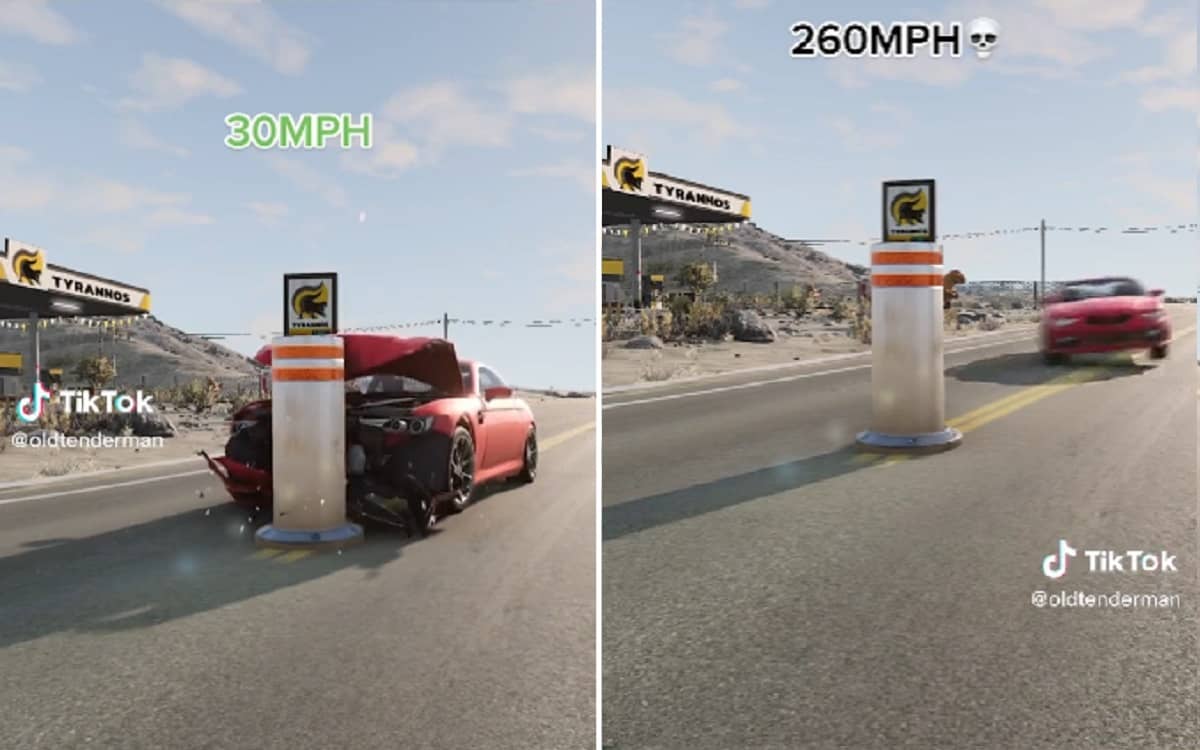

Automakers regularly test their cars with crash test dummies at the wheel but they also use animations.
This crash test simulation, for example, demonstrates what happens if you crash at different speeds up to 200 mph.
It’s a bit unsettling, mostly because the animation looks scarily realistic.
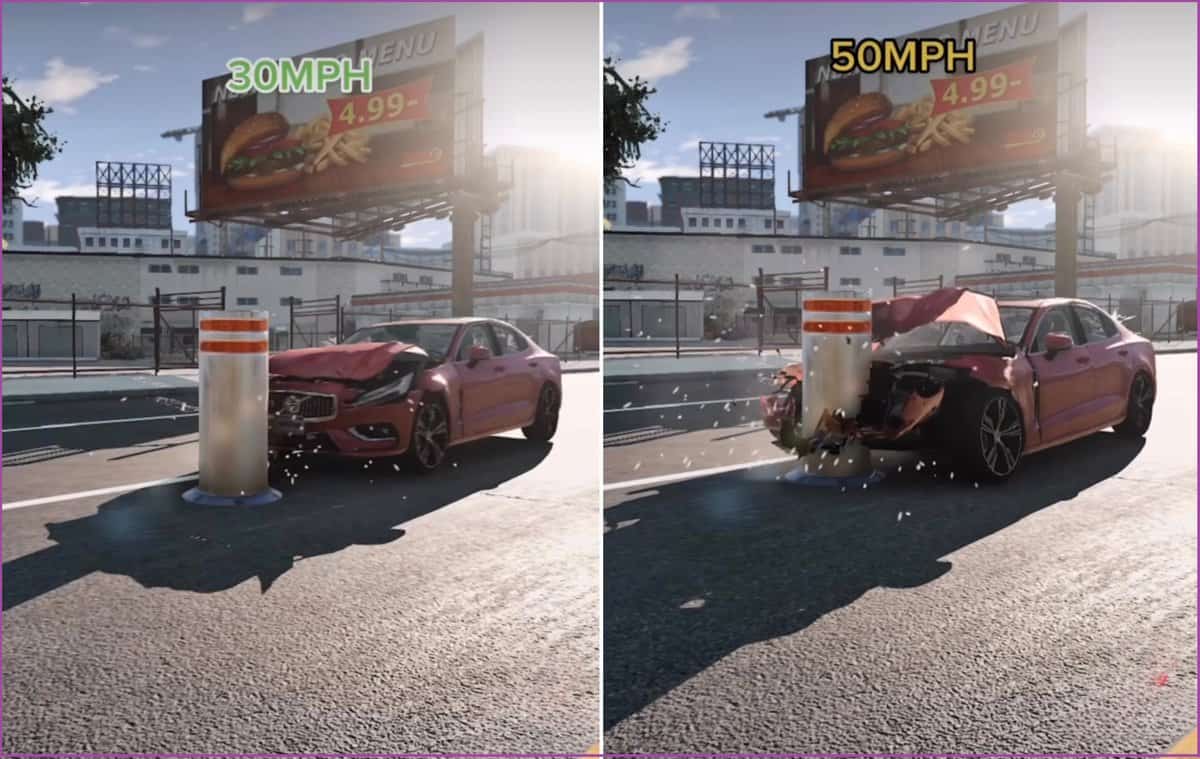
The video looks halfway between a gameplay vid from Grand Theft Auto and a Hollywood film but it’s actually from a game called BeamNG.
BeamNG allows players to recreate different drivig scenarios from races to crash tests, with a focus on realism.
And this video definitely does look realistic.
It starts with a sedan crashing into a traffic bollard at 30 mph.
There’s sustained damage to the hood, but the interior and the rear section are sort of okay because the front part absorbs the impact.
Things get a lot more serious at 50 mph because the hood basically explodes.
And it looks even worse at 90 mph because this time you can see the impact severely damaged the side and the rear section as well.
At 150 mph, the situation becomes nightmarish because the impact is so violent it knocks the car to the side and the doors fly away.
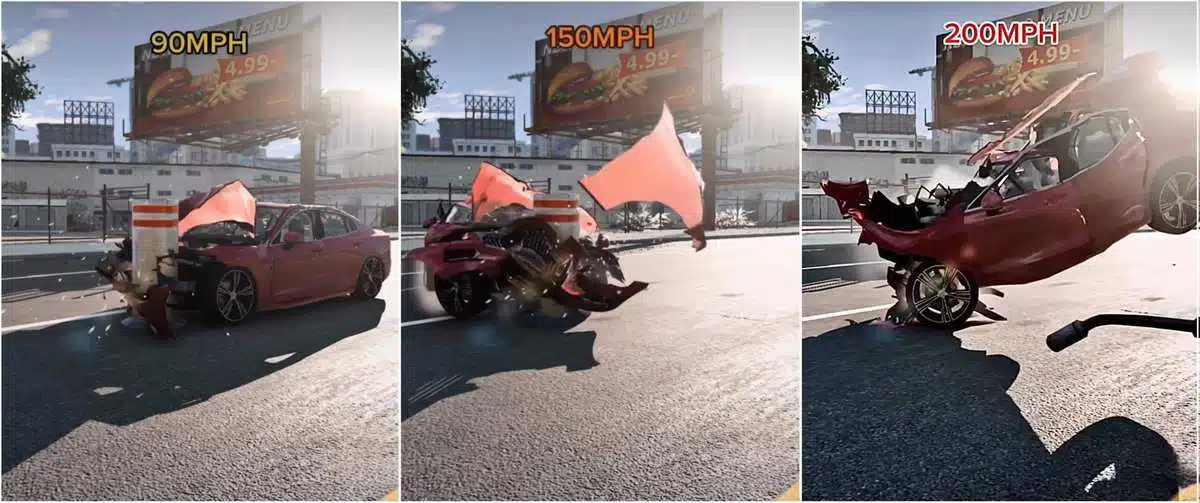
At 200 mph, the car becomes unrecognisable.
From the hood to the trunk, the entire car seems damaged beyond repair, and the engine is shot through the interior.
And then finally, at 260 mph, the car basically disassembles itself.
It looks like a box of brick-shaped, crushed components straight out of a Minecraft video game.
Automakers will probably rely on 3D-enhanced simulation even more in the future.
After watching this, even dummies will get scared and start resigning.
Related
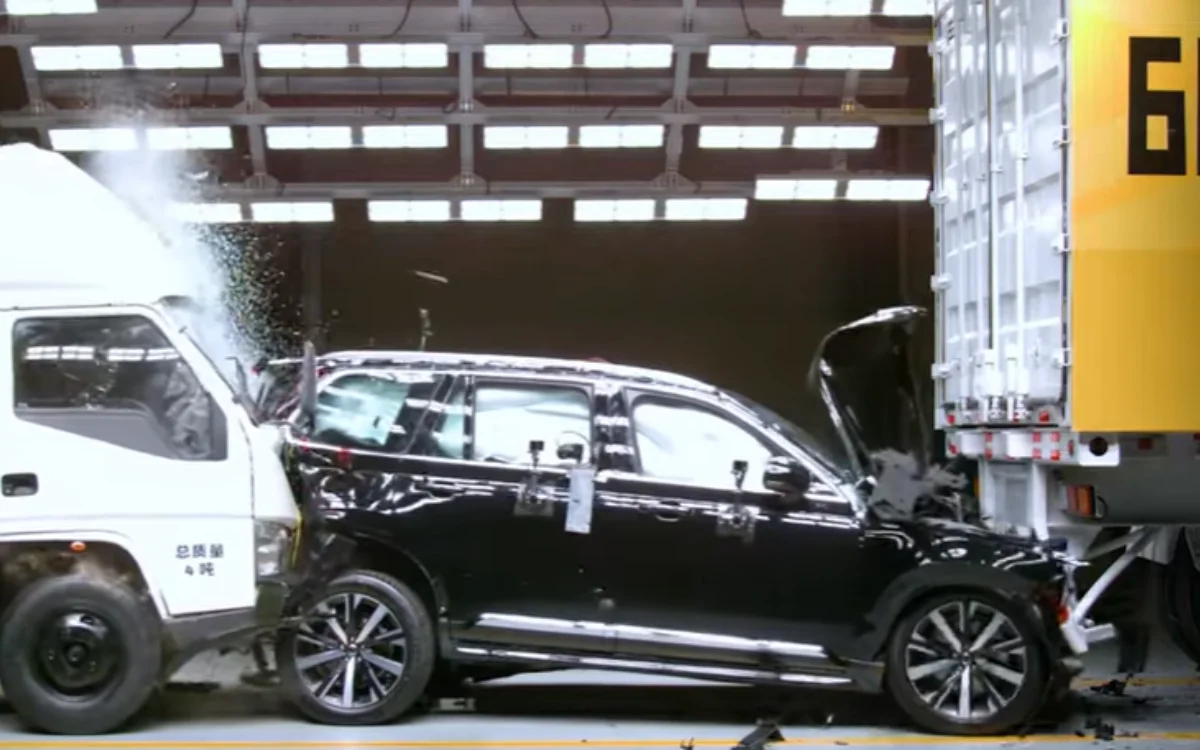

Crash test simulation vs real crash test
A real crash test simulates the consequences of an accident with a higher degree of realism.
Not only that, car companies and tech firms often work together to create dummies with synthetic bones, nerves, muscles and organs to simulate damage to the human body.
The downside is this is obviously expensive.

A crash test simulation is less expensive, and it may get even cheaper in the future.
However, a 3D simulation can’t provide the same amount of data as a real crash.
So yep, it looks like car makers are going to continue crashing real world cars (sigh) for the foreseeable future.
Alessandro is an automotive journalist with 10 years of experience covering supercars, automotive history, emerging vehicle technology, and luxury transportation. He wrote the first article published on SupercarBlondie.com when the website launched in 2022 and has since built a reputation for insightful reporting across the automotive and transportation industries. His expertise is grounded in hands-on experience. Alessandro has driven every Tesla model ever produced, from the original Roadster to the Cybertruck, and regularly covers the latest developments in electric vehicles and automotive innovation. His passion for transportation extends beyond cars, he has even flown a Boeing 787 Dreamliner simulator in Addis Ababa, Ethiopia. His reporting spans everything from classic American muscle cars and rare automotive discoveries to luxury yachts, private aircraft, high-end watches, and cutting-edge vehicle technology. Known for his deep knowledge of automotive history and ability to uncover the stories behind iconic vehicles, Alessandro brings readers a blend of historical context, technical expertise, and first-hand experience.