Man loved his Hotwheels car so much he spent 17 years building a real one
- Dream Roadster is a convertible inspired by a Hotwheels die cast model
- It combines elements from a variety of different cars
- It even won some awards
Published on Jun 25, 2024 at 6:29 AM (UTC-4)
by Alessandro Renesis
Last updated on Jun 26, 2024 at 7:49 AM (UTC-4)
Edited by
Alessandro Renesis
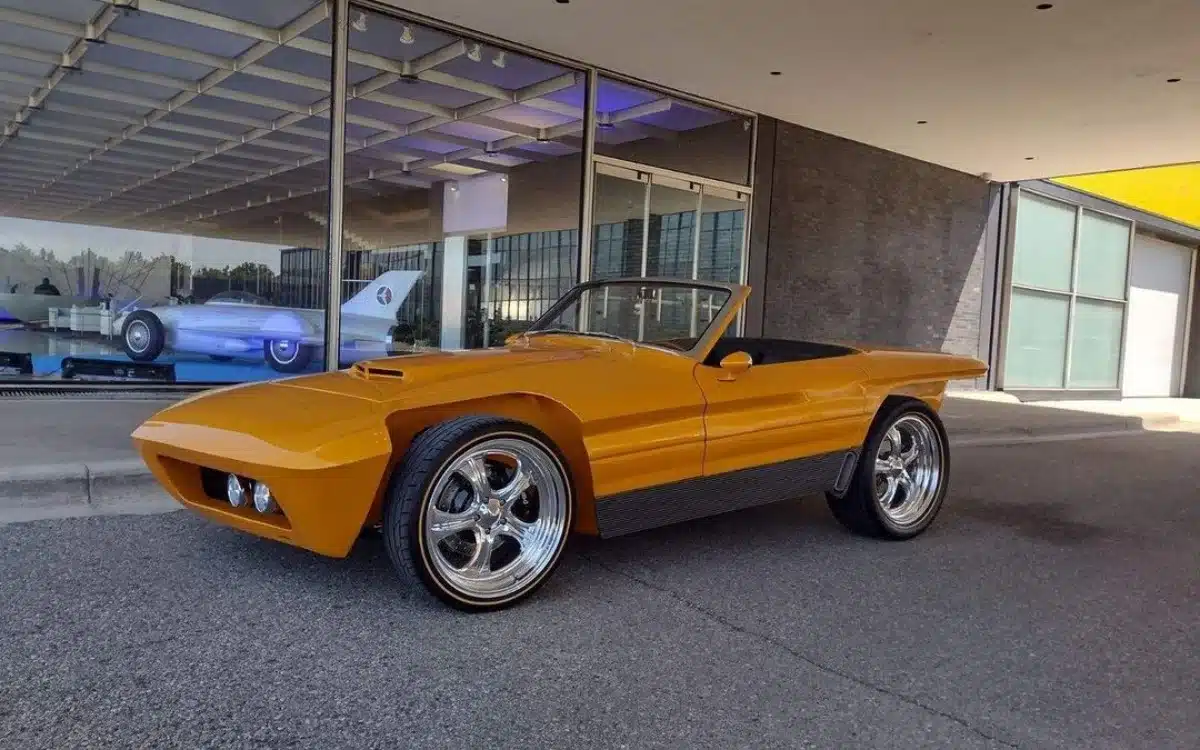

A man in the US loved his Hotwheels car so much that he actually spent about 17 years building a real-life one, which he calls the Dream Roadster
Dream Roadster is actually astonishingly close to the diecast model that inspired it, the 1978 MPC ‘Tiger Shark’.
And the engine is a gem as well.
READ MORE: Full-size Mercedes-Benz granite tombstone marks a brother’s pledge
Paul Jurewicz, the man behind this vehicle, spent 17 years putting the car together, but the hard work paid off.
The car won some awards, was showcased at several car events, and it was even featured in a Forza video game.
And considering how realistic Forza video games have become, Dream Roadster must look every bit as gorgeous in the game as it does in real life.
Dream Roadster combines elements from a long, long list of cars
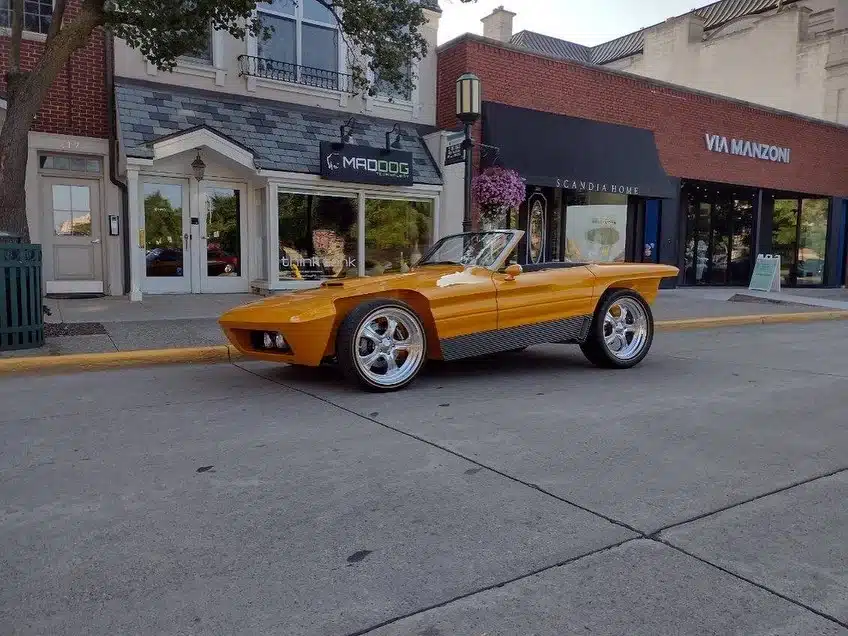
Jurewicz had to build the car from scratch, which meant he had to make do with whatever he could find.

He started with the chassis of a Studebaker Golden Hawk, chiefly because it’s relatively easy to find abandoned Studebakers in junkyards and garages.
His Dream Roadster uses the cowl, door frames, A-pillar and windshield from the Golden Hawk, but it also features several components from other brands.
The front end and doors used to belong to a 1960s Pontiac, the wing mirrors are from a Shelby Mustang, the taillights are borrowed from a Lincoln and the hood is from a 1959 Ford Thunderbird.
The rear end is from a 1963 Chevrolet Corvair, but it also incorporates the sunroof from an Audi.
An all-American icon
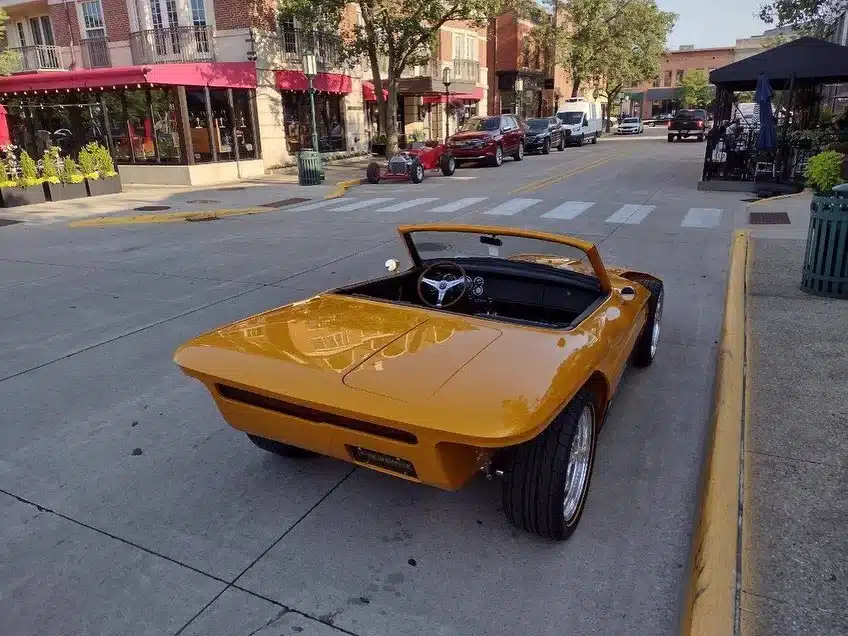
Nearly every component used to build this car was made in the United States.
In fact, between the exterior and the mechanical parts, there are only two things that aren’t American, namely the Audi sunroof and the rear suspension, which is from a Jaguar.
The engine is a 4.6-liter V8 with a custom intake and a Demon carburetor, and it is paired with a three-speed automatic transmission built by Ford.
Even the brakes are made in the U.S., by a company called Wilwood.
An award-winning machine
The car won several awards.
It won the ‘First in Class’ award at the 2019 and 2020 Detroit Autorama.
It was also a contender at the at the 2019 Syracuse Nationals in New York, and a Fine Nine contender and Darryl Starbird’s Personal Choice award at the Darryl Starbird National Rod & Custom car show in 2020.
In 2021, it won the Judge’s Pick award at 2021 Eyes on Design Concours d’Elegance in Grosse Pointe Shores, Michigan.
So yes, it may have taken 17 years, but it is now a car the owner can definitely be proud of.
Alessandro is an automotive journalist with 10 years of experience covering supercars, automotive history, emerging vehicle technology, and luxury transportation. He wrote the first article published on SupercarBlondie.com when the website launched in 2022 and has since built a reputation for insightful reporting across the automotive and transportation industries. His expertise is grounded in hands-on experience. Alessandro has driven every Tesla model ever produced, from the original Roadster to the Cybertruck, and regularly covers the latest developments in electric vehicles and automotive innovation. His passion for transportation extends beyond cars, he has even flown a Boeing 787 Dreamliner simulator in Addis Ababa, Ethiopia. His reporting spans everything from classic American muscle cars and rare automotive discoveries to luxury yachts, private aircraft, high-end watches, and cutting-edge vehicle technology. Known for his deep knowledge of automotive history and ability to uncover the stories behind iconic vehicles, Alessandro brings readers a blend of historical context, technical expertise, and first-hand experience.