Supersonic wingless ultra-luxury plane to complete London to New York flight in under 5 hours
- Sky OV is a wingless jet concept that could fly supersonic
- The wingless design makes it 50 percent more efficient than ‘traditional’ aircraft
- It would accommodate up to 200 passengers
Published on May 08, 2024 at 10:40 AM (UTC-4)
by Alessandro Renesis
Last updated on May 17, 2024 at 10:27 AM (UTC-4)
Edited by
Kate Bain
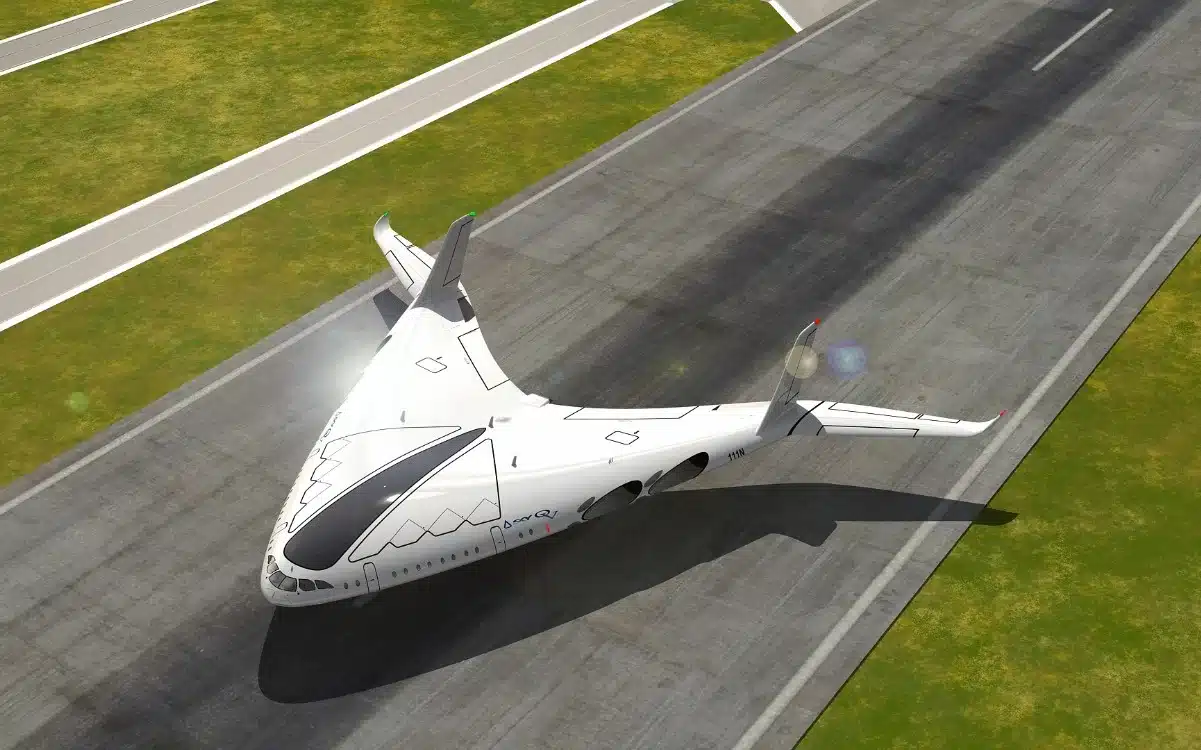

This is a supersonic plane concept that could potentially fly from New York to London in under five hours.
Simply dubbed Sky OV, it could be faster than the average airliner, and a lot more efficient.
The key to all of that is its unique wingless design.
READ MORE: First humans to reach Mars will travel on nuclear-powered spacecraft
Sky OV is a wingless jet concept designed by Oscar Viñals, the same person behind the nuclear-powered concept that could potentially fly from London to New York in 80 minutes.
It uses bladeless turbojet engines, which are more efficient than current turbojet engines, and faster.
The jet would use hydrogen fuel technology, meaning it would use electric units powered by hydrogen fuel cells, and the electric units would in turn propel the jets.

Even though most aircraft look the same, basically a fuselage with wings attached to it, different designs have always existed.
Lockheed Martin, for example, once unveiled a prototype for a jet with a circular wing.
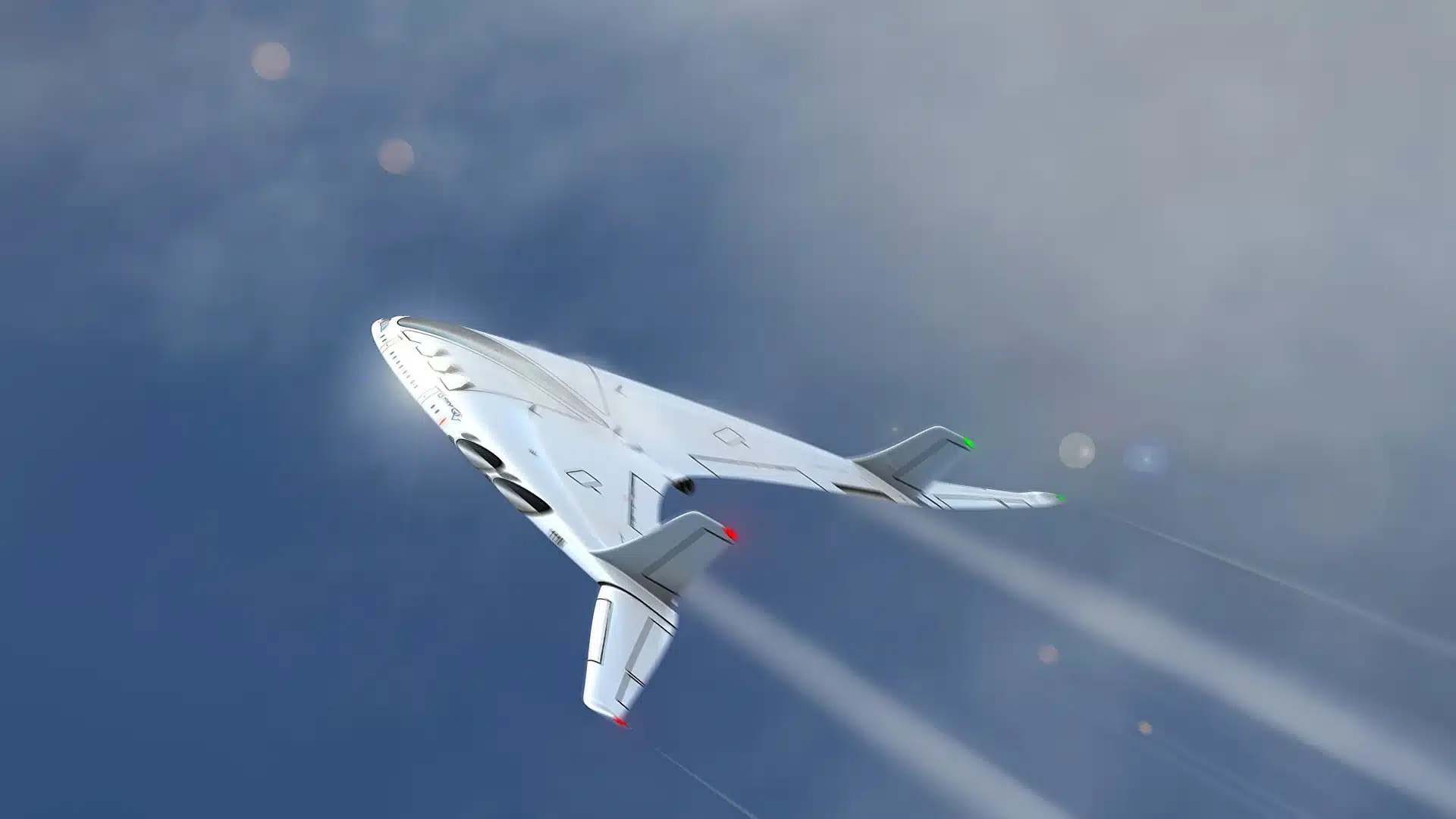
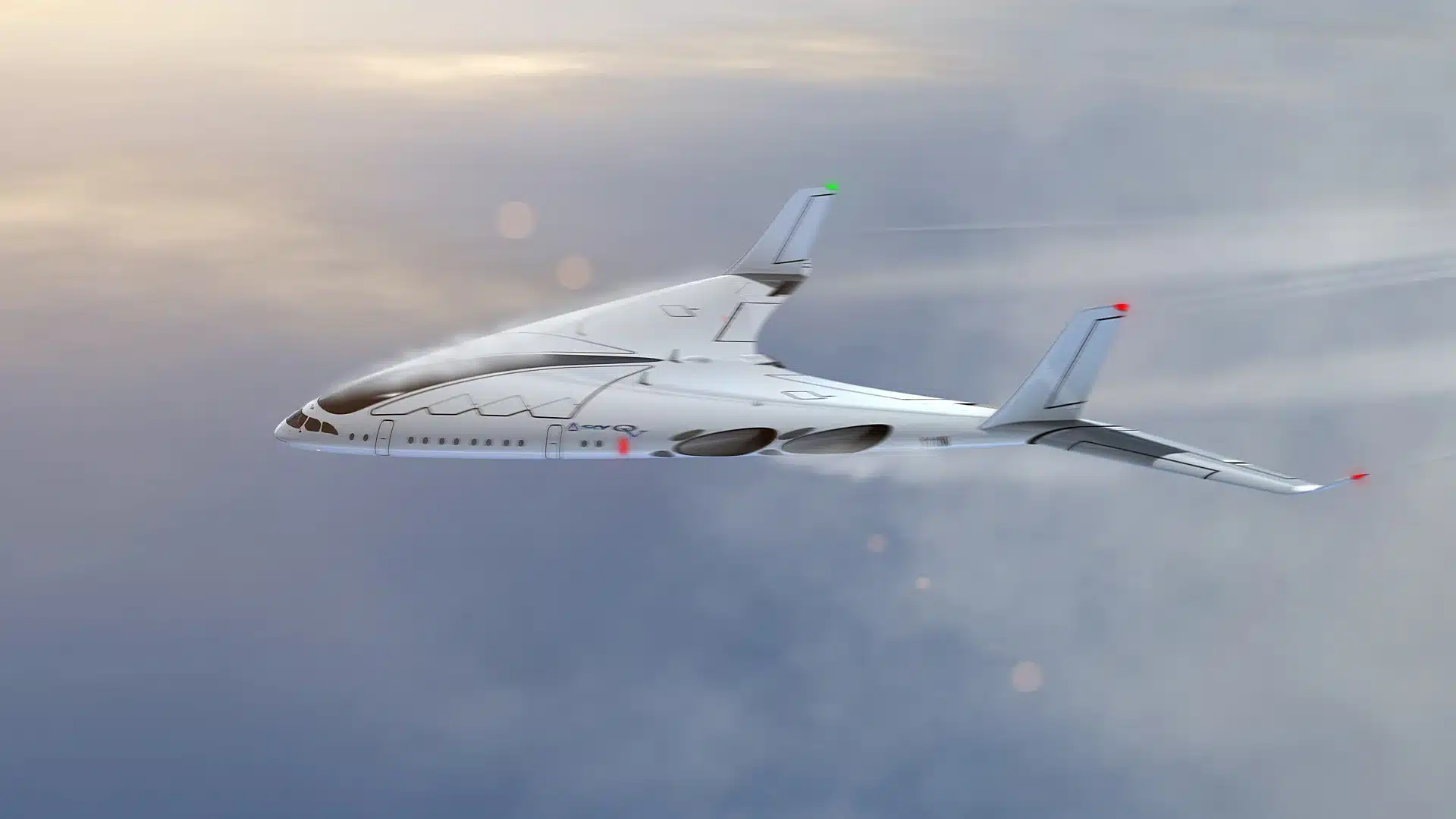
The Sky OV uses a blended-wing design which, because of the unusual way the wings are ‘glued’ to the fuselage, makes it look like it has no wings at all.
The last section of the wings, the only part that’s not physically attached to the body, is very small and can fold parallel to the ailerons.
According to Viñals, this system would make the wingless jet 50 percent more fuel efficient than a ‘regular’ aircraft, also due to the fact it would make it 30 percent lighter.
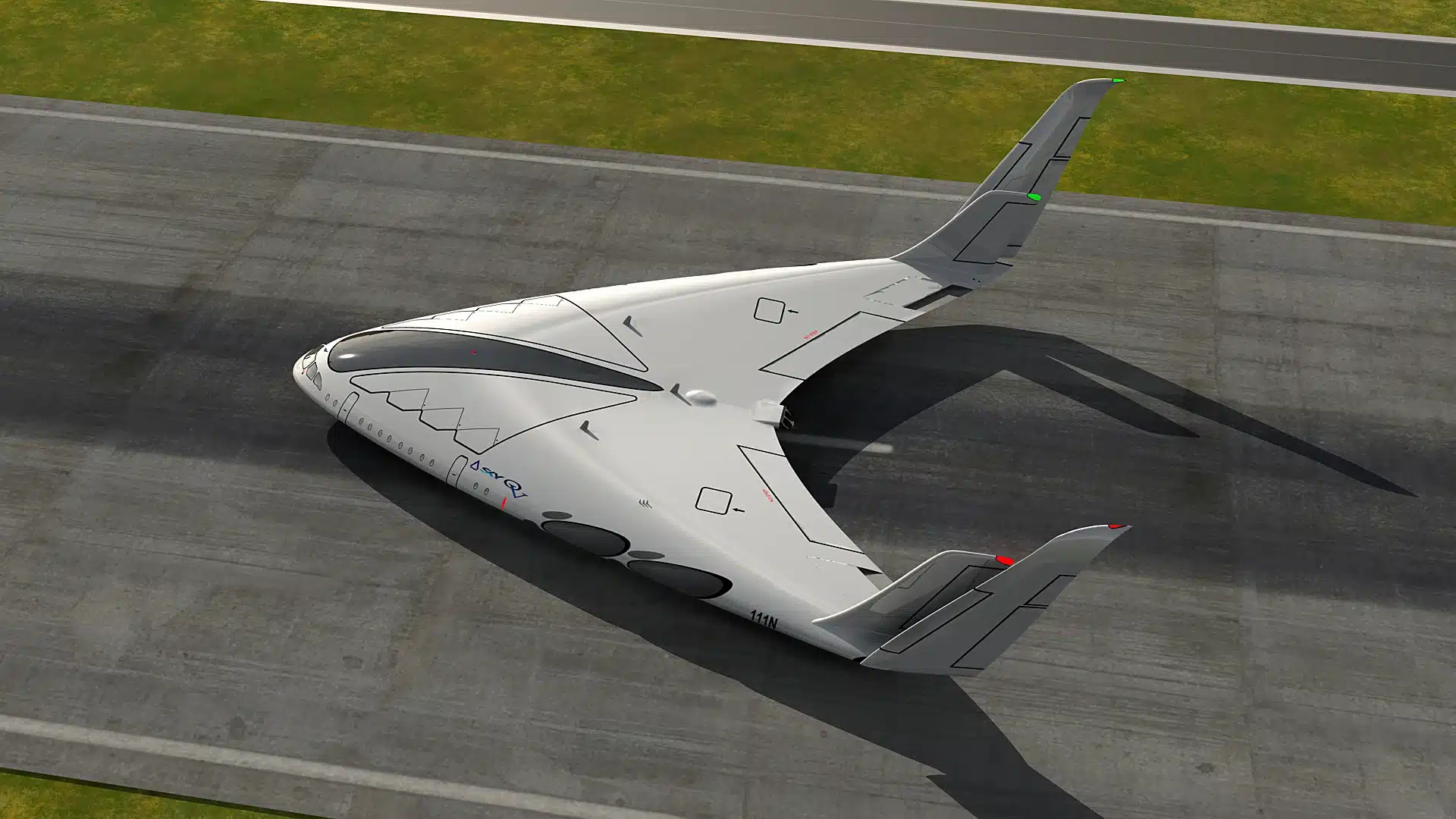
Sky OV would be 45.5 meters long, with a wingspan of 66.8 meters, and it would have a capacity for 200 passengers.
The cruise speed would be 1,235 km/h, or Mach 1, with a top speed of of 1,470 km/h (913 mph) – or Mach 1.2.
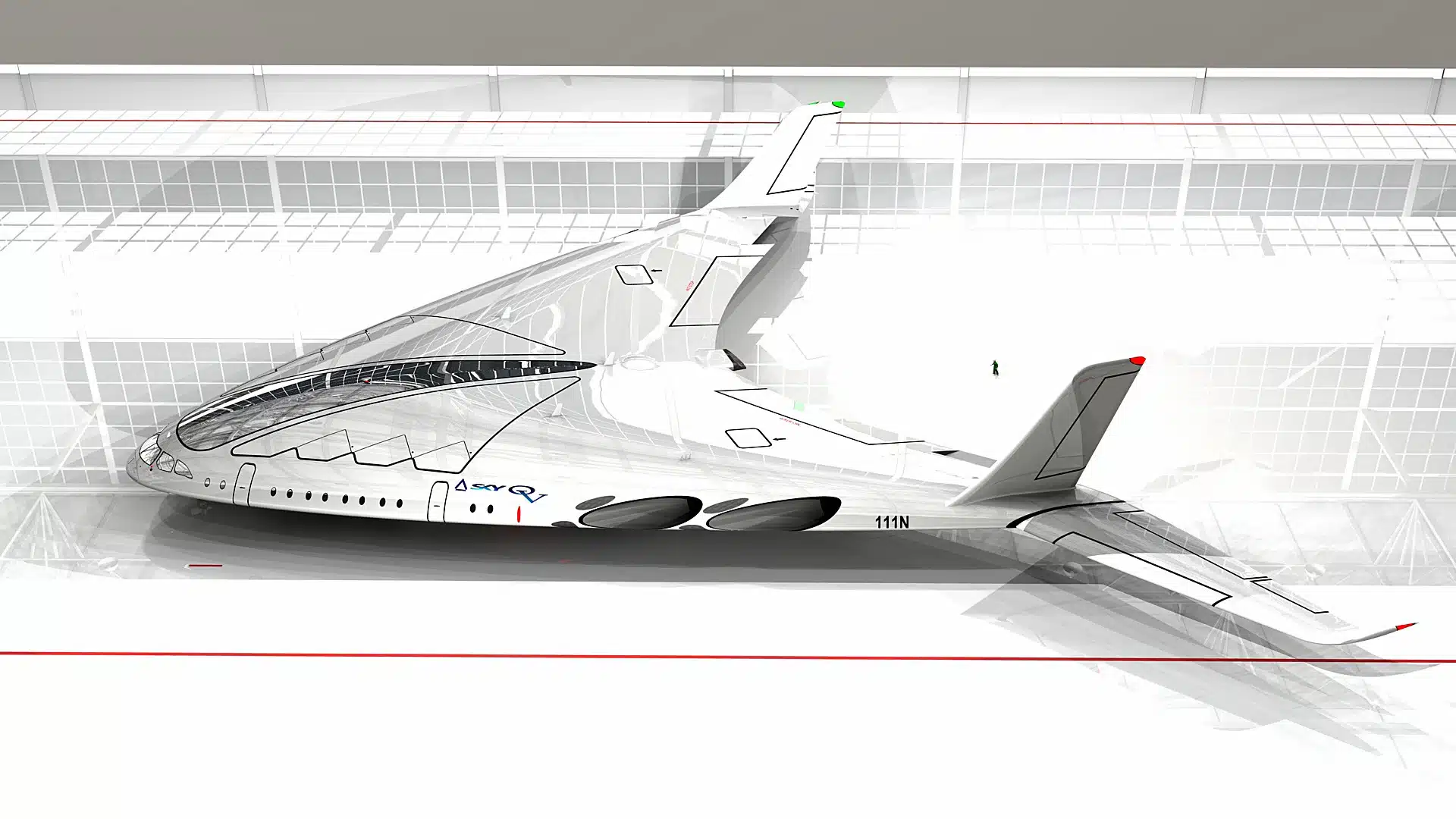
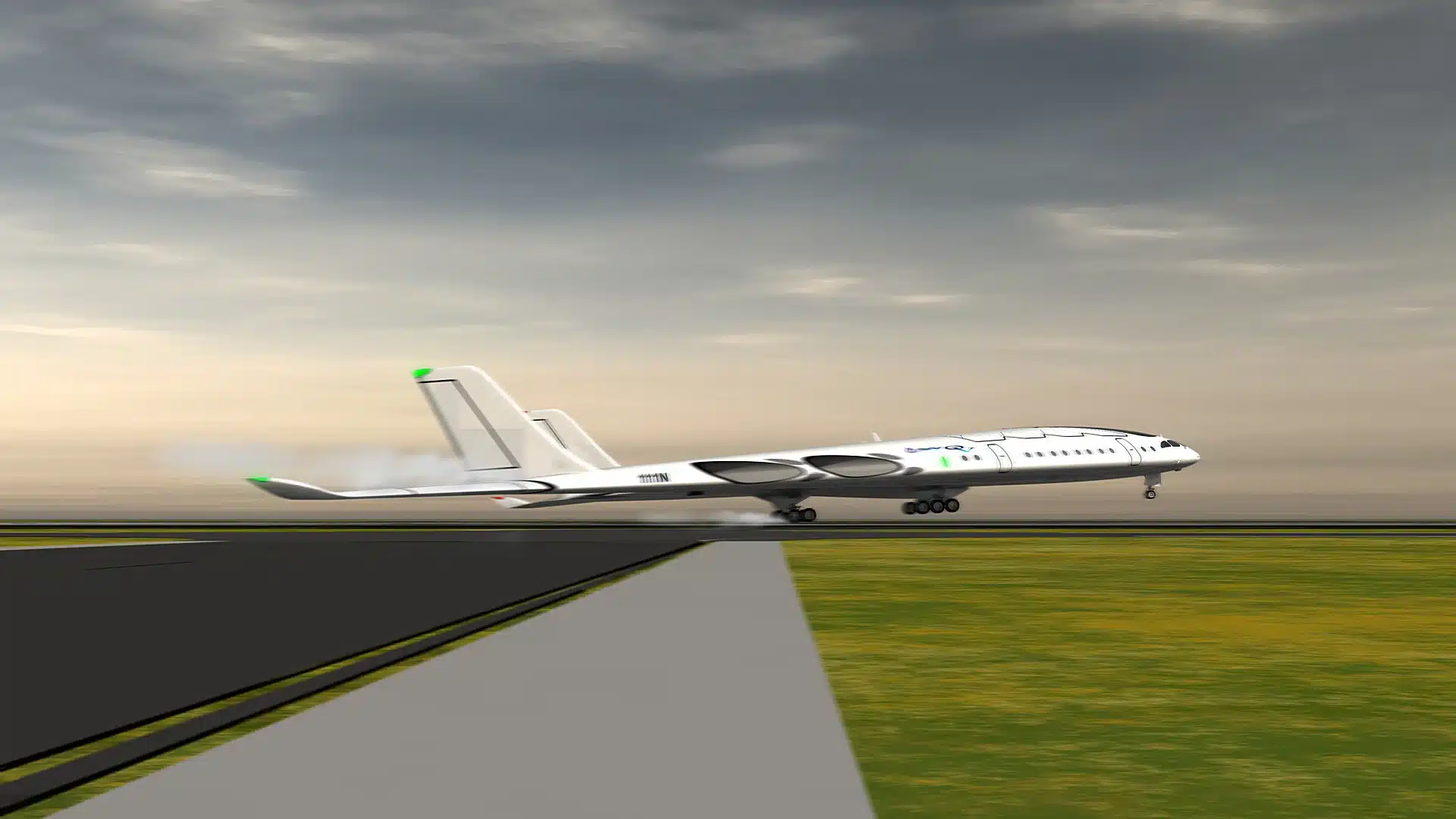
Unfortunately, this is just a concept, and it doesn’t look like the aviation industry is ready to shift away from the ‘traditional’ aircraft design we all know.
At least for now.
Related


Alessandro is an automotive journalist with 10 years of experience covering supercars, automotive history, emerging vehicle technology, and luxury transportation. He wrote the first article published on SupercarBlondie.com when the website launched in 2022 and has since built a reputation for insightful reporting across the automotive and transportation industries. His expertise is grounded in hands-on experience. Alessandro has driven every Tesla model ever produced, from the original Roadster to the Cybertruck, and regularly covers the latest developments in electric vehicles and automotive innovation. His passion for transportation extends beyond cars, he has even flown a Boeing 787 Dreamliner simulator in Addis Ababa, Ethiopia. His reporting spans everything from classic American muscle cars and rare automotive discoveries to luxury yachts, private aircraft, high-end watches, and cutting-edge vehicle technology. Known for his deep knowledge of automotive history and ability to uncover the stories behind iconic vehicles, Alessandro brings readers a blend of historical context, technical expertise, and first-hand experience.