Brembo shares the impressive numbers behind its world-first hydraulic-free brakes and predicts what will happen to brake fluid
Published on Jul 03, 2026 at 4:28 PM (UTC+4)
by Ben Thompson
Last updated on Jul 03, 2026 at 4:28 PM (UTC+4)
Edited by
Mason Jones
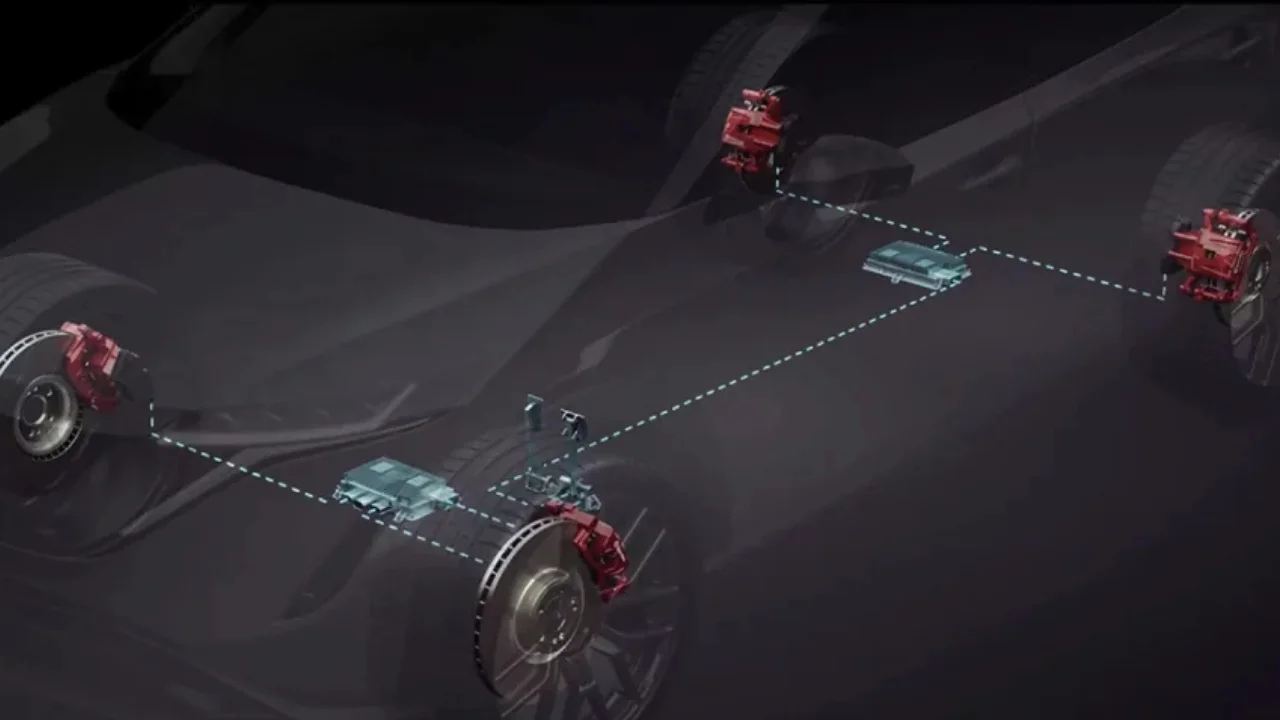

For a century, hydraulic brakes have been the norm but Brembo is set to change all of that with its hydraulic-free technology.
Brembo announced the Sensify system recently, and it’s caused quite a buzz in the automotive sphere.
But what does this mean for brakes at large? Has the tide of change arrived?
Ignacio Alvarez Troncoso, chief of R&D at Brembo, spoke to Supercar Blondie about the benefits of the technology.
Hydraulic-free brakes are on the way
The Sensify brake-by-wire system is set to revolutionize braking in a way we’ve not seen for decades.
With traditional hydraulic brakes, it takes between 300 and 500 milliseconds to fully engage.
That’s still mighty impressive, but the Sensify does one better – 80 milliseconds.
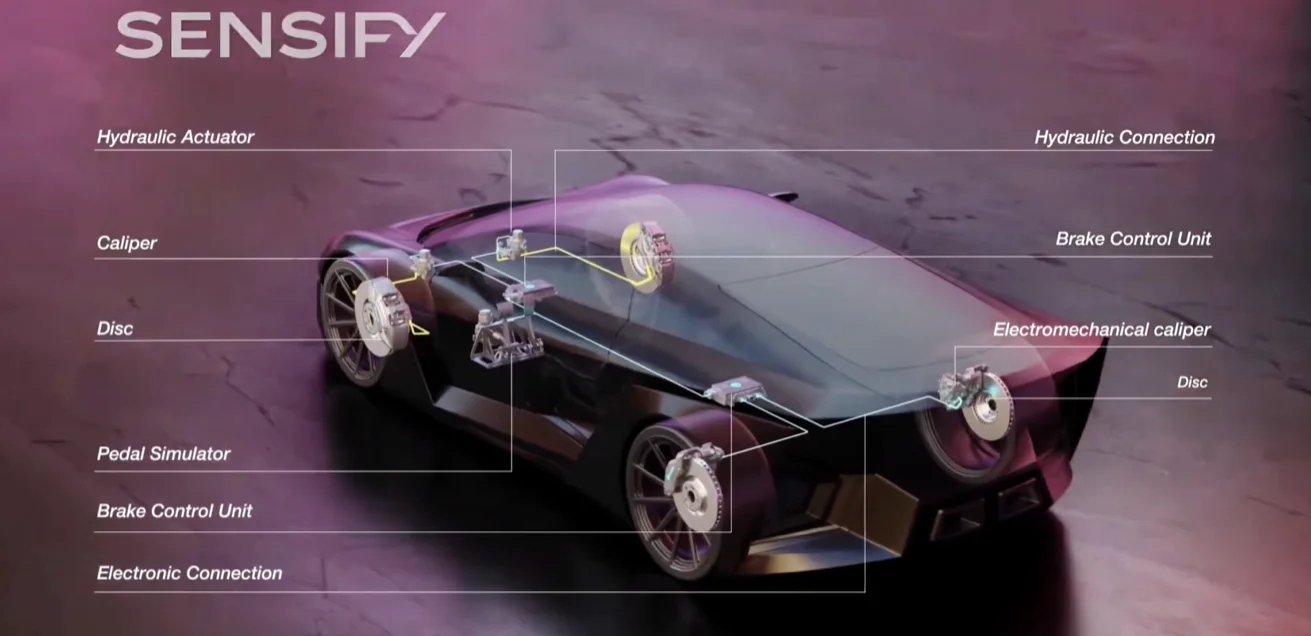
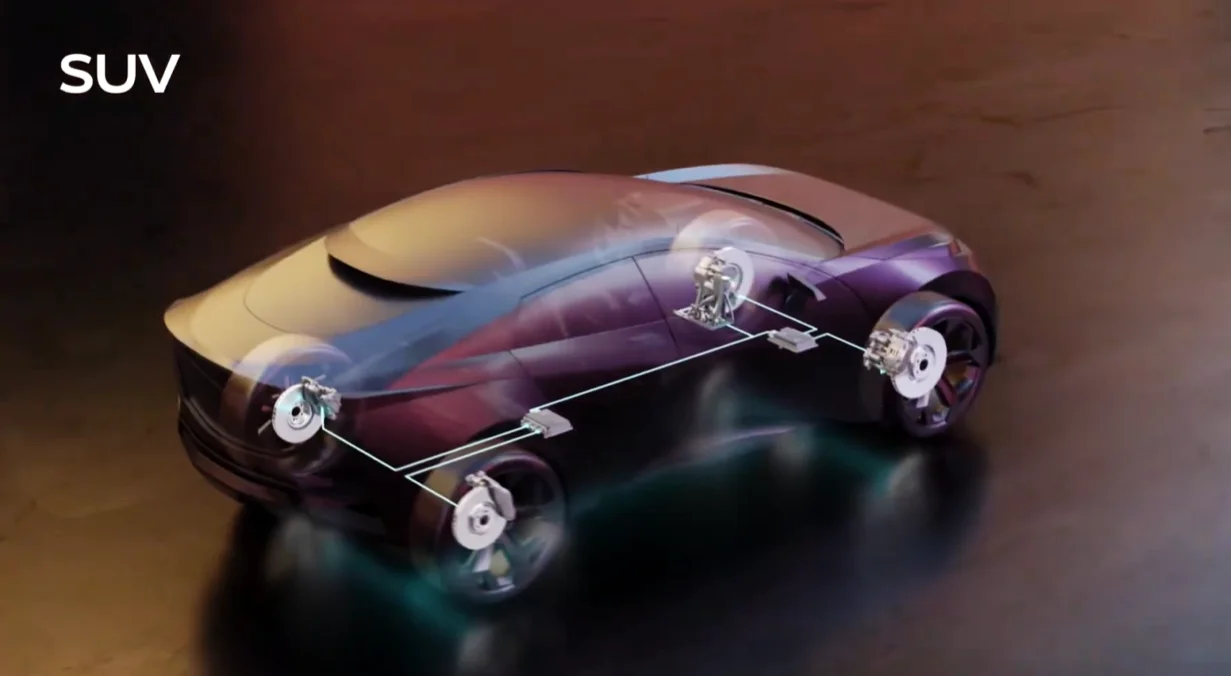
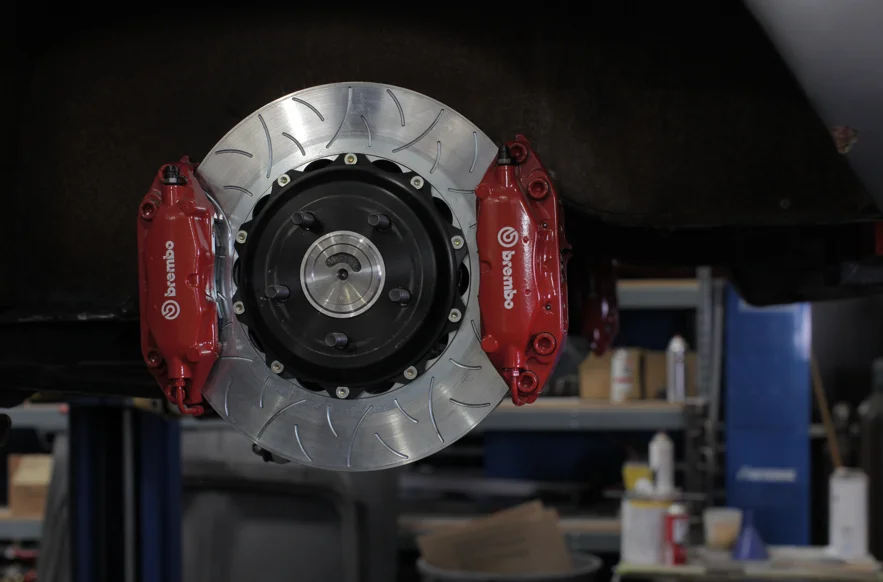
Rather than fluid pushing pistons, in a Sensify system electric motors directly activate the brake calipers.
The software monitors the pedal pressure, wheel speed, and vehicle dynamics, so each wheel knows how much braking force to apply.
It’s a big change, but it’s one that Brembo felt was coming at the right time.
“We thought that [this] would be the right time to just break through the current technology and what is around the chassis,” Ignacio Alvarez Troncoso, chief of R&D at Brembo, told Supercar Blondie.
“We anticipate a lot of needs on the future market and enhance both safety and also comfort and just improving the ride.”
Does he think that hydraulic brakes are on the way out?
“This is what we believe could happen step by-step for sure,” Troncoso said.
“We see Sensify a part of a bigger transformation which is happening in
the automotive industry.
“For a given period of time, we [will] see the two technologies coexisting.”
What does he see Sensify offering that standard brakes don’t?
“It’s moving from pure mechanical transmission of actuation of the intent of the driver to the action in the brake,” he explained.
“The granularity and the precision of the control that Sensify is able to deploy in each wheel independently is absolutely breakthrough in that point.
“If you imagine this new precision, it enables a lot of new potential features and actually a lot of new attributes in the vehicle that are able to touch the [driver] in a way that it makes the driving experience more intuitive, more stable, smoother.”
Brembo has been revolutionizing brakes for a long time now
Even long before Sensify was announced, Brembo was braking the mold in more…colorful ways.
You may have noticed braked calipers on high-performance cars around the world.
This is curtesy of Brembo and started way back in 1992, and has been going strong ever since.
Brembo’s Chief Marketing Officer Mauro Piccoli spoke to Supercar Blondie about the meaning behind the design choice.
“When with a premium sport car brand, that was Porsche at the time, we decided to apply a color on the caliper body. They were already adopting our fixed bridge aluminium caliper,” Piccoli told Supercar Blondie.
“And together we decided to give this a splash of color inside of the wheel. And everything started there, because basically it became a signature of performance and quality and later on style.”
At the forefront of Brembo’s agenda is performance and efficiency.
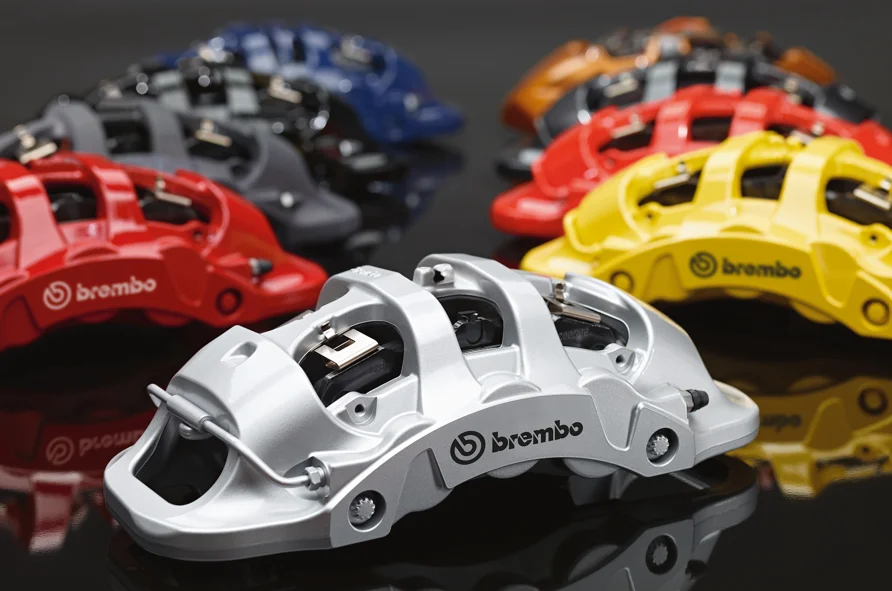
“When we add the color on the caliper, it simply became a sort of signature and performance identity of the car itself,” Piccoli explained.
“This became a sort of a status symbol of a car with high performance that was fully recognizable at first sight because of the color brake.”
How many colors are there to choose from?
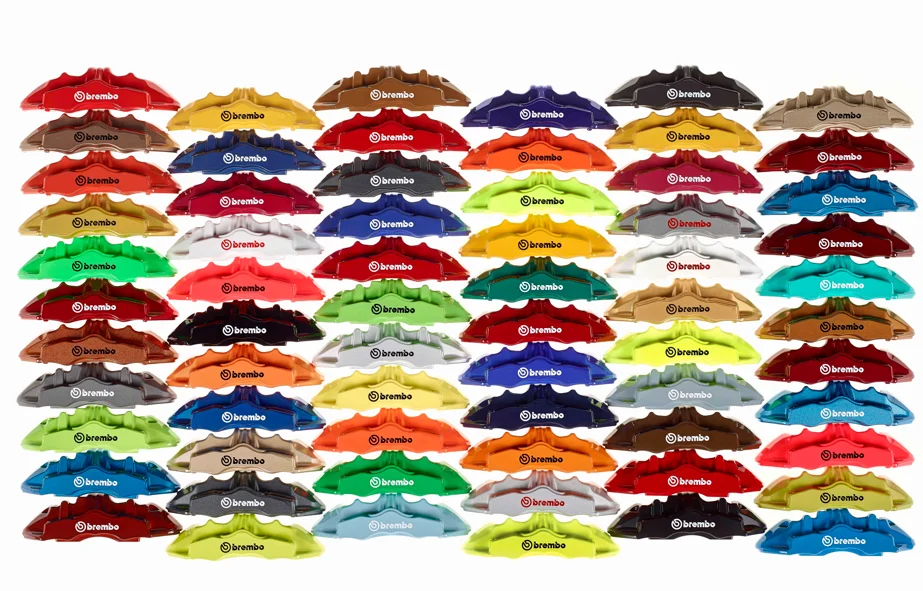
Red, often linked to performance and power, was the first color to be used on the calipers.
But in the years, more and more have joined the ranks, with 150 colors now available to choose from.
Interestingly, the colors chosen can vary based on geography.
“I think for Europeans, it goes basically brand by brand,” Piccoli said.
“Some brands have the blue as a basic high-performance color, like BMW. Porsche is also yellow as a performance color. Ferrari in red. McLaren is the papaya orange.
“Surprisingly, in China and, we see colors that are becoming extremely popular like pink and light blue.
“This kind of shades that are, I mean, I would say more lifestyle [oriented]. I think this is because it’s following a bit more the fashion world more than the automotive world.”
Ultimately, there is an air of alchemy about the whole process, as Brembo strives to balance brands, car colors, and vehicle identity.
The car world is certainly moving more and more towards customization, that much is clear.
Whether it’s BOTTEGAFUORISERIE or customized Apple CarPlays, there’s practically no aspect of cars that hasn’t received a personal touch in recent years.
We’ve come a long way from Pimp My Ride.
Ben joined Supercar Blondie in February 2025 after being published by international organizations including LADbible, The Sun, the New York Post, and the Daily Mail. He covers supercars, rare and collectible vehicles, aviation, luxury assets, and the fascinating people behind them. His reporting has explored everything from seven-figure supercars and historic Ferrari collections to unusual aircraft adventures and extraordinary automotive discoveries from around the world. Ben has also gained first-hand insight into vehicle craftsmanship and customization, including visiting specialist workshops to see bespoke vehicles up close.