The ghosts of the Mojave are forgotten Boeing 377 Stratocruisers that went from luxury airlines to rusting hulks
Published on Apr 11, 2026 at 8:39 AM (UTC+4)
by Ben Thompson
Last updated on Apr 10, 2026 at 12:34 PM (UTC+4)
Edited by
Emma Matthews
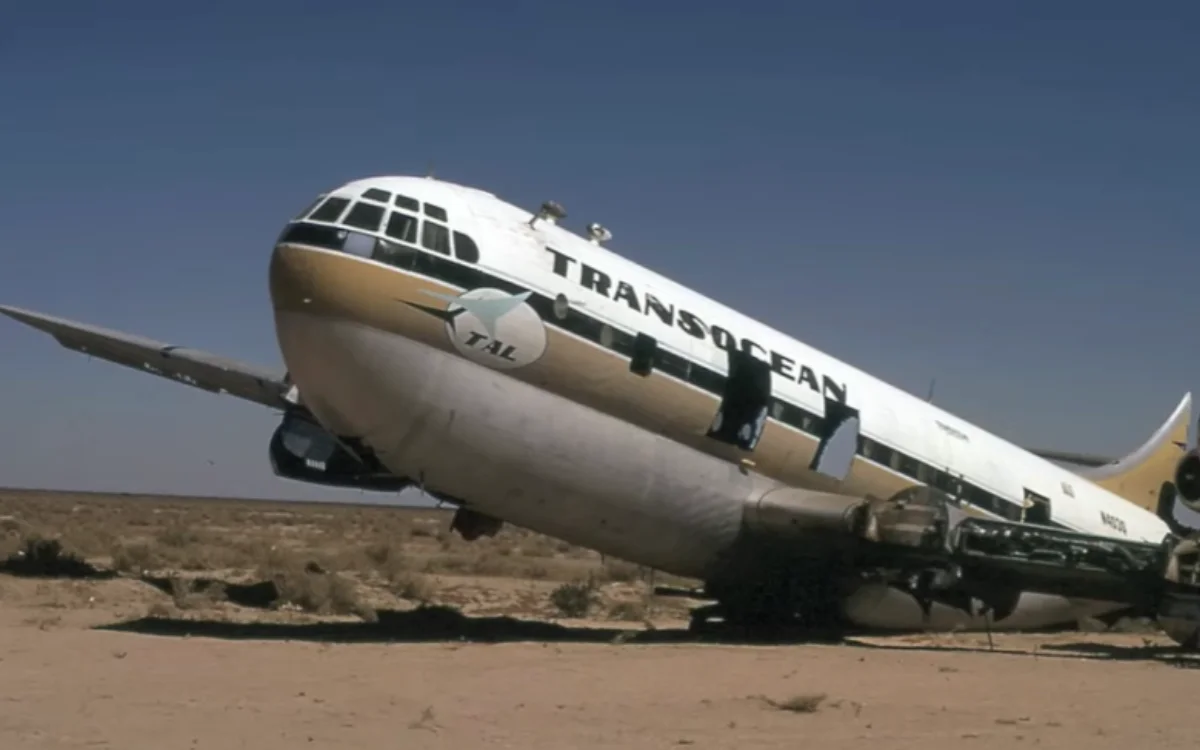

Out in the Mojave Desert, these Boeing 377 Stratocruisers have been left to rot in a sad display of aviation greatness past its prime.
As part of his YouTube series, Henry Tenby went through a collection of shots of these planes.
These were originally snapped by German photographer Gert Killian back in September 1973.
These planes were once proud titans of the sky, but they had become stewards of the desert after retirement.
Taking a closer look at these Boeing 377 Stratocruisers
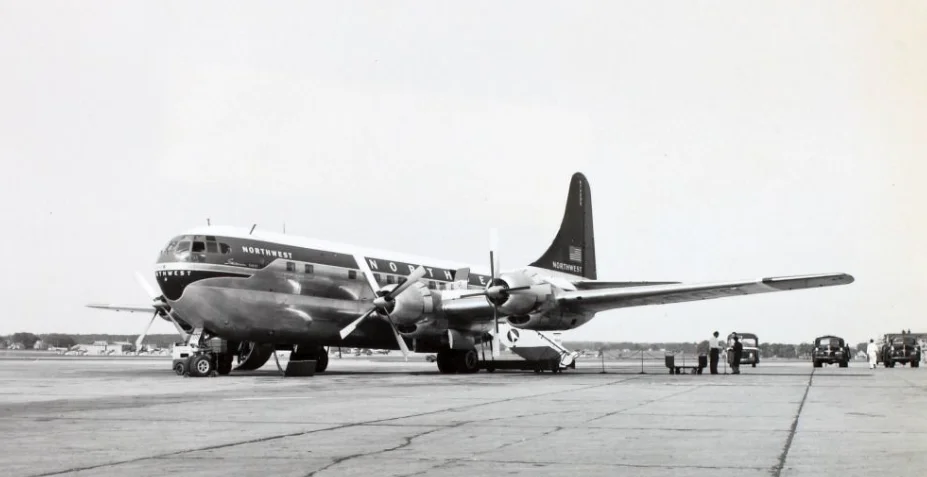
For those of you not in the know, a Boeing 377 Stratocruiser was the ‘luxury ocean liner’ of the skies way back in the 1950s.
This long-range propeller airplane was developed after World War Two, essentially serving as a civilian derivative of the C-97 Stratofighter.
It was perhaps most famous for its ‘double-bubble’ fuselage, with the upper deck serving as the main cabin for passengers.
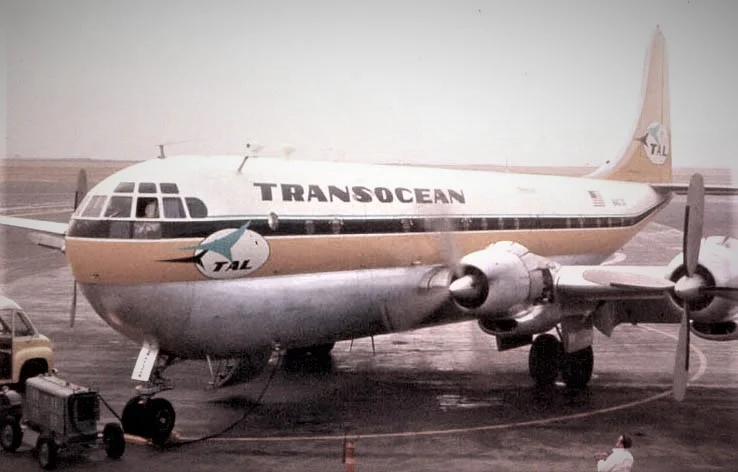
On the lower deck, a circular lounge and bar could be reached at the bottom of a spiral staircase.
Even by today’s standards, that sounds really fancy.
So it’s no wonder that these planes were considered the height of luxury back in the day.
But sadly, all good things must come to an end, and in 1963, the Stratocruiser was retired.
Several of them ended up out in the Mojave Desert, where German photographer Gert Killian snapped some photos of them on September 20, 1973.
These photos got a thorough look-over in an episode of Pre-Internet Plane Spotting, hosted by Henry Tenby over on the JetFlix YouTube channel.

Most of the planes featured in this video came from Northwest Airlines, Pan Am, or Transocean Airlines.
They’d primarily been retired as jet travel came to the forefront with the Boeing 707s taking center stage.
Considering that these planes had spent around a decade out in the Californian desert, they weren’t looking too bad – for the most part.
One plane from Transocean Airways had suffered more than most, with a bashed-in nose and large portions of its fuselage removed.
Tenby speculated that these parts had been harvested to support active aircraft.
While plenty of pieces were missing – primarily rudders, propellers, and emergency exit doors – the planes otherwise didn’t look too bad structurally.
“By the late 1970s, these aircraft were gone, there might have been one aircraft or bits and pieces remaining, but this collection of Stratocruisers that we have here at the Mojave Desert was something unique to behold,” Tenby said.

Keeping aircraft in the desert isn’t anything new, as aviation professional Rob Cullemore told us.
“It’s not surprising as dry environments like deserts around the world are most used for ‘long-term storage’ – this is industry terminology – which often means the final resting place for the aircraft in particular,” Cullemore told Supercar Blondie.
“In the case of aircraft that are in these types of long-term storage facilities that are still operating around the world, they are occasionally cannibalized for spare parts, but the B377 is long out of use with airlines around the world now.
“These aircraft would have been flown as a normal – but in this case, one-way flight – by the airline that last operated them to this facility, that is how they would have gotten there.”
There’s something undeniably tragic about abandoned planes
There’s no denying that it’s sad to see these planes in this condition.
Unfortunately, it’s not a totally uncommon sight around the world.
Well, relatively speaking – after all, you don’t see abandoned planes on every street corner.
But still, it’s more common than you might think.
For example, there are millions of dollars’ worth of planes sitting across Nigeria’s airports, costing an absolute mint to maintain.
Then there’s this Lockheed plane hanging out in an African desert, which has become something of a tourist attraction.
DISCOVER SBX CARS: The global premium car auction platform powered by Supercar Blondie
Following stints at LadBible, The Sun, The New York Post, and the Daily Mail, Ben joined the team full-time in February 2025. In his role as Senior Content Writer, his sparkling copy, the ability to sniff out a good story at 100 paces, and a GSOH quickly led to him becoming an integral and invaluable member of the writing staff.