Man turns a Boeing 737 into a hypersonic airliner and the result is absolutely ridiculous
Published on Mar 21, 2026 at 5:48 PM (UTC+4)
by Callum Tokody
Last updated on Mar 20, 2026 at 6:59 PM (UTC+4)
Edited by
Amelia Jean Hershman-Jones

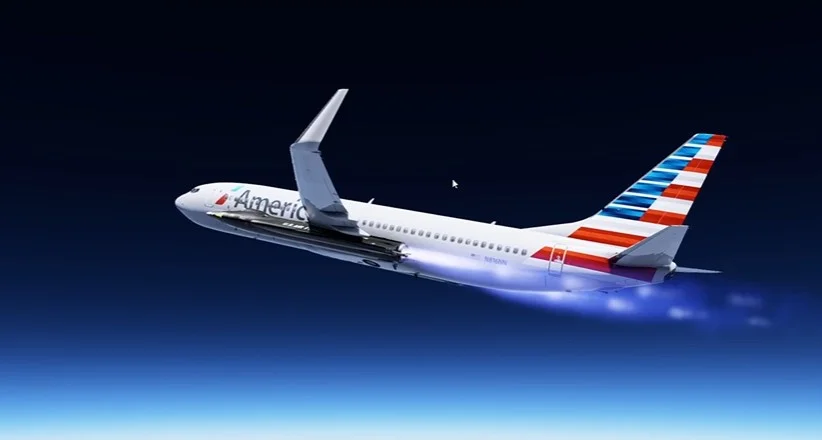
Ever seen a Boeing 737 in space? Mounting a liquid-propellant rocket engine to a Boeing 737 turned this short-haul passenger plane into an aircraft capable of a speed record during hypersonic flight.
This digital experiment replaced the standard CFM56 turbofans with the XLR99 powerplant once used for the X-15 rocket-powered research program by NASA and the U.S. Air Force.
The modification allowed the airframe to, in theory, climb far beyond its usual altitude and enter the vacuum of the upper atmosphere.
Watching an airliner scream toward the stars at Mach 3 reveals exactly where standard engineering meets total mechanical destruction – keep scrolling to see it in action.
Click the star icon next to supercarblondie.com in Google Search to stay ahead of the curve on the latest and greatest supercars, hypercars, and ground-breaking technology
Breaking a Boeing 737 into space
The simulation by Swiss001 on YouTube shows that a Boeing 737 equipped with a rocket engine can reach the highest levels of the atmosphere.
The XLR99 rocket engine produces 55,000 pounds of thrust and functions independently of atmospheric oxygen.
This allows the aircraft to maintain steady acceleration while passing through the stratosphere.
During this test, the jet achieved hypersonic flight at speeds three times faster than a standard cruising velocity.

The Boeing 737 eventually reached an altitude of 100,000 feet, which is nearly triple the height of a typical commercial flight path.
Pursuing a speed record in a commercial airframe introduces immediate mechanical risks.
The simulator monitors aerodynamic heating, showing that a standard aluminum fuselage would fail under these conditions.

A real-world hypersonic flight requires titanium or advanced composites to withstand temperatures exceeding 1,200 degrees Fahrenheit.
Additionally, the rocket engine consumes 8.7 tons of fuel in approximately 80 seconds.
This consumption rate means a Boeing 737 would exhaust its entire supply before completing a high-speed run.
The simulation tracks this depletion accurately, with fuel levels dropping to zero almost immediately after the throttle is opened.
The future of hypersonic flight
A specialized rocket engine remains an impractical choice for commercial aviation despite the performance seen in this Boeing 737 test.
Aerospace companies are currently developing air-breathing engines designed for efficient high-speed travel.
These systems aim to achieve hypersonic flight without the weight penalties associated with liquid rocket propellants.
Current research focuses on scramjet technology to bridge the gap between traditional aircraft and space vehicles.
These advancements could eventually lead to a new speed record set by a jet designed for passenger safety.
The aviation industry continues to prioritize operational efficiency and safety over absolute speed.
While the Boeing 737 is an effective platform for regional travel, the airframe cannot support the thermal loads of a Mach-speed upgrade.
Future high-speed transport will require unique wing profiles and heat-resistant materials to manage the friction of Mach 5 travel.

For now, the concept of a rocket-powered airliner serves as a benchmark for testing the limits of existing hardware.
The transition toward faster travel depends on the development of more durable alloys and sustainable propulsion systems.
DISCOVER SBX CARS: The global premium car auction platform powered by Supercar Blondie