California company unveils world's first solar roof system that can be installed on a Tesla or any other EV so you 'never have to stop at a charger again'
Published on Aug 24, 2026 at 8:15 PM (UTC-4)
by Henry Kelsall
Last updated on Aug 26, 2026 at 6:42 AM (UTC-4)
Edited by
Kate Bain
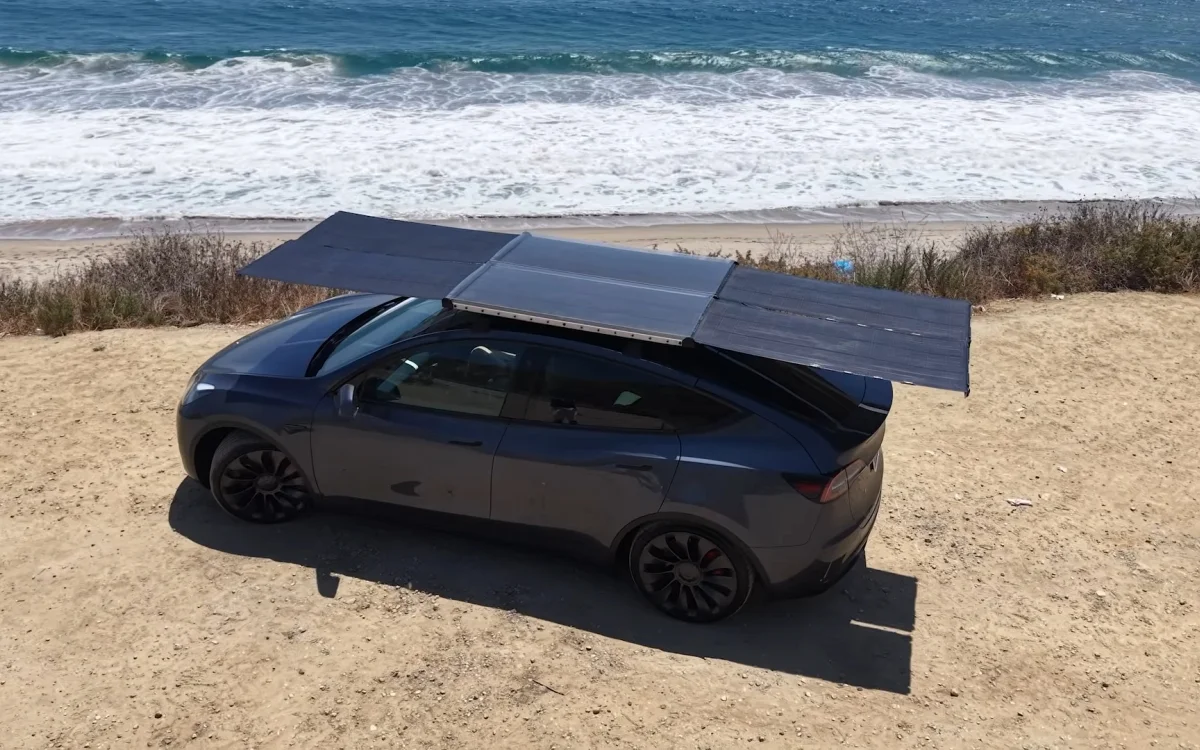

A California company has unveiled the world’s first solar roof system that could be the beginning of the end of time consuming recharging sessions for EV owners.
Dart Solar has released a video on YouTube detailing the new product, showcasing it on top of a Tesla.
The company says this roof-mounted device can keep your EV replenished with energy while on the move.
That means you may not have to stop at a charger ever again, which could save you both time and a lot of money.
What is the Dart Solar?
“You can open or close it in about 10 seconds,” the company said of its new product.
The Dart Solar is a vehicle-mounted system that extends to around 15ft long but can collapse to be just five feet long.
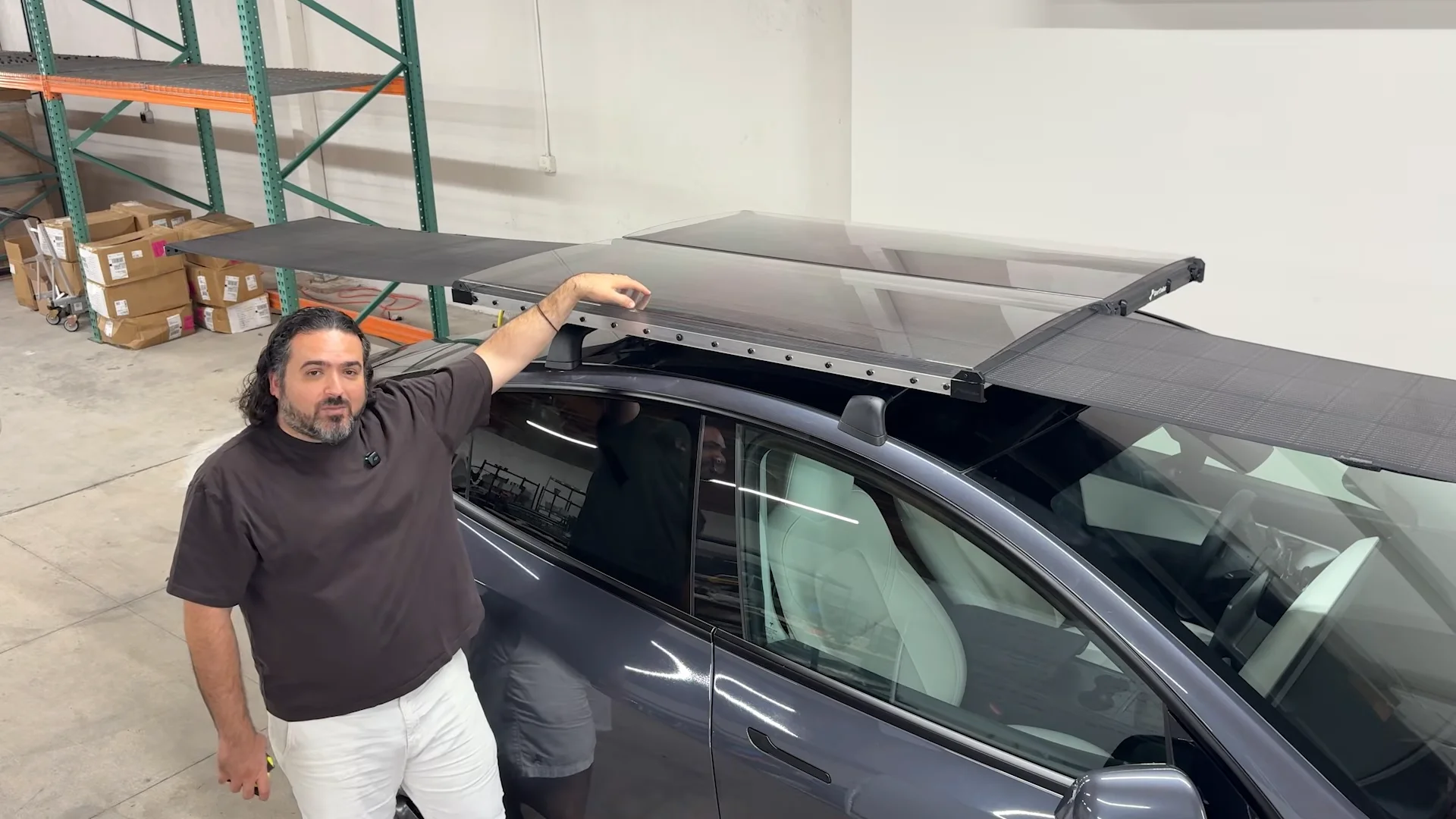
“It connects to any vehicle roof rack system, electric or not,” the company said.
The modular units that comprise the system can connect to each other like Lego.
Depending on the size of the roof, they can charge from 500 to 2,000 watts.
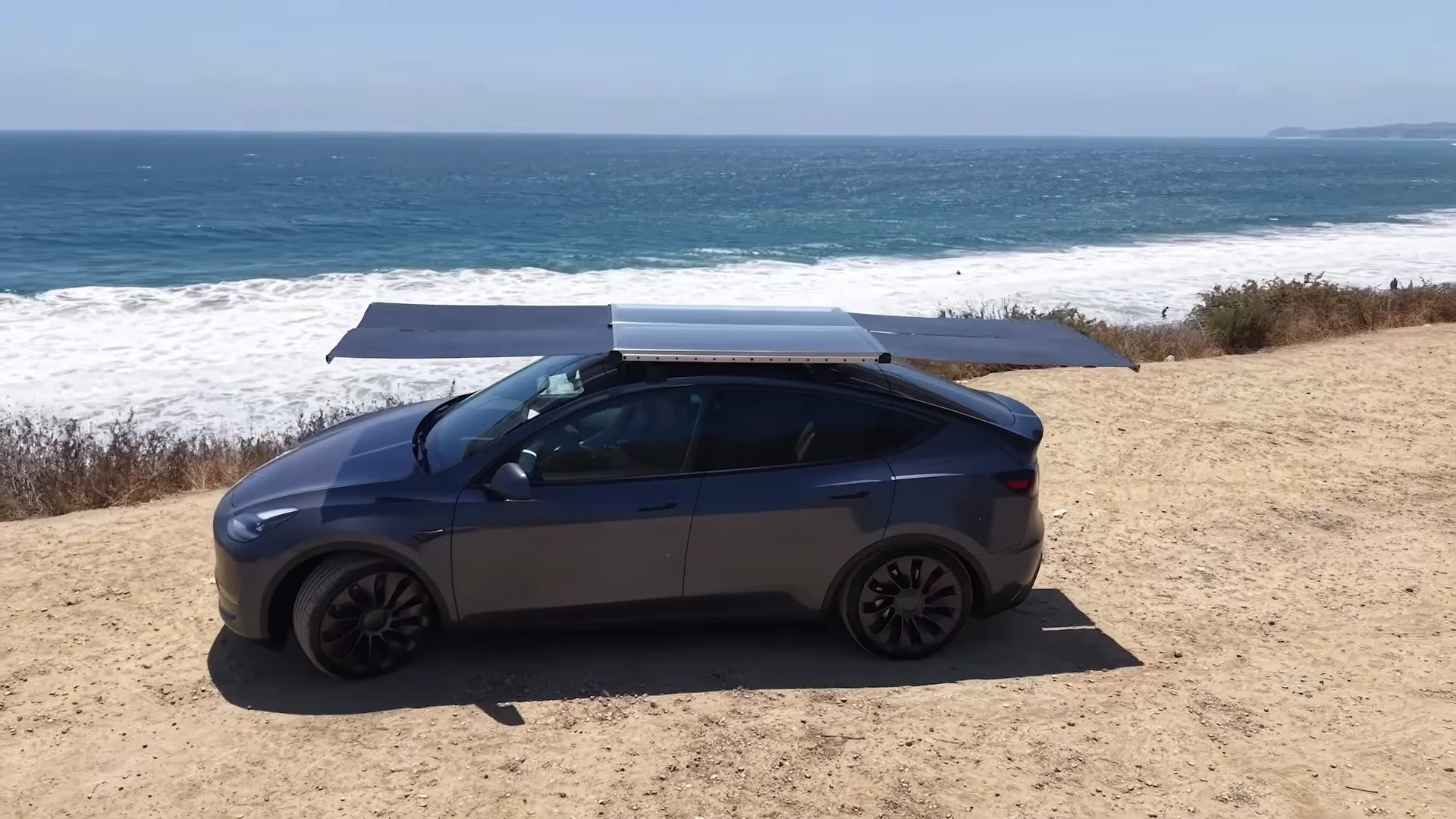
It might look slightly surreal, but the purpose is very simple.
The idea is to stop people from needing to recharge their car at a charging station.
Simply unfold the panels, and you can stay on the move while the car recharges itself.
How does the power from the solar roof transfer to the car?
The power that is generated from the solar panels transfers into a combiner.
This lives on the T-slots of the system, and these continuously feed a separate portable power station.
The normal charger from the car plugs into this, and this is what feeds the car with its continuous stream of power.
Think of it like having a portable charger plugged into your phone.
In terms of the range, a 500W module could produce 2,000-2,500 watt-hours per day, equating to around 20 miles of range.

That could be enough to get you back home, without needing to stop off for a recharge.
The idea is certainly an interesting one, as it could save that little bit of time on longer journeys.
As the technology progresses, who knows how much energy it could eventually put back into your EV.
Henry joined the Supercar Blondie team in February 2025, and since then has covered a wide array of topics ranging from EVs, American barn finds, and the odd Cold War jet. He’s combined his passion for cars with his keen interest in motorsport and his side hustle as a volunteer steam locomotive fireman at a heritage steam railway.