Porsche built a brand new 911 car just so it could climb the world's highest volcano standing at over 22,000ft
Published on Sep 11, 2026 at 8:05 PM (UTC-4)
by Daisy Edwards
Last updated on Sep 11, 2026 at 8:05 PM (UTC-4)
Edited by
Tom Fenton


Porsche built a brand-new 911 car just so it could climb the world’s highest volcano, standing at over 22,000ft, and the resulting adventure was a literal movie plot.
The specially created Porsche 911, named Edith, was taken to Ojos del Salado in Chile, the highest volcano on Earth.
Driven by three-time Le Mans winner Romain Dumas, the car eventually reached 22,093 feet above sea level and set a new altitude world record for a vehicle.
Now, the extraordinary story behind the climb has been turned into a documentary called “Edith: Porsche’s Volcano Ascent.”
The Porsche 911 was built for a volcano
The idea was to find out just how far Porsche could push its famous supercar when the road disappeared entirely.
The project involved two specially modified 911s, nicknamed ‘Edith’ and ‘Doris’, and was led by endurance racer and adventurer Romain Dumas.
Instead of being designed for racetracks or highways, the cars were prepared for some of the planet’s most hostile terrain.
‘Edith’ was based on a 911 Carrera 4S, retaining its 3.0-liter twin-turbocharged flat-six engine, which produced 450 horsepower.

It also retained the seven-speed manual transmission, while the car was extensively adapted for the expedition with off-road modifications, including increased ground clearance, special wheels and tires, protective equipment and a lightweight construction.
The destination was Ojos del Salado, which rises more than 22,000 feet in the Chilean Andes and at those elevations, the air is only around half as dense as it is at sea level, while temperatures can plunge well below freezing.
That meant the car wasn’t the only thing being tested.

The team had to contend with freezing temperatures, loose volcanic rock, ice and extremely thin air, while Dumas himself faced the physical effects of operating at extreme altitude.
The first expedition in 2022 reached around 19,708 feet before snow and ice prevented the team from going farther, but that was only the beginning.

Related
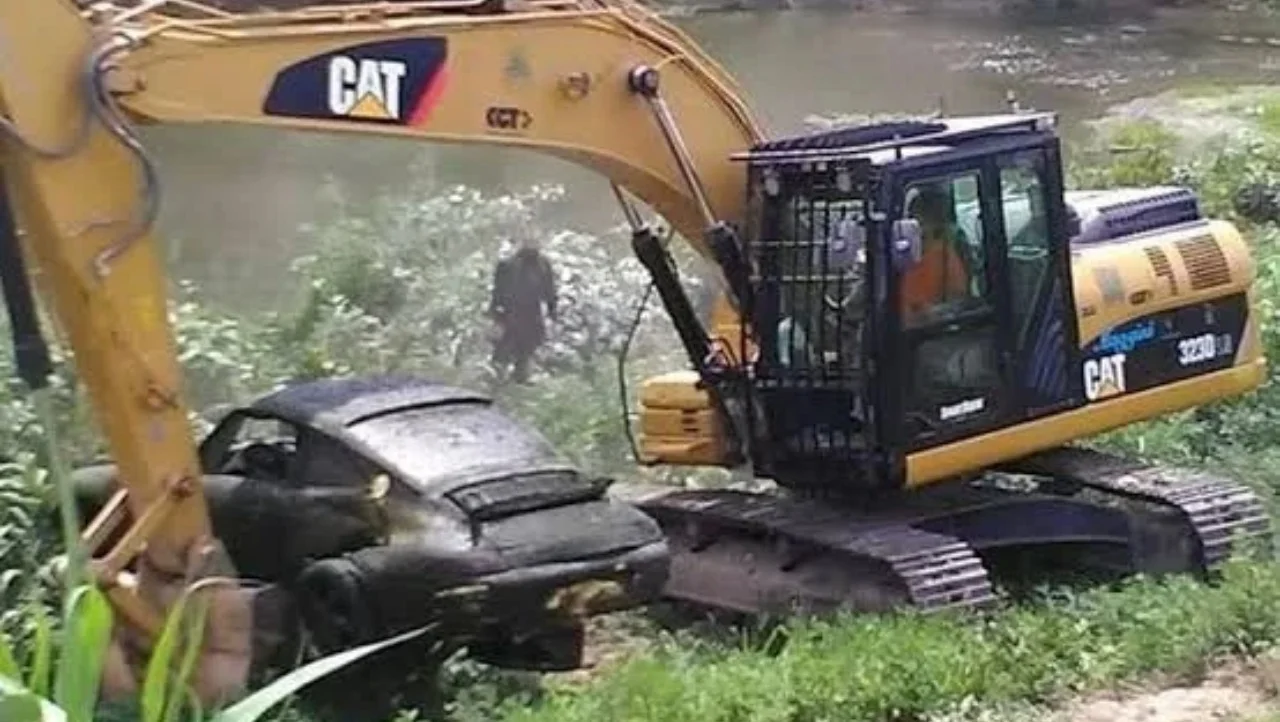

Edith climbed over 22,000ft to make history
After failed attempts and years of preparation, the team returned to Ojos del Salado in 2023 with the goal of going all the way.
On December 2, Dumas began the final push at around 3:30 a.m.
The conditions finally allowed the team to attempt the record, and Edith was driven across increasingly difficult terrain toward the volcano’s western summit.
Eventually, the Porsche reached 6,734 meters, or 22,093 feet, making it the highest-altitude vehicle ever driven on Earth at the time.

The previous record was 6,694 meters, meaning Edith had managed to push the benchmark even higher.
The final section was particularly brutal, with Dumas navigating a narrow frozen ridge before tackling a slope of around 45 degrees.
There was little room for error, and once he committed to the final section, turning around wasn’t really an option.

Edith’s achievement is now the subject of the 50-minute documentary Edith: Porsche’s Volcano Ascent, which chronicles more than four years of work, three attempts, and the physical and emotional challenges faced by the team.
The film eventually won Best Documentary Feature at the 2024 International Motor Film Awards.
It is perhaps one of the strangest things anyone has ever done with a Porsche 911 – taking a car famous for tearing around racetracks and transforming it into a machine capable of climbing one of the most inhospitable places on Earth.
Daisy is a technology and automotive journalist covering artificial intelligence, consumer tech, Apple news, cryptocurrency, emerging technologies, and transportation innovation. Since joining the team in 2025, she has reported on everything from AI-powered startups and major iOS updates to viral car stories and the latest developments shaping transportation and the digital economy. Drawing on her background in automotive journalism and a degree in History and Journalism from Goldsmiths, University of London, Daisy specializes in breaking down complex topics into clear, engaging reporting for a global audience. Her work spans cutting-edge technology, innovative vehicles, and the people driving change across both industries. Daisy has gained first-hand access to some of the world's most talked-about technologies and innovators, including meeting Tesla's Optimus humanoid robot during its first European appearance in London. She has also discussed the future of space exploration with an astronaut, bringing unique insights and real-world perspectives to her coverage of emerging technology.