A 2026 Chevrolet Blazer and a 1996 Chevrolet Blazer are put head-to-head in a crash test to show how much has dramatically changed in 30 years
Published on Jul 04, 2026 at 4:02 AM (UTC+4)
by Daisy Edwards
Last updated on Jul 04, 2026 at 4:02 AM (UTC+4)
Edited by
Ben Thompson
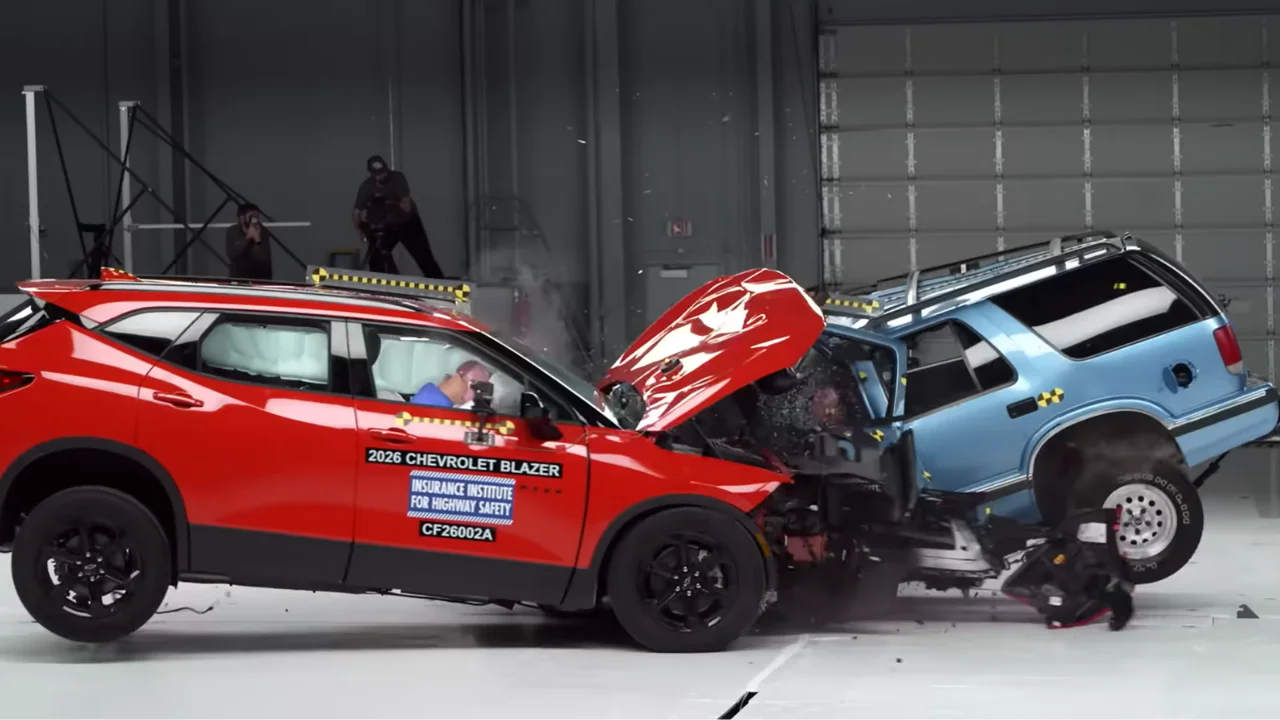

The Chevrolet Blazer has worn the same name for decades, but a dramatic new crash test shows just how different the SUV has become over the last 30 years.
If you’ve ever wondered just how far car safety has come over the last three decades, the latest crash test from the Insurance Institute for Highway Safety (IIHS) provides a dramatic answer.
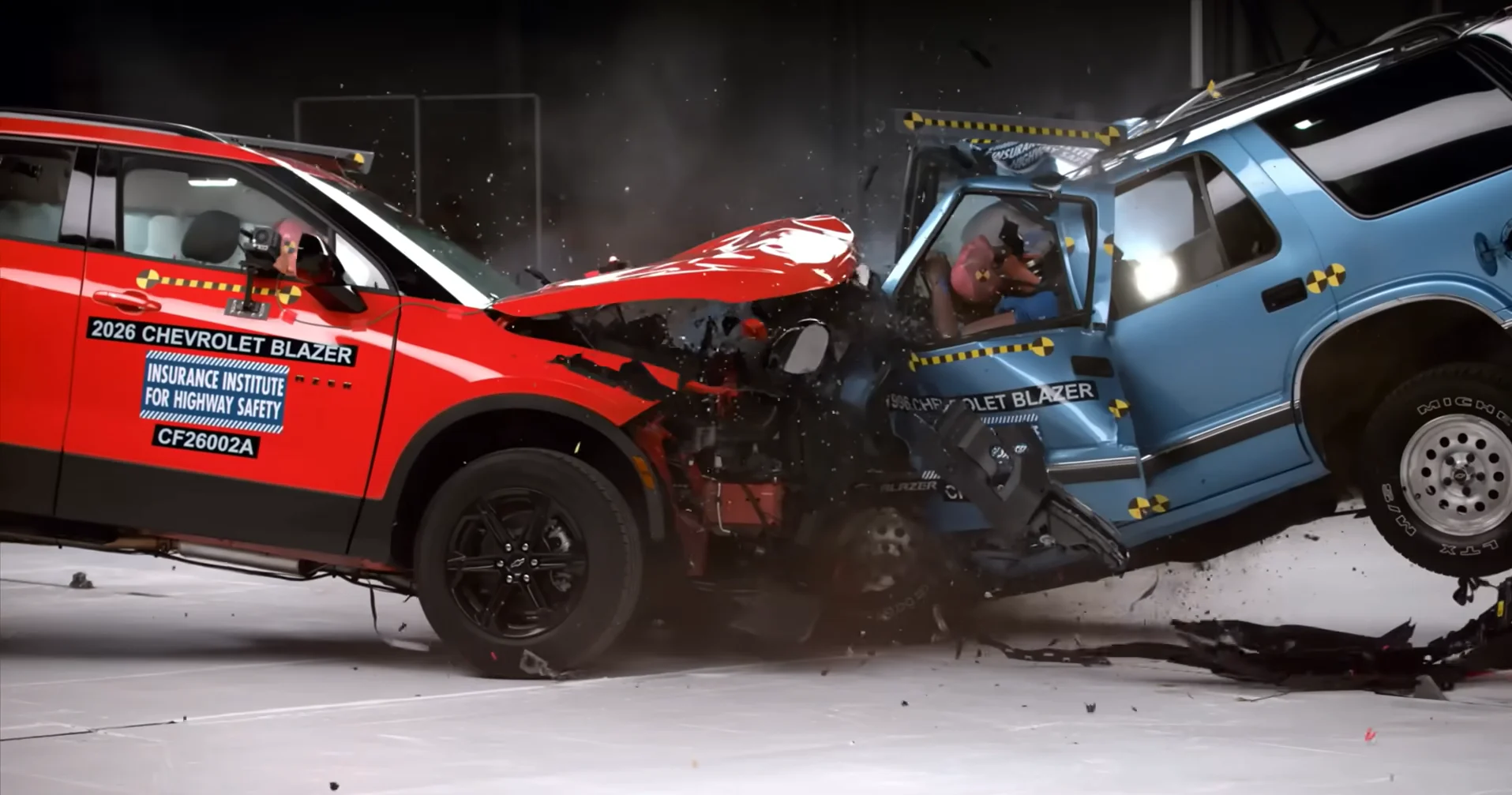
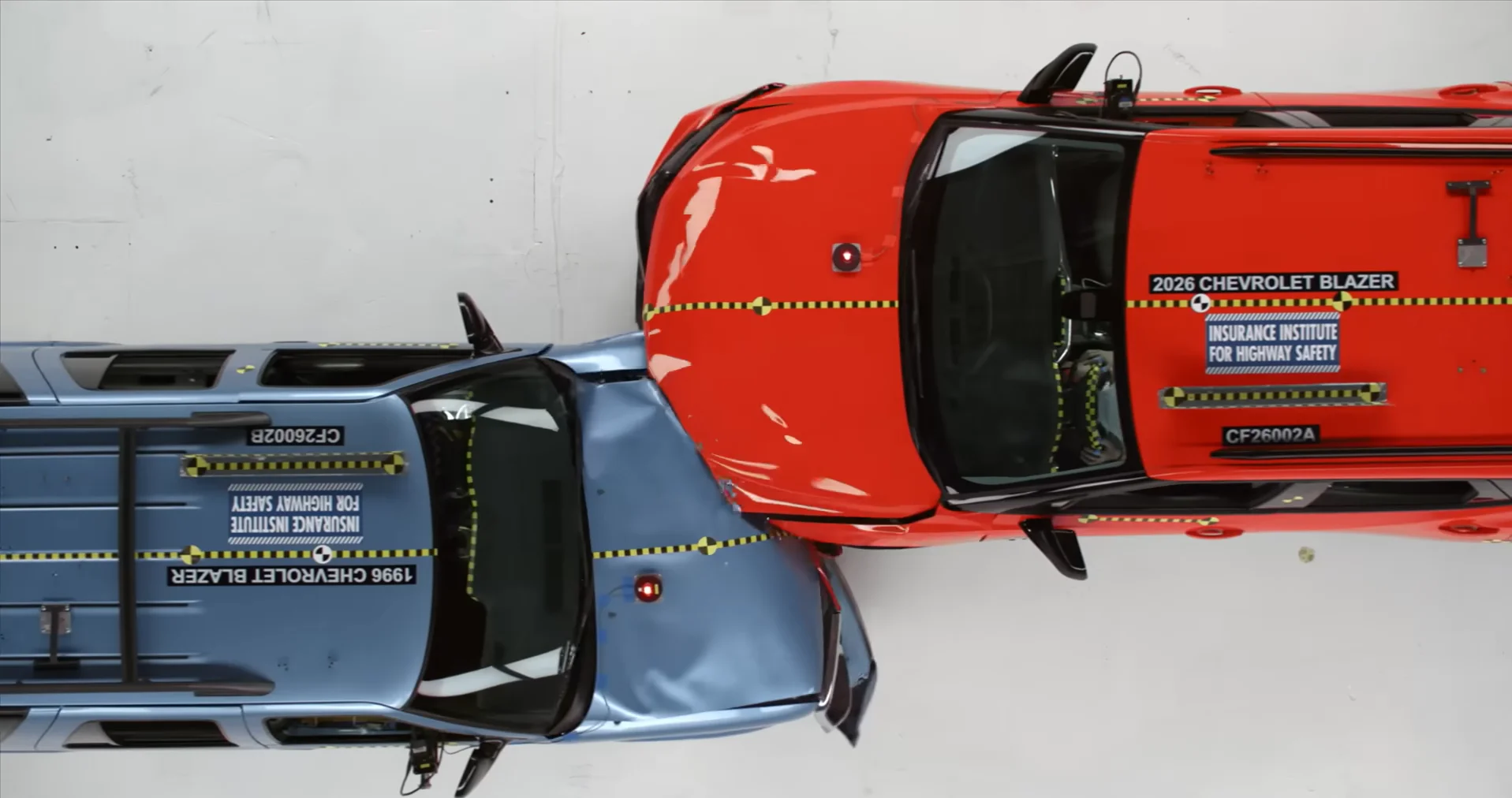
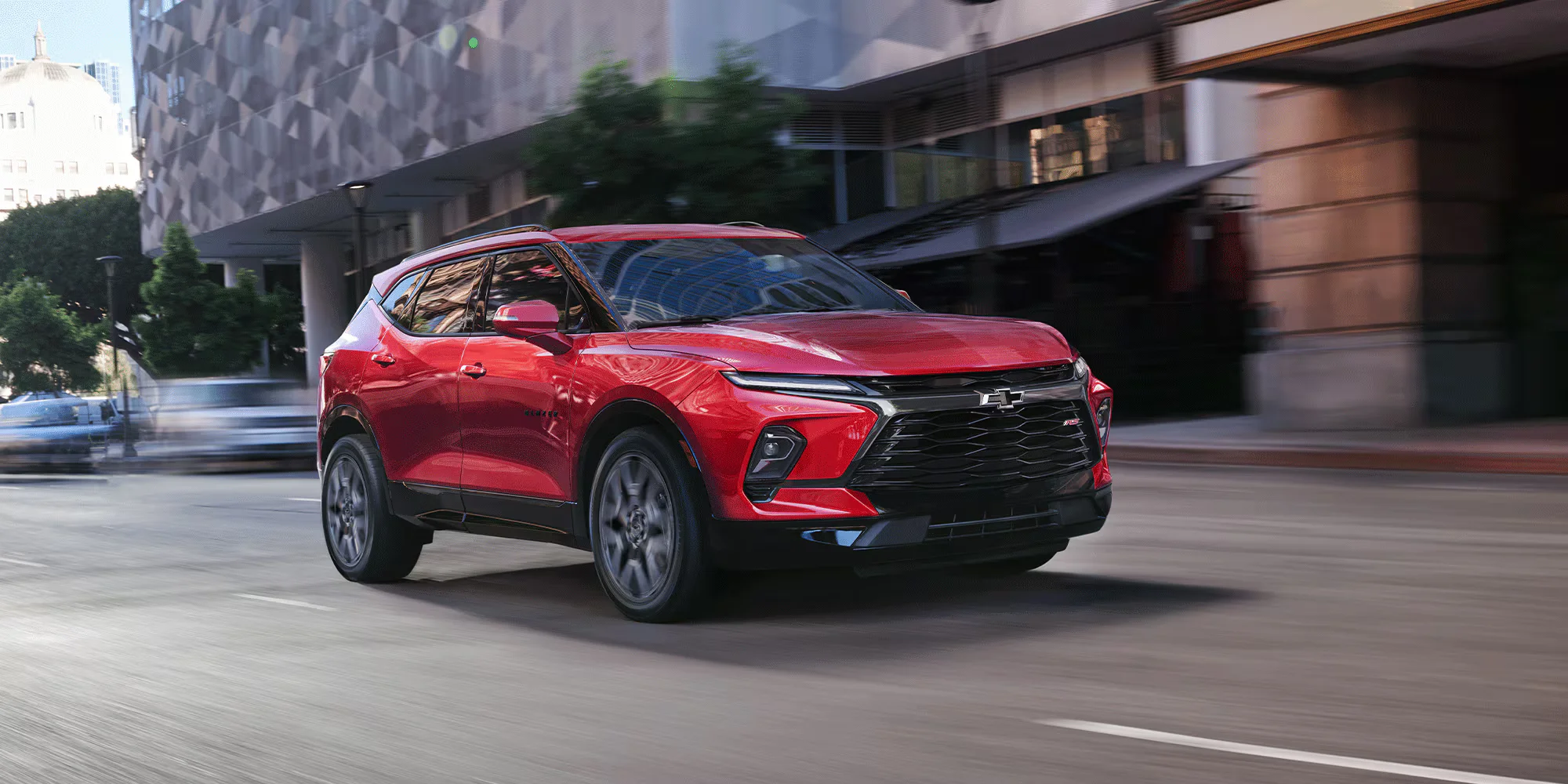
The organization put a brand new 2026 Chevrolet Blazer head-to-head with a 1996 Chevrolet Blazer in a controlled frontal crash.
While both SUVs share the same nameplate, the results showed they are worlds apart when it comes to protecting passengers.
The 2026 Chevrolet Blazer left the 1996 model looking seriously outdated
Sometimes you can’t stop looking away from a car crash, and the Insurance Institute for Highway Safety (IIHS)’s YouTube channel can scratch that itch.
For the test, the IIHS marked its 30th anniversary of its crash-testing programme by lining up a 2026 Chevrolet Blazer against a pristine 1996 Chevrolet Blazer in a moderate overlap frontal collision.
At first glance, many people might assume the older SUV would hold up well.
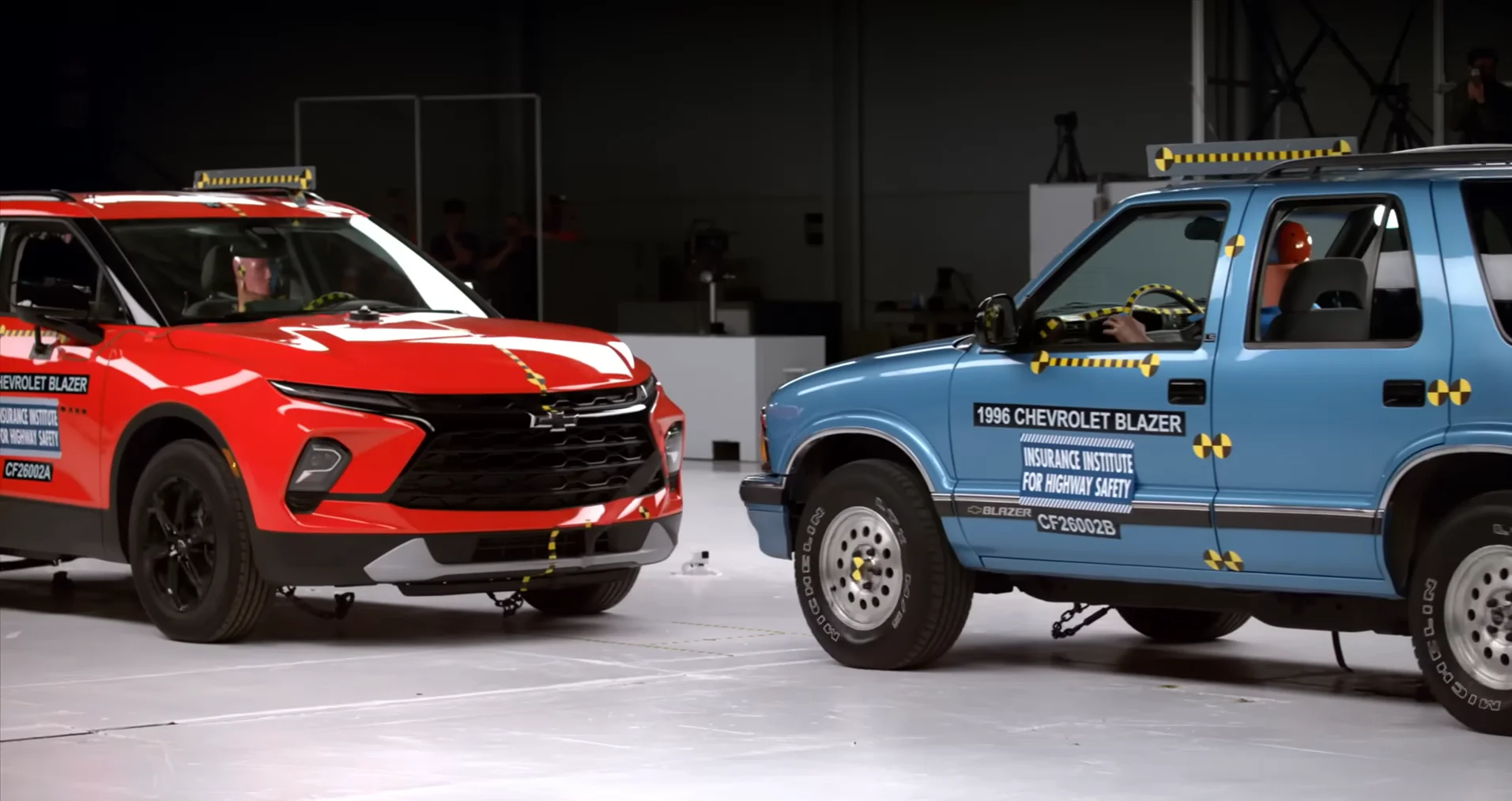
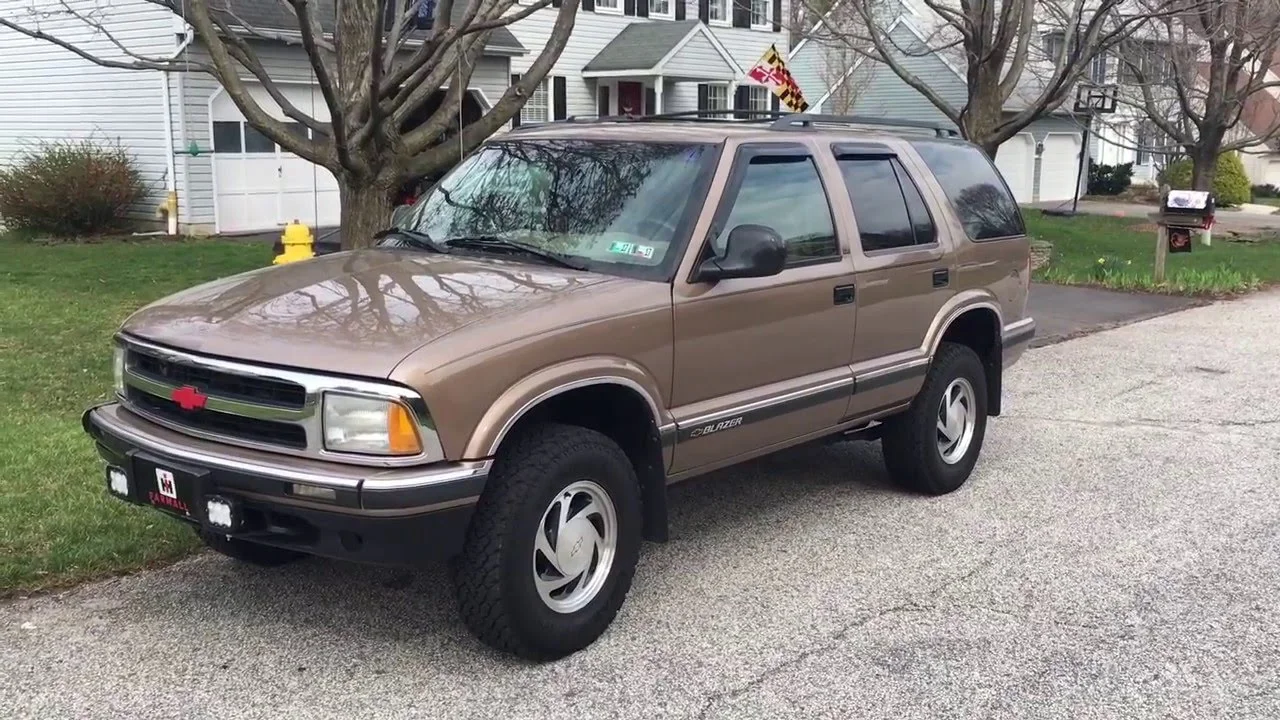
After all, the 1996 Blazer is built like a traditional body-on-frame SUV and looks substantially tougher than many modern cars.
But the crash told a very different story when the front end of the 1996 Blazer crumpled dramatically, with the driver’s compartment suffering severe intrusion.
The steering wheel and dashboard were pushed backwards toward the driver, leaving very little survival space inside the cabin.
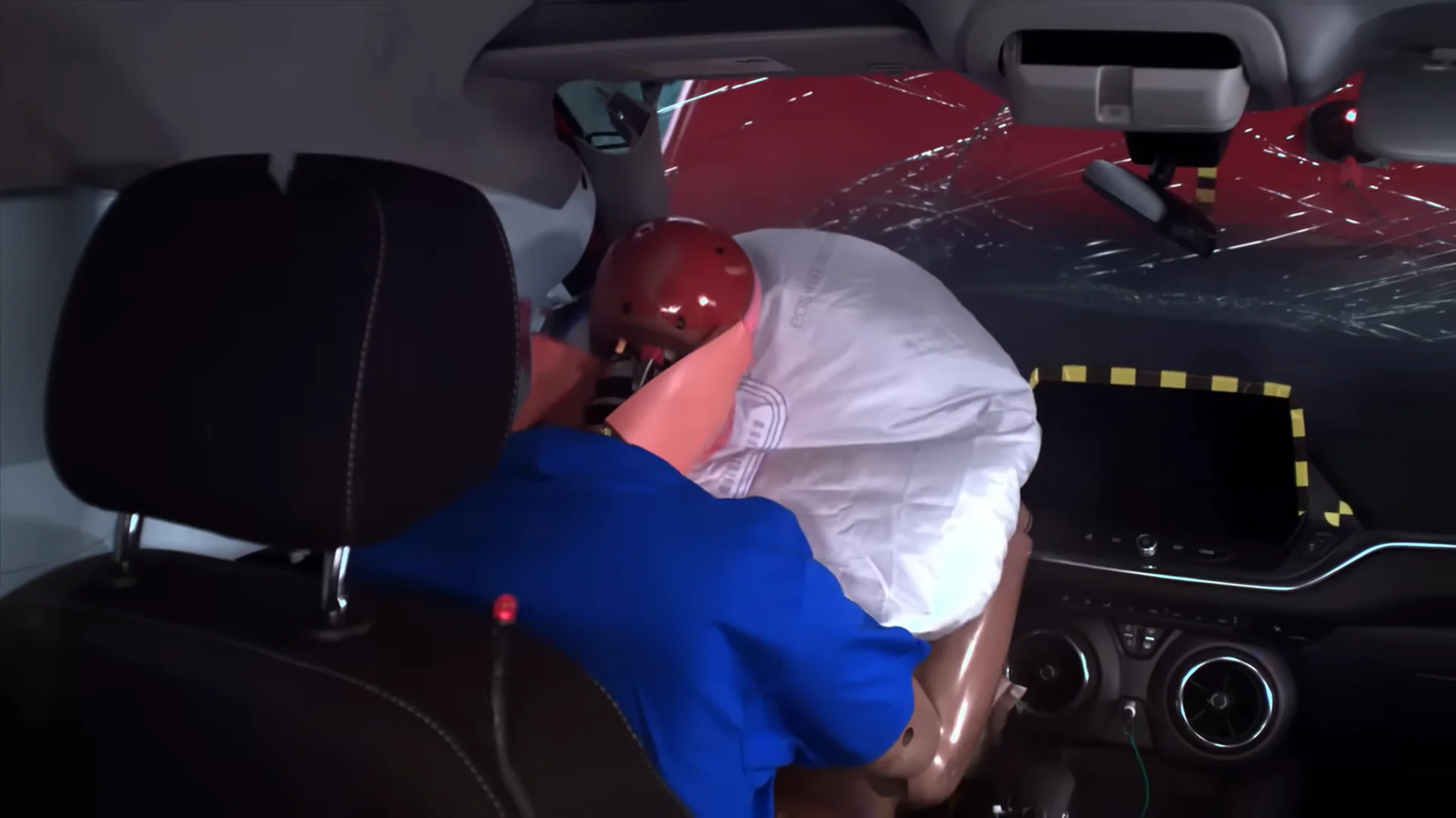
By comparison, the 2026 Blazer’s passenger compartment remained largely intact.
Its crumple zones absorbed much of the impact while directing crash forces away from occupants, allowing the cabin to maintain its shape.
The newer SUV also benefited from decades of advances in airbag technology, seatbelt pretensioners, and structural engineering that simply didn’t exist when the 1996 model was designed.
The comparison showed that while older vehicles may feel solid, modern crash engineering is far more effective at protecting people inside.
Viewers were shocked by how much vehicle safety has evolved
The dramatic footage quickly sparked discussion online, with many viewers surprised by just how large the gap in safety had become.
Some longtime Blazer fans admitted the results weren’t entirely unexpected.
“I grew up with the older Blazers, even then they were not known for being safe,” one commenter wrote.
Others found it difficult watching such a well-preserved example get destroyed.
“Hurt my soul to see that happen to such a mint ’96 Blazer” another viewer said.
The video also poked fun at one of the most common sayings among classic car enthusiasts.
“They don’t make ’em like they used to. Yes, and this is why!” another commenter replied.
The IIHS said the comparison highlights just how much vehicle safety has advanced over the last 30 years.

While older vehicles may have plenty of charm and nostalgia, modern SUVs are designed from the ground up to absorb crash energy while keeping occupants protected.
The side-by-side crash test serves as a powerful reminder that when it comes to crash protection, newer might not be as cool, but it is certainly safer.
Daisy is a technology and automotive journalist covering artificial intelligence, consumer tech, Apple news, cryptocurrency, emerging technologies, and transportation innovation. Since joining the team in 2025, she has reported on everything from AI-powered startups and major iOS updates to viral car stories and the latest developments shaping transportation and the digital economy. Drawing on her background in automotive journalism and a degree in History and Journalism from Goldsmiths, University of London, Daisy specializes in breaking down complex topics into clear, engaging reporting for a global audience. Her work spans cutting-edge technology, innovative vehicles, and the people driving change across both industries. Daisy has gained first-hand access to some of the world's most talked-about technologies and innovators, including meeting Tesla's Optimus humanoid robot during its first European appearance in London. She has also discussed the future of space exploration with an astronaut, bringing unique insights and real-world perspectives to her coverage of emerging technology.