Tesla-powered EV abandoned after Tesla and Mercedes refuse repair then Massachusetts man fixes it with a bottle cap
Published on Apr 11, 2026 at 2:49 AM (UTC+4)
by Callum Tokody
Last updated on Apr 09, 2026 at 6:21 PM (UTC+4)
Edited by
Emma Matthews
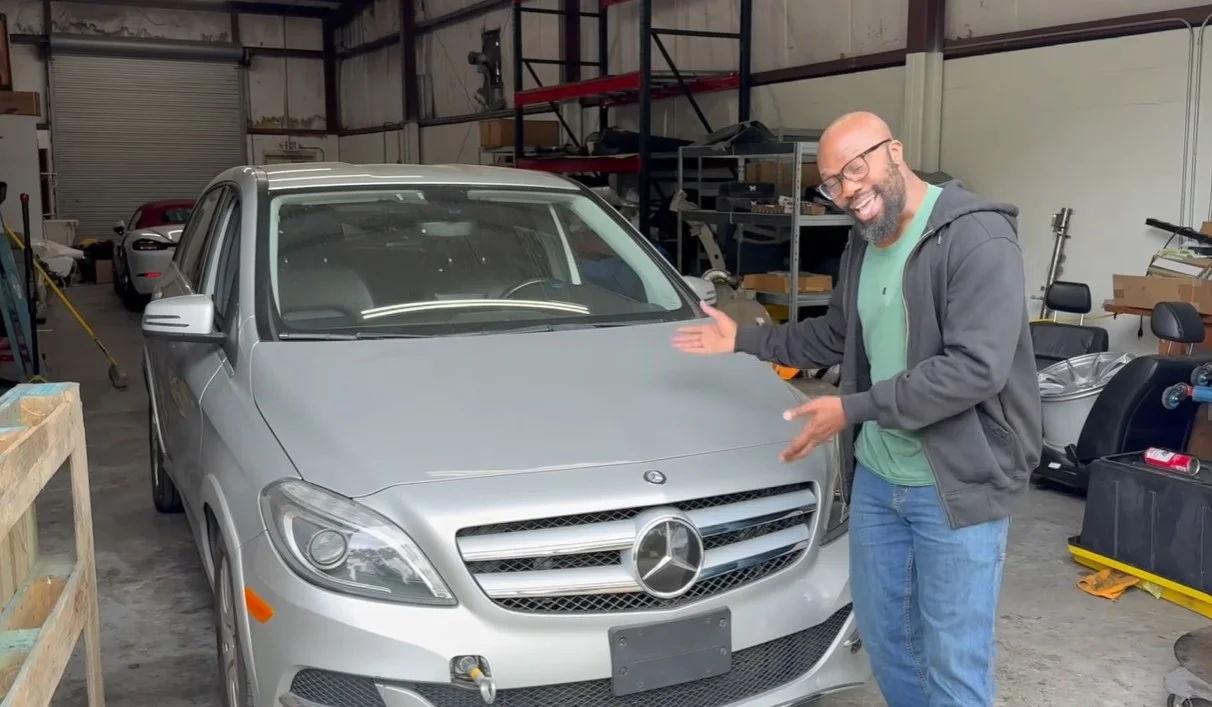

A rare EV featuring a high-performance Tesla motor sat abandoned in a snowbank after the owner received a $20,000 repair estimate for his dead electric car.
Mercedes-Benz technicians recommended a complete powertrain replacement rather than attempting to troubleshoot the specific high-voltage faults detected by the onboard sensors.
This B-Class became a non-runner when the manufacturer declined to perform component-level repairs on the aging drive unit.
An independent teardown eventually revealed a surprising mechanical failure that shifted the entire direction of the recovery mission.
Inside the gutted EV powertrain
Restoring communication with the vehicle was the first priority for the recovery team.
After jumping the 12-volt battery, the diagnostic system returned 21 distinct error codes related to the drivetrain and various isolation sensors.
It looked as though water had leaked into the DC-to-DC converter, causing the electronic shutdown.
That component manages the car’s power flow and is susceptible to moisture damage when the vehicle is stored in harsh outdoor conditions.
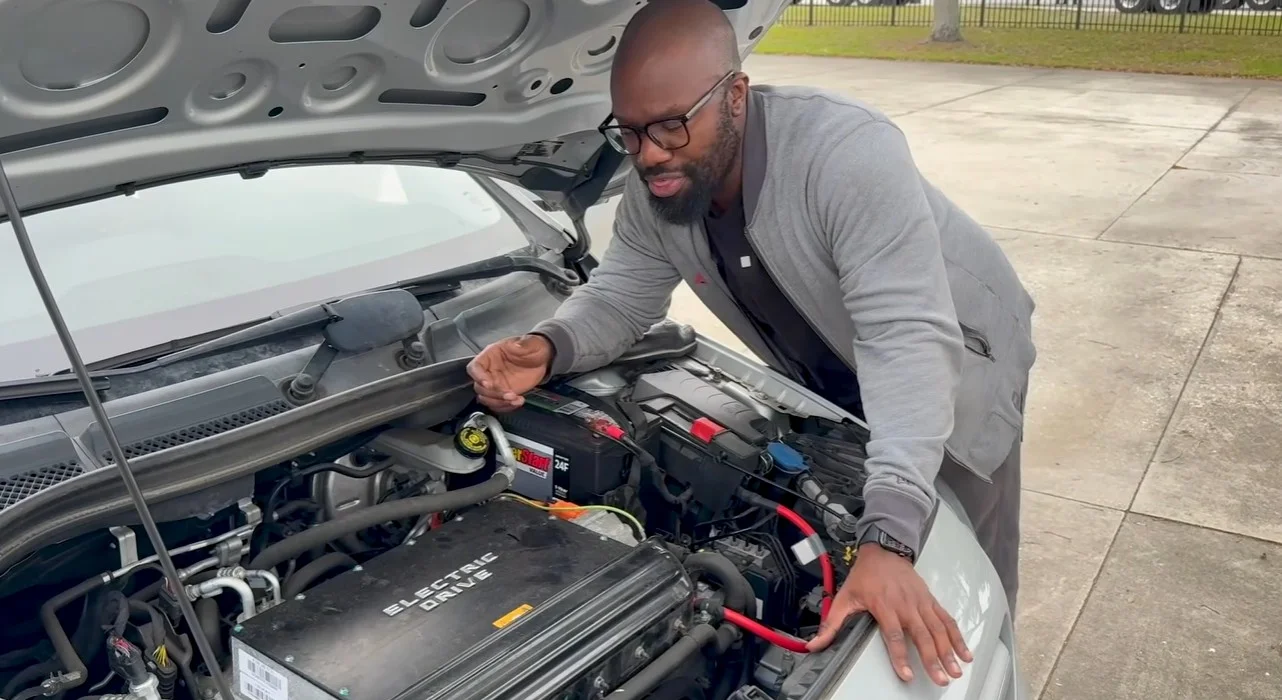
The resulting safety lockout is a documented issue that frequently leads to total assembly replacements in a dealership setting.
Giving the internal circuit boards a clean and replacing the fuses allowed the EV to power up, but the drive system remained disabled.
Further inspection showed that an internal seal was leaking coolant directly into the encoder area of the Tesla motor. This specific leak is a known vulnerability in early Tesla-sourced drive units.
But because the cooling shaft was inaccessible without removing the entire subframe, the technician opted for a more direct method to stop the fluid from reaching the electronics.
The bottle cap fix that saved this electric car
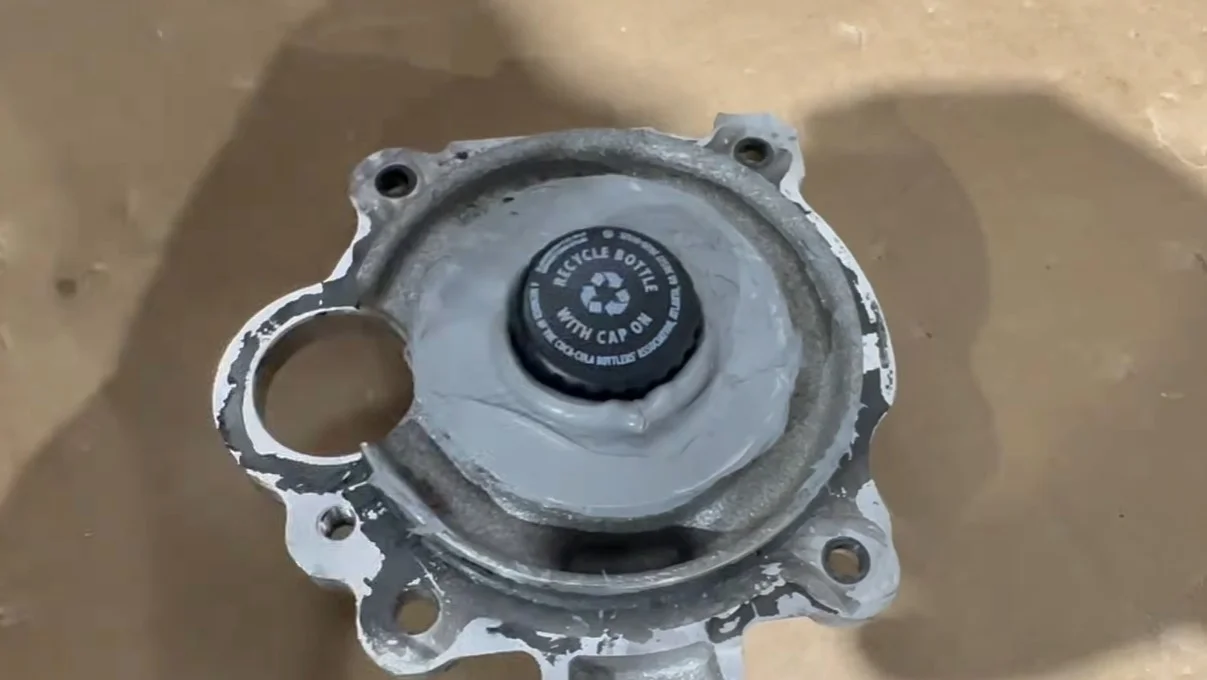
The final repair involved a ‘coolant delete,’ performed by cutting the internal feed tube and sealing the bypass with a plastic bottle cap and RTV silicone.
This modification prevents pressurized coolant from entering the motor electronics and triggering the isolation alarm.
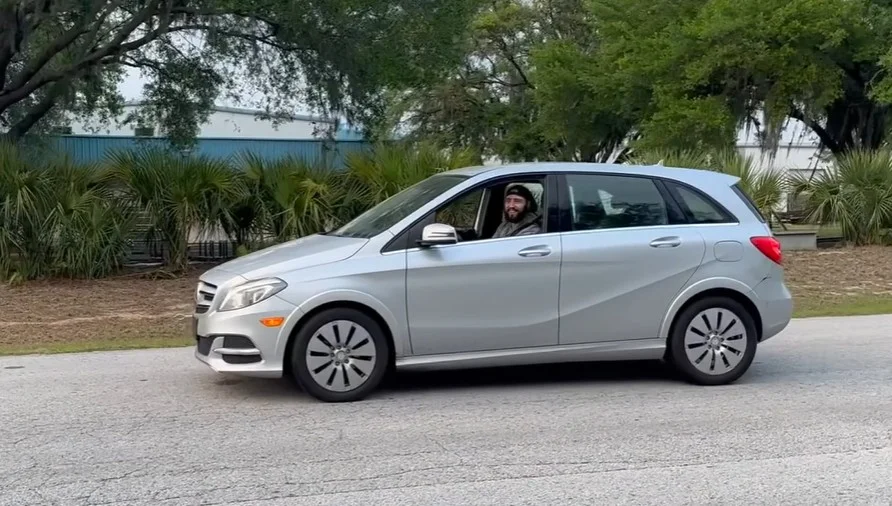
While this is not a factory-approved Mercedes-Benz service procedure, the electric car regained full power and passed several high-load performance tests.
The vehicle now operates at its original output levels. All thanks to a bottle cap.
Ryenne Brewer, a specialist at Girardo & Co, notes that this type of ingenuity reflects a shift in the secondary market.
As electric vehicles become the dominant choice, a new generation of technicians is learning to troubleshoot high-voltage systems with the same level of resourcefulness once reserved for internal combustion engines.
Independent repair options are becoming more important as the first generation of modern EV models exits the warranty period.
Without third-party specialists to troubleshoot individual parts, many functional vehicles face being scrapped due to high dealership service costs.
This electric car is back on the road and performs with the same acceleration as a standard performance model.
Even advanced high-voltage machines are subject to mechanical failures that can sometimes be resolved with localized repairs and practical engineering.
This specific Mercedes is no longer a static display, proving that even a $20,000 estimate can sometimes be bypassed with a bit of DIY grit.
DISCOVER SBX CARS: The global premium car auction platform powered by Supercar Blondie