Boeing's pilots rely on an old-school relic in commercial planes
Published on Jun 04, 2025 at 10:06 PM (UTC-4)
by Daisy Edwards
Last updated on Jun 04, 2025 at 10:06 PM (UTC-4)
Edited by
Emma Matthews
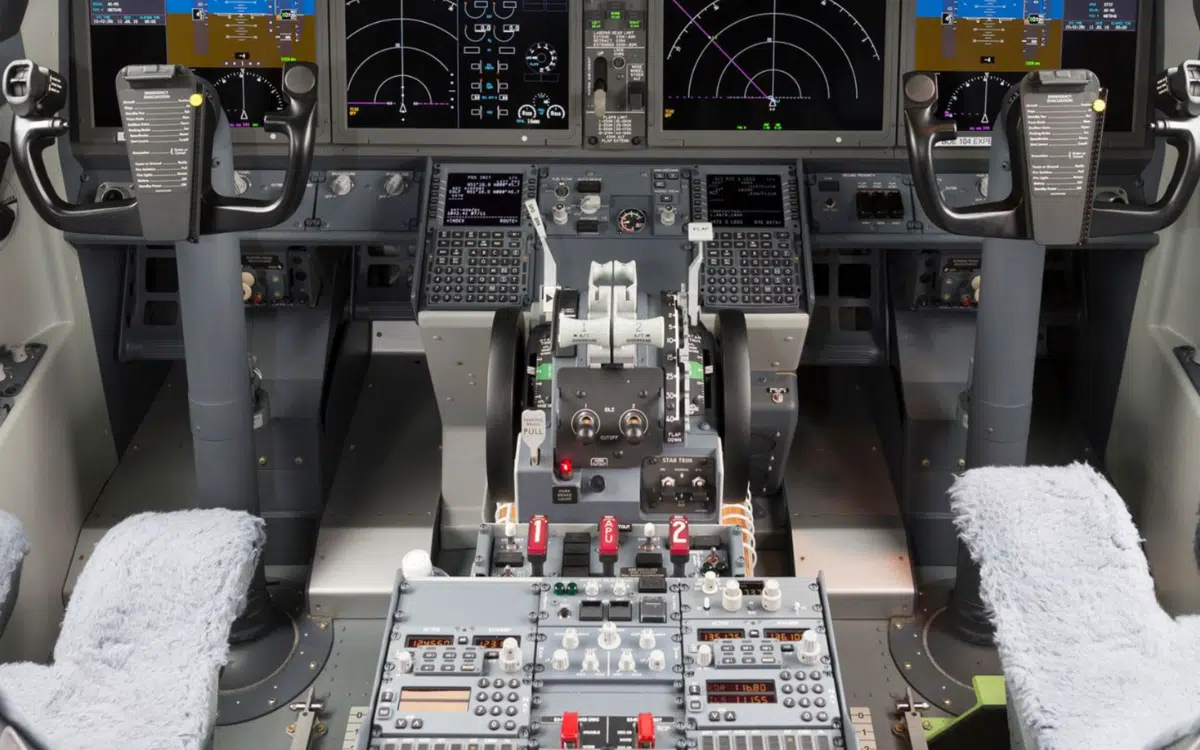

If you rode in a Boeing cockpit at any point before the 1960s and then at some point after, things would look oddly similar, because Boeing’s pilot-first approach relies on an old instrument in commercial planes.
In an equivalent Airbus, the instruments you would find in the cockpit are now very different from the ones you’d have seen pre-1960s.
There are a few reasons that Boeing has stuck with what it knows, and one is very noble – making sure that the pilots know how to control the tech.
Sticking with a relic of an instrument isn’t because Boeing didn’t get the memo, it’s actually so much more than that.
EXPLORE SBX CARS – Supercar auctions starting soon powered by Supercar Blondie
Believe it or not, the aviation world and the auto world have a lot of things in common.
For instance, much like the classic Tesla, all Boeing cockpits still have a yoke in them. And it’s an old-school relic of piloting history.
Airbus, though, has since moved on and in the 1960s introduced a side stick. This fly-by-wire system declutters the cockpit and lets a computer handle all the little details of flying.
However, Boeing stayed old-school by using a big, bulky yoke. But it’s not sticking to what it knows because Boeing is scared of change; it is, in fact, it’s about safety.
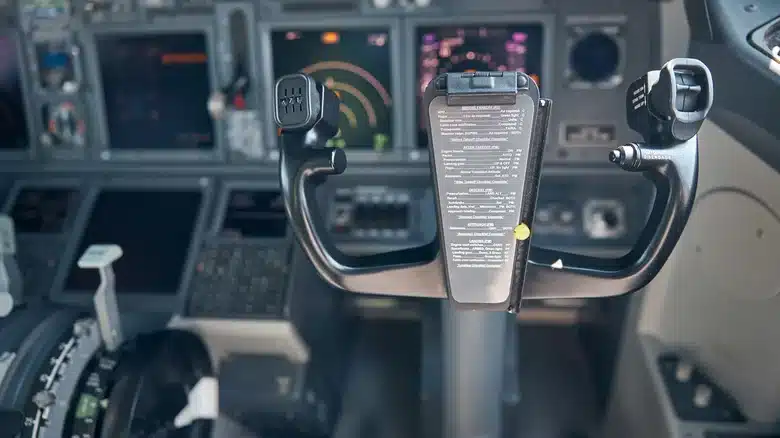
Yokes are heavy and involve a lot more active engagement from both the pilot and the co-pilot – they both have one – so they can see visually what the other one is doing.
It makes it harder for the pilot and co-pilot to cancel each other’s actions out, because the yoke’s movements are dependent on the other’s actions. So it fosters much better teamwork than an Airbus stick shift.
Also, with a yoke, movements are far more deliberate because they’re heavy to move, which means that the pilots have to be paying attention at all times.
In an emergency, stick shifts are off to the side, making it harder for the pilots to see each other’s moves. But with yokes, it’s a lot easier for the two to work together to deal with emergencies safely.
While Boeing relies on a relic instrument, it also seems to be operating under the age-old adage that if it ain’t broke, don’t fix it.
Related


Daisy is a technology and automotive journalist covering artificial intelligence, consumer tech, Apple news, cryptocurrency, emerging technologies, and transportation innovation. Since joining the team in 2025, she has reported on everything from AI-powered startups and major iOS updates to viral car stories and the latest developments shaping transportation and the digital economy. Drawing on her background in automotive journalism and a degree in History and Journalism from Goldsmiths, University of London, Daisy specializes in breaking down complex topics into clear, engaging reporting for a global audience. Her work spans cutting-edge technology, innovative vehicles, and the people driving change across both industries. Daisy has gained first-hand access to some of the world's most talked-about technologies and innovators, including meeting Tesla's Optimus humanoid robot during its first European appearance in London. She has also discussed the future of space exploration with an astronaut, bringing unique insights and real-world perspectives to her coverage of emerging technology.