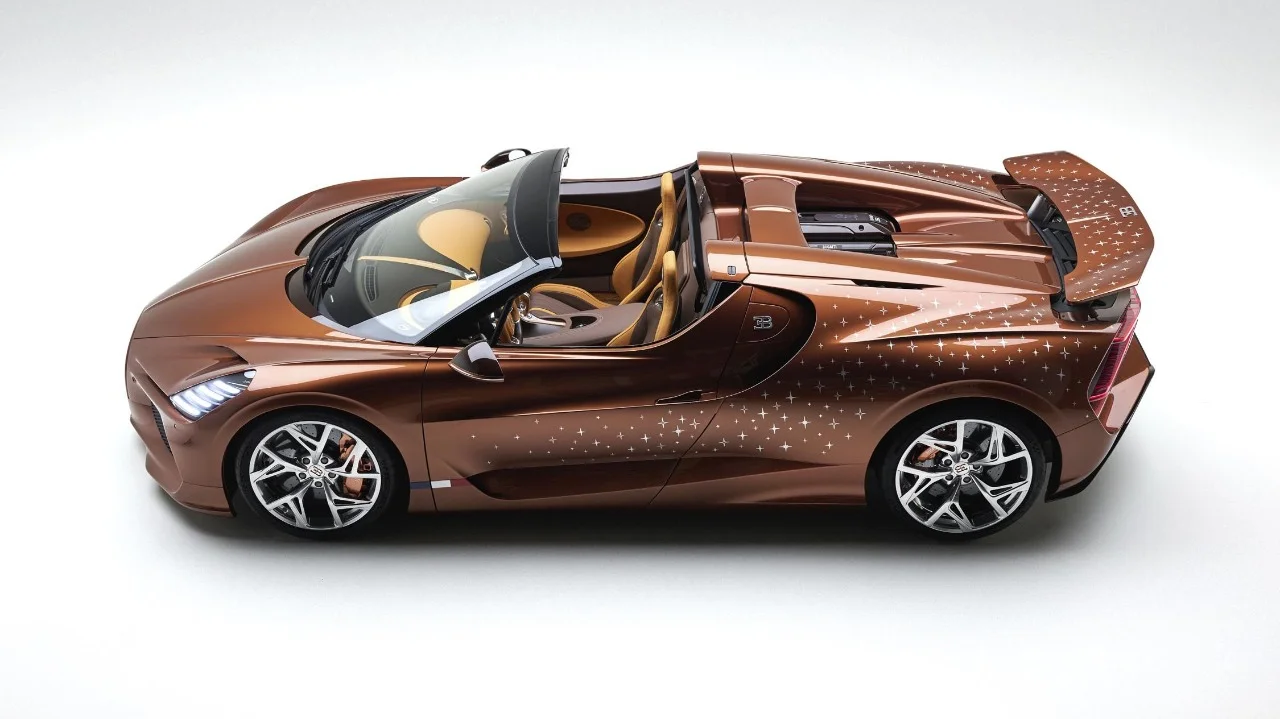
Mate Rimac shows the underside of his Bugatti Tourbillon and the little known design that helps it hit 277mph
Published on Jun 22, 2026 at 4:05 AM (UTC-4)
by Alessandro Renesis
Last updated on Jun 22, 2026 at 9:10 AM (UTC-4)
Edited by
Mason Jones


Mate Rimac is a car guy, the CEO of Bugatti-Rimac, and he’s also – first and foremost – an engineer who helped design the Bugatti Tourbillon.
And you can tell.
His excitement while driving his cars is matched only by his enthusiasm when explaining the engineering behind them.
And in his latest video, he talked about a very tiny detail that makes a huge difference in the Tourbillon.
The Bugatti Tourbillon is one of the fastest cars ever designed
The Bugatti Tourbillon has an electronically limited top speed of 380 km/h (236 mph), which increases to 445 km/h (277 mph) when the specialized ‘Speed Key’ is inserted.
The definition of a ‘production’ car is notoriously loose, which is why other brands like Koenigsegg and even BYD’s YangWang have all claimed speed records at various points.
But, either way, 277 mph is nothing to sneeze at.
And it also means that every tiny detail must be carefully thought through and built.
Including the latest engineering masterpiece envisioned by Mate Rimac.

Related


Even the bolts are aerodynamically efficient
In a video he recently posted to his Instagram account, Bugatti-Rimac CEO Mate Rimac showcased the underside of a Bugatti Tourbillon, and there’s a detail that stands out.
The underside consists of a thick panel – or undertray, if you like – of carbon fiber that features integrated ducts to channel air directly to the engine components.
So far, so obvious.
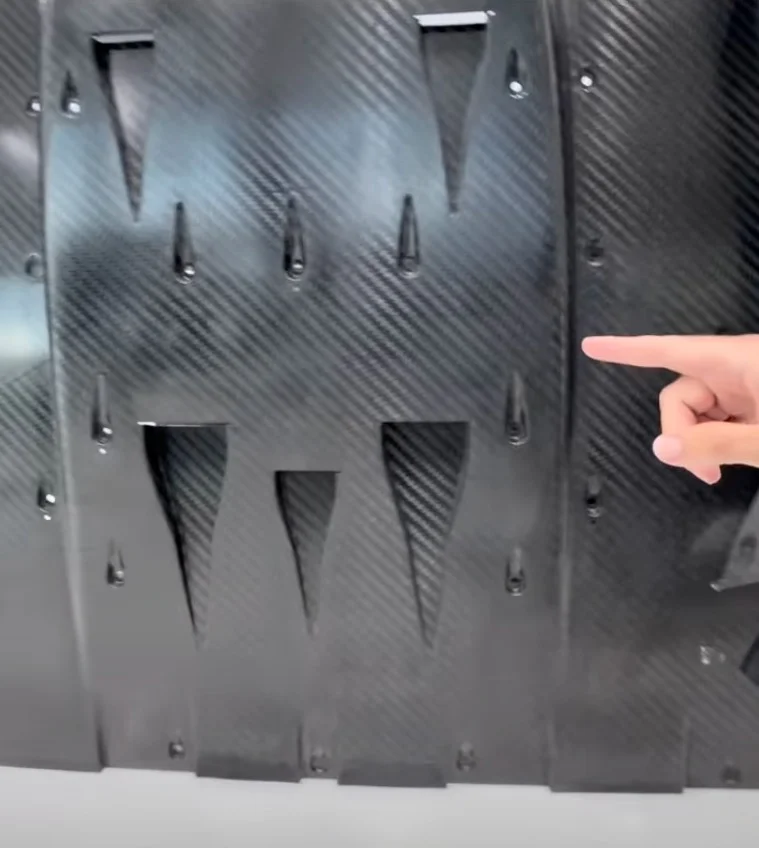
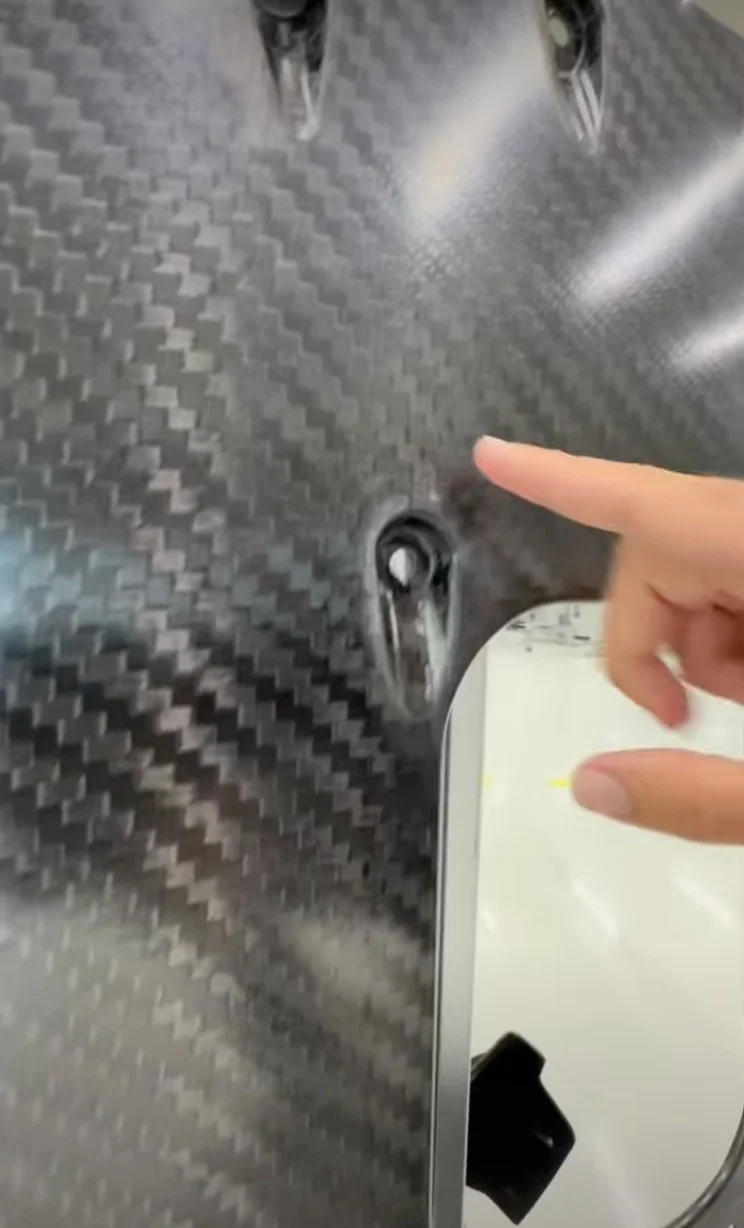
But then there are even smaller mini-ducts, and those are the bolt casings.
Amazingly, they had to think of that as well.
It sounds like such a tiny detail but aerodynamic resistance – much like gravity and energy, for example – isn’t a ‘cruel and unpredictable’ mistress.
It is a very reliable and predictable mistress.
Translated: You make a tiny mistake, and it’ll cost you fuel and top-end speed.
Without these minute adjustments, the Tourbillon would still nail its 2.0-second sprint to 62 mph, but increased drag would severely choke its top-end acceleration and leave it unable to reach its unrestricted 277-mph top speed.
How these small details can make a huge difference
We asked Simone Bianconi, a mechanical engineer from Italy, to tell us a bit more about these little custom-built ducts, and the first thing he confirmed was that these are relatively rare.
“Several cars have similar ducts, but automakers generally don’t make custom ducts for the bolts as well,” he told Supercar Blondie.
“Another thing that comes to mind is [they wanted to] give the screws an aerodynamic look,” he added.
“If you use a ‘normal’ screw and the head sticks out, the projection of the head in the direction of the flow is a rectangle, which is the worst possible aerodynamic shape,” Bianconi revealed.
“If you countersink it into the undertray with a simple cylindrical hole, this can cause pressure drops due to the pressure differential between the air under the undertray and the air inside the cylindrical hole.
“They probably studied the shape to minimize pressure drops or even to achieve something specific.”
It’s proof that at such high speeds, the smallest details can often make the biggest difference.
Alessandro is an automotive journalist with 10 years of experience covering supercars, automotive history, emerging vehicle technology, and luxury transportation. He wrote the first article published on SupercarBlondie.com when the website launched in 2022 and has since built a reputation for insightful reporting across the automotive and transportation industries. His expertise is grounded in hands-on experience. Alessandro has driven every Tesla model ever produced, from the original Roadster to the Cybertruck, and regularly covers the latest developments in electric vehicles and automotive innovation. His passion for transportation extends beyond cars, he has even flown a Boeing 787 Dreamliner simulator in Addis Ababa, Ethiopia. His reporting spans everything from classic American muscle cars and rare automotive discoveries to luxury yachts, private aircraft, high-end watches, and cutting-edge vehicle technology. Known for his deep knowledge of automotive history and ability to uncover the stories behind iconic vehicles, Alessandro brings readers a blend of historical context, technical expertise, and first-hand experience.