Chrysler once built an American supercar so good it gave Europe a run for its money
- 2004 saw the birth of what could have been America’s greatest supercar
- The Chrysler ME Four-Twelve had the potential to be a hypercar
- It was never mass-produced for one, frankly disappointing, reason
Published on May 05, 2025 at 3:05 AM (UTC-4)
by Daisy Edwards
Last updated on May 05, 2025 at 3:05 AM (UTC-4)
Edited by
Tom Wood
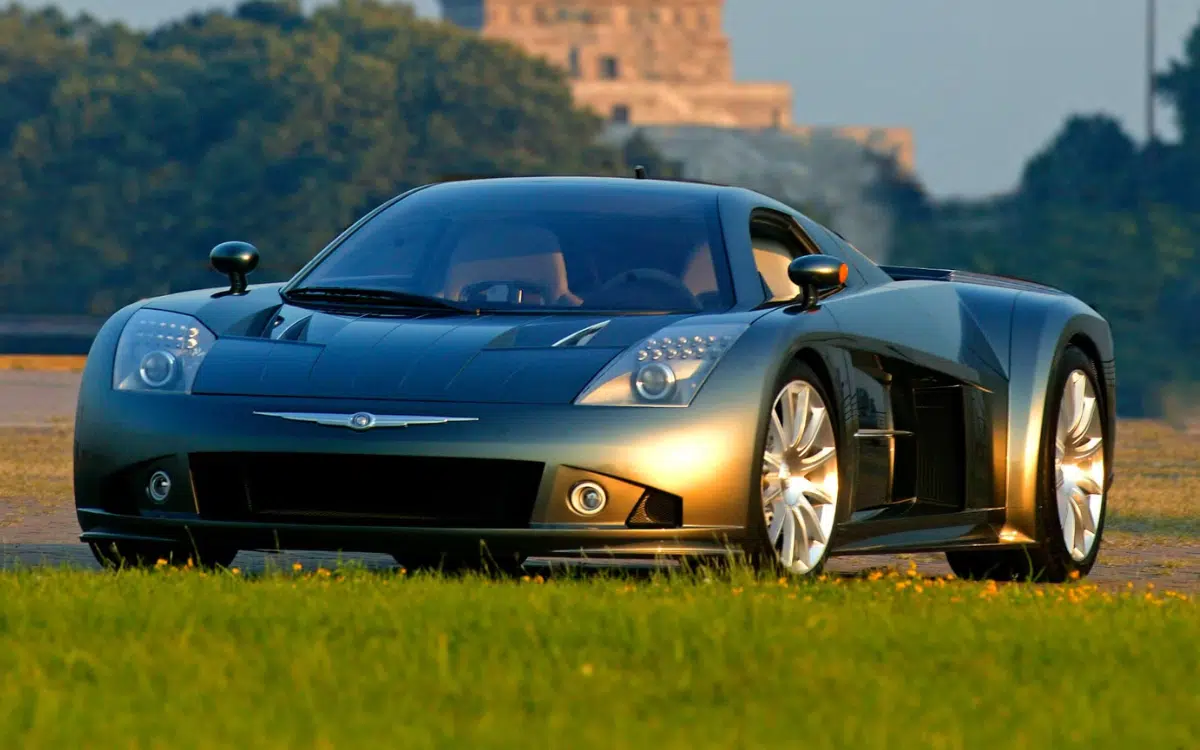

Did you know that Chrysler once built an American supercar that was so good it gave Europe a run for its money, although it was never sold commercially?
American automakers constantly strive to recreate the magic of a classic European supercar brand, such as Ferraris, Bugattis, or even newcomers like Koenigsegg.
Chrysler created the ME Four-Twelve, a beast that almost became the greatest American supercar, almost bordering on hypercar stats, but for some reason it didn’t take off in the way people thought it should.
It was an unfortunate case of inter-office politics that killed off the Chrysler ME Four-Twelve before it could prove itself as the great American supercar, and we are very disappointed that it never got its chance to shine.
EXPLORE SBX CARS – Supercar auctions starting soon powered by Supercar Blondie
Chrysler tried to give Europe a run for its money
It is a truth universally acknowledged that an American supercar brand in possession of a good fortune must be in want of a European-style supercar, and in the 2000s, Chrysler fulfilled this destiny.
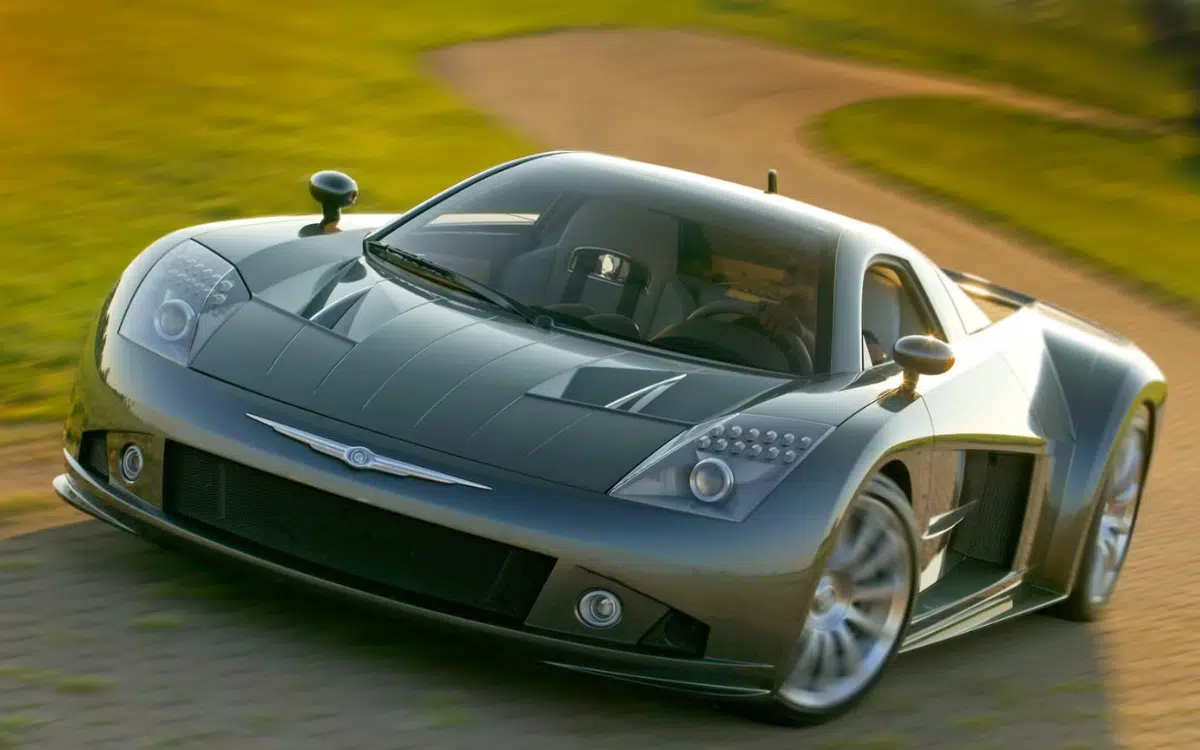
During it’s 2000s DaimlerChrysler era, Chrysler designed and debuted its brand new supercar at the International Auto Show in 2004.
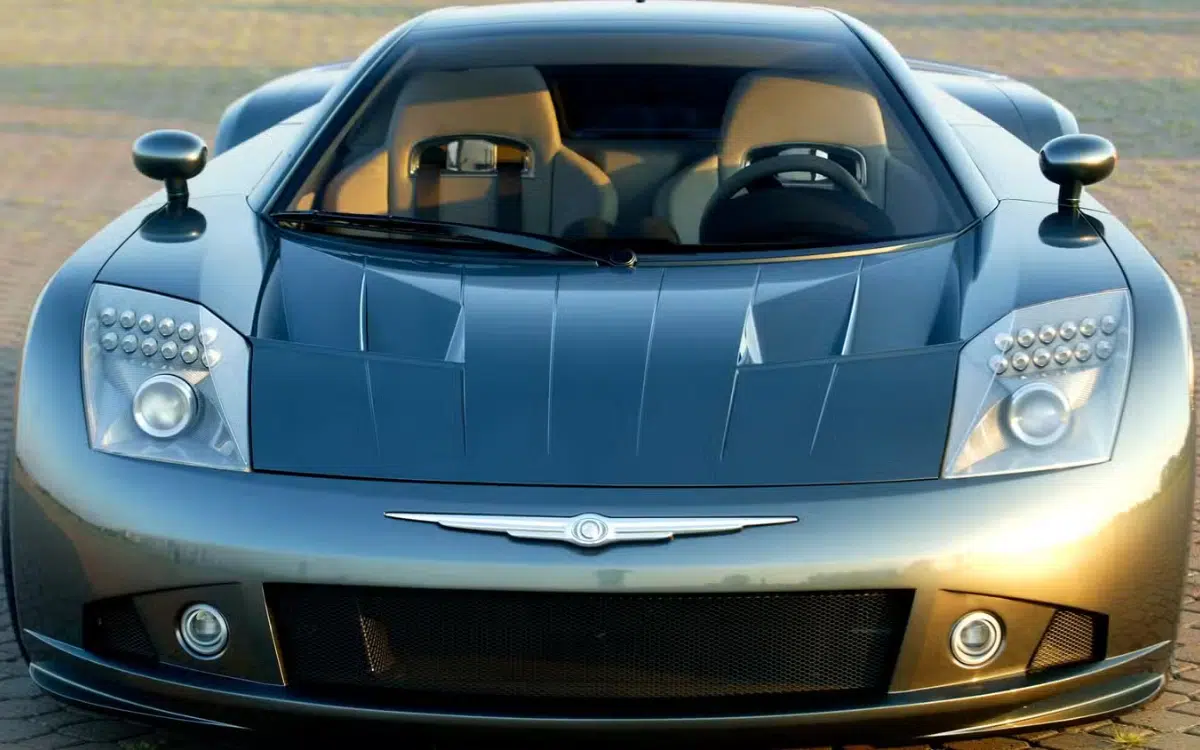
The Chrysler ME Four-Twelve was a beast of a supercar, that gave all the classic European automakers a run for their money, but a Ferrari this was not.
Powered by a quad-turbo V12 engine, Chrysler claimed its new supercar could produce 850 horsepower and fly from 0-60 in just 2.9 seconds at a top speed of 248 mph, inching into hypercar territory.
A mostly American supercar
While the Chrysler ME Four-Twelve was designed by one of the most All-American brands out there, it couldn’t be described as fully American designed.
During the DaimlerChrysler era, Mercedes-Benz and Chrysler were owned by the same company, and the way that the ME Four-Twelve had captured the hearts of the people worried the people at Mercedes-Benz.
At the same time, Mercedes-Benz had produced the Mercedes-Benz SLR McLaren and saw the ME Four-Twelve as a threat from inside the company.
It wasn’t just a concept car that was killed.
The ME Four-Twelve was practically ready to go into production, but was far more expensive to make than the Mercedes-Benz SLR McLaren, so Chrysler decided to kill it before it even had a chance to prove itself.
We can’t believe that what could have been America’s greatest supercar was killed by inter-office politics – you would’ve thought it would have gone out in a more rock and roll way.
Sigh.
Daisy is a technology and automotive journalist covering artificial intelligence, consumer tech, Apple news, cryptocurrency, emerging technologies, and transportation innovation. Since joining the team in 2025, she has reported on everything from AI-powered startups and major iOS updates to viral car stories and the latest developments shaping transportation and the digital economy. Drawing on her background in automotive journalism and a degree in History and Journalism from Goldsmiths, University of London, Daisy specializes in breaking down complex topics into clear, engaging reporting for a global audience. Her work spans cutting-edge technology, innovative vehicles, and the people driving change across both industries. Daisy has gained first-hand access to some of the world's most talked-about technologies and innovators, including meeting Tesla's Optimus humanoid robot during its first European appearance in London. She has also discussed the future of space exploration with an astronaut, bringing unique insights and real-world perspectives to her coverage of emerging technology.