Delta Air Lines employees raised $30M in just three months to buy the company an entire Boeing 767 when it was in financial trouble
Published on Nov 12, 2026 at 11:01 PM (UTC-5)
by Daisy Edwards
Last updated on Nov 12, 2026 at 11:01 PM (UTC-5)
Edited by
Mason Jones
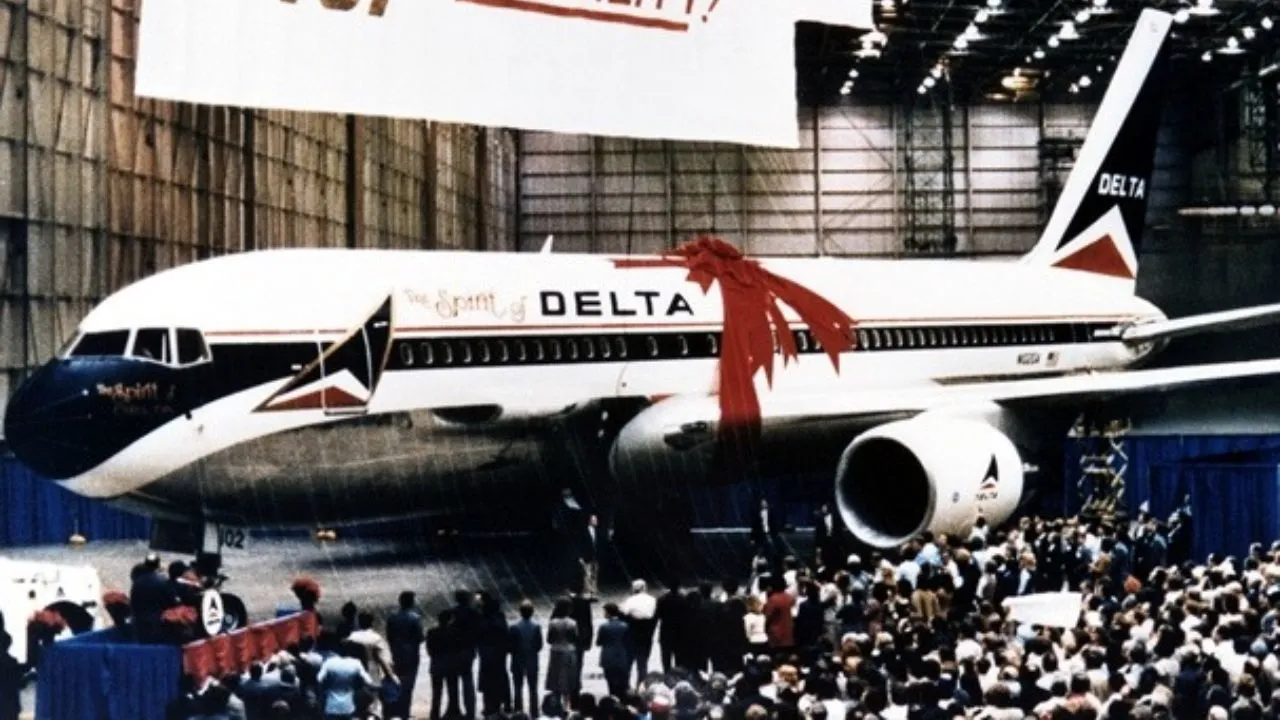

In 1982, Delta Air Lines was facing one of the most difficult periods in its history, but its employees came up with an extraordinary way to show their support.
Rather than simply watching their employer struggle, thousands of workers decided to raise enough money to purchase the company an entire passenger aircraft.
Their efforts resulted in a $30 million Boeing 767, which would become one of the most unusual aircraft in the airline’s history.
The remarkable gesture also became a lasting symbol of the relationship between the airline and the people who helped keep it flying.
Delta employees decided to buy their struggling employer an entire passenger plane
The crazy airplane story began in the spring of 1982, when the airline industry was dealing with a combination of rising fuel prices, economic uncertainty, and the effects of deregulation.

According to the Delta Flight Museum, Delta Air Lines had just recorded its first net loss after 35 consecutive profitable years.
Despite the financial difficulties, the airline had continued to support its workforce, including avoiding widespread layoffs.
That prompted three flight attendants – Diane Carvelli, Virginia ‘Ginny’ Oxford and Jean Owens – to come up with an unusual idea.
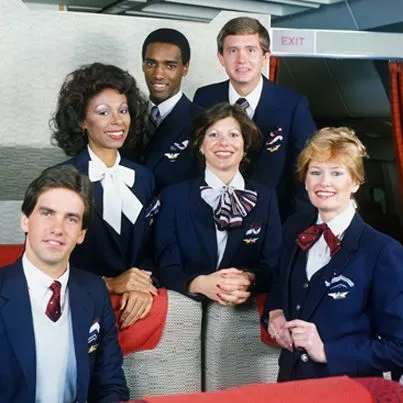
They launched Project 767, a voluntary fundraising campaign designed to purchase the company’s first Boeing 767 as a gift.
The initiative brought together current employees, retired workers and friends of the airline, with contributions helping fund the aircraft.
According to the airline, the campaign raised an extraordinary $30 million in just three months.
The idea even attracted attention from TIME magazine, which reported on the fundraising effort in October 1982.
The publication explained that employees were contributing through voluntary salary deductions, with flight attendant Jean Owens saying they wanted to thank the company for how it had treated its workforce.
It was an extraordinary gesture at a time when the wider aviation industry was struggling.
The aircraft arrived wrapped in an enormous red ribbon
On December 15, 1982, thousands of people gathered at Delta’s Technical Operations Center in Atlanta to witness the result of Project 767.
More than 7,000 employees, friends and members of the international media attended the presentation of the airline’s first Boeing 767.
The aircraft, registered N102DA, was christened The Spirit of Delta in recognition of the people who had helped purchase it.
It was even presented with an enormous red ribbon, making the occasion look more like the unveiling of a giant Christmas present than the arrival of a commercial passenger aircraft.
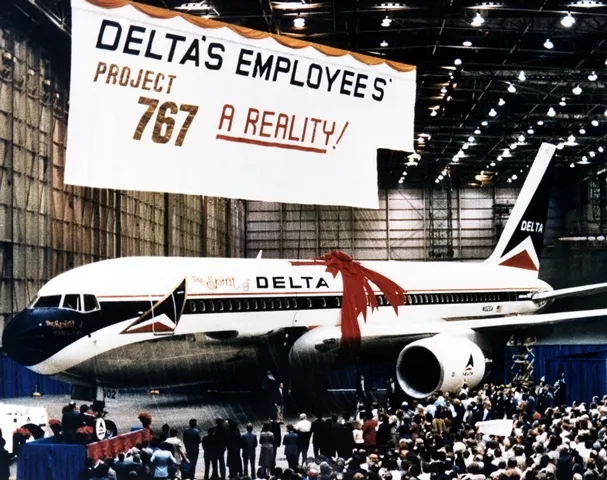
Former Delta Director of Corporate Communications Bill Berry later recalled the challenge of finding a ribbon large enough for the aircraft.
In a 2024 interview published by the Delta Flight Museum, Berry explained that the team had to enlist a specialist company to produce the enormous piece of red velvet.
The ribbon was reportedly around 12 feet wide, with a team of experts brought in to tie it around the aircraft.
Immediately after the dedication ceremony, The Spirit of Delta departed Atlanta on its inaugural passenger service to Tampa, Florida.
It was an extraordinary way to introduce an aircraft to the airline’s fleet.
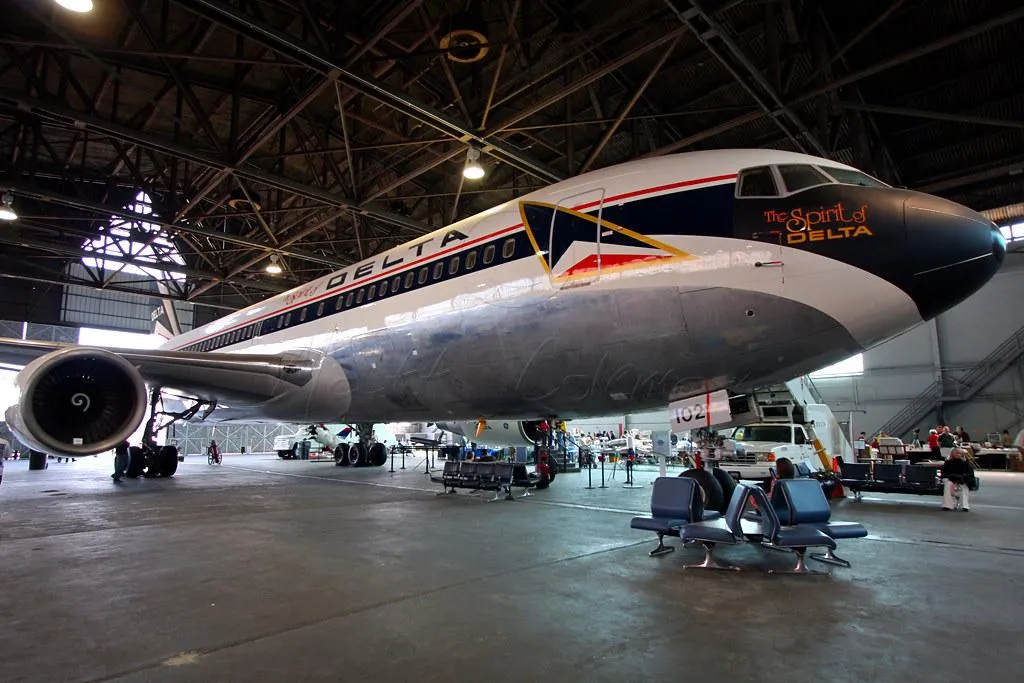
The Boeing 767 remained with Delta for more than 23 years
The aircraft went on to become a particularly memorable part of Delta’s fleet, serving the airline for more than 23 years.
During that time, it was given special liveries celebrating events including the 1996 Atlanta Olympic Games and Delta’s 75th anniversary in 2004.
However, its working life eventually came to an end.
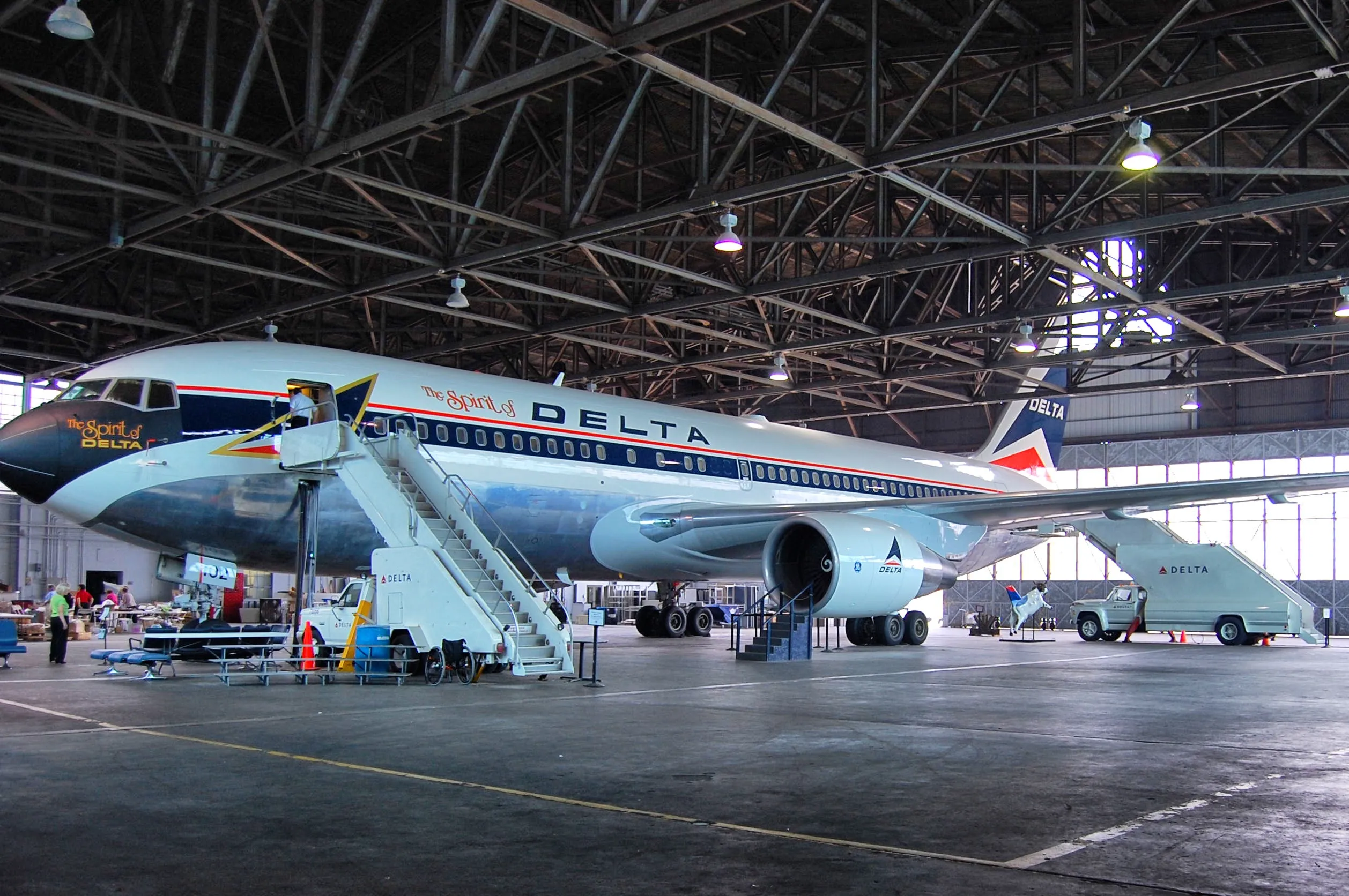
On February 12, 2006, The Spirit of Delta was officially retired after accumulating 70,697 flight hours and 34,389 flight cycles.
Rather than being scrapped or disappearing into another airline’s fleet, the aircraft was given a permanent home.
It made its final journey to the Delta Flight Museum in Atlanta on May 7, 2006, where museum volunteers helped guide it into Historic Hangar 2.
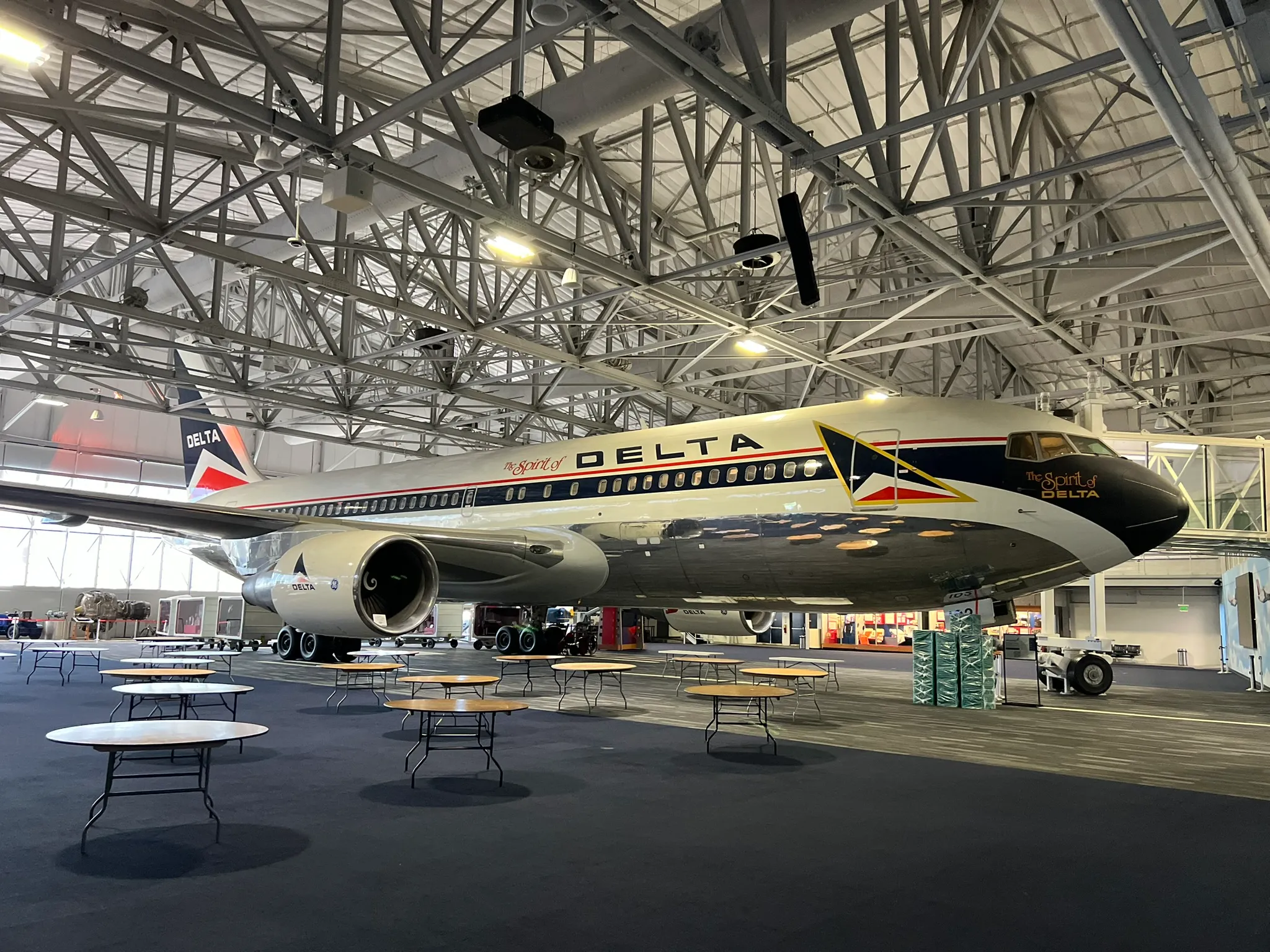
Today, visitors can see the Boeing 767 preserved as a reminder of an unusual moment in aviation history.
More than four decades after employees decided to purchase an entire aircraft for their employer, The Spirit of Delta remains a physical reminder of what thousands of people can achieve when they come together.
The best of Supercar Blondie, every Sunday
The week's best car stories, straight to your inbox. Free.
Daisy is a technology and automotive journalist covering artificial intelligence, consumer tech, Apple news, cryptocurrency, emerging technologies, and transportation innovation. Since joining the team in 2025, she has reported on everything from AI-powered startups and major iOS updates to viral car stories and the latest developments shaping transportation and the digital economy. Drawing on her background in automotive journalism and a degree in History and Journalism from Goldsmiths, University of London, Daisy specializes in breaking down complex topics into clear, engaging reporting for a global audience. Her work spans cutting-edge technology, innovative vehicles, and the people driving change across both industries. Daisy has gained first-hand access to some of the world's most talked-about technologies and innovators, including meeting Tesla's Optimus humanoid robot during its first European appearance in London. She has also discussed the future of space exploration with an astronaut, bringing unique insights and real-world perspectives to her coverage of emerging technology.