Experts issue warning about hackers using your car's tire pressure system to breach your privacy
Published on Mar 03, 2026 at 7:58 AM (UTC+4)
by Jason Fan
Last updated on Mar 03, 2026 at 9:20 PM (UTC+4)
Edited by
Emma Matthews

You may not realize this, but the tire pressure system on your car could be responsible for a serious privacy breach, according to researchers studying modern vehicle technology.
This simple feature, which was designed with safety in mind, may also be quietly broadcasting signals that allow vehicles to be tracked.
Experts say the issue affects many cars built over the last two decades.
And it gets worse: the equipment needed to exploit it may be cheaper and easier to obtain than most drivers would expect.
DISCOVER SBX CARS – The global premium auction platform powered by Supercar Blondie
A car’s tire pressure system can reveal a lot of information
The technology in question is the Tire Pressure Monitoring System (TPMS).
It became mandatory in many vehicles after the Transportation Recall Enhancement, Accountability and Documentation Act, often called the TREAD Act.
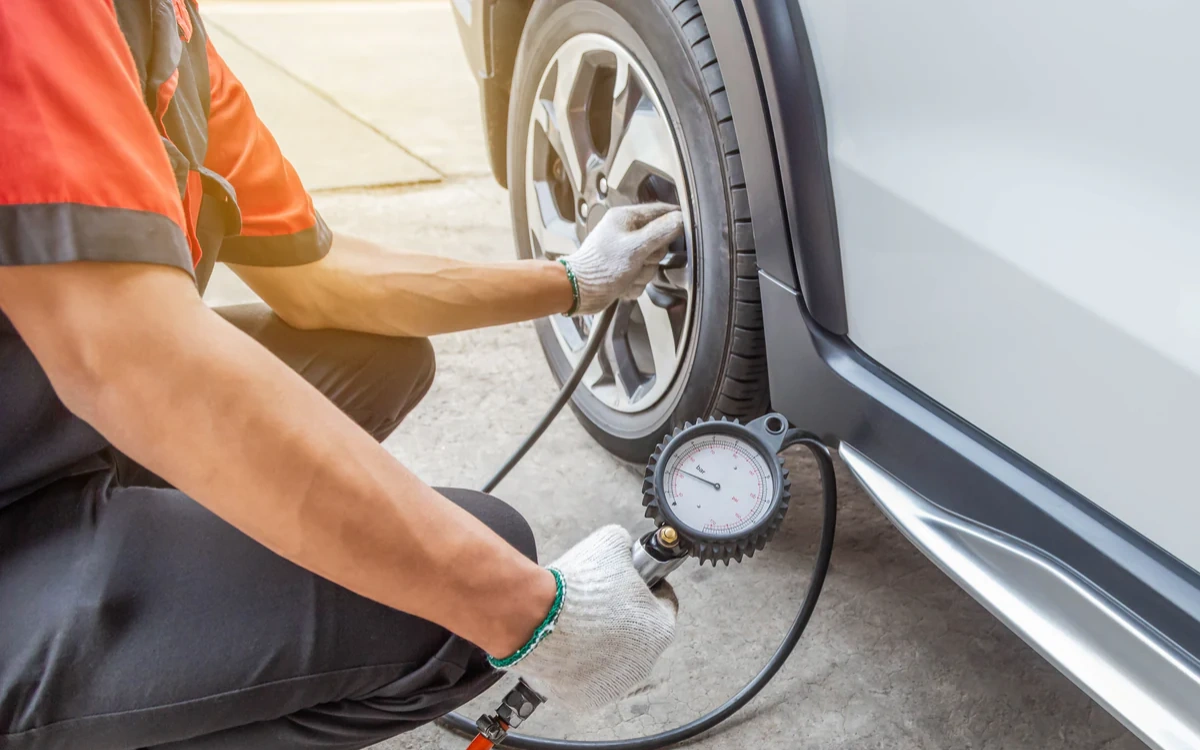
It was introduced to improve road safety following several high-profile tire failure incidents.
Since then, most cars built after 2008 have been equipped with small wireless sensors inside each tire that constantly measure air pressure.
These sensors transmit signals to the vehicle’s onboard computer so drivers can be alerted if a tire is underinflated.
Normally, the tire pressure system simply triggers a dashboard warning light.
But according to researchers from the IMDEA Networks Institute, those same signals could potentially be used to track a vehicle’s movements.
During a 10-week study, the researchers collected nearly six million wireless signals from more than 20,000 vehicles.
Each tire sensor broadcasts a unique identification number, so the car’s computer can recognize which tire is sending information.
However, the problem is that these signals are not encrypted.
What that means is that anyone with a cheap radio receiver could potentially detect the signal.
They can also record the unique ID, allowing them to recognize the same vehicle again later.
In theory, a network of receivers placed around a city could monitor when certain vehicles pass by specific locations.

“Our results show that these tire sensor signals can be used to follow vehicles and learn their movement patterns,” said Domenico Giustiniano, a research professor involved in the study.
According to the research, signals could be captured from more than 50 meters (164 feet) away.
Even more surprisingly, they could sometimes be detected through walls or from inside buildings.
Researchers found that the data could reveal details such as vehicle type, weight, and driving patterns.
Click the star icon next to supercarblondie.com in Google Search to stay ahead of the curve on the latest and greatest supercars, hypercars, and ground-breaking technology
Modern cars collect a ton of driver data
Privacy advocates say this highlights a broader issue with modern vehicles becoming increasingly data-driven machines.
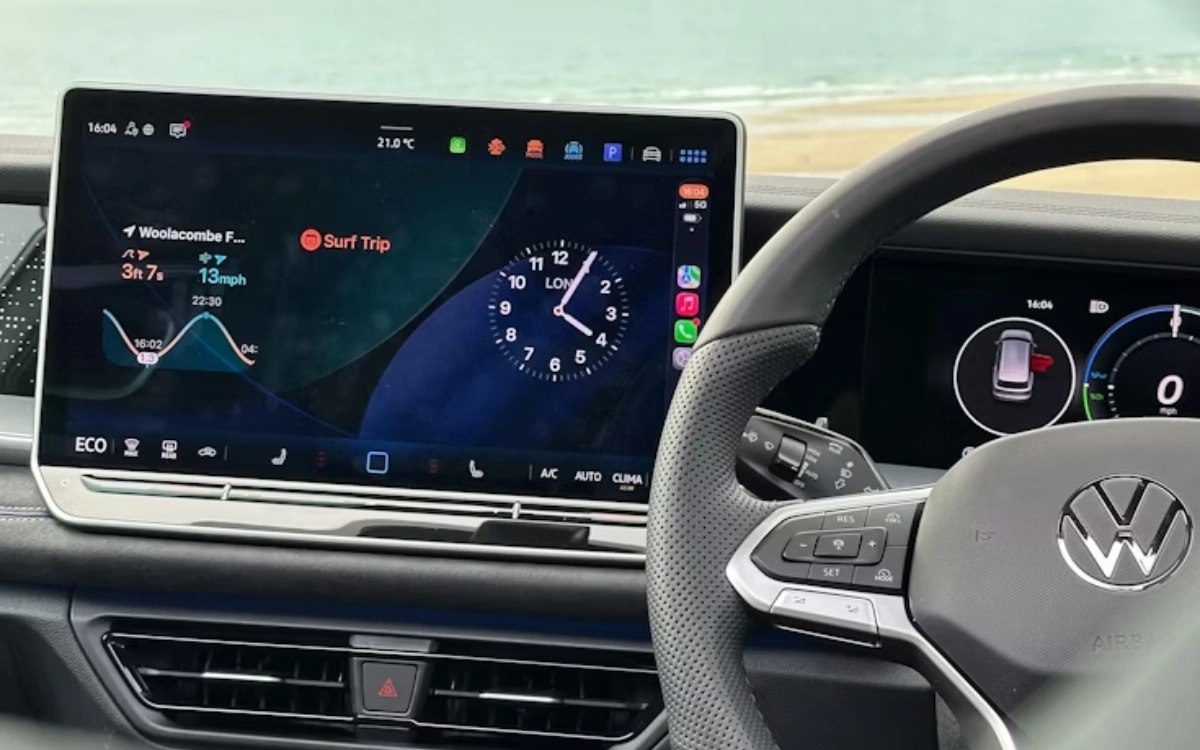
Cooper Quintin, a technologist at the Electronic Frontier Foundation, noted that cars already collect significant amounts of driver data for insurance assessments, advertising, and analytics.
Interestingly, this vulnerability is not entirely new.
Earlier research from Rutgers University and the University of South Carolina raised similar concerns as far back as 2010.
Experts say that drivers don’t necessarily need to panic.
However, manufacturers may need to improve how these tire pressure systems are secured.
After all, TPMS was originally designed to keep drivers safe on the road, not to guard against hackers.
DISCOVER SBX CARS: The global premium car auction platform powered by Supercar Blondie