This Hawaii air force base built the doors of its hangar to perfectly fit a Boeing C-17 Globemaster III and it's a bizarre sight when they're closed
Published on Aug 05, 2026 at 4:04 PM (UTC-4)
by Henry Kelsall
Last updated on Aug 05, 2026 at 4:04 PM (UTC-4)
Edited by
Mason Jones
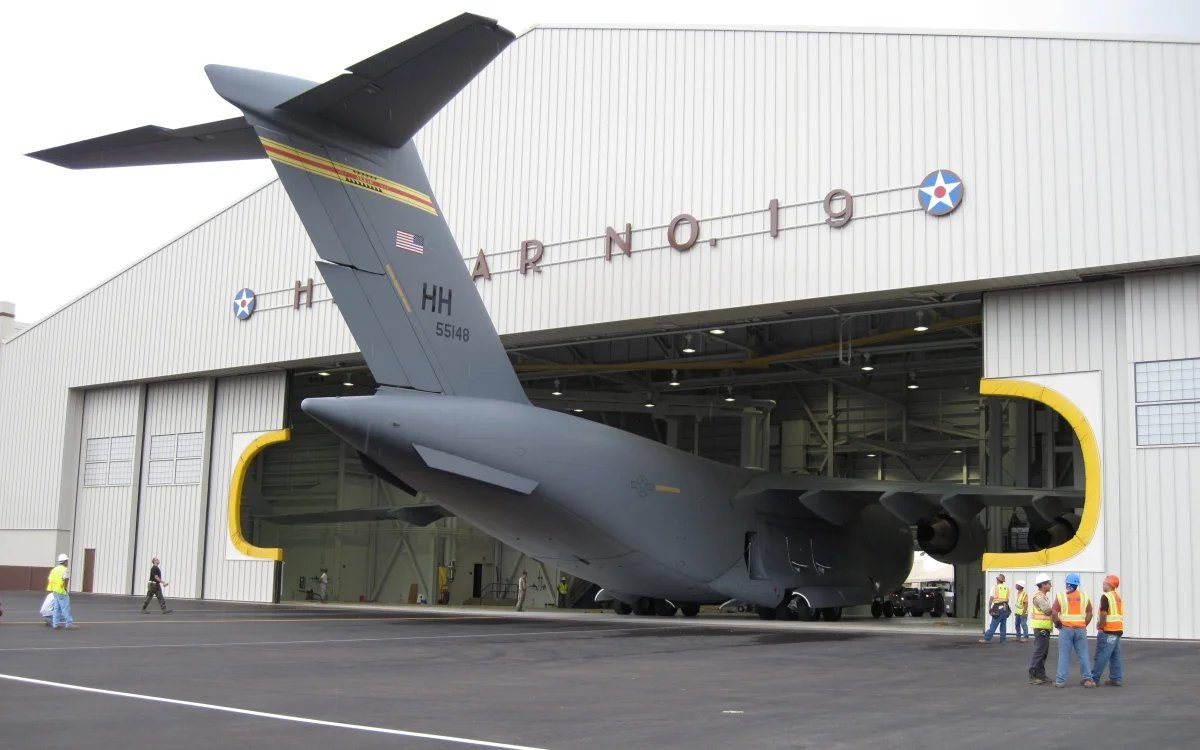

The Boeing C-17 Globemaster III is one of the largest aircraft in the world, and as such, it requires a pretty big hangar in order for it to fit inside.
The Hawaii air force base, Hickam Air Force Base, is one location that needed to accommodate the giant cargo plane.
So it built a massive hangar that fits the entire aircraft inside. Except for the tail section, which is incredibly tall.
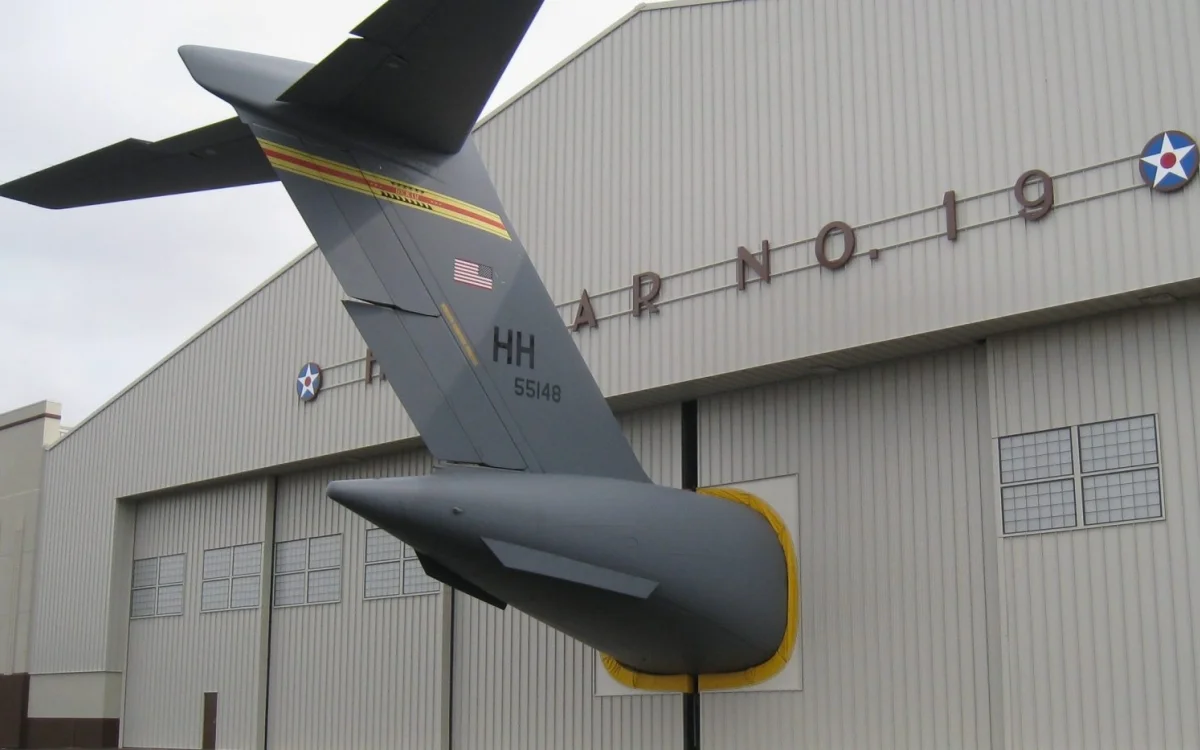
That led to the unusual sight of nearly an entire C-17 inside a hangar, only for the tailplane to stick out with a nice slot built into the hangar doors.
How the weird hangar was designed
The hangar is called the C-17 Fuel Cell Nose Dock Hangar.
It is located at Joint Base Pearl Harbor-Hickam in Hawaii.
While it might look like a bit was left out and had to be cut out, that couldn’t be further from the truth.
The hangar is a custom design.
The cutout in the doors is a precise measure to seal the aircraft’s fuselage into the hangar.
The tail can happily stick outside, while the climate-controlled hangar itself looks after the rest of the aircraft.
“The hangar features a 200 ft. wide, 6-leaf hangar door, with an aperture to seal around the tail of the C-17,” said Contrack Watts Case Studies, who designed the building.
Why the hangar was needed
Part of the issue with the base is that space was at a premium.
So a clever solution was needed to accommodate the giant aircraft.
With space so limited, the base had to prioritize the core parts of the aircraft when it came to maintenance.
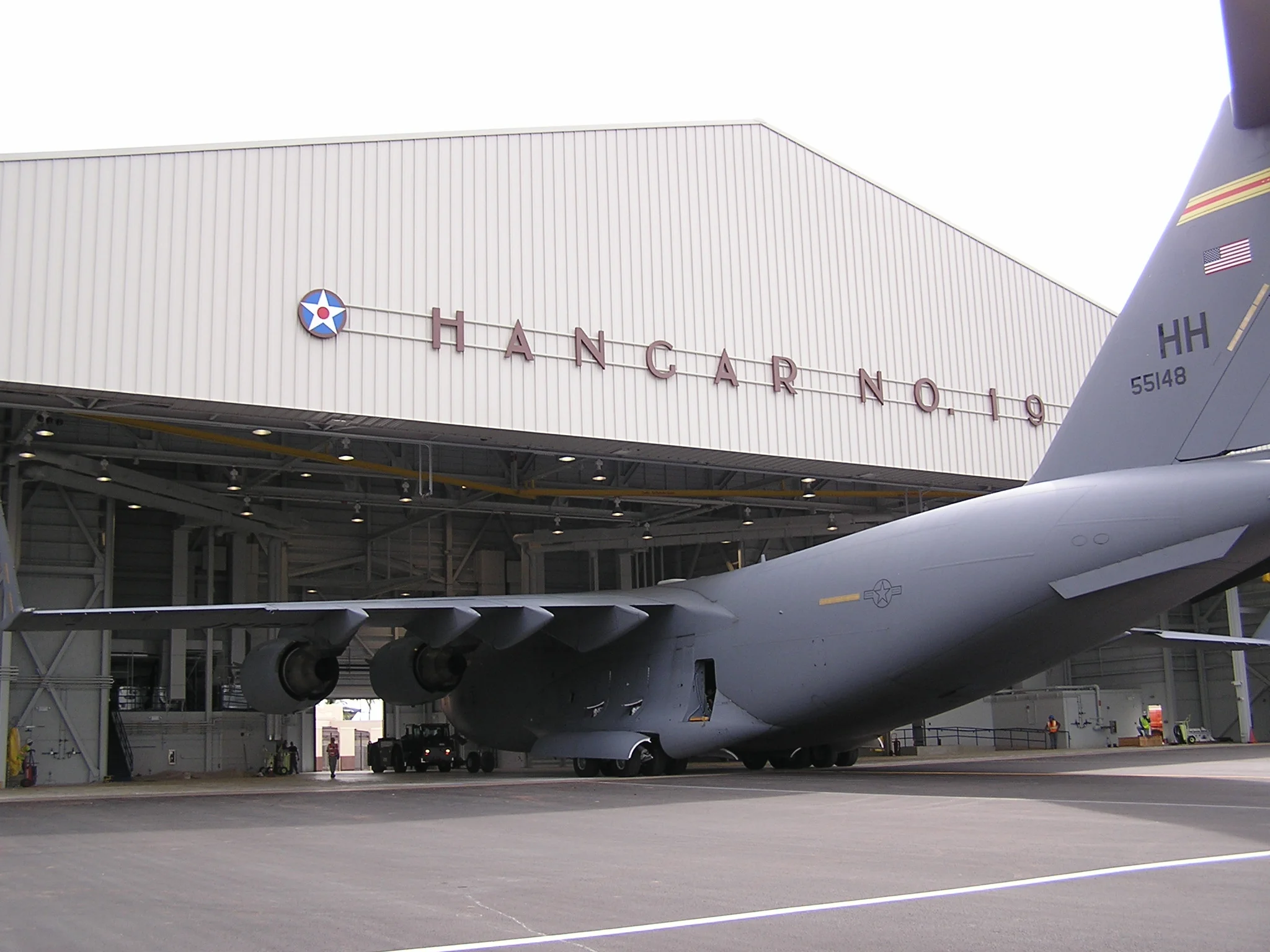
Most of the critical work takes place forward of the tail.
So it didn’t actually need to go inside the hangar.
That meant when work was needed on things such as the avionics, fuel cells, or other elements, mechanics could work on the airplane in a dry, secure environment.
Given aircraft can sit outside for much of the year when operational, the tailplane is quite happy to stick out the top of the hangar.
The C-17 is a true USAF workhorse
An aircraft as dependable as the C-17 Globemaster III certainly deserves plenty of protection.
The giant cargo plane has been a part of the United States Air Force since the 1990s.
The jet also flies with other operators around the world.
It quickly became one of the most important aircraft in America’s Air Force.
It played a key logistical role in Afghanistan and Iraq, and it has proven itself perfect for flying humanitarian aid.
It is little wonder that other air arms, such as the Royal Air Force, have also used the C-17 Globemaster III throughout its service life.
C-17 Globemaster III timeline
August 1981: McDonnell Douglas is selected to develop a new military transport aircraft for the US Air Force under the C-X program
December 1985: A full-scale development contract is officially awarded, initiating the long process toward production
September 15, 1991: The airlifter successfully completes its maiden flight from Long Beach, California, despite being roughly a year behind schedule
June 14, 1993: Joint Base Charleston receives the very first production model, signaling the beginning of fleet integration
January 17, 1995: The 17th Airlift Squadron is declared operationally ready, marking the official entry into active service
August 1997: The original manufacturer merges with a larger aerospace company, transitioning management of the transport program
August 8, 2007: Canada’s Department of National Defense receives its first operational unit, highlighting the aircraft’s widespread international adoption
November 29, 2015: The final airframe rolls off the Long Beach assembly line, concluding over two decades of production
Henry joined the Supercar Blondie team in February 2025, and since then has covered a wide array of topics ranging from EVs, American barn finds, and the odd Cold War jet. He’s combined his passion for cars with his keen interest in motorsport and his side hustle as a volunteer steam locomotive fireman at a heritage steam railway.