Airbus shows off what's inside its A350-1000ULR plane which is the world's longest-range aircraft
Published on Jun 16, 2026 at 11:52 AM (UTC-4)
by Alessandro Renesis
Last updated on Jun 18, 2026 at 5:28 AM (UTC-4)
Edited by
Mason Jones
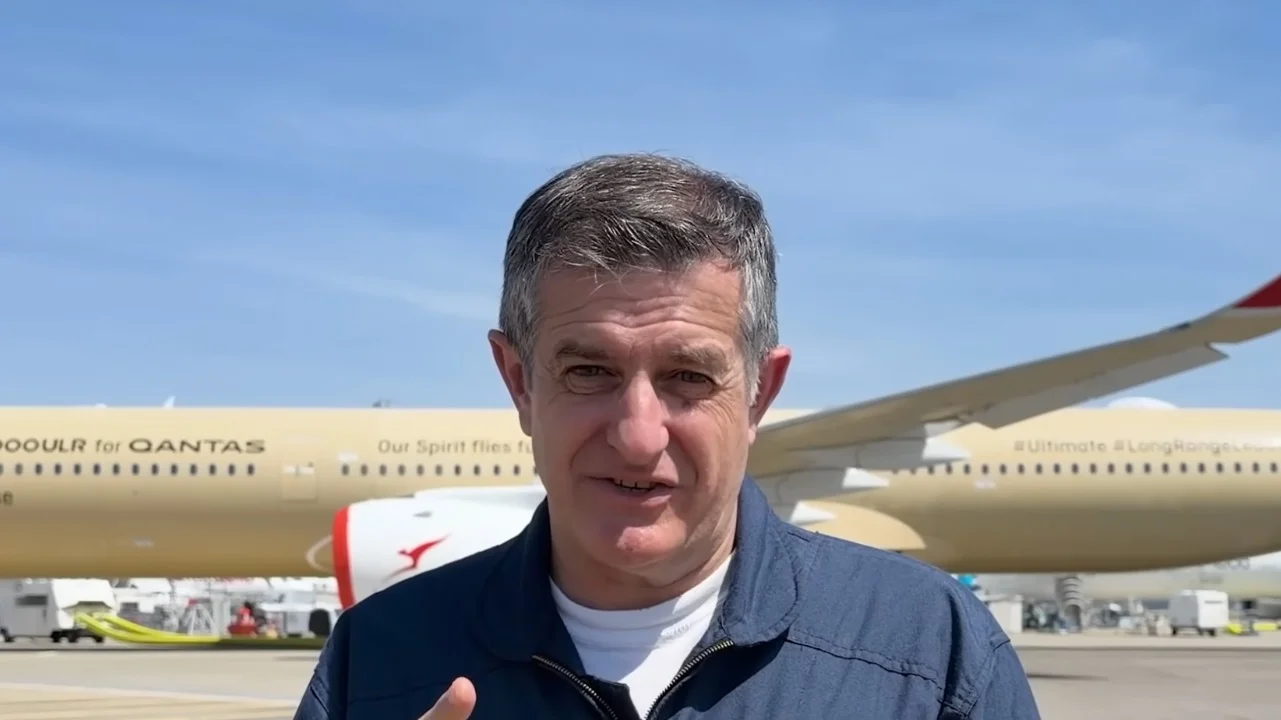

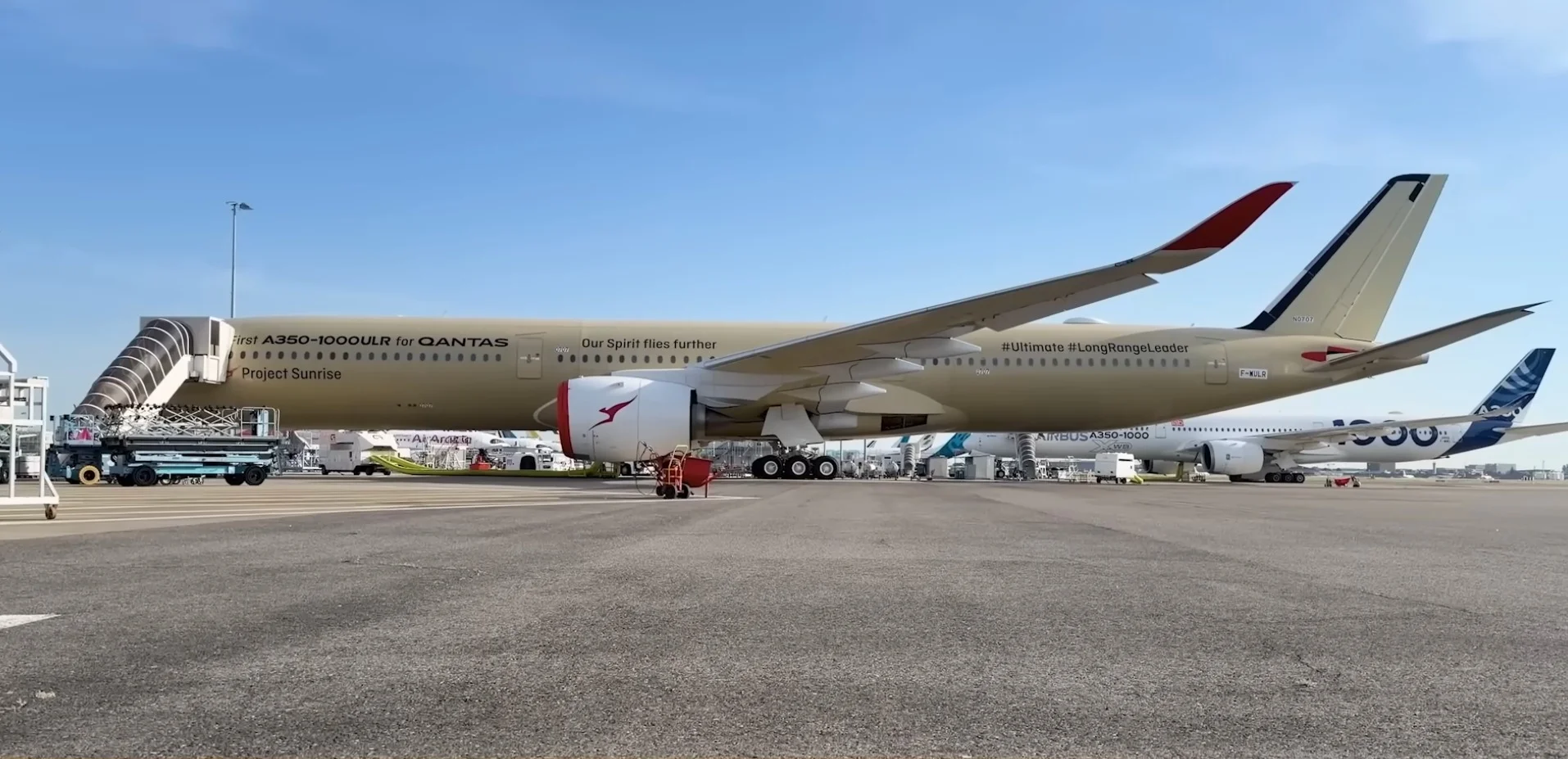
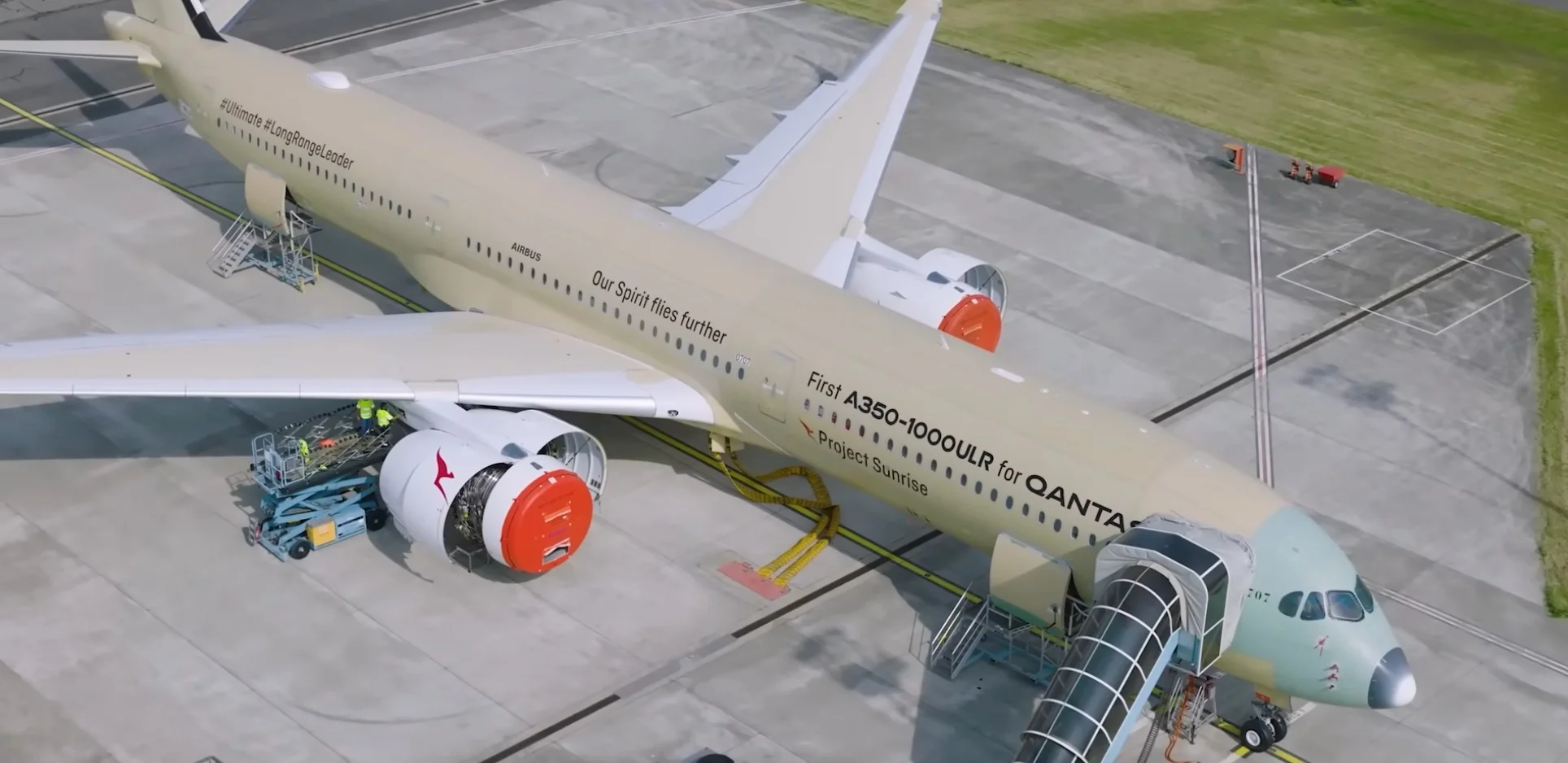
Airbus is finally giving us a first look inside the Airbus A350-1000ULR that’ll be used by Qantas for Project Sunrise.
One of the most ambitious aircraft ever built, this plane will transport passengers from Sydney to London on a non-stop flight.
With an air time of around 20 hours, this’ll be the world’s longest flight, and by a long margin.
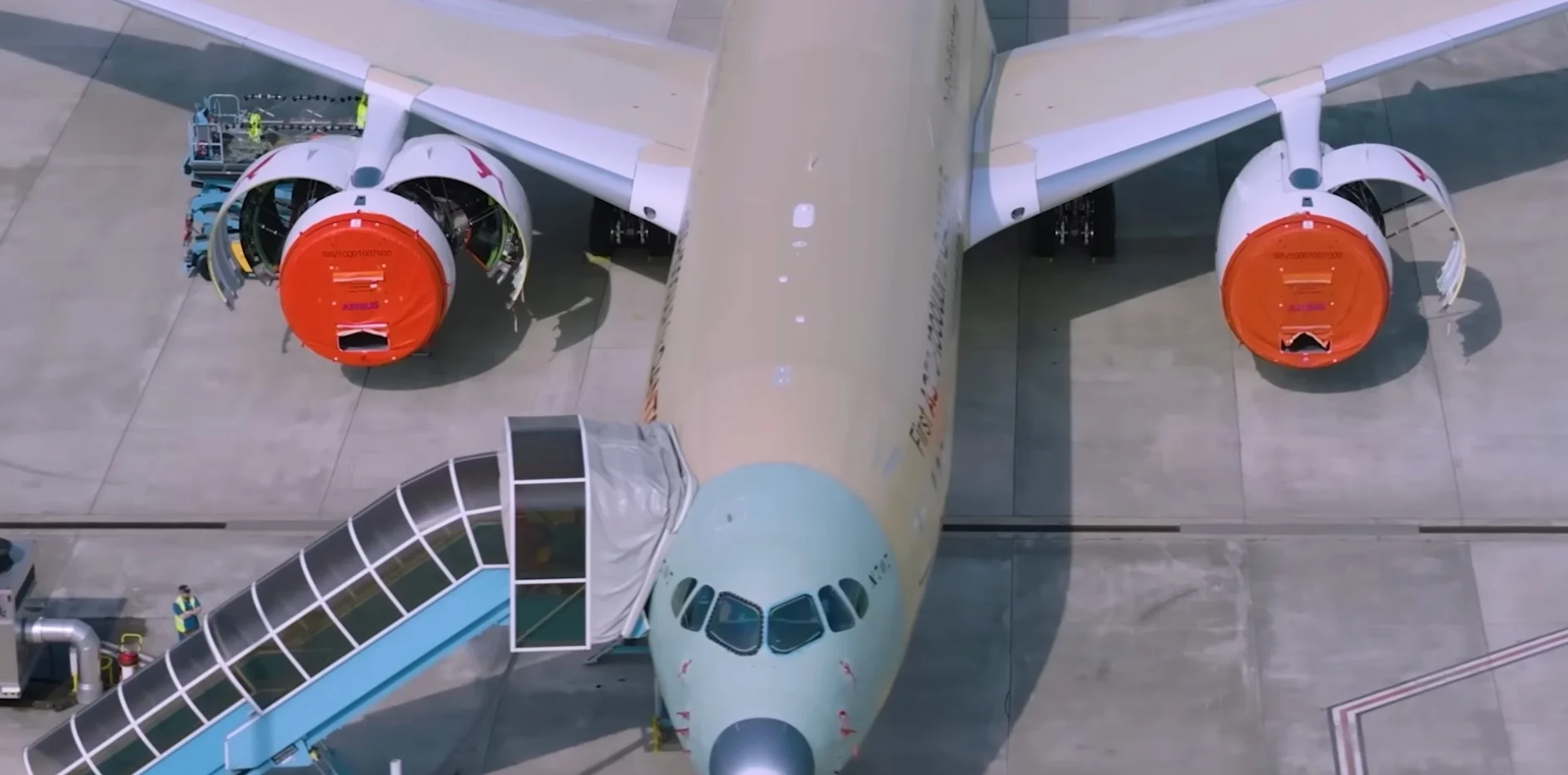
The aircraft is still unfinished, but there are a couple of interesting details worth expanding on.
A unique configuration
Most long-range aircraft have two classes, and some have three – Economy, Business, and First Class or, sometimes, Premium Economy, Economy, and Business.
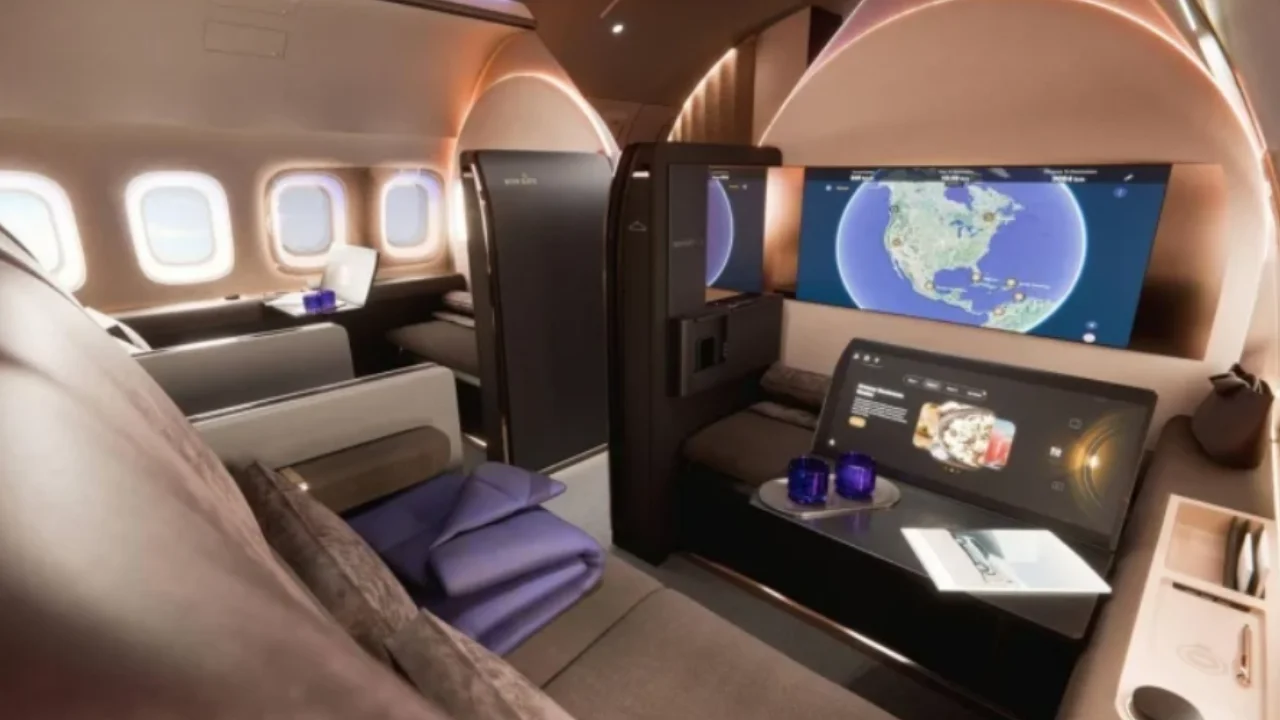
Qantas’ Project Sunrise will have four plus one.
You’ve got Economy, Premium Economy, Business, First Class, and then an area that’s called the Wellbeing Zone.
Open to all four passenger ‘classes’, the Wellbeing Zone serves two purposes: one, you can use it to stretch your legs; and two, you can use it to kill some time chatting to other passengers or having a snack.
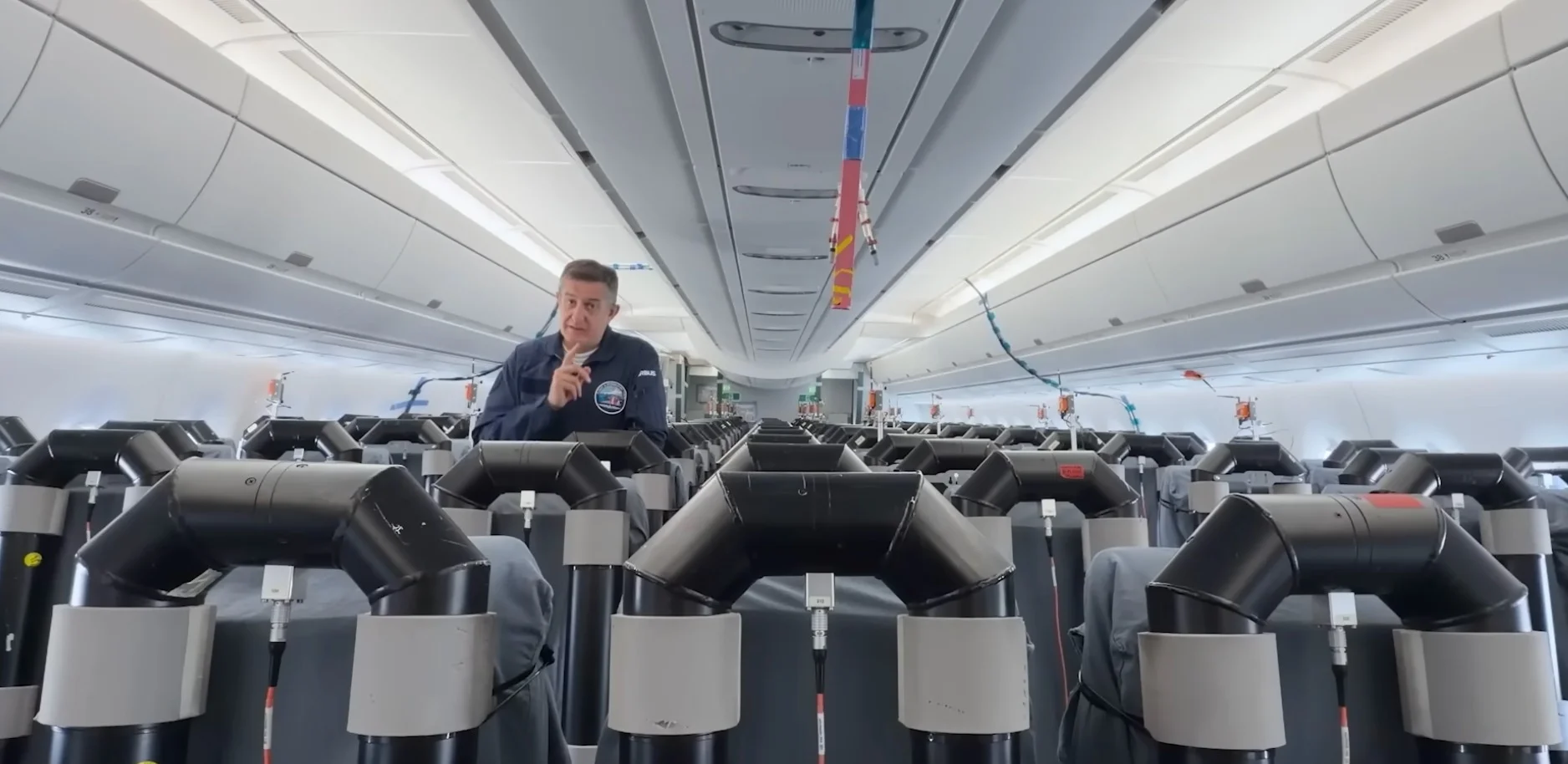
The Airbus A350-1000ULR will be one of the largest planes in the world, but there isn’t a square inch Airbus can waste.
Project Sunrise is ambitious for technical reasons, but also (more importantly) for financial reasons.
Related
This Airbus A350-1000ULR is a city
Airbus has already shared some render images to showcase what the plane will look like, but this is the first real-world look.
It’s far from finished – the seats are bare skeletons equipped with technical testing gear but no upholstery – but it’s already giving us a key detail: the plane’s width.
We’re used to Ryanair-style Boeing 737 – where you can almost reach both windows if you’re tall enough – or long-haul 787, where window-to-window, you probably have enough to space to park a Fiat 500.
But this is huge.
The cabin looks large enough to fit a Hummer H2.
Is Qantas’ Project Sunrise just a headline grabber?
Some ‘critics’ argue that ultra-long routes such as the one that Project Sunrise is going to cover are mostly headline grabbers.
They argue that these planes are difficult to fill up, and that it’s hard for the airline to make it profitable.
It’s the perfect catch-22: there’s only so much you can charge Economy and Premium Economy travelers, and there’s only so much you can make from Business and First Class.
First Class and Economy are particularly problematic.
Statistically, Business Class is the undisputed profit engine for full-service international airlines.
Airline economics comes down to maximizing profit per square foot of the aircraft, and – this is data from the International Air Transport Association (IATA) – Business Class seats make up only about 12 percent of total passengers, but they generate roughly 75 percent of an airline’s profits.
A typical Business Class seat takes up about 3 times the physical space of an Economy seat, but the ticket often costs 5 to 10 times more.
Good, but then you’ve got Economy and Premium Economy, which make up most of the plane and can’t be charged beyond a certain point, and First Class, which is a very expensive service to run on a flight that lasts almost an entire day.
The proof will be in the pudding soon.
Project Sunrise is set to launch in 2027.
Should it prove unsuccessful, airlines won’t take long to cut it.

Alessandro is an automotive journalist with 10 years of experience covering supercars, automotive history, emerging vehicle technology, and luxury transportation. He wrote the first article published on SupercarBlondie.com when the website launched in 2022 and has since built a reputation for insightful reporting across the automotive and transportation industries. His expertise is grounded in hands-on experience. Alessandro has driven every Tesla model ever produced, from the original Roadster to the Cybertruck, and regularly covers the latest developments in electric vehicles and automotive innovation. His passion for transportation extends beyond cars, he has even flown a Boeing 787 Dreamliner simulator in Addis Ababa, Ethiopia. His reporting spans everything from classic American muscle cars and rare automotive discoveries to luxury yachts, private aircraft, high-end watches, and cutting-edge vehicle technology. Known for his deep knowledge of automotive history and ability to uncover the stories behind iconic vehicles, Alessandro brings readers a blend of historical context, technical expertise, and first-hand experience.