Jaguar I-PACE owner gets shock bill for rear brake pads after 50,000 miles
Published on Oct 31, 2026 at 8:13 PM (UTC-4)
by Daisy Edwards
Last updated on Oct 31, 2026 at 8:13 PM (UTC-4)
Edited by
Mason Jones
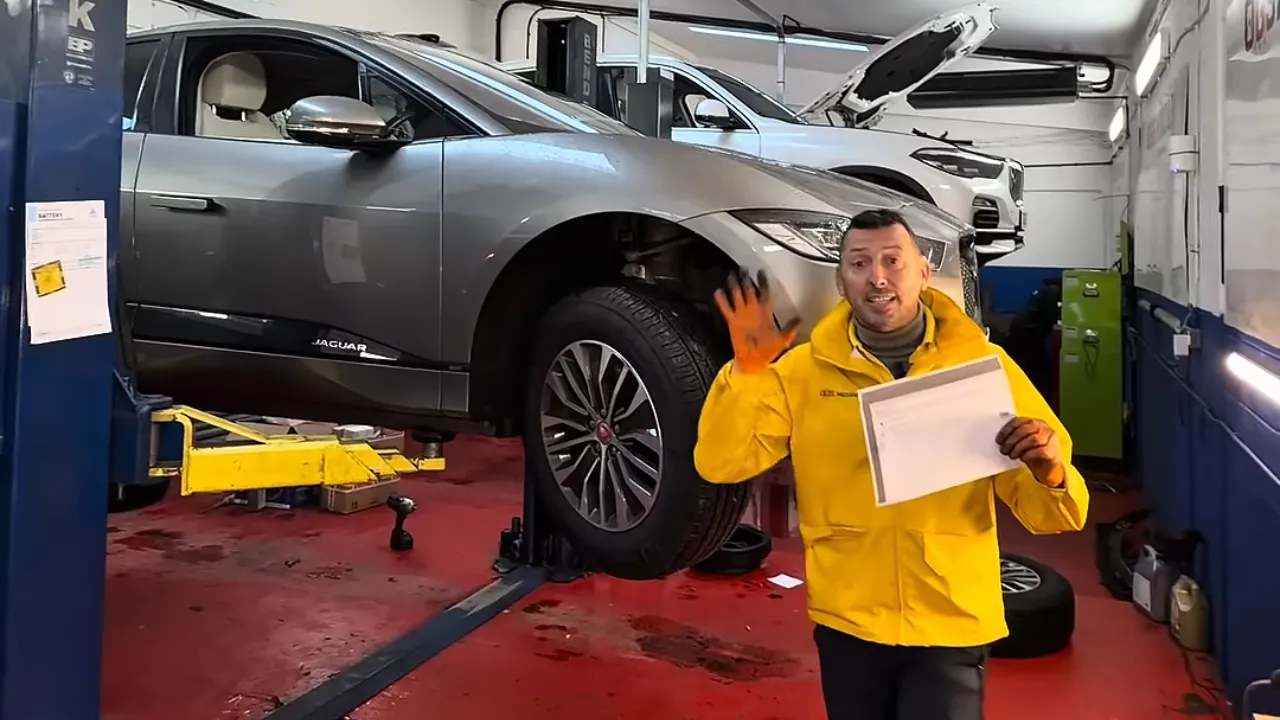

EVs are often praised for having lower maintenance costs than gas vehicles, but one Jaguar I-PACE owner has discovered that not every repair comes cheap.
After covering 50,000 miles, the electric SUV appears to be ready for its first rear brake-pad replacement.
The surprising part is that the pads themselves are not particularly complicated pieces of equipment.
In fact, an alternative set from a well-known brake brand costs a fraction of the price.
Jaguar I-PACE’s brake pads lasted 50,000 miles
The Jaguar I-PACE had covered around 50,000 miles when its dashboard warning light indicated that its rear brake pads needed attention.

That is a pretty impressive lifespan, especially considering that brakes are one of the components drivers eventually have to replace.
Electric vehicles can often go longer between brake-pad replacements because regenerative braking helps slow the car down while recovering energy for the battery.
This means the conventional brakes do not have to do all the work every time the driver lifts off the accelerator.
However, regenerative braking does not make brake pads last forever.
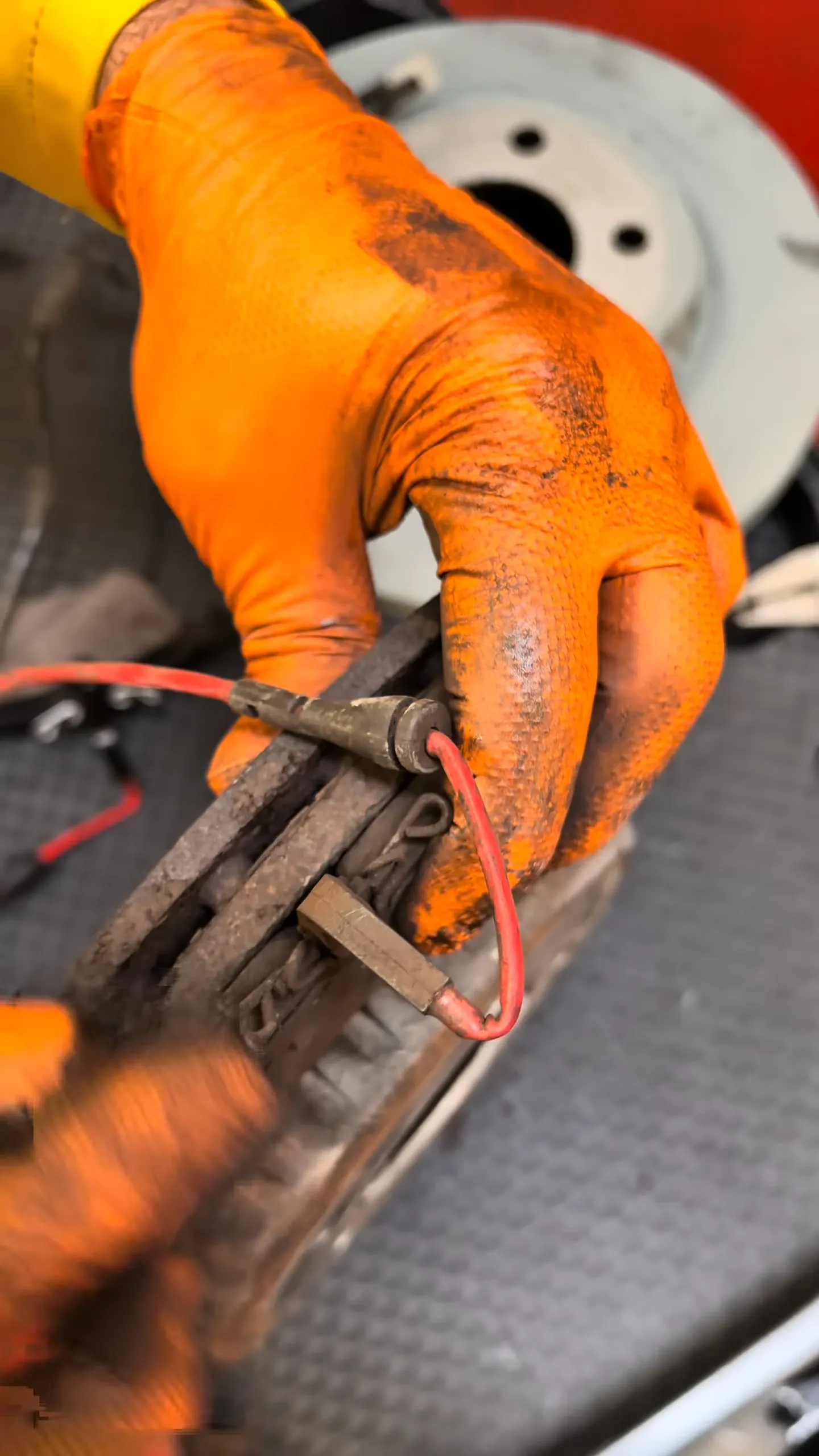
In the video by OGS & Mechanics, a mechanic explains that the warning light was triggered by the brake-pad wear sensor.
As the pads wear down, the sensor is gradually rubbed away until it breaks an electrical circuit, alerting the driver that the brakes need attention.
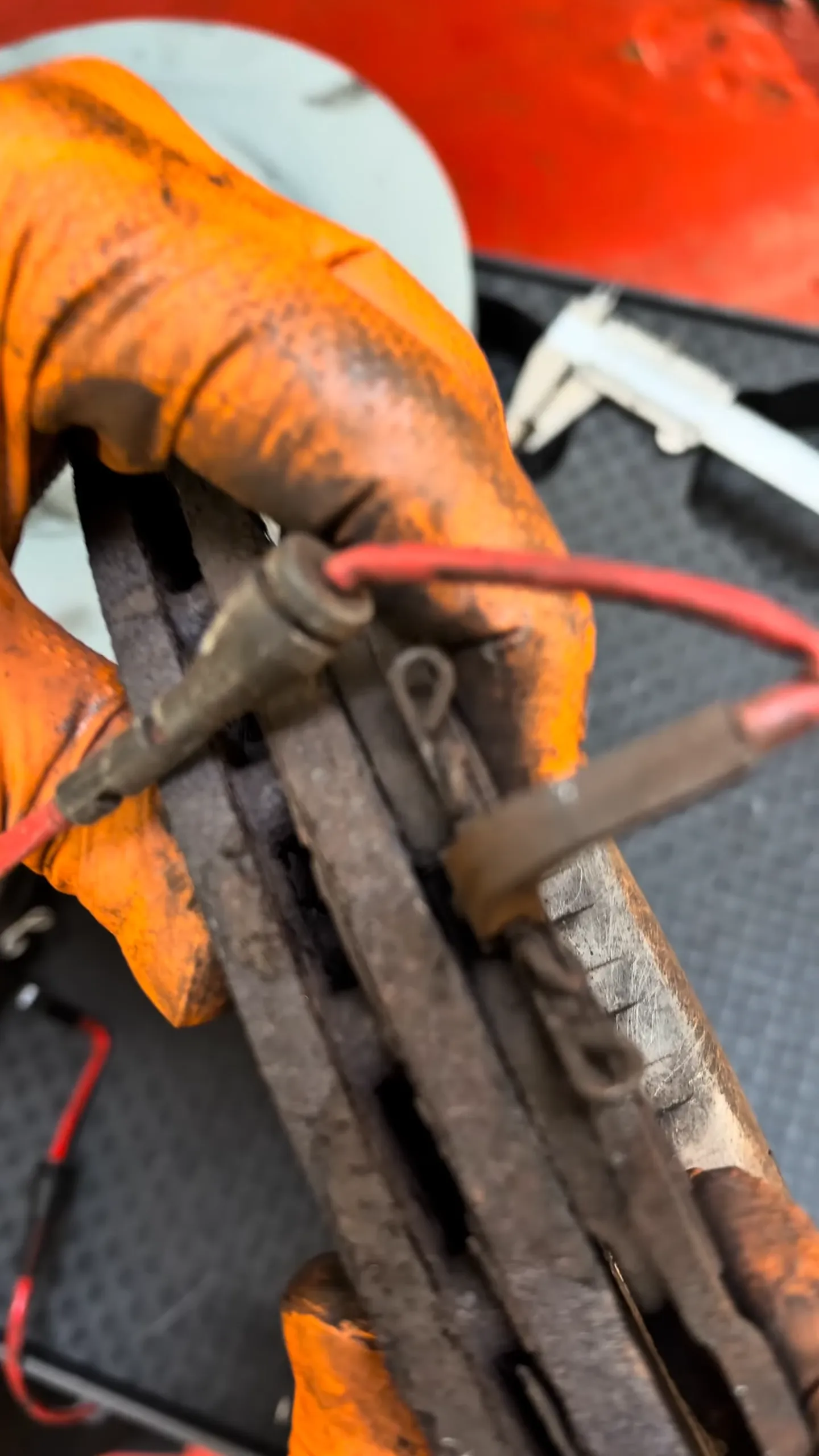
Interestingly, the mechanic estimates that the old pads still have slightly less than half of their friction material remaining.
That means the warning does not necessarily indicate that the pads have worn all the way down to the metal.
The brake discs were also inspected, but they were still within usable limits, because discs need to be replaced when their thickness falls below the manufacturer’s minimum specification, so there was no need to replace them alongside the pads in this case.
The difference between Jaguar parts and Brembo alternatives
Here’s where things get particularly interesting.
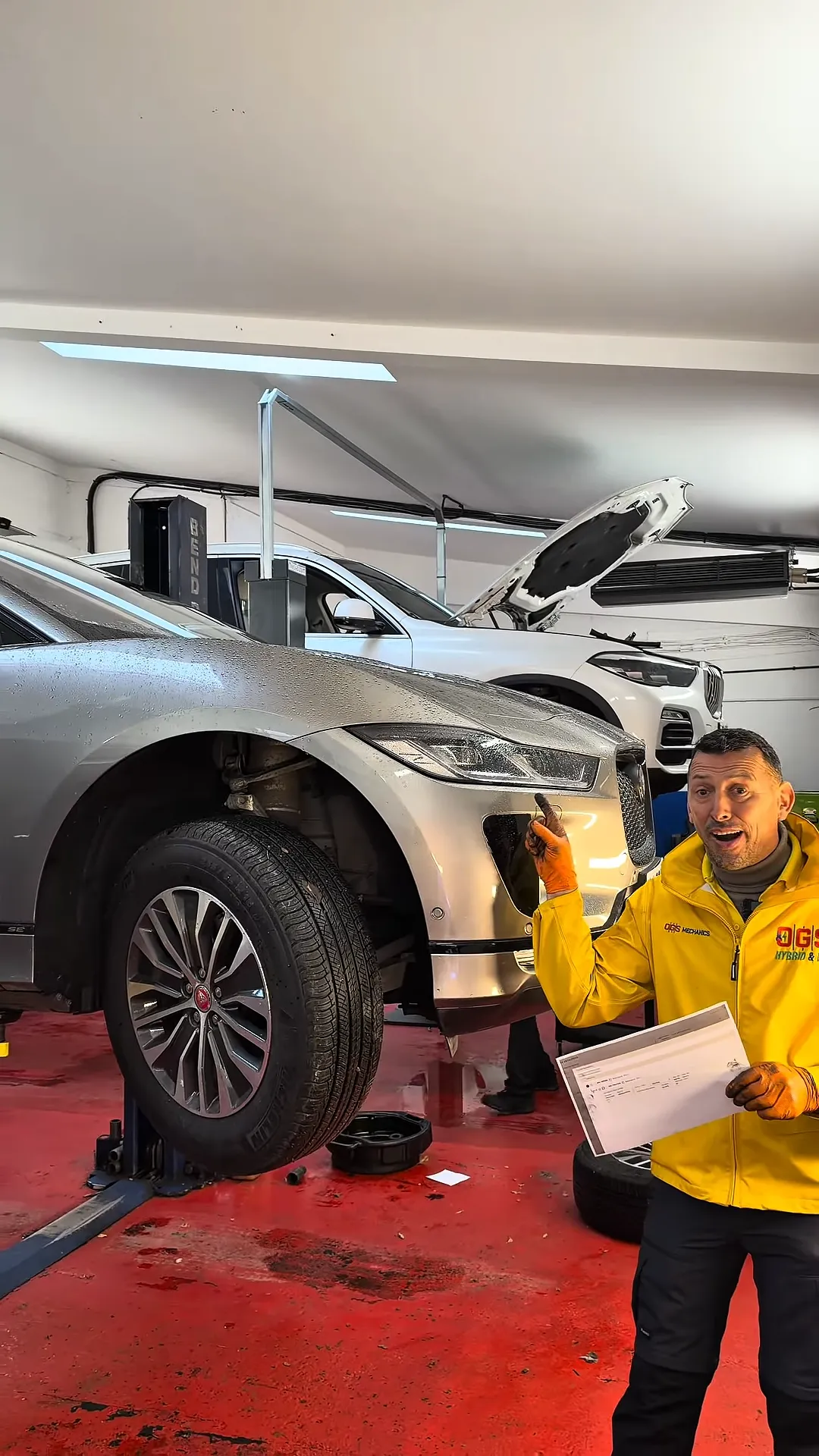
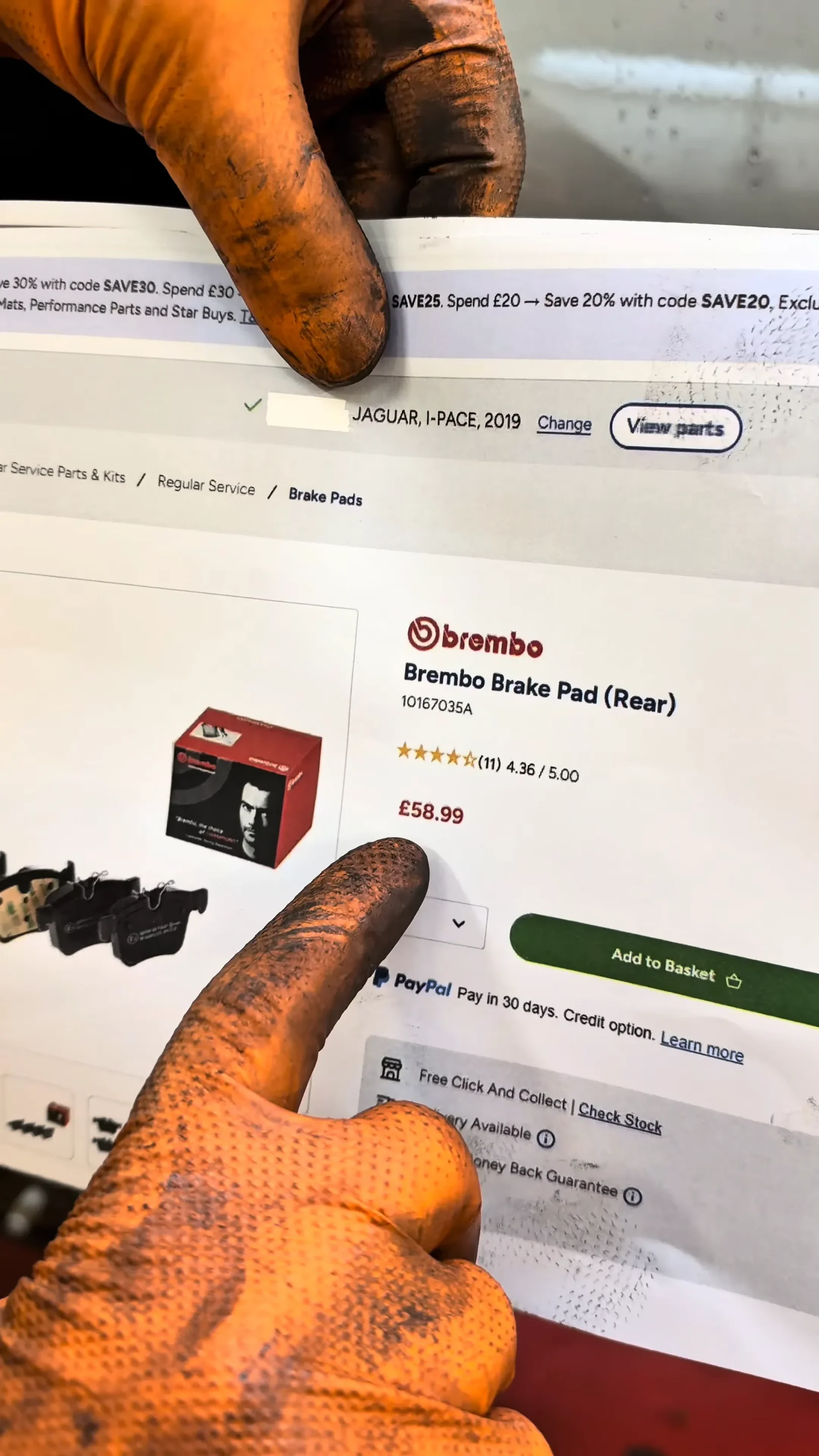
The mechanic compares the price of genuine Jaguar rear brake pads with an aftermarket alternative from Brembo, a well-known braking-system manufacturer, and the difference is enormous.
Genuine Jaguar pads were quoted at around $862 (£648), while the aftermarket Brembo set was priced at just $77 (£58).
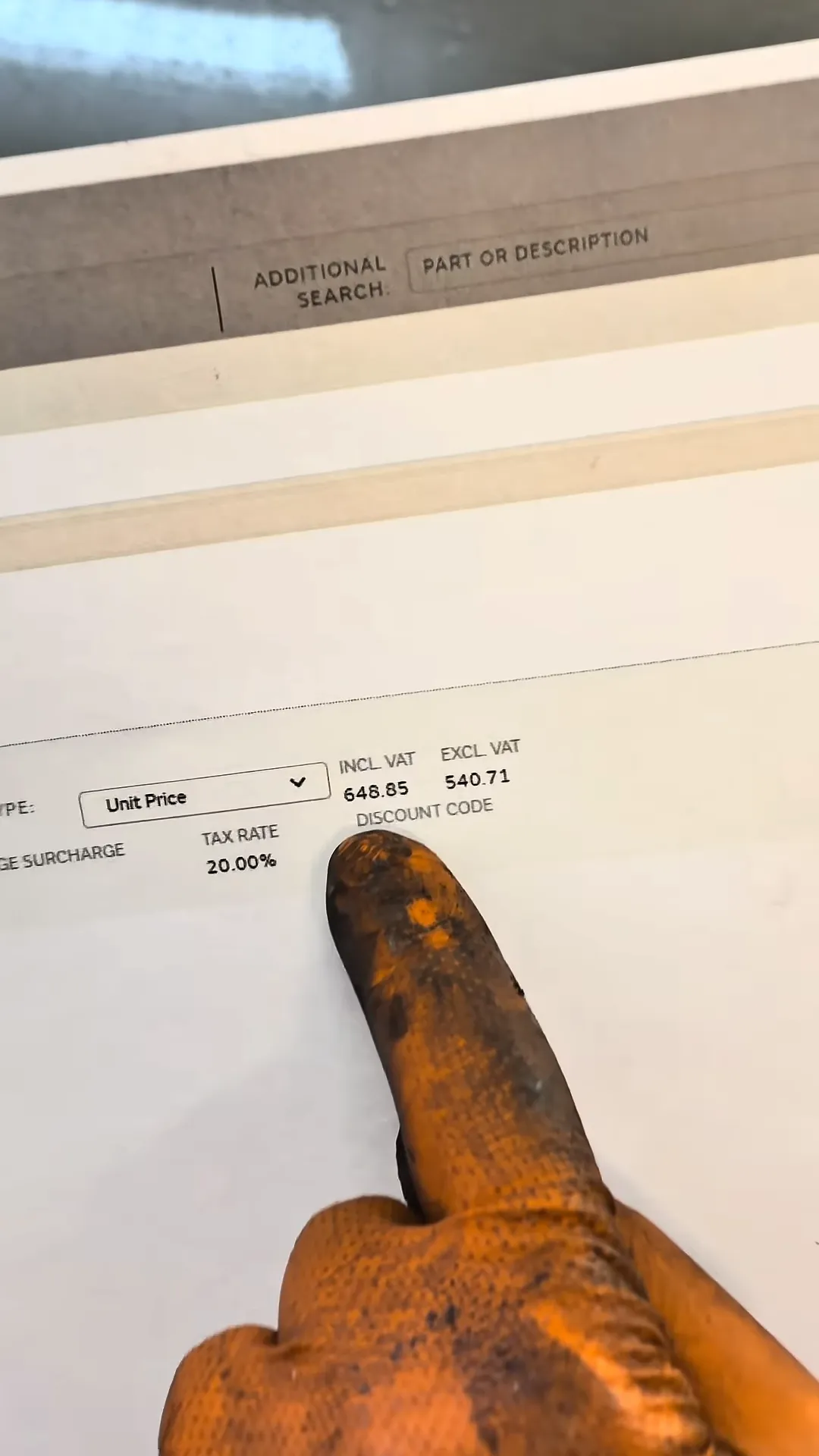
Of course, the exact price can vary depending on the supplier, the specific part number and whether a discount is available. Genuine manufacturer parts and aftermarket alternatives can also differ in specifications, warranty arrangements and vehicle compatibility.
Still, the comparison raises an obvious question about how much drivers are paying for the manufacturer’s badge.
For an owner trying to keep the running costs of an electric car under control, the difference could be hard to ignore.
Are genuine parts really worth the extra money?
The video ends with a question for drivers: would you pay the premium for genuine Jaguar parts, or would you choose the much cheaper Brembo alternative?
There are reasons to consider both options.
Genuine parts are designed to meet the vehicle manufacturer’s specifications, while reputable aftermarket brands can offer compatible components without the same price tag.

The important thing is to make sure any replacement meets the car’s requirements and is suitable for the exact model.
Brakes are also a safety-critical component, so choosing a replacement based on price alone is not necessarily the best approach.
Nevertheless, the comparison shows how much replacement-part costs can vary, even when a vehicle has managed to cover tens of thousands of miles before needing attention.
Daisy is a technology and automotive journalist covering artificial intelligence, consumer tech, Apple news, cryptocurrency, emerging technologies, and transportation innovation. Since joining the team in 2025, she has reported on everything from AI-powered startups and major iOS updates to viral car stories and the latest developments shaping transportation and the digital economy. Drawing on her background in automotive journalism and a degree in History and Journalism from Goldsmiths, University of London, Daisy specializes in breaking down complex topics into clear, engaging reporting for a global audience. Her work spans cutting-edge technology, innovative vehicles, and the people driving change across both industries. Daisy has gained first-hand access to some of the world's most talked-about technologies and innovators, including meeting Tesla's Optimus humanoid robot during its first European appearance in London. She has also discussed the future of space exploration with an astronaut, bringing unique insights and real-world perspectives to her coverage of emerging technology.




