Man constructs a Looney Tunes-style painted brick wall to see if his Tesla's autopilot can detect it when driving at speed
Published on Jul 20, 2026 at 9:52 PM (UTC-4)
by Ben Thompson
Last updated on Jul 31, 2026 at 6:36 AM (UTC-4)
Edited by
Mason Jones
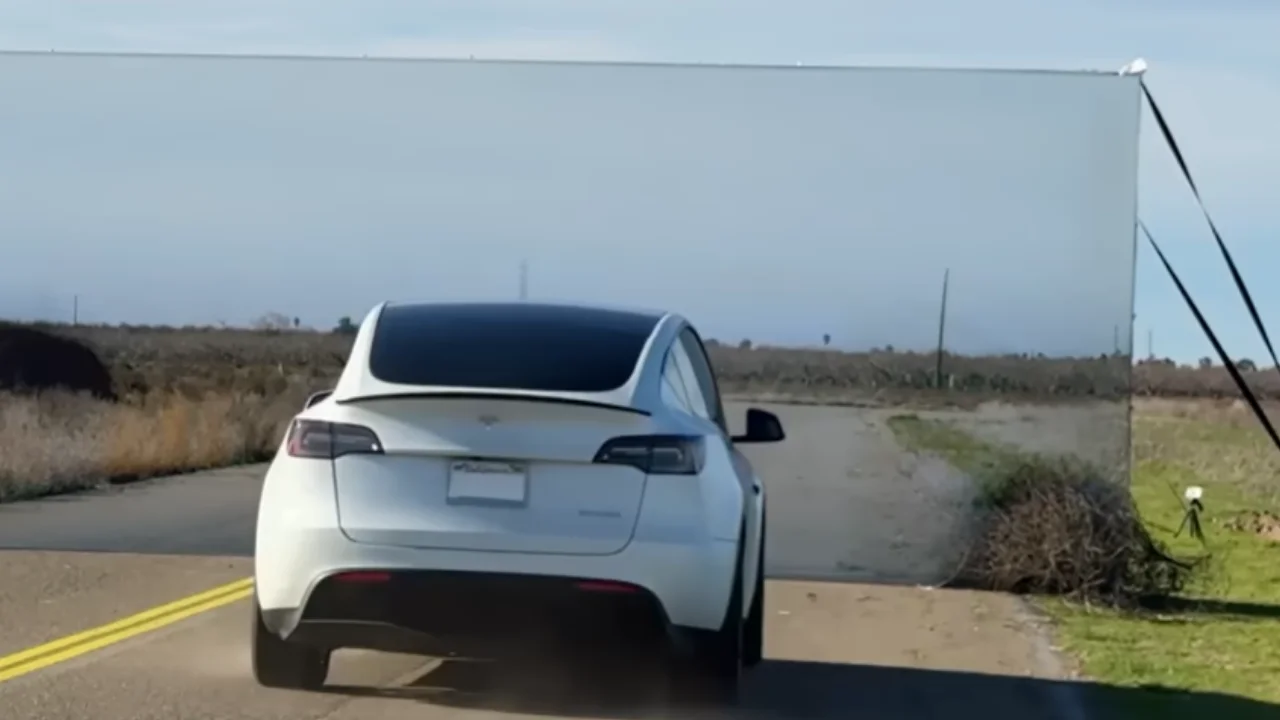

This man wanted to put his Tesla’s autopilot to the test, so built a Looney Tunes-style painted brick wall.
YouTuber Mark Rober was curious to see if the autopilot could detect the wall while driving at a fast speed.
He’d taken something from a cartoon and made it into a reality.
Now it was time to find out his EV was more like Wile E. Coyote or the Roadrunner.
Are Teslas too reliant on cameras?
Experts have cited concerns that Tesla’s autopilot is too reliant on cameras, making it less safe compared to its competitors.
Youtuber and former NASA engineer Mark Rober wanted to explore this, by putting his Model Y up against a Lexus RX, which was equipped with LiDar.
What is LiDar?
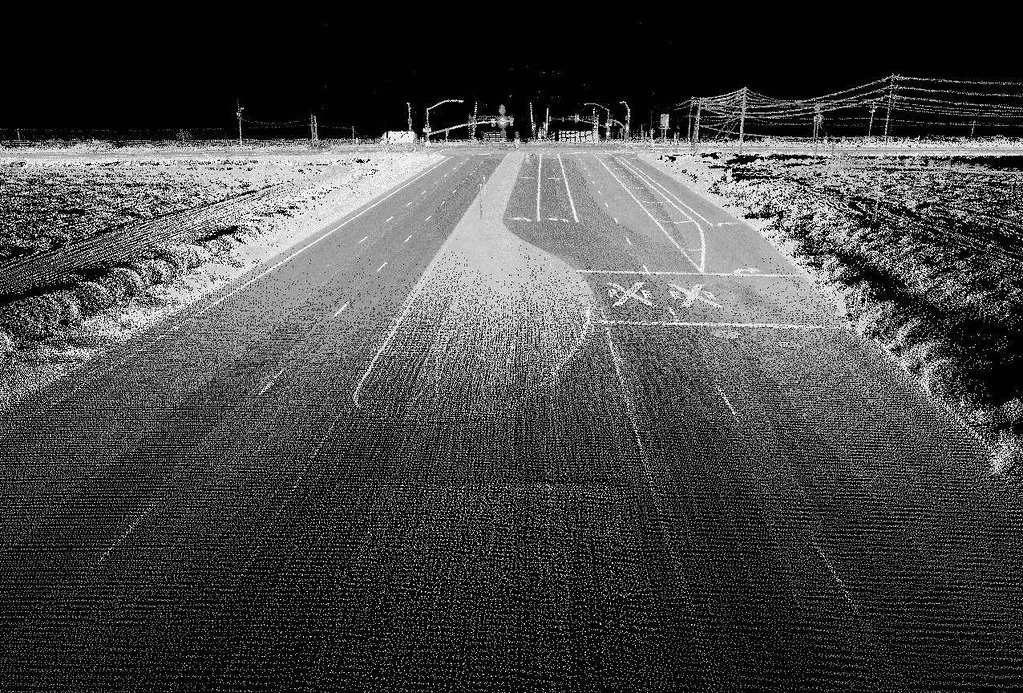
It stands for Light Detection and Ranging, and it uses pulsed lasers to measure distances.
By measuring how long it takes a laser beam to bounce off a surface and return, a highly accurate 3D environment is generated.
This technology once cost $50,000, but is now worth a few hundred dollars thanks to mass production.
It’s gone from appearing in prototypes to being used in millions of cars.
Brands that make use of the technology includes Rivian, Ford and General Motors, and Lucid.
However, Tesla is a holdout on this front and is sticking by cameras and artificial intelligence.
Would this prove to be the brand’s undoing in this wall experiment? That’s what Rober wanted to find out.
Would this Model Y go crashing through the wall or grind to a halt?
The set-up was so genius that Wile E. Coyote himself would have been proud of it.
That animated coyote was desperate to get his hands on the speedy Road Runner and went to lengths to seize his prey – a popular method included painting convincing backdrops onto brick walls.
But the bird always found a way to outsmart him, and would dart off after its characteristic beep.
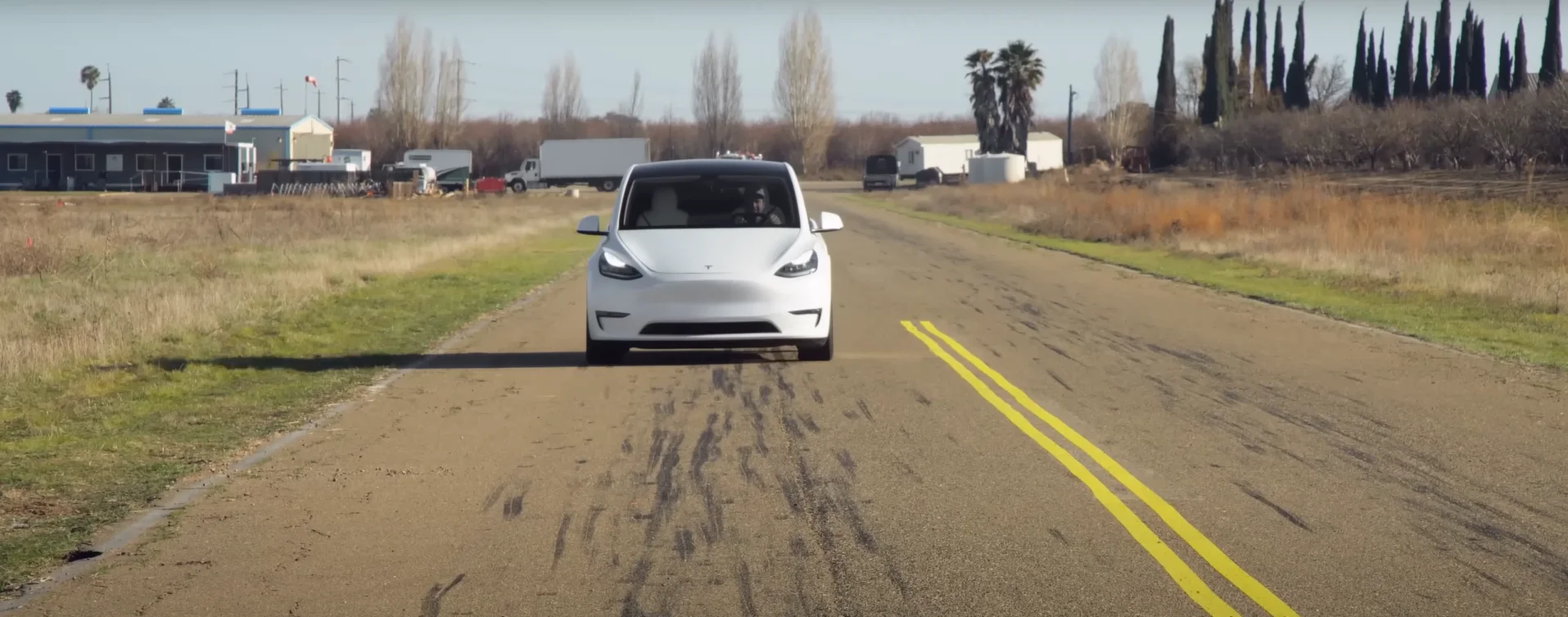
This time around, there was no birds and no coyotes – just a Tesla Model Y on autopilot and a wall with a sheet draped over it.
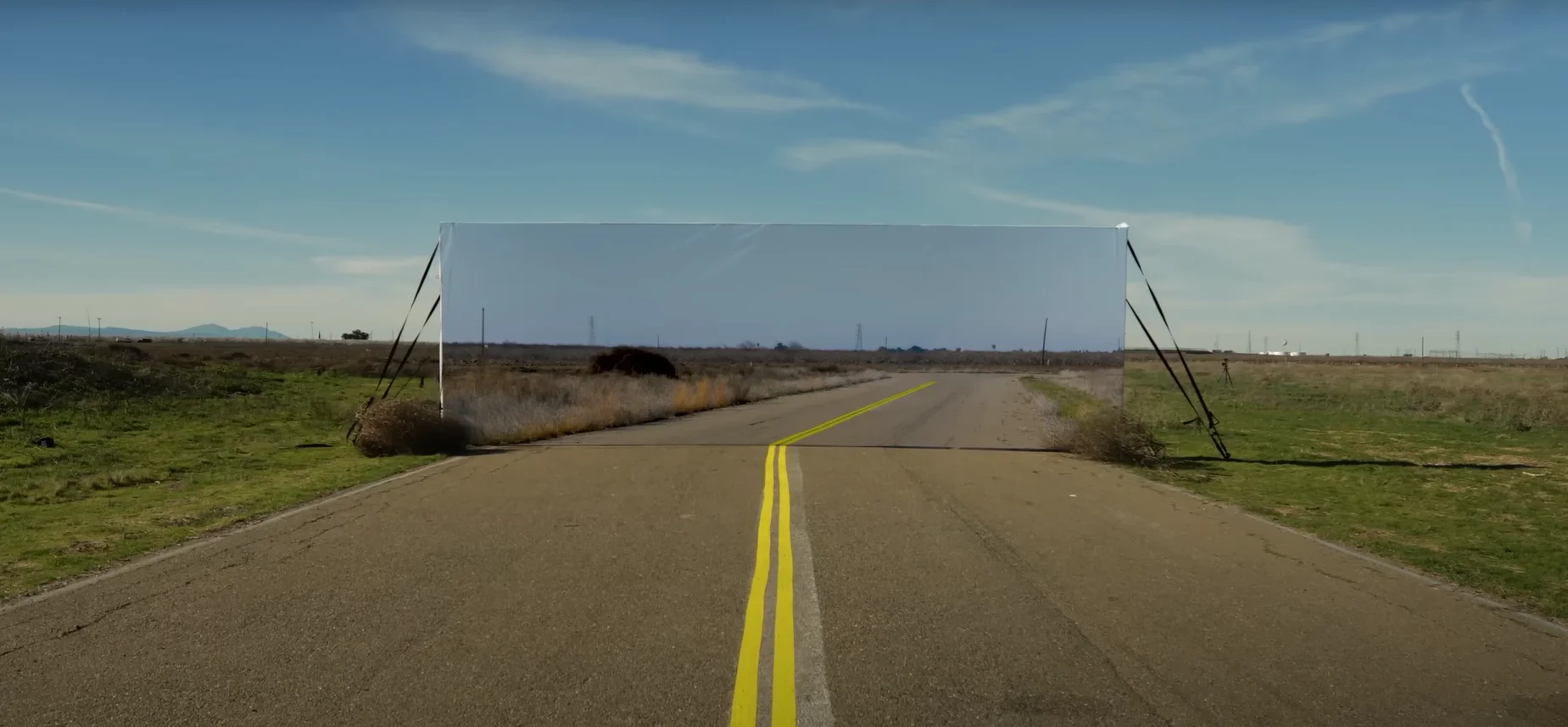
It did look eerily realistic – would it be enough to hoodwink Tesla’s Autopilot?
Well, it certainly didn’t pull the wool of the Lexus’ eyes, as the LiDar sensors kicked in and ground the car to a halt.
And as for the Tesla?
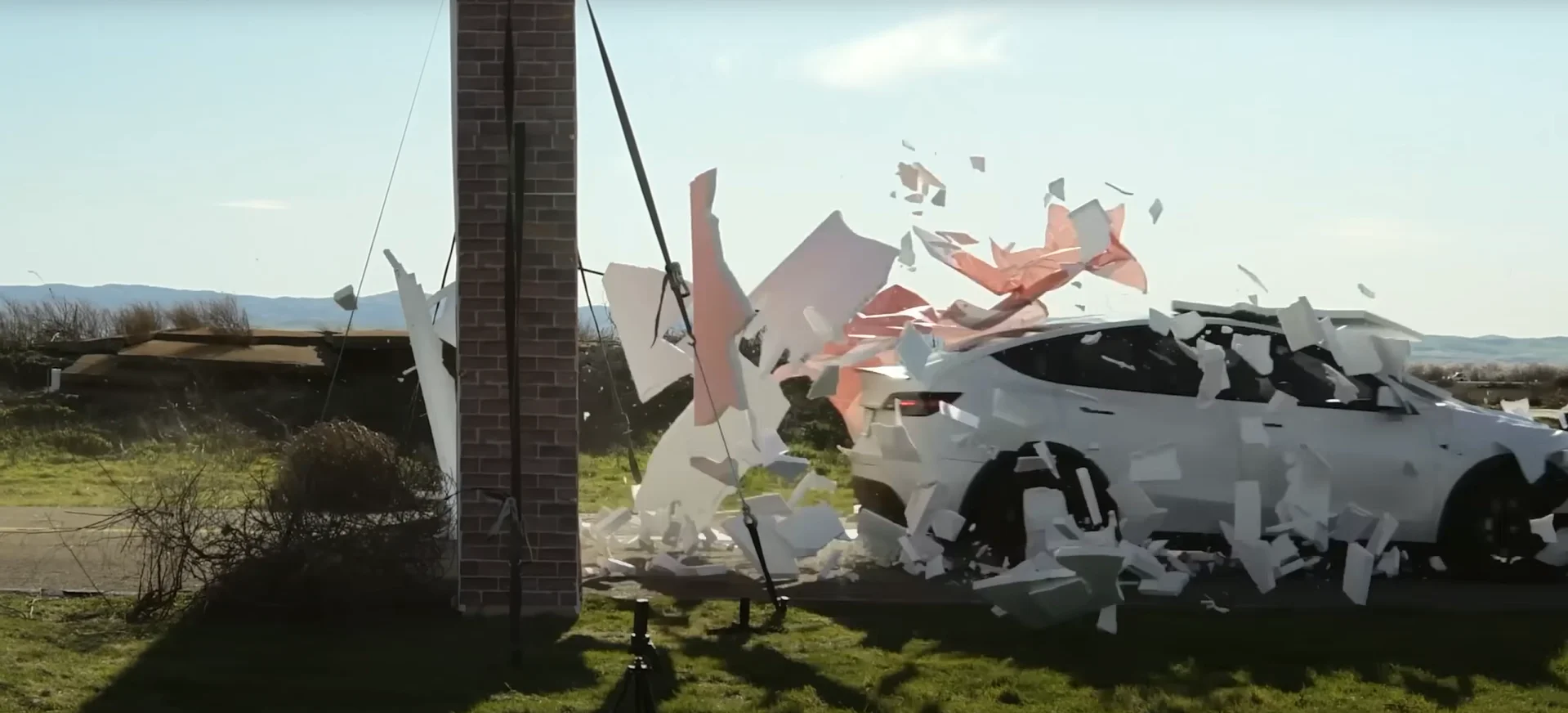
“Turns out my Tesla is less Road Runner, and more Wile E. Coyote!” Rober remarked.
Fortunately for him, the Model Y was different from the cartoon coyote in several ways.
Most notably, there was no cartoon sound effects.
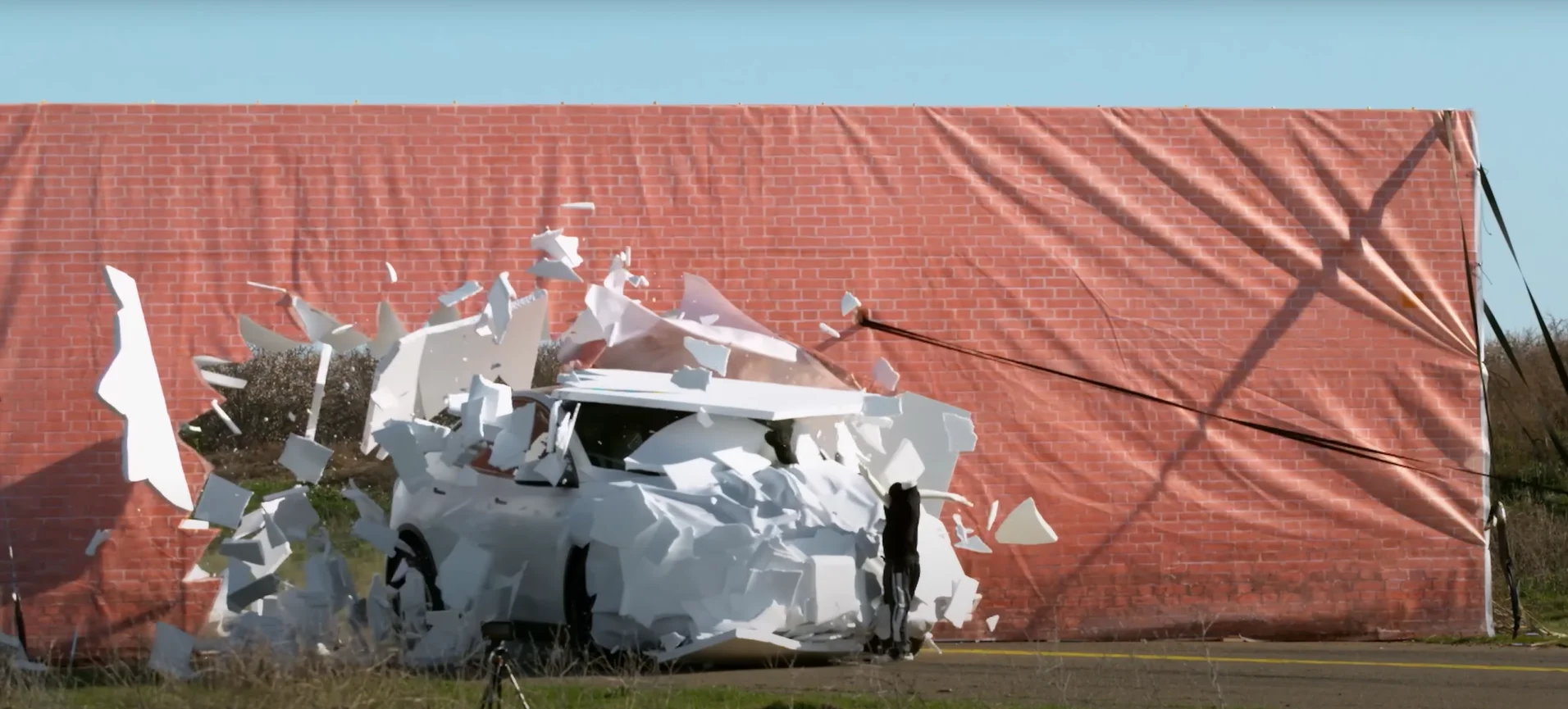
But it also went straight through the wall, rather than cartoonishly flattening itself.
If there’s one positive to be taken from this whole thing, it’s the fact that freakishly realistic walls aren’t commonplace.

Timeline of Tesla’s Autopilot and FSD
2013: Elon Musk publicly discusses the idea of ‘Autopilot’ for cars
2014: Tesla begins offering customers the ability to pre-purchase the Autopilot option
2015: First major Autopilot software release (Tesla Software version 7.0) enabling features such as adaptive cruise and lane keeping
2016: Tesla ends its partnership with Mobileye (which provides vision systems) and begins shifting toward its own hardware
2017: Rollout of ‘Enhanced Autopilot’ (EAP) with more features like automatic lane change, Summon, traffic-aware cruise control
2018: Tesla announces its custom ‘FSD Chip’ (Hardware 3) for self-driving compute
2020: Tesla begins public Beta testing of its ‘Full Self-Driving’ (FSD) software in the US, for a select group of owners
2022: Tesla reintroduces ‘Enhanced Autopilot’ as a purchasable option again alongside FSD
2023: Hardware 4 (HW4) begins shipping in new vehicles — the next major compute/sensor iteration
2023-24: Increased scrutiny – Tesla recalls over 2 million vehicles to address driver-monitoring issues with Autopilot
Ben joined Supercar Blondie in February 2025 after being published by international organizations including LADbible, The Sun, the New York Post, and the Daily Mail. He covers supercars, rare and collectible vehicles, aviation, luxury assets, and the fascinating people behind them. His reporting has explored everything from seven-figure supercars and historic Ferrari collections to unusual aircraft adventures and extraordinary automotive discoveries from around the world. Ben has also gained first-hand insight into vehicle craftsmanship and customization, including visiting specialist workshops to see bespoke vehicles up close.