Madeira Airport is famous for its extreme landings but what's hidden underneath the runway is even more surprising
Published on Oct 31, 2026 at 8:06 AM (UTC-4)
by Daisy Edwards
Last updated on Oct 31, 2026 at 8:06 AM (UTC-4)
Edited by
Mason Jones
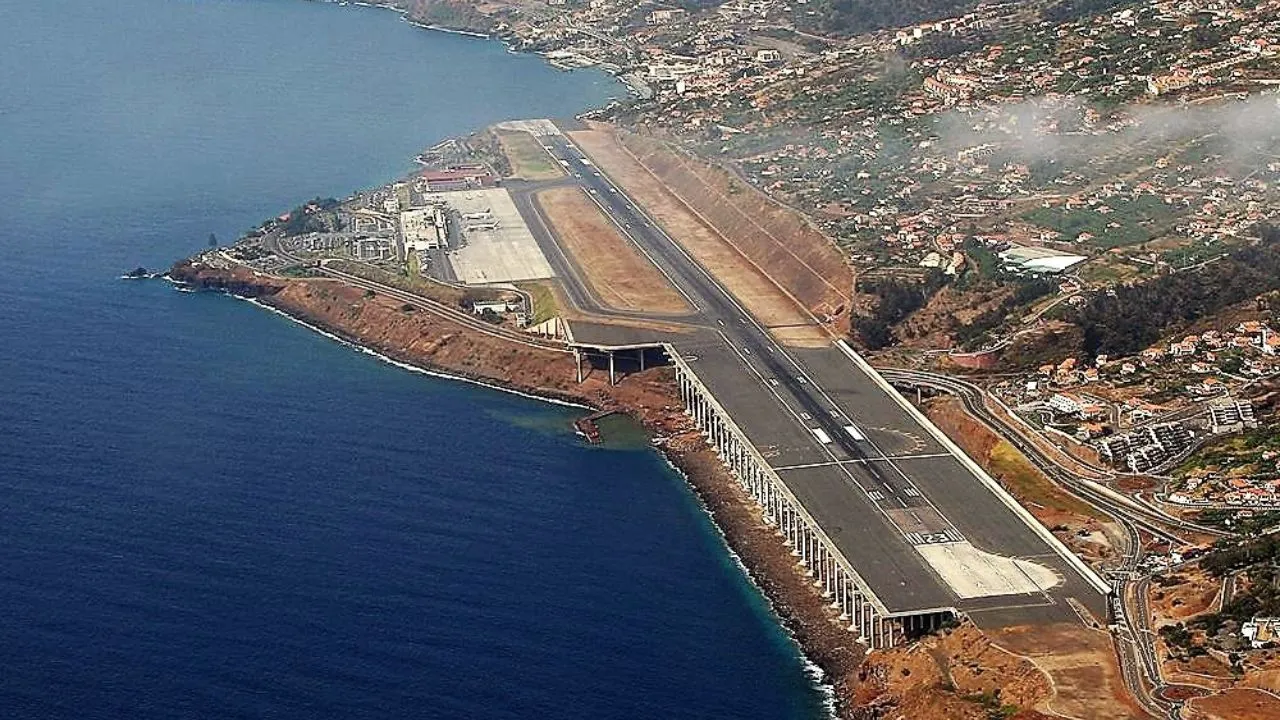

Madeira Airport in Portugal is famous for its dramatic landings, with planes touching down on a runway that’s an engineering marvel.
But while passengers are looking up at the aircraft arriving overhead, something completely different is happening beneath their feet
Hidden underneath the airport’s enormous elevated runway is a whole complex with so much going on.
And it’s one of the most unexpected ways an airport has made use of its space.
Madeira Airport has a huge sports complex hiding beneath its runway
Madeira Airport is already one of the most eye-catching airports in the world, thanks to its unusual runway design.
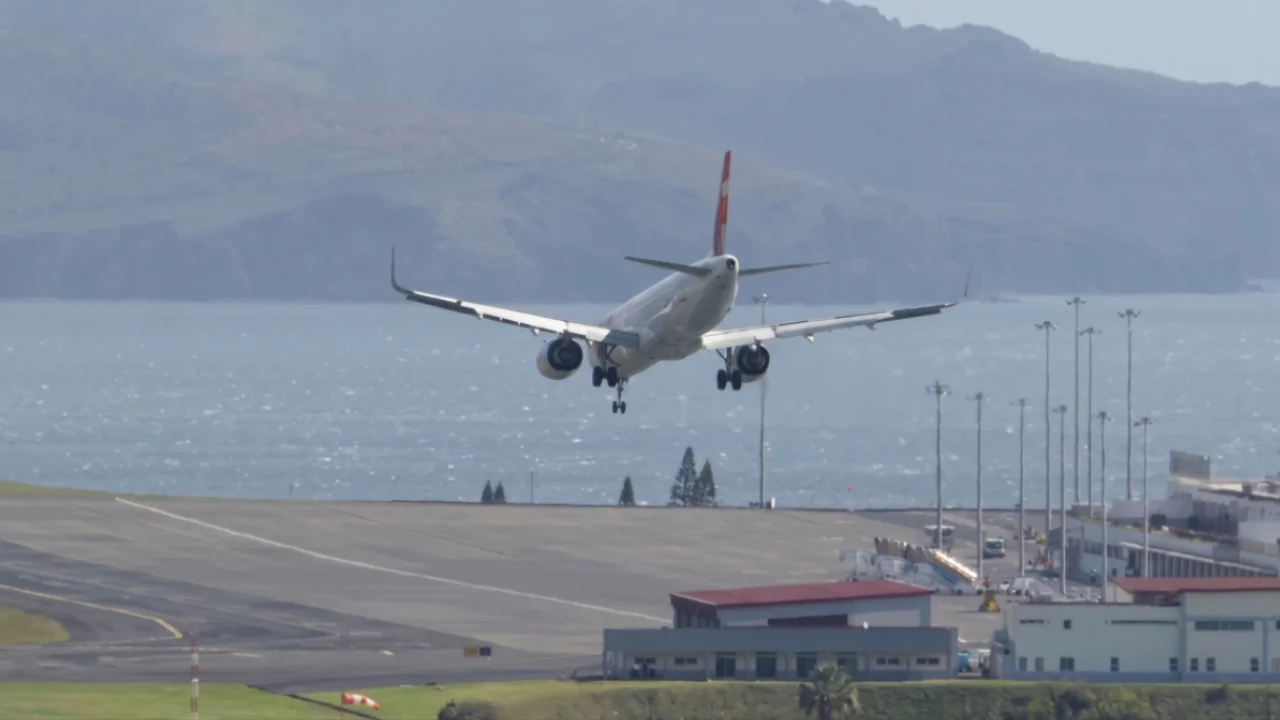
Part of the runway sits on a massive elevated platform supported by enormous concrete columns, creating a striking structure above the surrounding landscape, so when the plane lands, it feels like you’re on holiday straight away.
But instead of leaving all that space underneath the runway empty, the island turned it into something the local community could actually use.
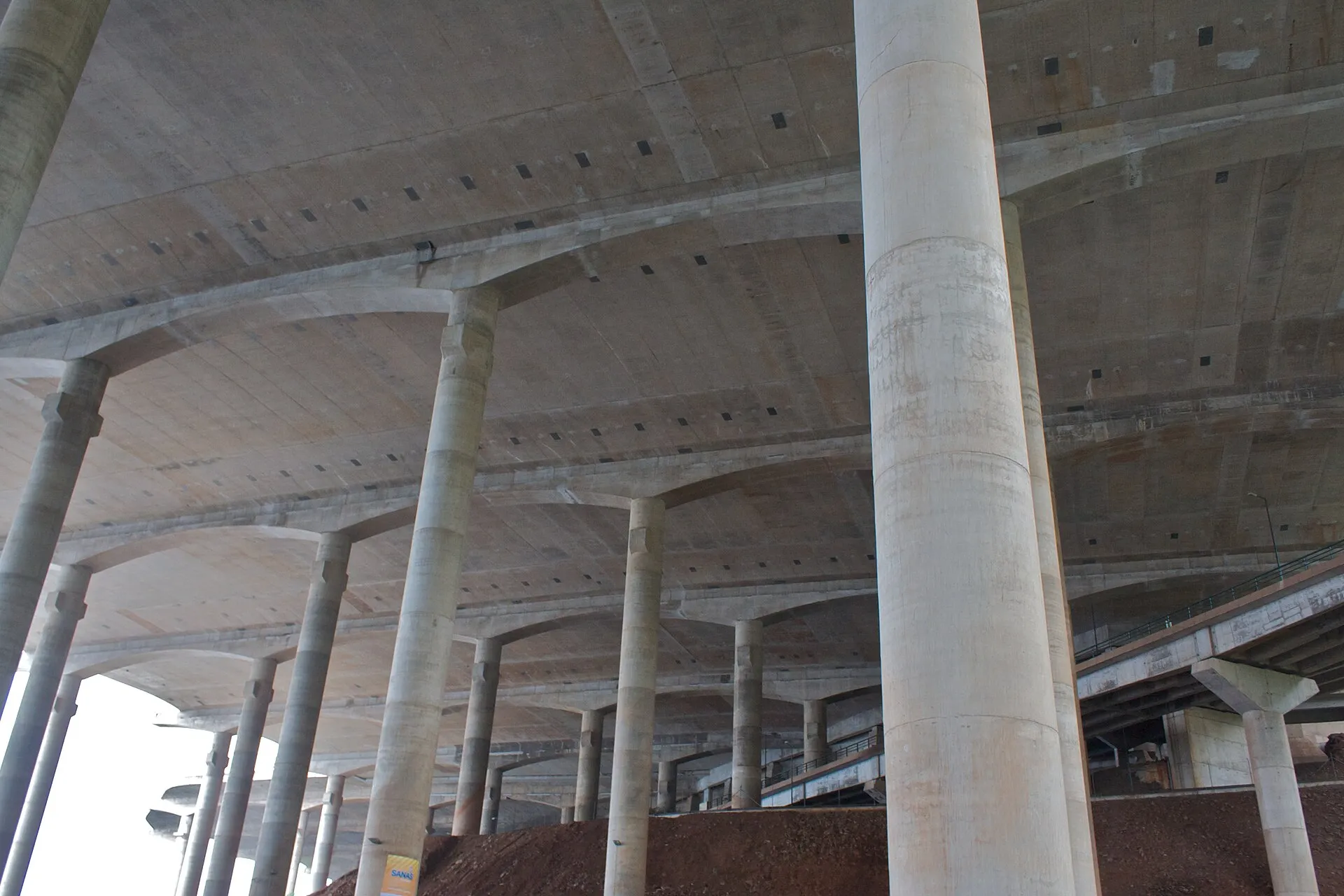
Known as Água de Pena Sports Park, the complex sits beneath the airport’s elevated runway and offers a surprising range of recreational facilities.
There are football pitches, futsal courts, tennis courts, padel facilities, basketball areas and skating spaces, giving locals plenty of ways to get active.
And if sports aren’t your thing, there’s still more to discover, with cafés, children’s play areas, a gym and even an amphitheatre.
It’s a pretty impressive use of space, especially when you consider that planes are landing and taking off above the structure.
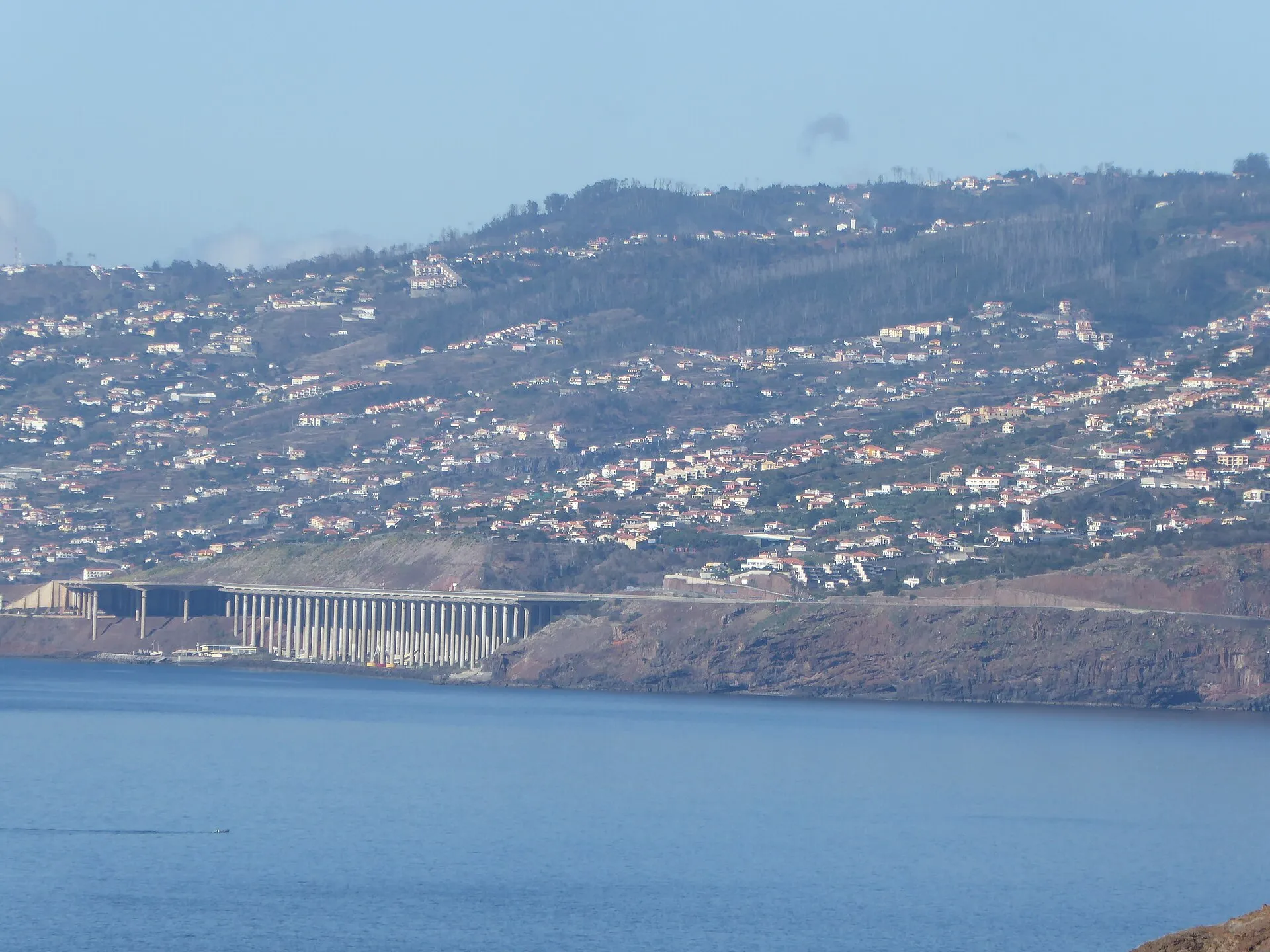
Locals can play football while planes land overhead
The complex isn’t just there to look impressive, either, as it’s an active part of the local community.
In April 2023, a local walking-football organization documented a tournament taking place beneath the airport runway, showing how the unusual space has become a venue for sporting activities.
The development was built between 2005 and 2008, transforming the area beneath the runway into a recreational destination rather than leaving it as unused land.
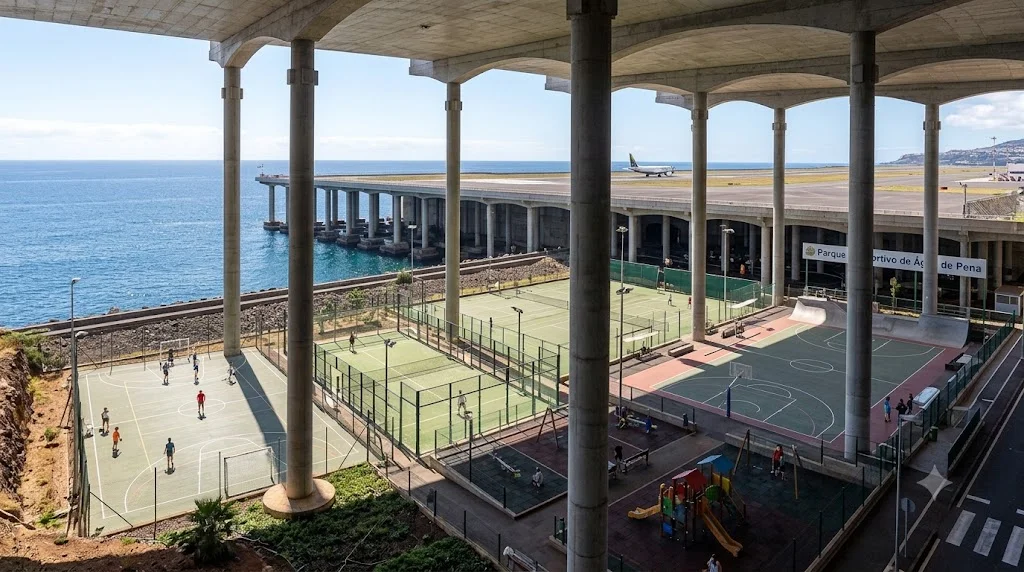
It’s easy to imagine the surreal scene: one minute, you’re passing a football across the pitch, and the next, a plane is coming in to land above the concrete structure.
Of course, the airport and sports facilities serve very different purposes, but their unusual arrangement means they share the same footprint in a way you don’t see every day.
For Madeira, it’s also a practical solution to making the most of available land on a Portuguese island known for its dramatic mountain-filled scenery.
Madeira Airport proves there’s more than one way to use a runway
Airports are usually associated with departure lounges, duty-free shopping and long queues at security.
Madeira, however, offers a rather different picture of what can happen around an aviation hub.
Its elevated runway is an impressive feat of engineering in its own right, but the space underneath has taken on a life of its own as a place for exercise, recreation and community events.
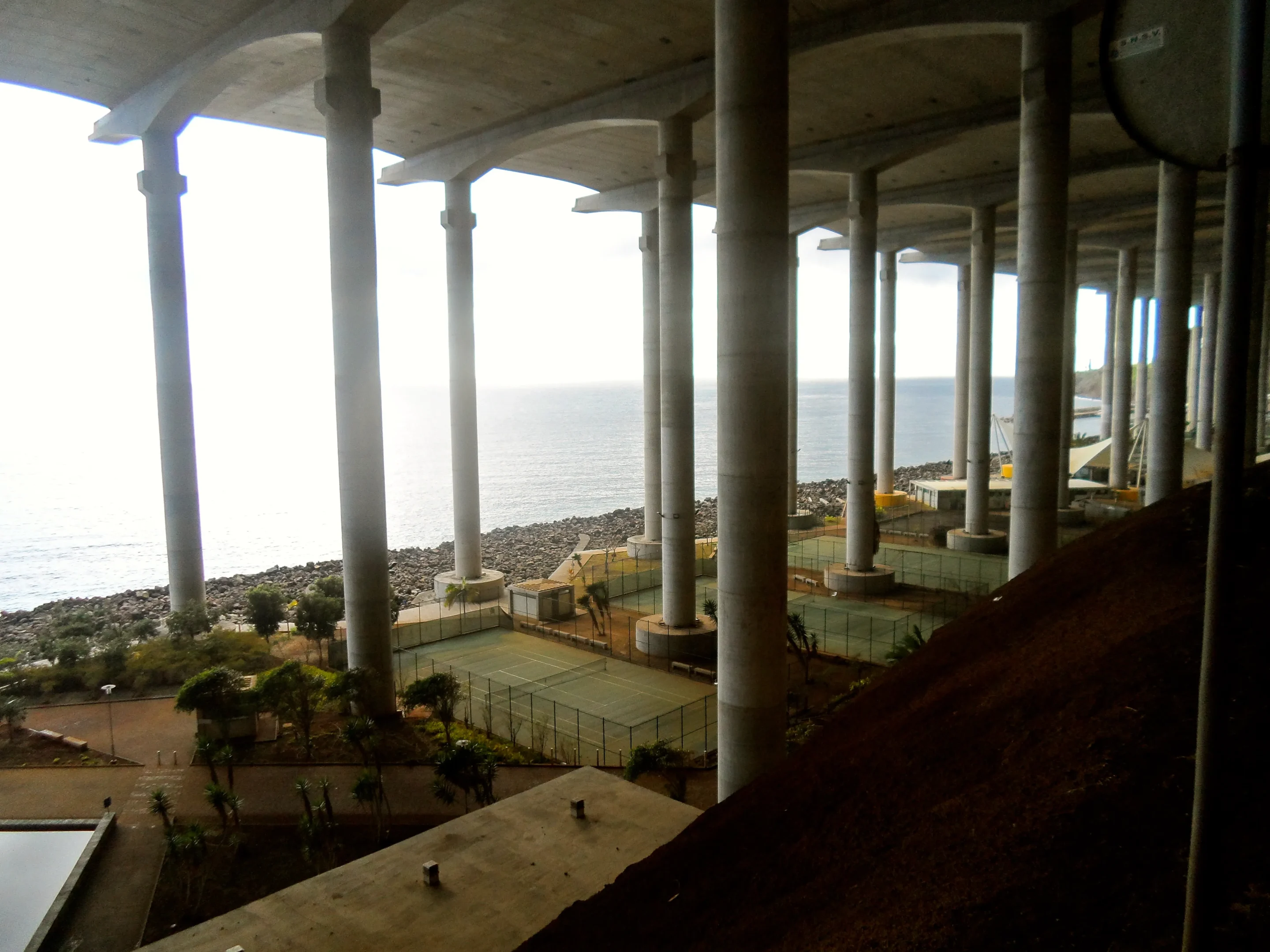
Rather than simply building a structure to support arriving and departing aircraft, the area beneath it has become a destination for people who might not even have a flight to catch.
So while visitors are arriving on the island and experiencing Madeira Airport’s famous landings, locals can be enjoying a football match, playing tennis or stopping for a coffee just below the runway.
Most airports have shops beneath their terminals, but Madeira has shops beneath the runway – cool huh?
Daisy is a technology and automotive journalist covering artificial intelligence, consumer tech, Apple news, cryptocurrency, emerging technologies, and transportation innovation. Since joining the team in 2025, she has reported on everything from AI-powered startups and major iOS updates to viral car stories and the latest developments shaping transportation and the digital economy. Drawing on her background in automotive journalism and a degree in History and Journalism from Goldsmiths, University of London, Daisy specializes in breaking down complex topics into clear, engaging reporting for a global audience. Her work spans cutting-edge technology, innovative vehicles, and the people driving change across both industries. Daisy has gained first-hand access to some of the world's most talked-about technologies and innovators, including meeting Tesla's Optimus humanoid robot during its first European appearance in London. She has also discussed the future of space exploration with an astronaut, bringing unique insights and real-world perspectives to her coverage of emerging technology.




