Man builds a solar-powered electric car and travels 18 miles without using up any battery due to the solar energy
Published on Apr 27, 2026 at 8:22 PM (UTC-4)
by Henry Kelsall
Last updated on Apr 29, 2026 at 1:27 AM (UTC-4)
Edited by
Emma Matthews
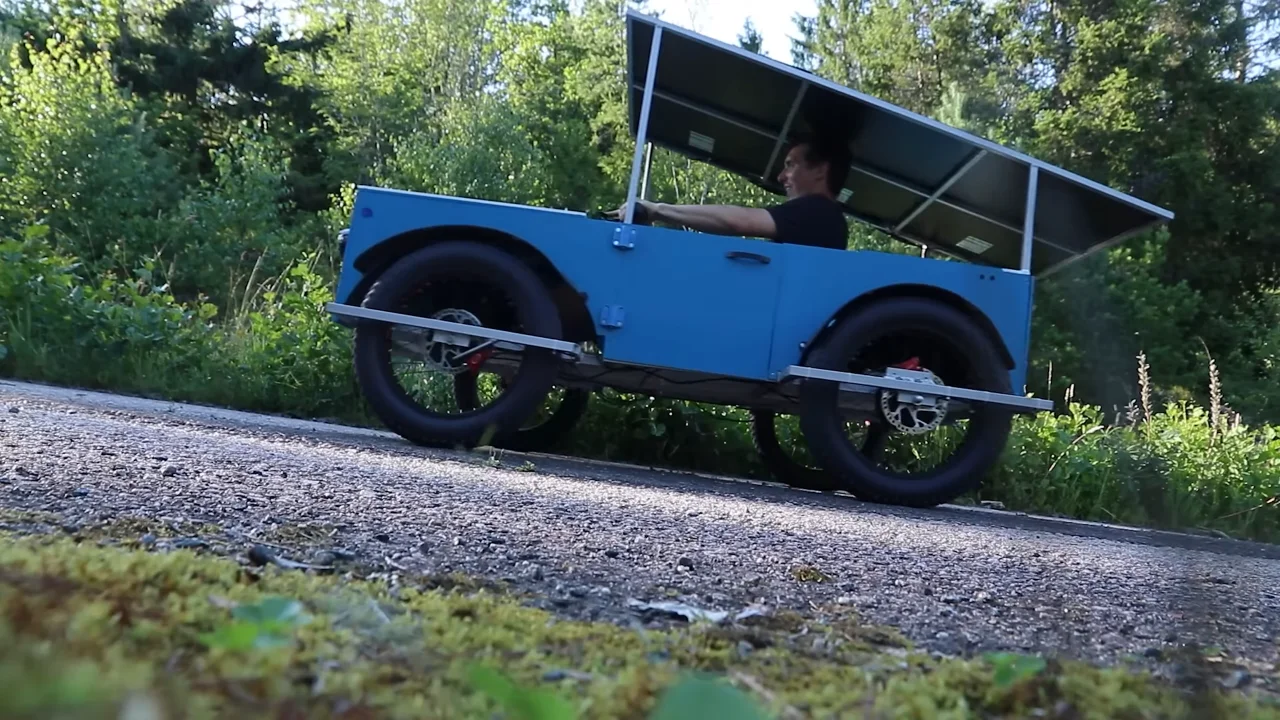

A man has built one of the coolest cars we’ve ever seen, a solar-powered electric car, and traveled nearly 20 miles on it without needing to use the battery.
YouTuber Simon Sörensen used parts from an e-bike to create the car, which can be powered and charged via the solar panel.
It’s a small car, but thanks to the e-bike motors, it has four-wheel drive, giving it great torque despite its size.
While it does use a battery for most of its mileage, it can be fully driven on solar power alone.
How Sörensen came up with the idea of the solar-powered electric car
Sörensen aimed to create a small but comfortable solar-powered car, while also getting decent speed from it.
Two e-bikes were sourced to provide most of the parts for the powertrain, enabling the car to have four-wheel drive.
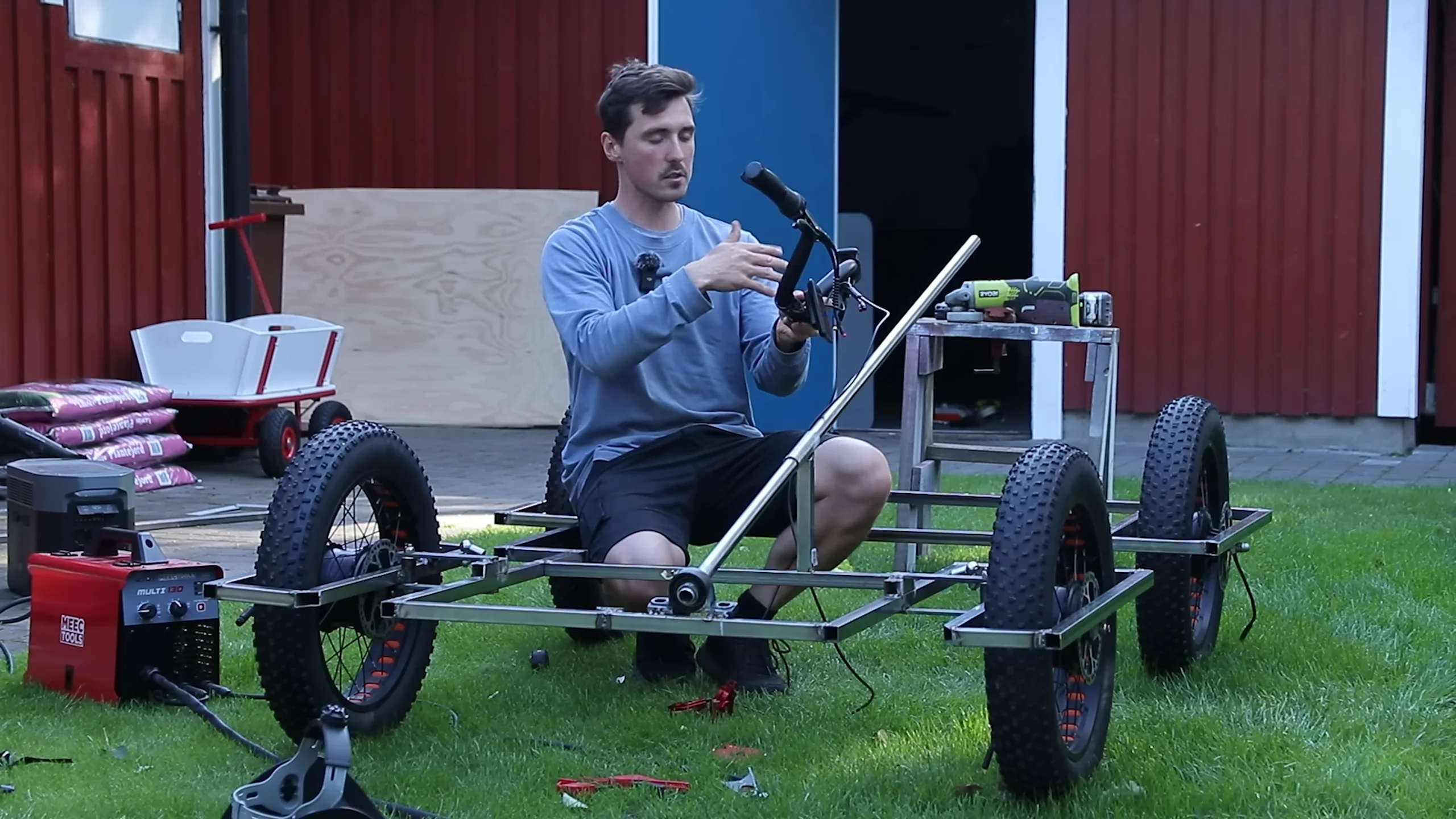
Sörensen spoke to Supercar Blondie about how he came up with the car.
“Basically, I was intrigued by the idea to use parts for E-bikes to build it,” he told us.
“I was particularly interested in the fact that all electric bikes use hub motors (motor in the wheel). This means there are no sprockets or chains, less things to break,” he added.
To construct the chassis, Sörensen used 25mm steel tubing, which involved learning welding from scratch.
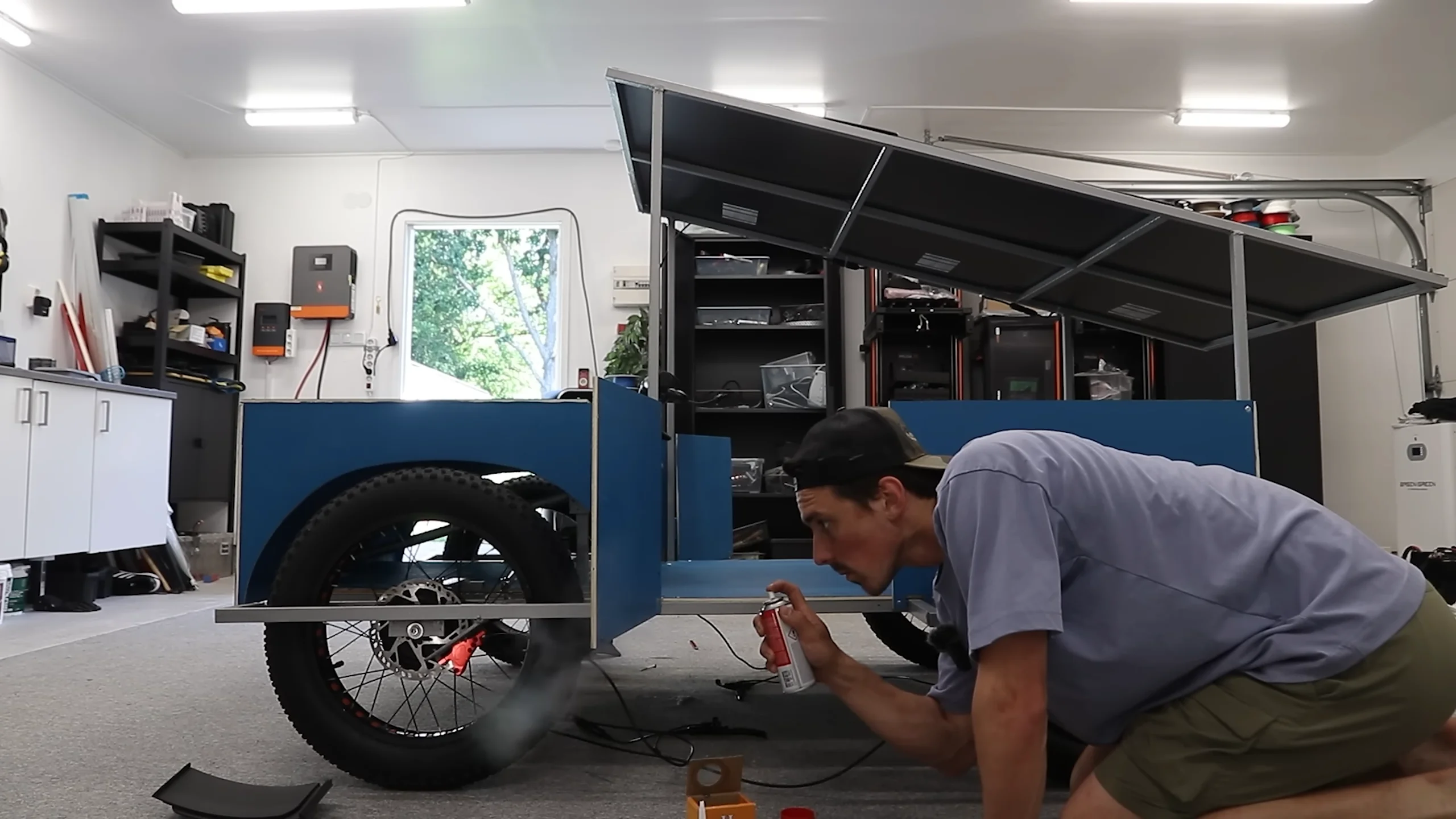
The steering mechanism was another custom design.
The implementation of an Ackermann steering geometry ensured the car had a great turning circle.
Three solar panels provided 300W of power in total, together with a 48-volt battery.
With the lightweight solar panels and lightweight body, Sörensen was able to keep the weight down as much as possible.
This is how the car performed on the road
Sörensen fully utilized the E-bikes motors for the car.
“I use the original batteries that came with the two E-bikes, the same speed controllers and even the same displays,” he told us.
“What’s cool about this particular setup is that I have a 1000W hub motor in each wheel (4wd is awesome!),” he added.
He Sörensen was even able to fit it out with a trunk, doors, and four motor controllers.

“That means I can decide to have front wheel drive, rear wheel drive, and of course, 4 wheel drive,” he told Supercar Blondie
Upon getting it on the road, the little blue car performed exceptionally.
Sörensen showed off the four-wheel drive acceleration, and it was very impressive.
Even after being presented with a steep hill in his video, the little electric car made it all the way to the top.

A hill start was no problem for the little EV.
Sörensen also tested how the car performed on solar power only, driving it 18 miles before the battery was needed.
The overall range, as he told Supercar Blondie, is also very impressive.
“The range, by the way, is about 50km, but on a sunny day you can probably go upwards to 100km,” he said.
So if you want your own solar-powered electric car, get yourself a couple of e-bikes, and you’re nearly there.
Solar power timeline
1839: Edmond Becquerel discovers the photovoltaic effect, observing that light can generate electricity in certain materials
1873: Willoughby Smith identifies the photoconductivity of selenium, proving that solid matter could convert light into an electrical current
1883: Charles Fritts builds the first functioning rooftop energy-generating array using selenium coated with a thin layer of gold
1954: Bell Labs creates the first practical silicon cell, capable of converting enough sunlight into power to run everyday electrical equipment
1958: The Vanguard I satellite launches, becoming the first spacecraft powered by these light-harvesting technologies
1970s: The global energy crisis drives extensive research and government funding into renewable alternatives to fossil fuels
1982: The first megawatt-scale power station built to harness energy from the sun goes online in Hesperia, California
2000: Germany passes the Renewable Energy Sources Act, introducing feed-in tariffs that massively accelerate global market growth
2012: Total global capacity for harnessing photovoltaic energy passes the 100-gigawatt milestone
2020: The International Energy Agency declares that the best-performing light-capturing projects now offer the cheapest electricity in history
Henry joined the Supercar Blondie team in February 2025, and since then has covered a wide array of topics ranging from EVs, American barn finds, and the odd Cold War jet. He’s combined his passion for cars with his keen interest in motorsport and his side hustle as a volunteer steam locomotive fireman at a heritage steam railway.