Man who built solar-powered yacht that can run forever puts it through a heavy wind test in the Mediterranean sea
Published on Apr 20, 2026 at 3:29 AM (UTC-4)
by Molly Davidson
Last updated on May 01, 2026 at 5:48 AM (UTC-4)
Edited by
Emma Matthews
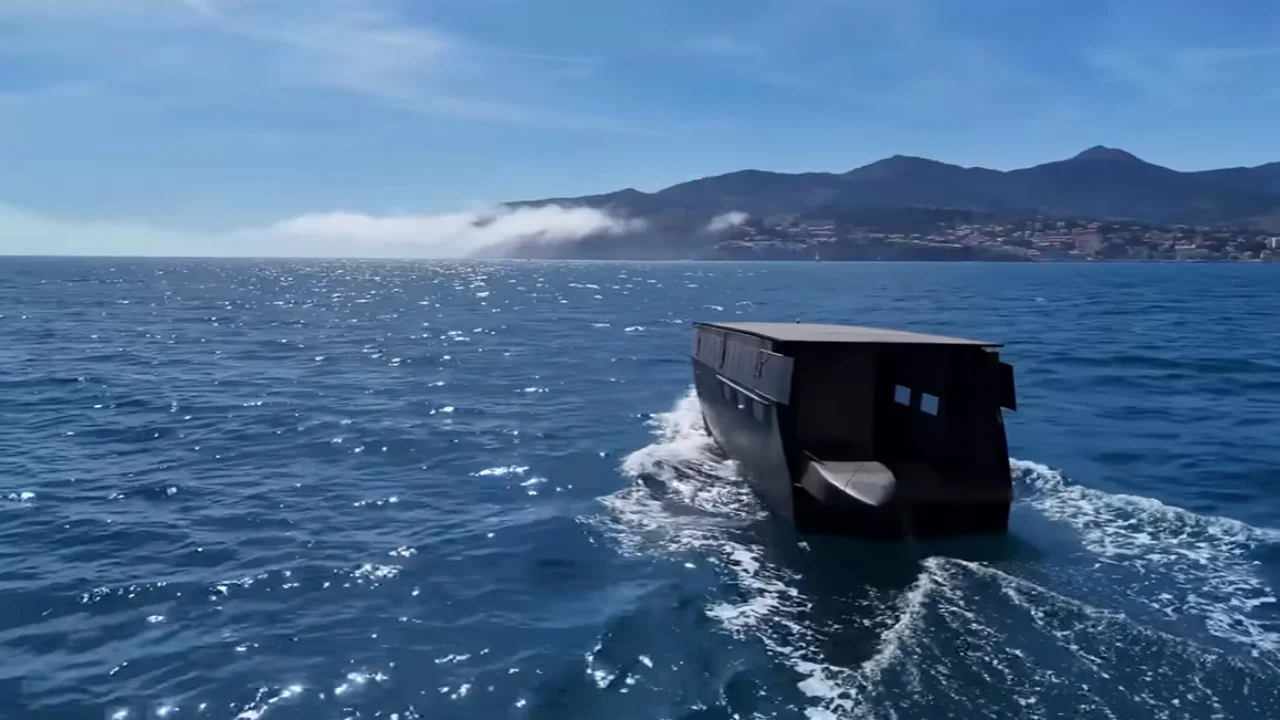

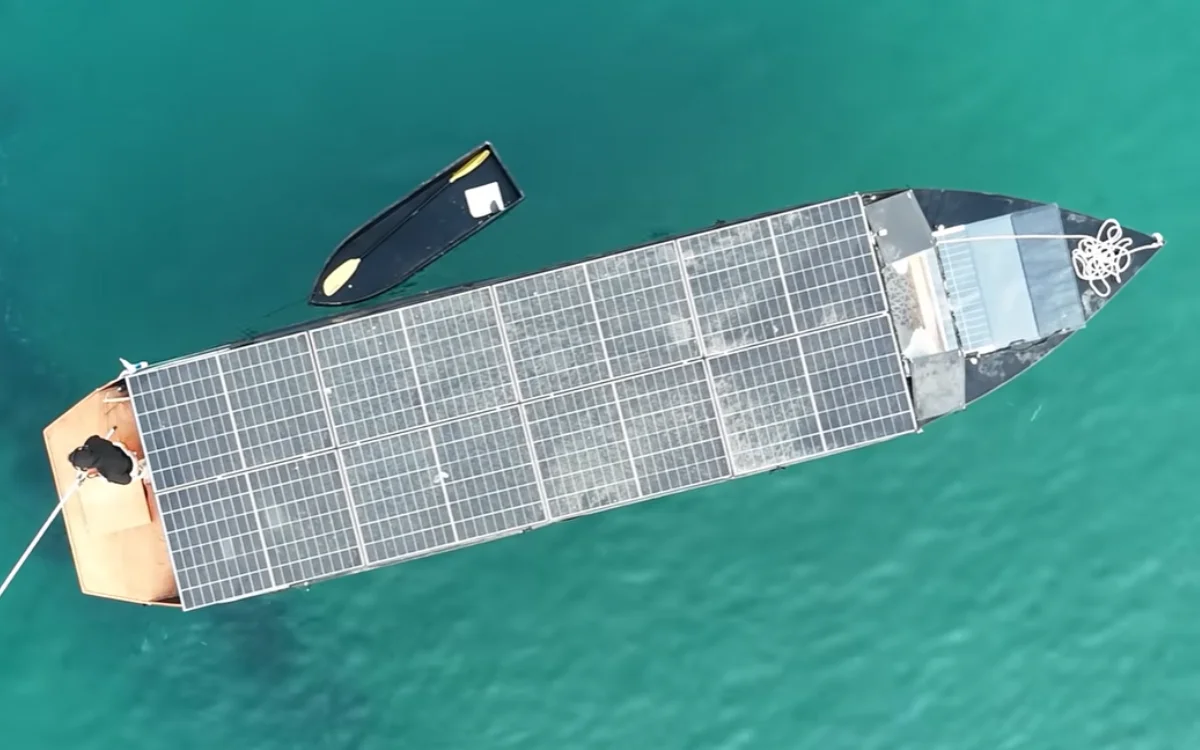
A man who built a solar-powered yacht designed to run indefinitely has now tested it in heavy winds.
This time, it wasn’t about range or upgrades, but how the boat holds up when conditions turn.
Because calm water is one thing, but real-world use rarely looks like that.
And once the wind picks up, the margins get a lot tighter.
How the solar-powered yacht handled heavy Mediterranean winds
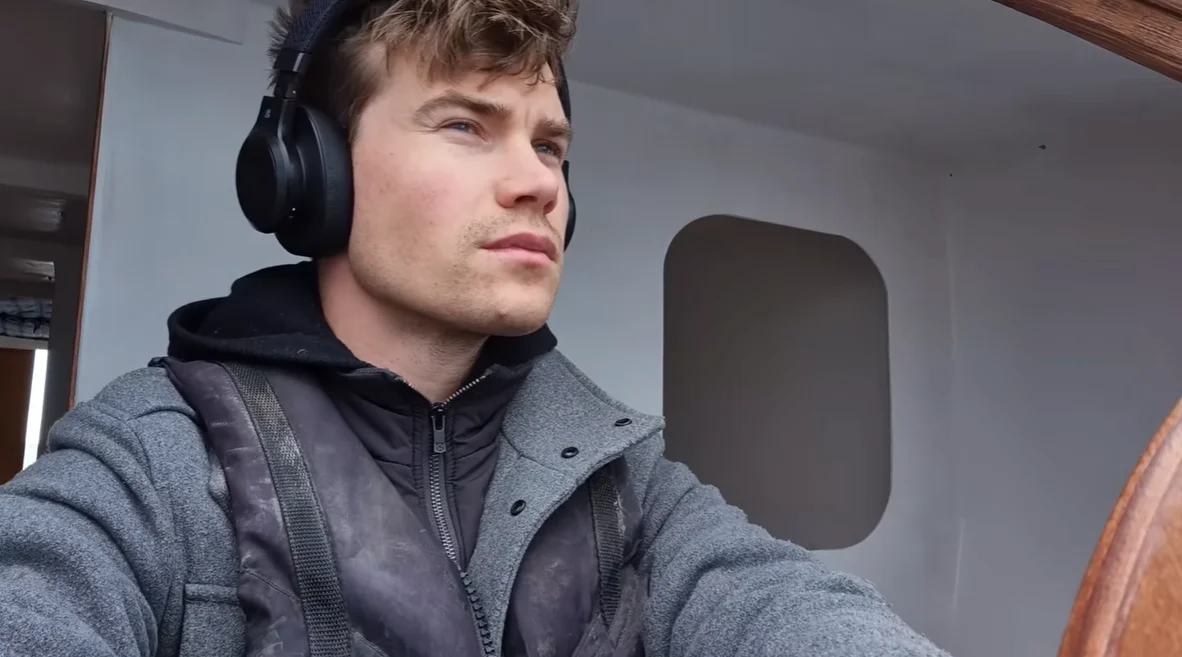
Lukas Sjoman, who documents the Helios 11 on his True North Yachts YouTube channel, took the prototype out into 20-25 knot winds along the Mediterranean coast.
It wasn’t extreme weather, but for a lightweight, solar-powered boat with minimal ballast, it was enough to expose any weak points.
He kept things deliberately simple.
No backup engine, no generator, just solar power, a small auxiliary sail, and an anchor as a last resort.
Because of that, every part of the test came down to how well the system could hold its own.
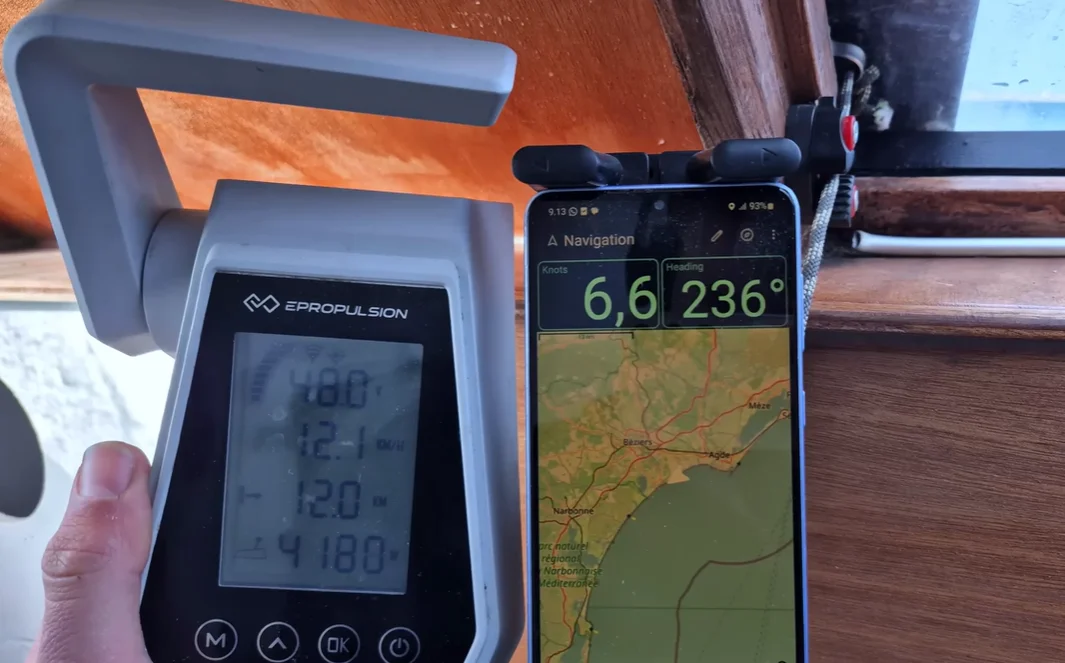
Even in a headwind pushing past 20 knots, the boat maintained a cruising speed between six and 6.7 knots, powered by around 3,500-4,000 watts.
At the same time, solar input ranged between 1,200-1,500 watts, depending on cloud cover.
So while energy was still coming in, the conditions were clearly working against it.
As the wind shifted to a beam angle and gusts climbed to around 32 knots, Sjoman pushed the test further by cutting the motor completely.
That’s when the drift became clear.
In those conditions, the boat moved at roughly one knot without propulsion, forcing constant course corrections once underway again.
Still, the system held together.
After nearly three hours, the yacht had covered 16 nautical miles, using 9.5 kilowatt-hours of energy, with a portion of that offset by solar charging during the trip.
And importantly, the batteries recovered close to full charge by the afternoon.
Related

What this test says about solar boats in real conditions
That result starts to paint a clearer picture of where solar-powered boats stand outside ideal conditions.
In mixed headwinds and small waves, Sjoman estimates the Helios 11 could manage around 40 nautical miles in a day, even without perfect sunlight.
That’s a noticeable drop from calmer conditions, but it’s still usable.
More importantly, it comes without the usual trade-offs.
There’s no sail handling, no fuel stops, and no engine noise.
Just steady, continuous output.
However, the test also highlights what still needs work.
Wind exposure, panel positioning, and stability all become bigger factors as conditions worsen, especially on a smaller prototype.
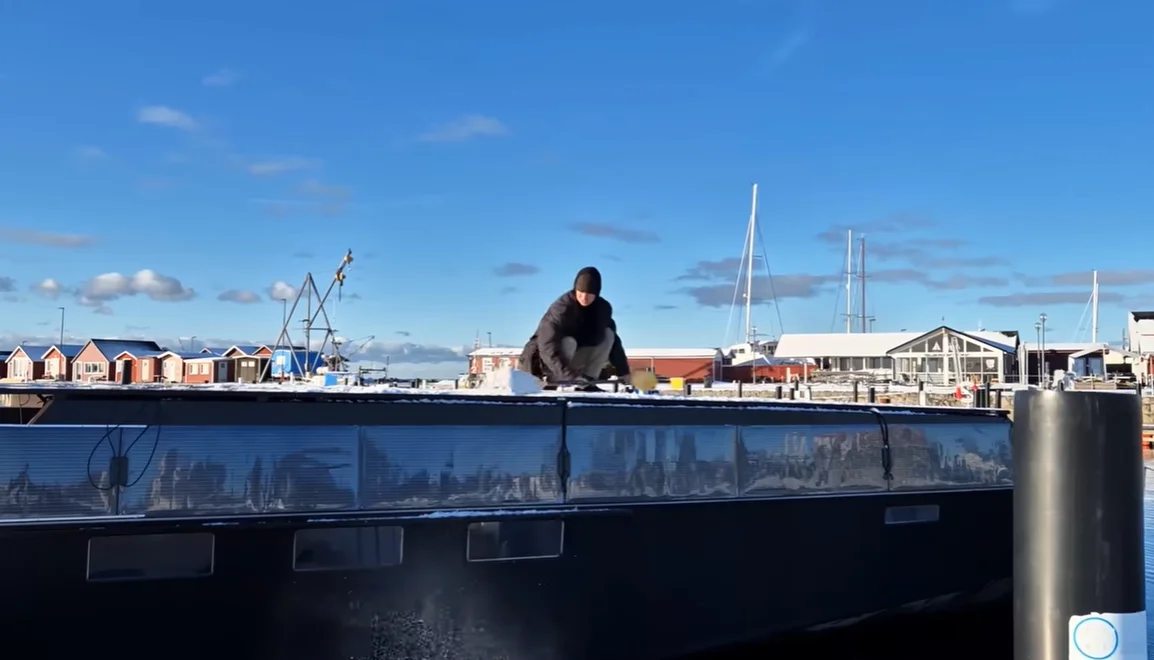
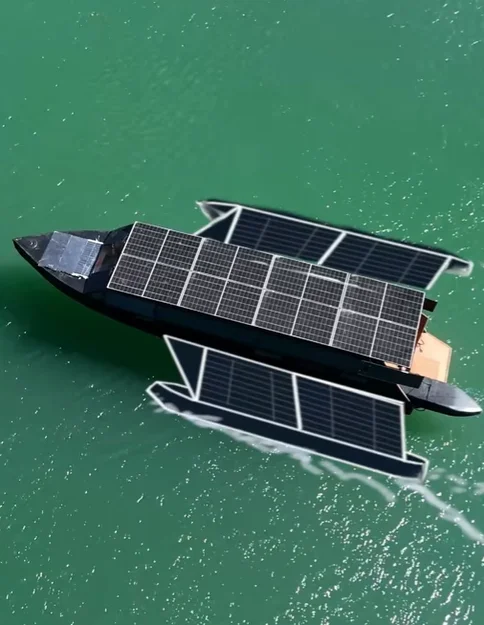
At one point, Sjoman even had to retract side panels to avoid damage, sacrificing around 100 watts of charging to keep things secure.
So while the system works, it’s not immune to compromise.
Associate Professor Saman Gorji, Director of the Centre for Smart Power and Energy Research at Deakin University, told Supercar Blondie systems like this are ‘already viable.’
But only within certain limits.
He added that for more demanding conditions, hybrid systems are still the more practical solution, particularly where range and reliability become critical.
Even so, the direction is clear.
The Helios 11 didn’t just survive the test.
It kept moving, kept charging, and kept proving that solar power isn’t limited to calm, ideal days.
And in rougher water, that matters more than the headline numbers.

With roles at TEXT Journal, Bowen Street Press, Onya Magazine, and Swine Magazine on her CV, Molly joined Supercar Blondie in June 2025 as a Junior Content Writer. Having experience across copyediting, proofreading, reference checking, and production, she brings accuracy, clarity, and audience focus to her stories spanning automotive, tech, and lifestyle news.