Mercedes deliberately crashes two new CLA models into each other at high speed in world first
Published on Nov 01, 2026 at 3:04 PM (UTC-5)
by Alessandro Renesis
Last updated on Nov 01, 2026 at 3:04 PM (UTC-5)
Edited by
Ben Thompson
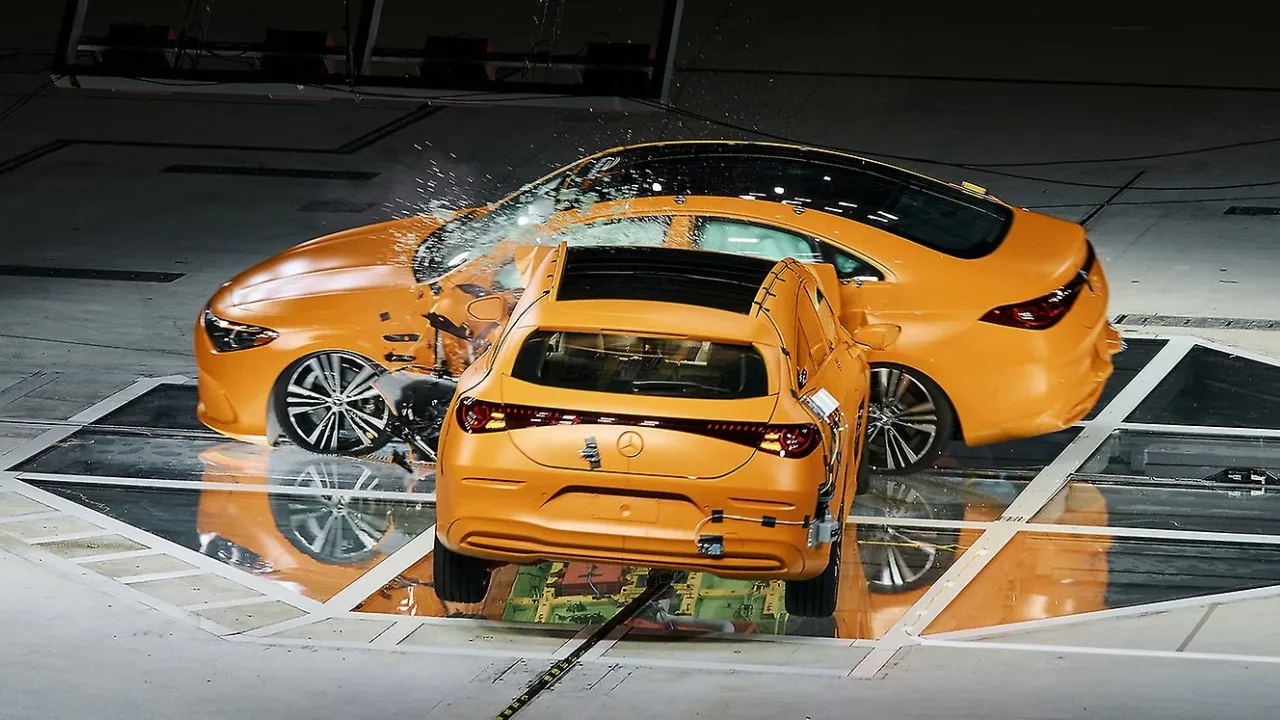

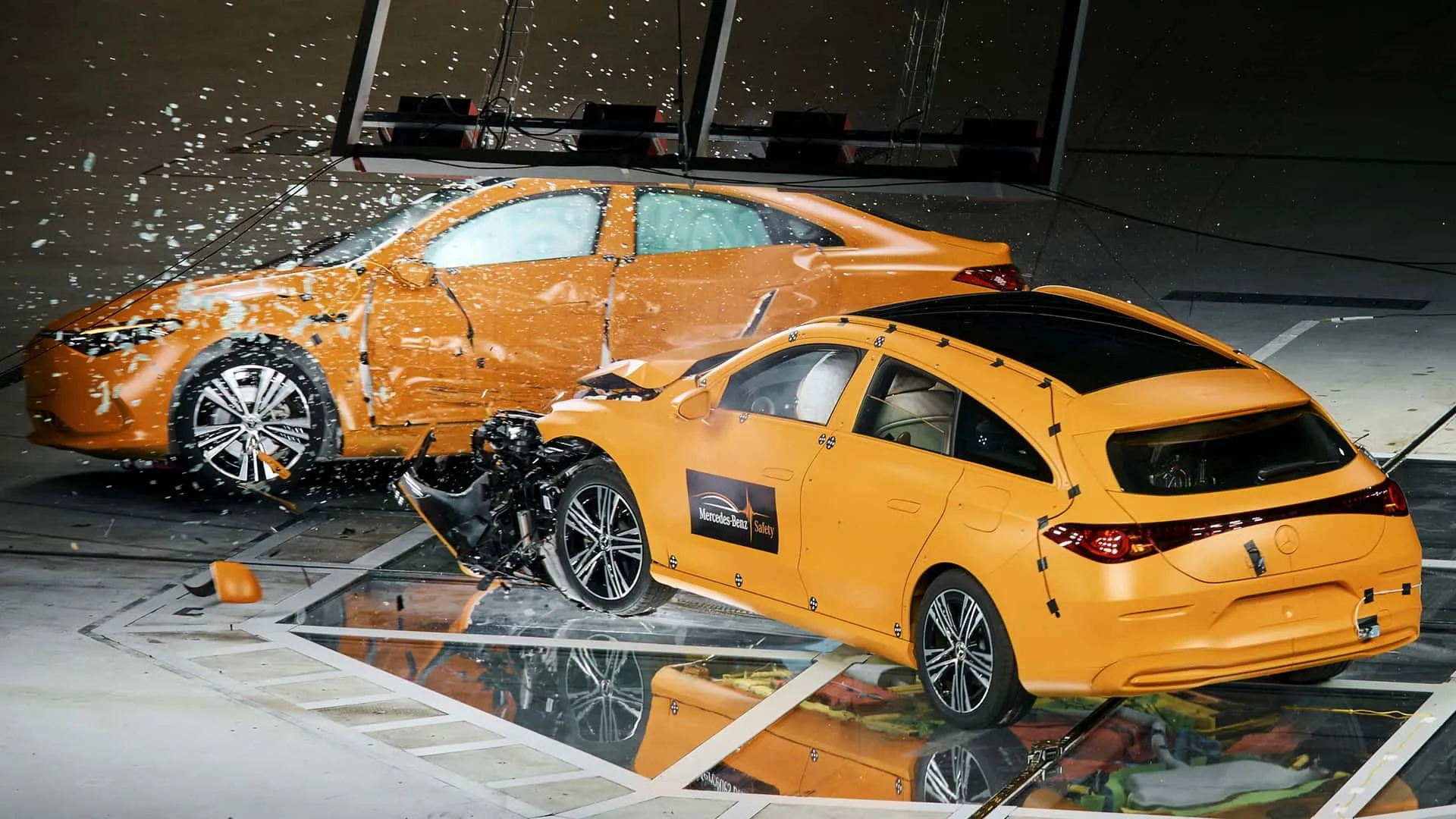
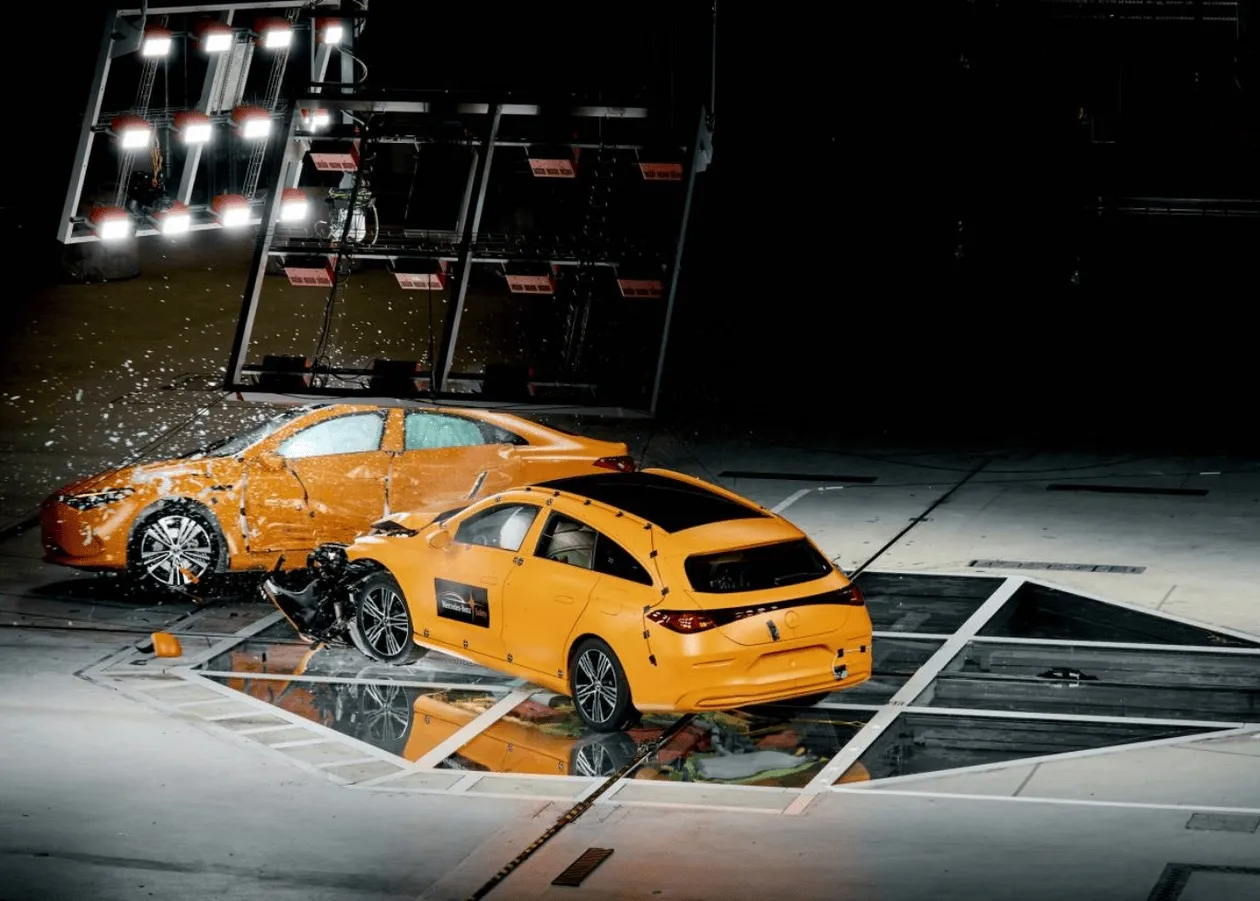
Mercedes-Benz recently escalated its safety evaluations by staging a high-speed collision involving a pair of new Mercedes CLA vehicles.
Rather than impacting a stationary barrier, which is what typically happens, the demonstration simulated a real crash between two moving vehicles.
Both CLA models were driven directly into each other at a speed of 56km/h (35mph) without any prior braking, and the result was spectacular.
Sadly, two Mercedes vehicles were indeed ‘harmed in the making of this video’.
The reason why Mercedes crashed these vehicles
Mercedes mostly wanted to test the aftermath of a potential crash between vehicles with different powertrains.
One model featured an electrified internal combustion engine, while the other was an all-electric CLA.
The collision directly targeted the driver’s side of the electric variant, placing incredible physical force on both the cabin and the underfloor structure.
Despite the severity of the impact, the result was satisfactory.
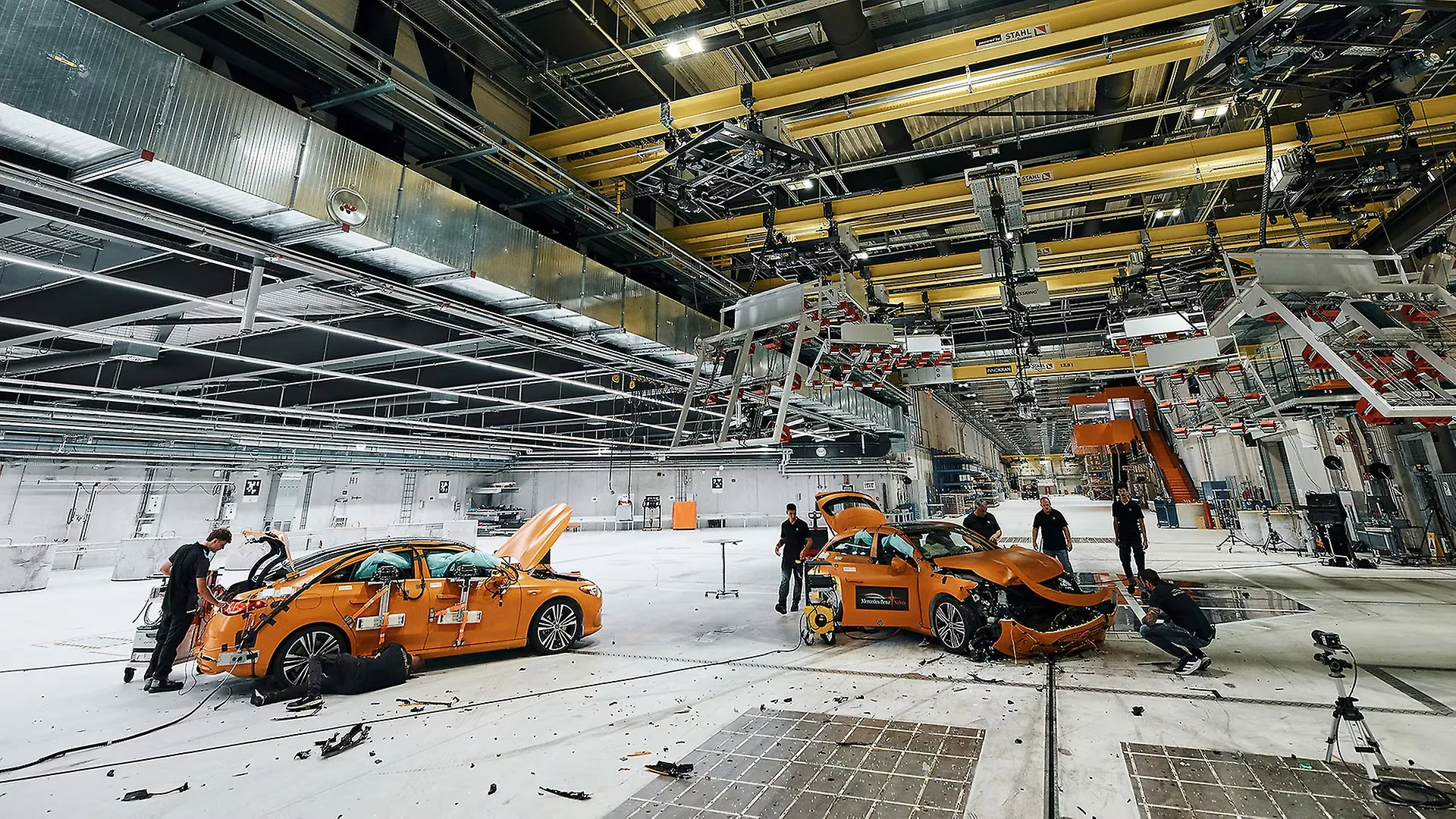
The ultra-rigid safety passenger compartments on both vehicles remained intact post-collision, and telemetry data gathered from the crash-test dummies placed inside the vehicles showed injury risk values were under control.
Also – the icing on the cake – the doors remained operational for emergency access.
It was also a test for Mercedes’ high-voltage batteries
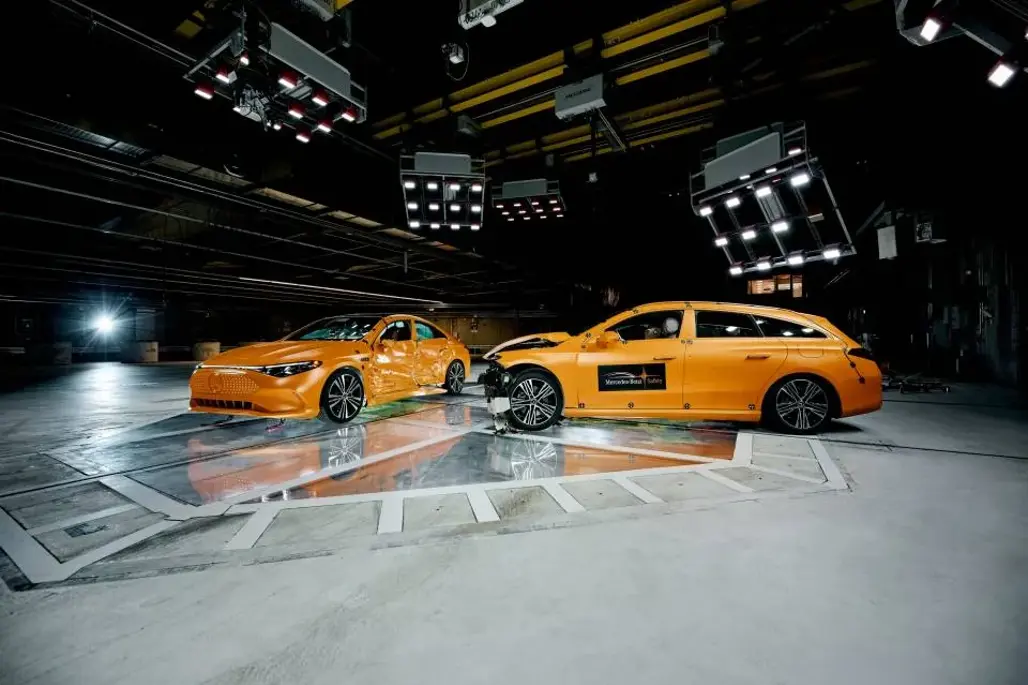
One of the main goals was to test the resilience – overused word, we know – of the electric CLA’s system.
Electric vehicle batteries are generally mounted along the vehicle floor, making them super vulnerable during side-impact events.
Post-crash inspection revealed that the high-voltage battery casing, protective frame, and internal cell modules suffered no structural breaches, which is crucial because it means the car didn’t catch fire.
Good news all around.
Apart from the fact two perfectly drivable Mercedes vehicles are now destroyed.
Not all vehicles undergo physical crash testing
While every street-legal vehicle must comply with government safety regulations, not all are physically crashed in a laboratory.
Meeting legal compliance depends on region and classification, but manufacturers frequently use computer simulations, component testing, or shared platform data rather than destroying full vehicles.
Standard consumer ratings, such as those from Euro NCAP or the IIHS, are voluntary programs that target popular mass-market models, leaving many niche vehicles unrated.
Low-volume supercar manufacturers, for example, often crash a single chassis repeatedly through modular repairs to satisfy requirements.
But they don’t actually crash a perfectly usable car.
We’re certainly glad to hear that.
The evolution of automotive crash testing
1934 – General Motors performed the world’s first recorded full-vehicle barrier crash test at its Milford Proving Ground
1949 – Sierra Engineering developed Sierra Sam, the first anthropomorphic test device (ATD). In other words, the first dummy
1959 – Mercedes-Benz pioneered the crumple zone concept: an engineered structural safety feature in a vehicle that deforms in a controlled way during a collision to absorb kinetic energy
1971 – General Motors developed the Hybrid I dummy, creating the first standardized test dummy for repeatable frontal crash results
1979 – The US National Highway Traffic Safety Administration (NHTSA) launched the New Car Assessment Program (NCAP) and introduced the now famous 5-star safety rating system
1980s – Supercomputers enabled the introduction of Finite Element Analysis (FEA) in automotive design, which means manufacturers could finally run virtual simulations
1997 – The European New Car Assessment Programme (Euro NCAP) was founded
2020s – Crash testing expanded to focus heavily on battery pack resilience during severe impacts, alongside testing Advanced Driver Assistance Systems (ADAS)
Alessandro is an automotive journalist with 10 years of experience covering supercars, automotive history, emerging vehicle technology, and luxury transportation. He wrote the first article published on SupercarBlondie.com when the website launched in 2022 and has since built a reputation for insightful reporting across the automotive and transportation industries. His expertise is grounded in hands-on experience. Alessandro has driven every Tesla model ever produced, from the original Roadster to the Cybertruck, and regularly covers the latest developments in electric vehicles and automotive innovation. His passion for transportation extends beyond cars, he has even flown a Boeing 787 Dreamliner simulator in Addis Ababa, Ethiopia. His reporting spans everything from classic American muscle cars and rare automotive discoveries to luxury yachts, private aircraft, high-end watches, and cutting-edge vehicle technology. Known for his deep knowledge of automotive history and ability to uncover the stories behind iconic vehicles, Alessandro brings readers a blend of historical context, technical expertise, and first-hand experience.




