The world’s first floating hotel opened in Australia before surprisingly ending up in North Korea
Published on Nov 29, 2025 at 7:15 PM (UTC-5)
by Jack Marsh
Last updated on Nov 29, 2025 at 7:15 PM (UTC-5)
Edited by
Amelia Jean Hershman-Jones


Once a state-of-the-art attraction on the coral reefs of north-east Australia, the world’s first floating hotel (most recently named Hotel Haegumgang) originally opened as a five-star Four Seasons resort, but has now been demolished off the coast of North Korea.
Given that over two-thirds of Earth’s surface area is dominated by water, it seems predictable that mankind would soon look to expand its territory into the blue.
In recent years, this has become increasingly common, particularly around ports in the Middle East.
But back in the 1980s, the Four Seasons brand decided to open the first floating hotel ever made – only, the world wasn’t ready.
VISIT SBX CARS – View live supercar auctions powered by Supercar Blondie
How the first floating hotel traveled from Australia to the bottom of the ocean off North Korea’s coast
In the times before Opera Houses were docked in Dubai and theme parks were erected in the Arabian Gulf, Four Seasons decided to take its expertise in hotel building and expand its reach to the Great Barrier Reef.
Originally named the Four Seasons Barrier Reef Resort, the world’s first floating hotel was built in 1988 and anchored down in the John Brewer Reef, 43 miles off the shore of Townsville, Australia.
Designed by Swedish engineer and maritime archaeologist Sten Sjöstrand, the seven-story hotel was flanked by floating pontoons that served as a harbor and helipad, allowing air and water access.
Boasting a swimming pool, two restaurants, a nightclub, a disco, two bars, a sauna, a gym, a library, a research lab, and a tennis court – it was set to be quite the attraction.

However, its expensive costs, troublesome weather, and access issues resulted in the Four Seasons closing the world’s first floating hotel just one year after it opened.
It was then purchased by EIE International, which sailed it over to Vietnam in 1989, before shutting down and facing the same expulsion to North Korea after Hyundai bought it.
On the Mount Kumgang Tourist Region in North Korea, the marine building was renamed Hotel Haegumgang and operated from 2000 to 2008.
But after Hyundai failed to keep the money flowing as quickly as the waves beneath its surface, the Korean brand ceased its operations, and the government issued its demolition in 2022.
Related
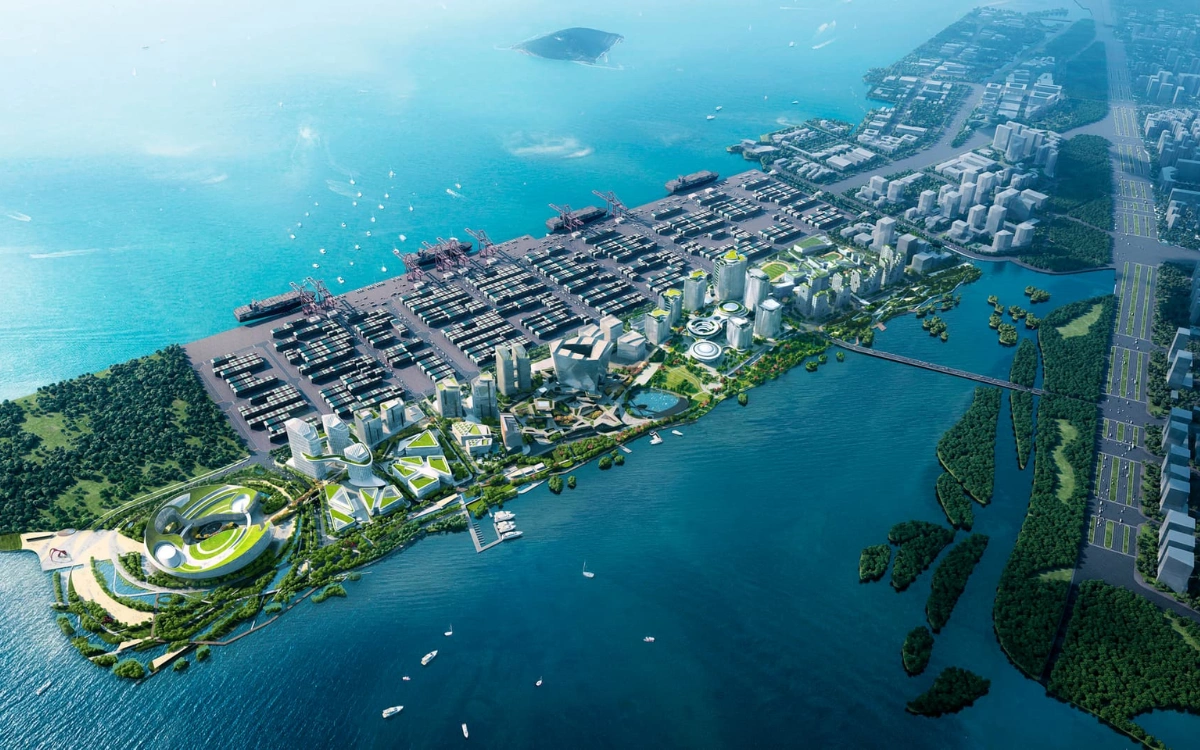

Hotel Haegumgang led the way for billion-dollar sea-based cities
While it was ultimately a failure on all three shores, the first floating hotel did have the right concept, just not the best execution.
Nowadays, the effects are still rippling through the water, showcasing that floating buildings are possible.
This has been adopted by many different architecture firms, such as Lazzarini Design Studios, which has made modular pyramids designed to house people in utopian ocean villages.

If not villages, then the Four Seasons did inspire McDonald’s to get aquatic too, as it created an on-the-go restaurant named McBarge that once sailed around Vancouver, Canada.
These floating structures aren’t without issue, though, as the Kansai airport in Japan has found out to be slowly but surely sinking.
After beginning his career writing about all things gaming, Jack joined the Supercar Blondie team in November 2024 as a Content Writer. Since joining SB Media, in addition to a love for covering emerging tech, he has developed an admiration for vintage restorations, particularly old American brands like Dodge and Ford.




