Seeing an Airbus A380 next to a Boeing 737 is like a light jet beside an airborne megastructure
Published on Feb 24, 2026 at 12:38 PM (UTC+4)
by Molly Davidson
Last updated on Feb 24, 2026 at 9:12 PM (UTC+4)
Edited by
Emma Matthews
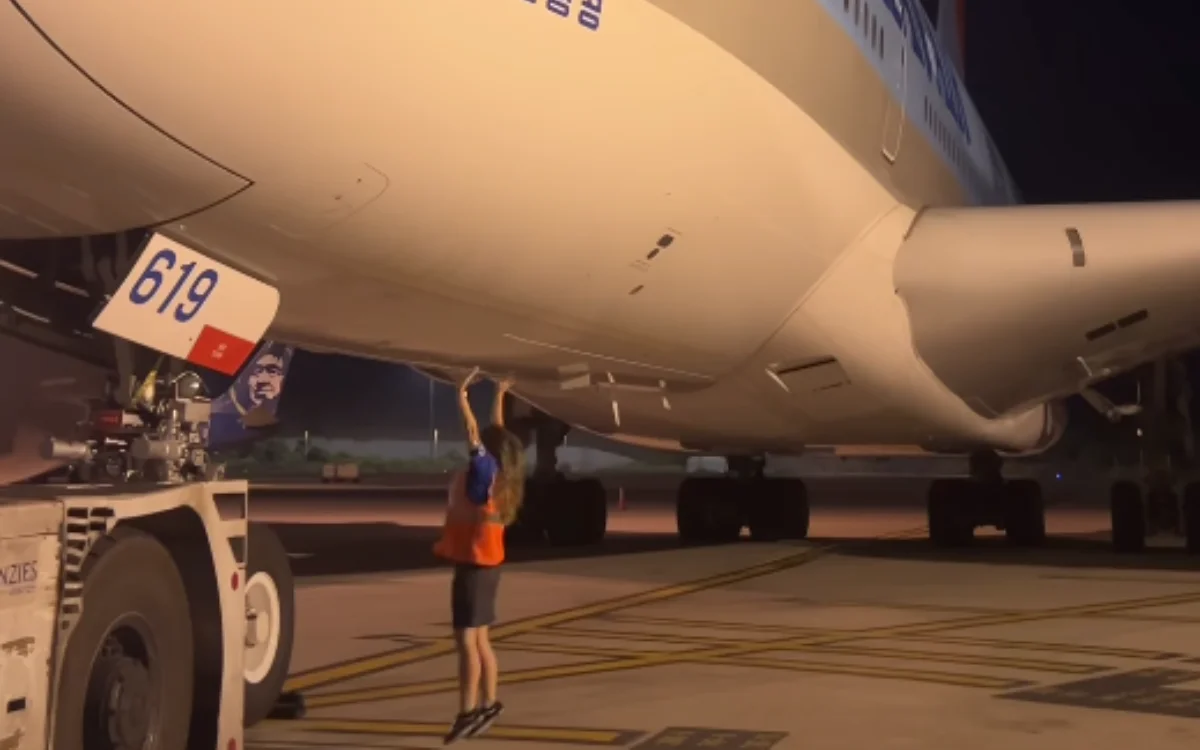

When you see an Airbus A380 parked next to a Boeing 737, the scale difference can be quite a shock.
On paper, they’re both passenger jets doing the same job.
In real life, one feels like a commuter bus and the other like an airborne apartment block.
It’s the kind of comparison that resets your idea of what big actually means.
DISCOVER SBX CARS – The global premium auction platform powered by Supercar Blondie
The Airbus A380 vs Boeing 737 size comparison that stops people in their tracks
Let’s start with length.
A typical Boeing 737 stretches between 129 and 138 feet, depending on the variant.
The Airbus A380?
A massive 238 feet from nose to tail.
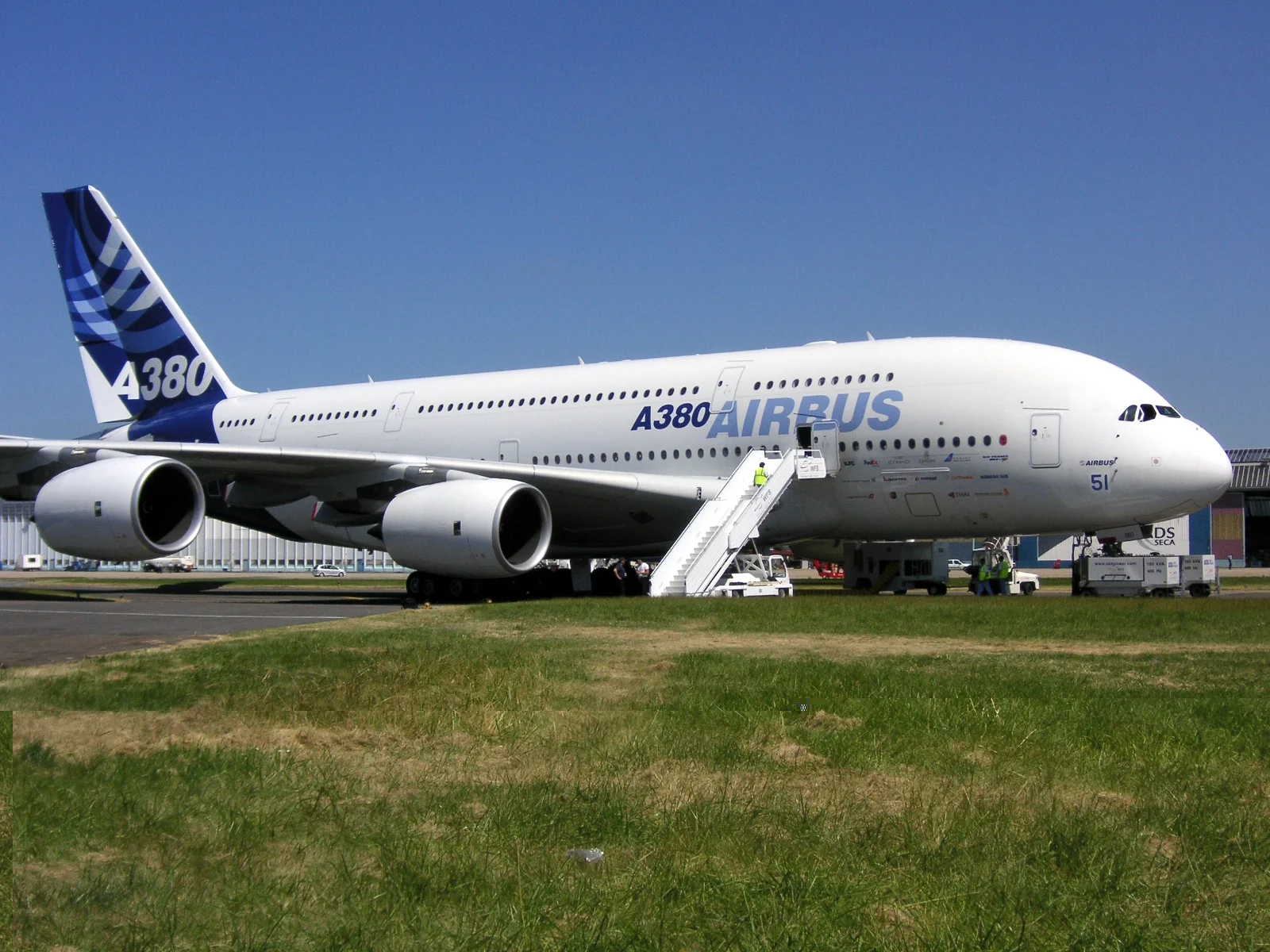
That’s nearly double.
Then there’s wingspan.
The 737 spans anywhere from 117 to 141 feet.
Respectable.
The A380 spreads out to 261 feet 8 inches – almost the length of a football field.
When those wings flex at the gate, it looks less like a plane and more like infrastructure.

Height adds another layer to the visual drama.
A 737 stands about 41 feet tall.
The A380 towers at 79 feet, with its full-length double deck giving it that unmistakable ‘flying cruise ship’ presence.
Passenger numbers tell the same story.
A 737 typically carries between 85 and 215 people, depending on layout.
The A380 can seat around 555 in a standard two-deck configuration, and in all-economy layouts, it can climb as high as 850.
That’s not just bigger – that’s a different category of movement entirely.
Under the hood, the contrast continues.
The 737 runs on two engines.
The A380 uses four.
Maximum takeoff weight drives the point home: up to 187,700lbs for a 737 versus a staggering 1,234,600lbs for the A380.
So yes, both connect cities.
But they do it on completely different scales.
Click the star icon next to supercarblondie.com in Google Search to stay ahead of the curve on the latest and greatest supercars, hypercars, and ground-breaking technology
Why both aircraft still dominate their own lanes
For all its mega-jet presence, the Airbus A380 isn’t replacing the Boeing 737 anytime soon.
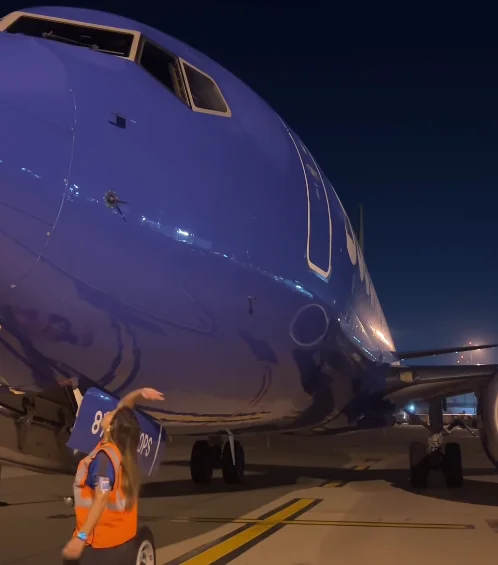
The 737 is the backbone of short and medium-haul travel.
It’s efficient, flexible, and built to land at airports that could never handle an A380’s wingspan or weight.
That practicality is exactly why you see so many of them.
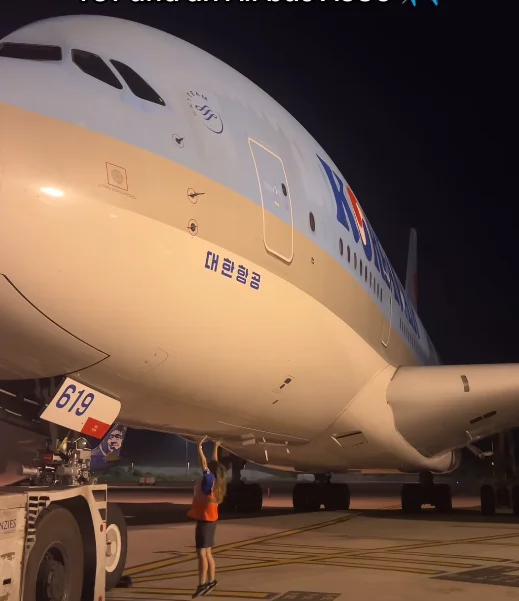
Meanwhile, the A380 was designed for high-density international routes – think major global hubs moving hundreds of passengers in one hit.
It’s less about frequency and more about sheer volume.
In other words, the 737 is the daily workhorse.
The A380 is the headline act.
And when they line up on the same taxiway, it’s a reminder that ‘passenger jet’ can mean very different things – from neighborhood shuttle to flying megastructure.
DISCOVER SBX CARS: The global premium car auction platform powered by Supercar Blondie
With roles at TEXT Journal, Bowen Street Press, Onya Magazine, and Swine Magazine on her CV, Molly joined Supercar Blondie in June 2025 as a Junior Content Writer. Having experience across copyediting, proofreading, reference checking, and production, she brings accuracy, clarity, and audience focus to her stories spanning automotive, tech, and lifestyle news.