America's most ambitious aircraft was six times larger than anything in the sky and Howard Hughes only ever got it off the ground once
Published on Apr 05, 2026 at 9:13 PM (UTC+4)
by Henry Kelsall
Last updated on Apr 02, 2026 at 3:18 PM (UTC+4)
Edited by
Emma Matthews
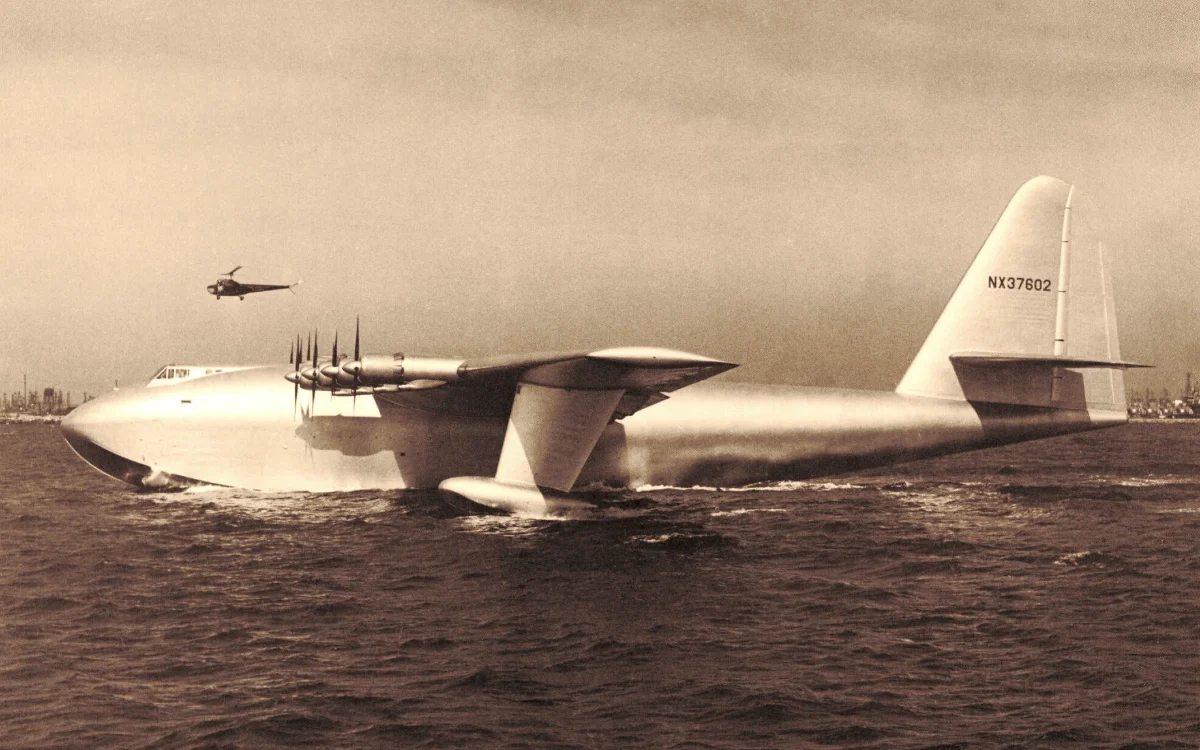

Legendary aviator Howard Hughes once built America’s most ambitious aircraft, the H-4 Spruce Goose, which may have only flown once, but it’s still revered as an amazing aviation achievement to this very day.
Hughes was a controversial character, and in the 1940s, he had the idea of creating a large flying boat that could be used as a troop transport in World War II.
However, despite its promise and size, this amazing machine flew just once, but it did so after the war had finished.
It remains the largest seaplane ever built, and thankfully, its story is far from over.
Enter our competition to win a stunning 2006 Ford GT or $400,000 cash!
How Howard Hughes developed the H-4 Spruce Goose
Having entered the war in 1941, by 1942, the US War Department needed to transport war material and troops to Britain.
With Allied shipping suffering thanks to U-Boat attacks, America needed a new way to get things across the pond.
Hence, the requirement was issued to create what was officially the Hughes H-4 Hercules.
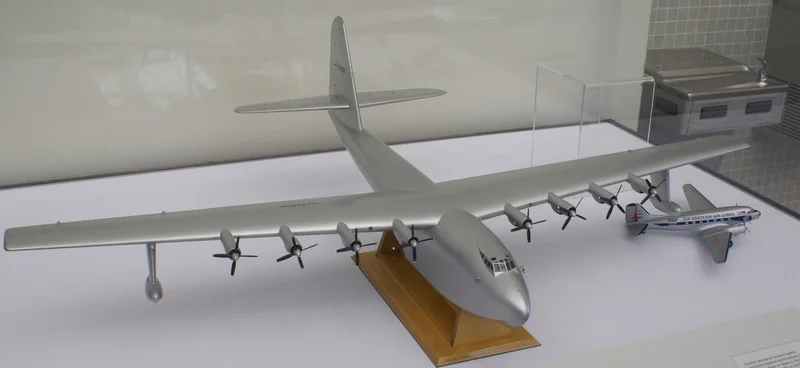
Liberty ship builder Henry J. Kaiser teamed up with Howard Hughes to design the new, ambitious aircraft.
A contract was eventually issued in 1942 to construct the aircraft, and it called for three to be built in two years.
After various designs were considered, a mostly wooden construction was settled upon.
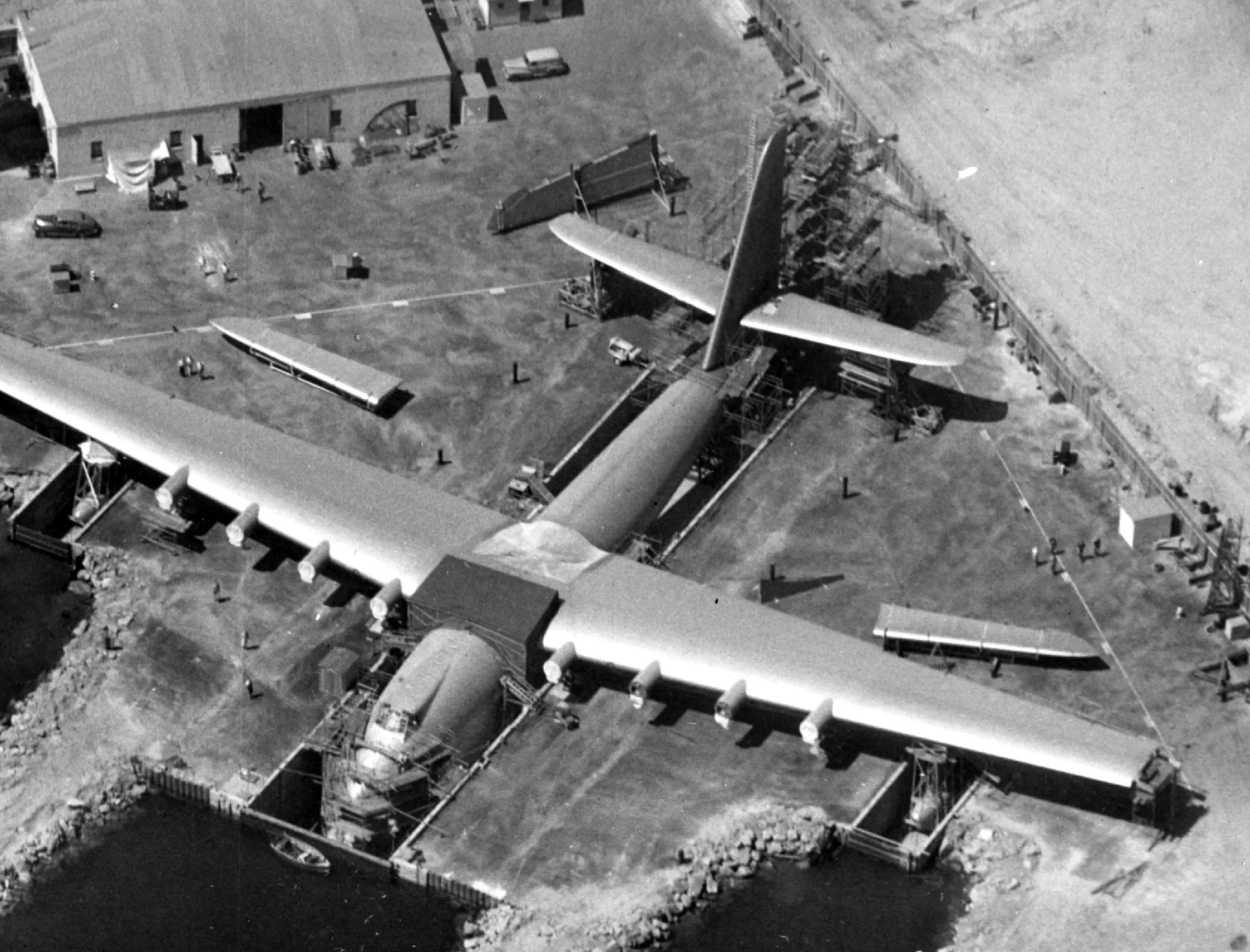
The final design was also an absolute monster, incorporating eight engines in total, four on each wing.
It was, at the time, the largest aircraft ever made, dwarfing anything built before it.
Even in 2026, its size is still comparable to the likes of the Boeing 747 and Antonov An-225.
This is why building the Spruce Goose took so long
That target for three aircraft in two years, however, soon evaporated.
After Kaiser withdrew from the project, Hughes and his company pushed forward alone.
A new contract was also signed to produce just a single example.
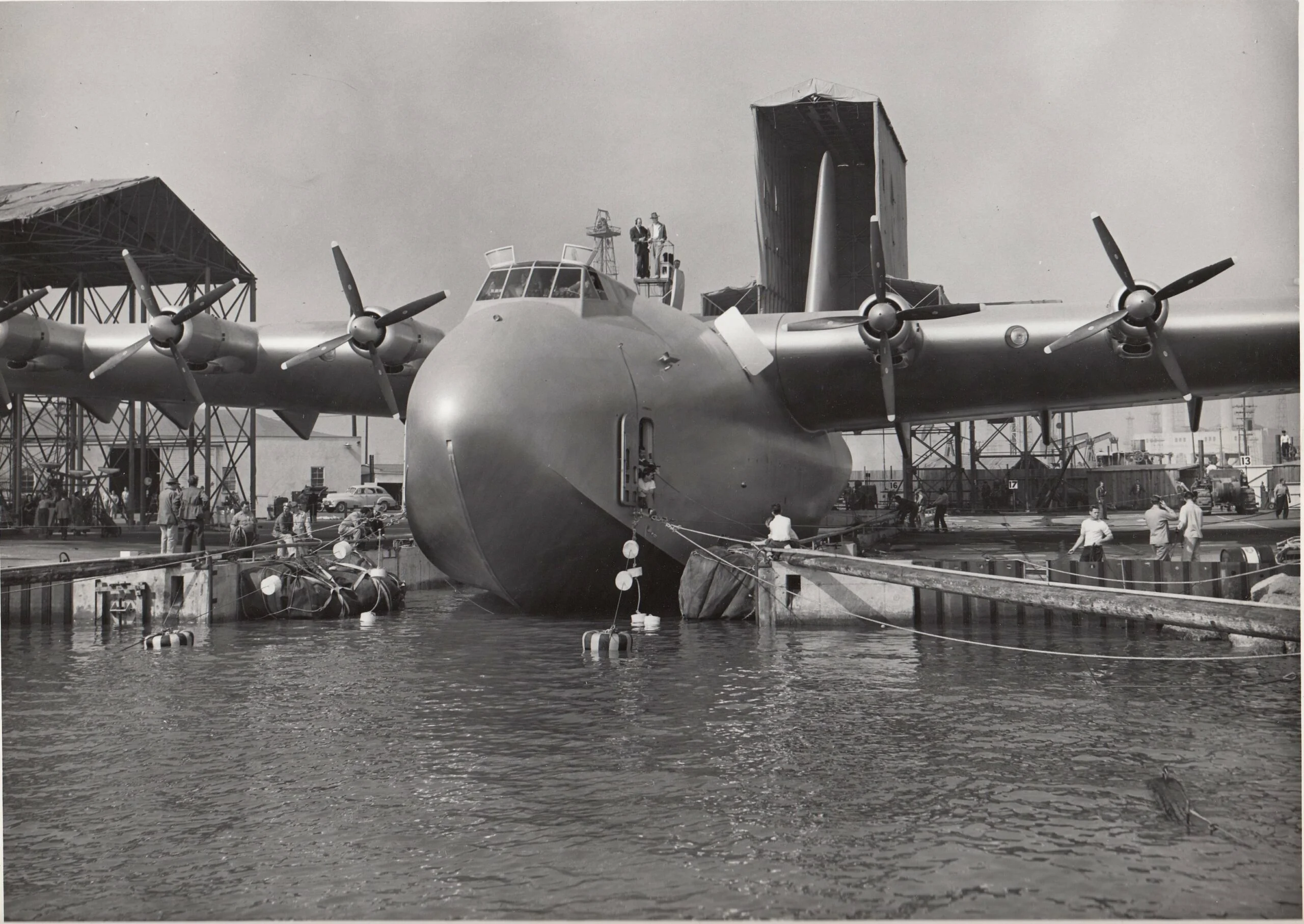
The final design had eight Pratt & Whitney R-4360 Wasp Major engines powering it.
It weighed 250,000lbs when empty and had a wingspan of 97.5 meters.
For context, that is larger than the wingspan of the An-225, Boeing 747, and the Airbus A380.
In fact, only the Straolaunch Roc has a larger wingspan at 117 meters long.
The tailplane alone was longer than the wingspan of a Boeing B-17 Flying Fortress.
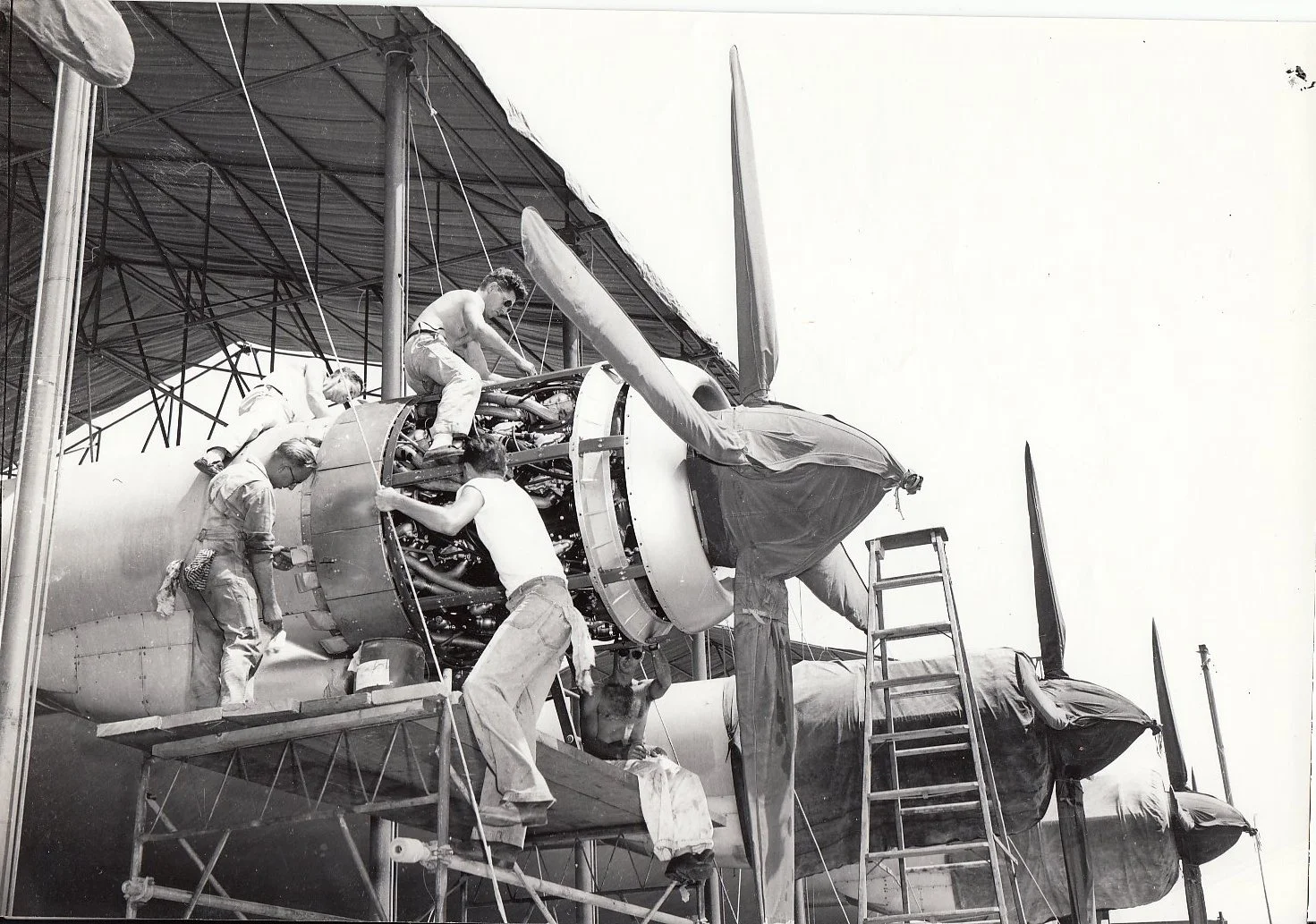
Costs for its construction ramped up more and more, and in the end, the aircraft was not completed until 1947.
This was two years after the war had ended.
Such was the size of the ambitious aircraft that a hangar and ramp were specially built for it in Long Beach, California.
When the Spruce Goose flew for the first and only time
Senate hearings took place thereafter, questioning Hughes and whether the H-4 had been a wise use of funds.
Howard Hughes was adamant that the ambitious aircraft was worth it.
“The Hercules was a monumental undertaking. It is the largest aircraft ever built,” said Hughes at the time.
“I have stated several times that if it’s a failure, I’ll probably leave this country and never come back. And I mean it,” he added.
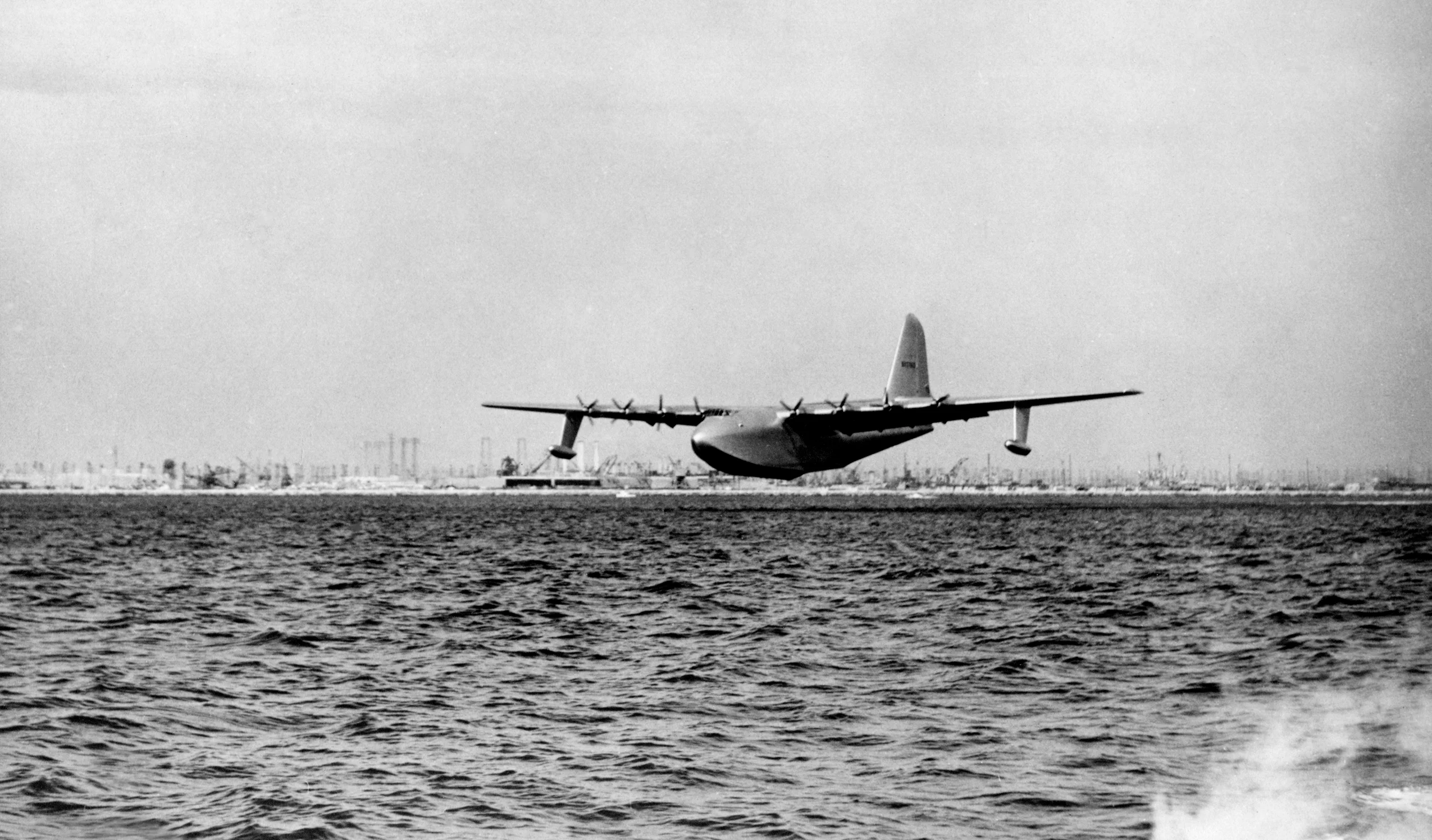
But in November 1947, Hughes was determined to prove that the aircraft was worth the time and money.
Taxi trials were conducted with the aircraft, with reporters on hand as well as invited guests.
After successful taxi runs, Hughes pushed on with one last test run along the Cabrillo Beach.
After accelerating down the channel, the huge aircraft lifted off the water at 70ft, flying for just 26 seconds.
It had hit a top speed of 135mph before it gently touched down again.
This would be the first and last time that the Hughes H-4 Spruce Goose ever flew.

With the war over, jet engines coming on-stream, and a lack of interest in flying boats, the project was abandoned.
Thereafter, a team of workers secretly maintained the aircraft in flying condition in a climate-controlled hangar.
They would do so until Hughes died in 1976.
What happened to the Spruce Goose after Hughes’ death?
There was much debate as to what should be done with the H-4 after Hughes’ death.
Ownership was first transferred to the US government.
Then, a plan was devised to transport a section of its wing and the Hughes H-1 Racer aircraft to the Smithsonian Institution.
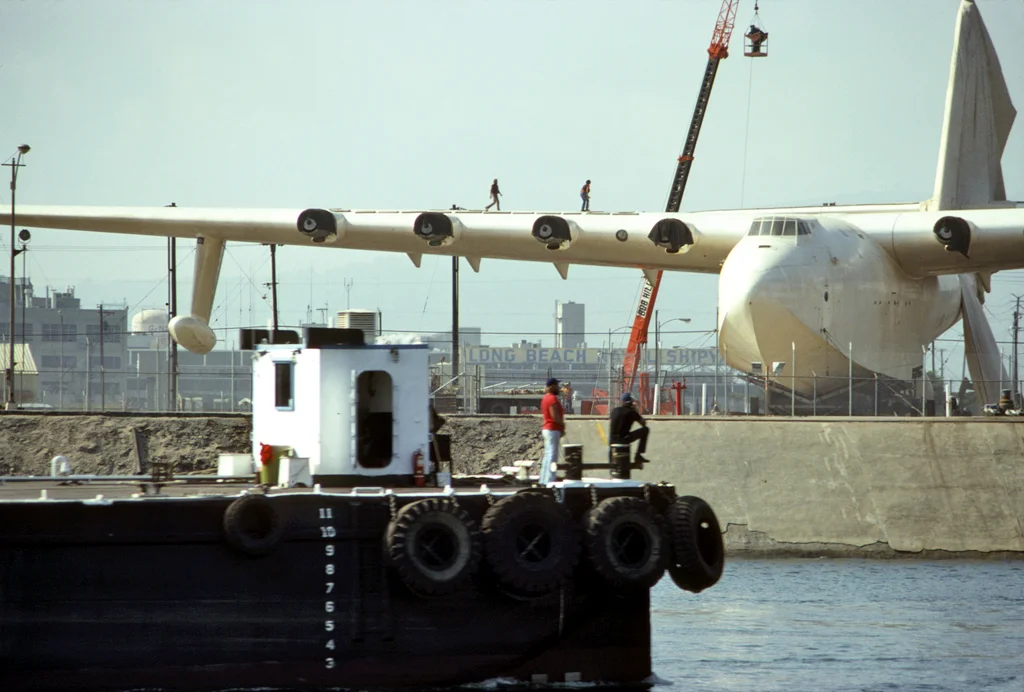
But there was an outcry over this as well as plans to offer parts of the aircraft to various museums.
Seen as an aviation icon, groups formed in the 1980s to prevent the H-4 Spruce Goose from being dismantled.
Their efforts paid off, and in May 1980, Los Angeles County announced it wanted the aircraft displayed intact.
The Aero Club of Southern California would then acquire the legendary H-4.
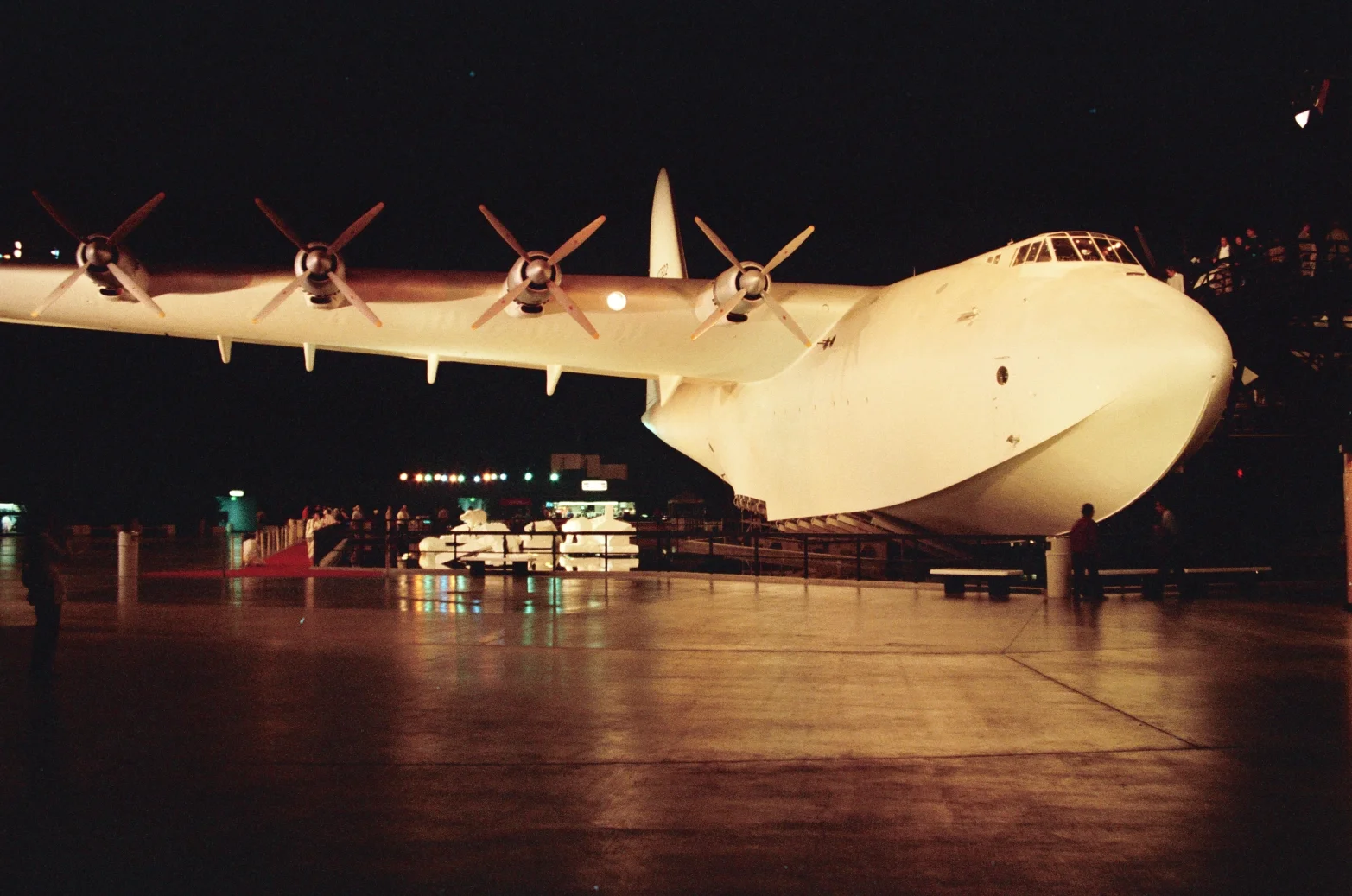
Soon, it was on display in a giant dome next to the RMS Queen Mary, in what was called the ‘Spruce Goose Dome.’
The dome was used as an event space, tourist attraction, and it even hosted huge dinners and concerts.
Yet amazingly, this did not secure the H-4 Spruce Goose’s future.
How Howard Hughes H-4 eventually found its forever home
After Walt Disney acquired the Long Beach attractions in the area, they stated they did not want the aircraft at the site.
After much searching and fears that it would be scrapped, a home was found for the ambitious aircraft.
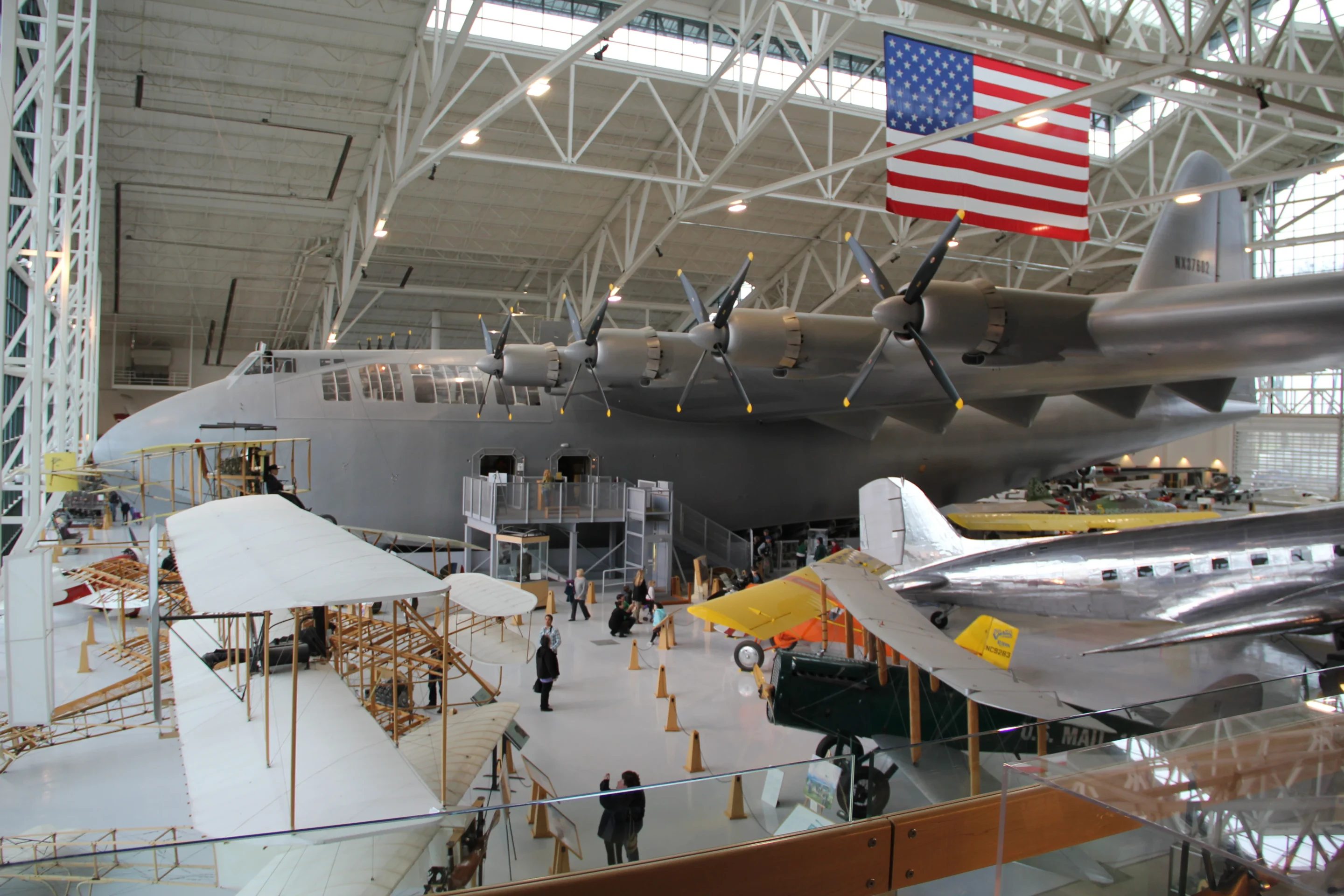
The amazing machine was transported by barge, train, and truck to Oregon’s Evergreen Aviation & Space Museum in 1993.
Located in McMinnville, Oregon, the H-4 arrived at its new home on February 27th, 1993.
The reassembled aircraft finally went on display in 2001.
The Spruce Goose remains there today, preserved in immaculate condition in a bespoke hangar.

Given that the project was a failure, it’s remarkable that the H-4 Spruce Goose survived at all.
While it failed in its design brief, this ambitious aircraft didn’t fail to captivate aviation fans all over the world.
It is perhaps the ultimate symbol of Howard Hughes and his legacy.
A timeline of the H-4 Spruce Goose
1942: The US government awards a contract to shipbuilder Henry Kaiser and aviator Howard Hughes to build a massive ‘flying boat’ to transport troops and supplies safely across the Atlantic
1944: Frustrated by delays, Kaiser withdraws from the project. Hughes takes full control, renaming the aircraft the H-4 Hercules
1946: Construction is finally completed. The enormous, primarily wooden, aircraft is moved in massive sections from Culver City to Long Beach, California
August 1947: Facing heavy criticism, Howard Hughes fiercely defends the over-budget and heavily delayed project during highly publicized US Senate hearings
November 2, 1947: Howard Hughes surprises observers by piloting the ‘Spruce Goose’ on its first and only flight, lifting off the water for about one mile at an altitude of 70 feet
1947-1976: Hughes locks the ambitious aircraft away in a massive, climate-controlled hangar in Long Beach, spending millions to keep it in flight-ready condition until his death in 1976
1980: The plane is acquired by the Aero Club of Southern California and put on public display inside a giant geodesic dome next to the Queen Mary in Long Beach
1992: In need of a new home after Disney acquires the Long Beach site, the massive plane is disassembled and transported by barge and truck to McMinnville, Oregon
2001: Fully reassembled, the legendary aircraft goes on permanent display as the centerpiece of the newly opened Evergreen Aviation & Space Museum
DISCOVER SBX CARS: The global premium car auction platform powered by Supercar Blondie
Henry joined the Supercar Blondie team in February 2025, and since then has covered a wide array of topics ranging from EVs, American barn finds, and the odd Cold War jet. He’s combined his passion for cars with his keen interest in motorsport and his side hustle as a volunteer steam locomotive fireman at a heritage steam railway.