Incredible simulation shows what the SR-71's top speed would look like if it was flying at ground level
Published on Jul 17, 2026 at 12:18 PM (UTC-4)
by Daisy Edwards
Last updated on Jul 17, 2026 at 12:18 PM (UTC-4)
Edited by
Mason Jones
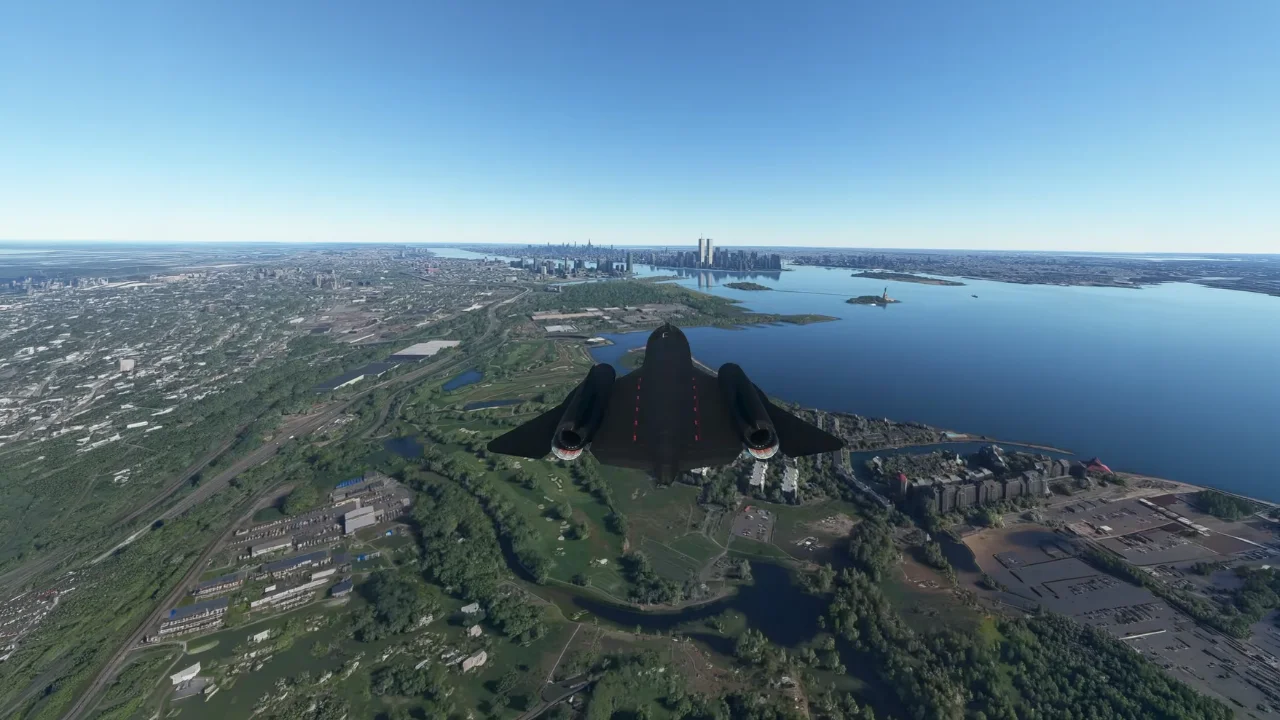

An incredible simulation has shown what the SR-71’s top speed would look like if it were flying at ground level, and the results are almost impossible to comprehend.
The legendary reconnaissance aircraft remains the fastest air-breathing manned jet ever built, with performance figures that still haven’t been beaten decades after it left service.
Instead of watching the Blackbird cruise at its usual altitude of more than 80,000 feet, this animation from Airplane Mode imagined it flying over some of the world’s biggest cities.
The result shows how outrageously fast the Cold War icon really was.
Incredible simulation shows the jet’s top speed at ground level
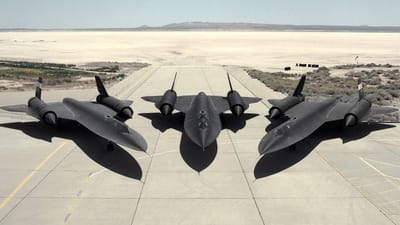
The Lockheed SR-71 Blackbird is one of the most iconic aircraft ever created.
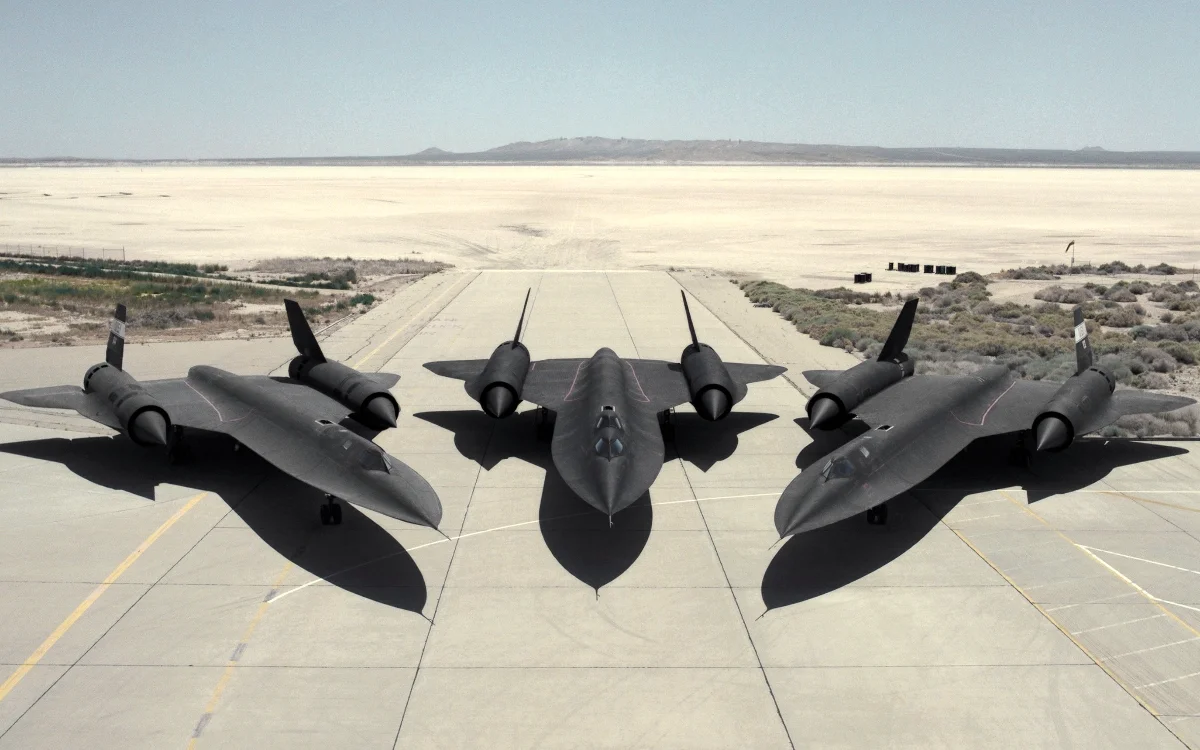
Developed during the Cold War as a strategic reconnaissance aircraft, it was designed to fly so high and so fast that enemy defenses couldn’t intercept it.
It could cruise comfortably above Mach 3 while operating at altitudes of around 85,000 feet.
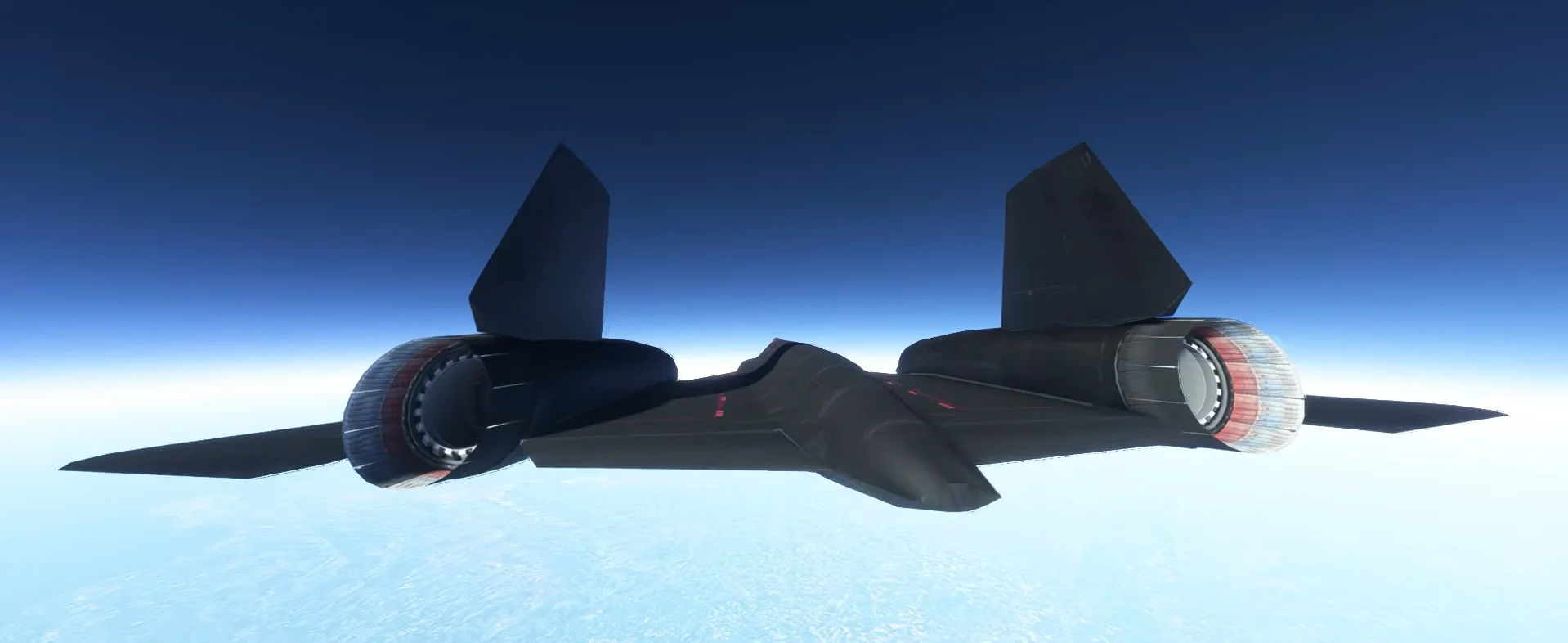
Despite entering service in the 1960s, the Blackbird still holds the official world speed record for an air-breathing manned jet aircraft, reaching 2,193MPH during a record-setting flight in 1976.
That achievement has remained untouched for almost half a century.
Because the SR-71 spent nearly all of its missions at extreme altitude, it’s difficult to appreciate just how quickly it moved.
That’s exactly what inspired aviation creator Airplane Mode to produce a simulation imagining the aircraft flying at ground level.
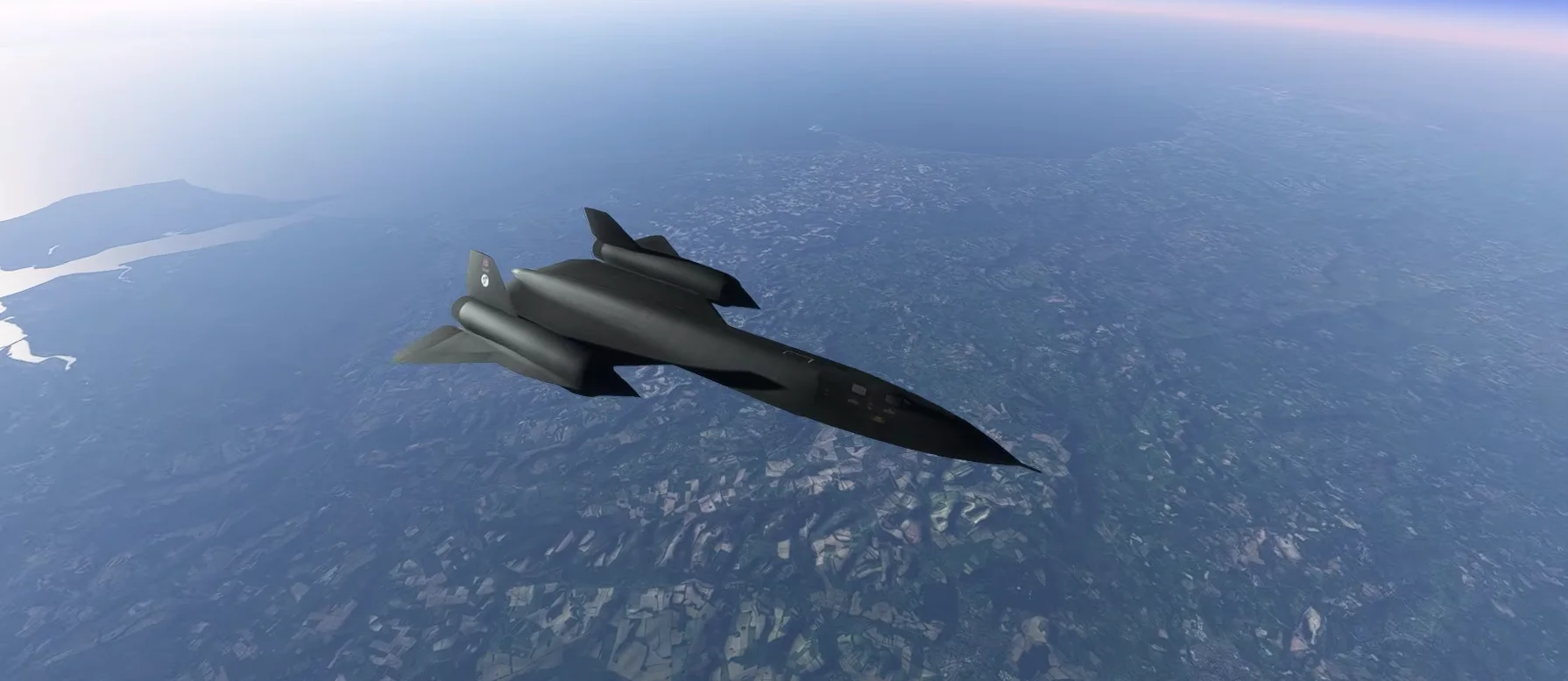
The video places the Blackbird over recognizable city skylines including New York, San Francisco, and Sydney, allowing us to compare its speed against familiar landmarks.
Rather than soaring peacefully across the sky, the aircraft flashes through the sky in an instant.
Buildings, roads, and bridges disappear almost as quickly as they come into view, making it clear why the aircraft earned its legendary reputation.

The SR-71’s stats are some of aviation’s greatest engineering achievements
The simulation is, of course, entirely computer generated and doesn’t depict a real flight.
Flying an SR-71 at its maximum speed close to the ground wouldn’t be possible because the dense air at low altitude would generate enormous aerodynamic problems with the aircraft.
Instead, the Blackbird achieved its incredible performance where the atmosphere was much thinner.
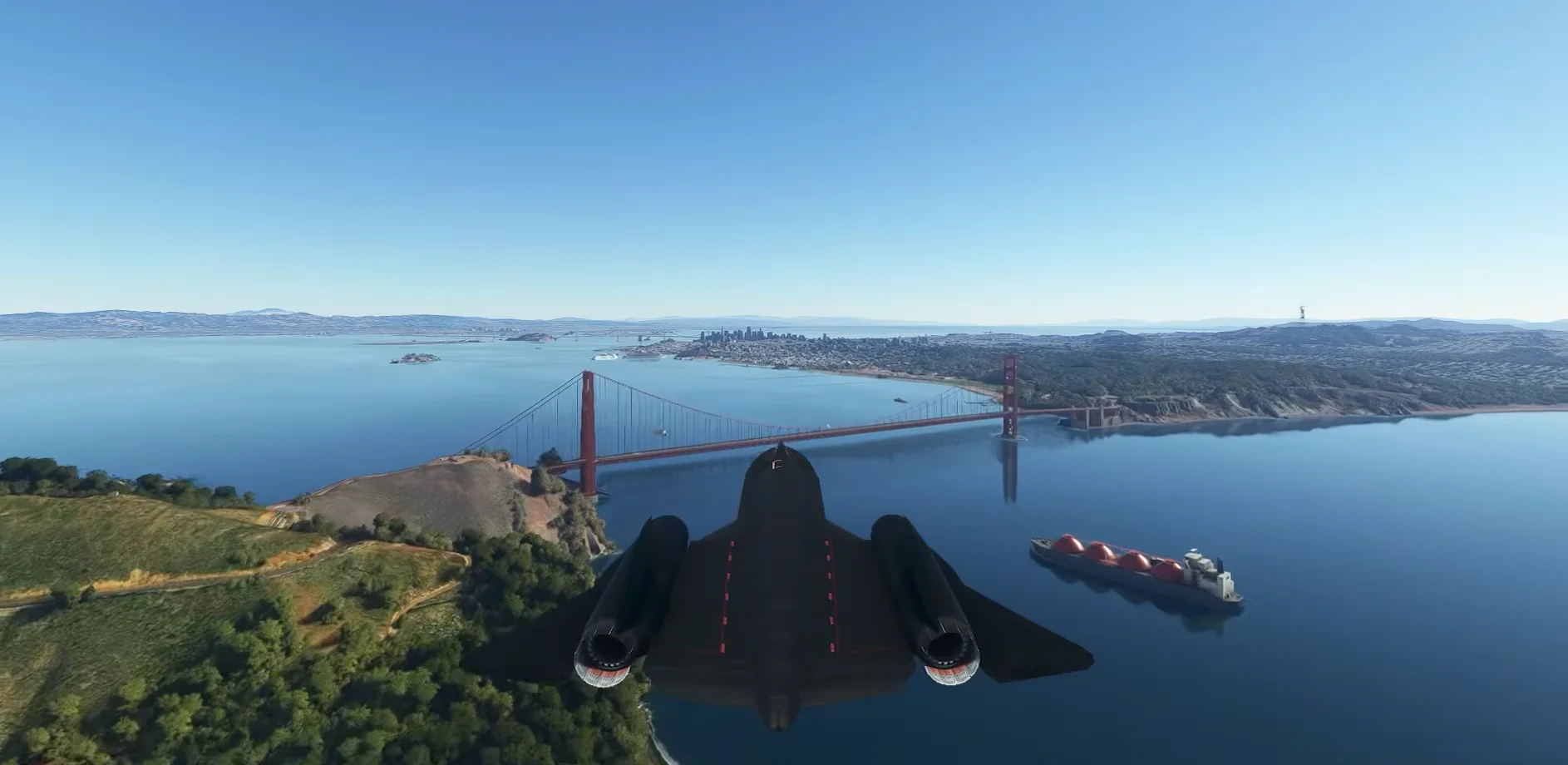
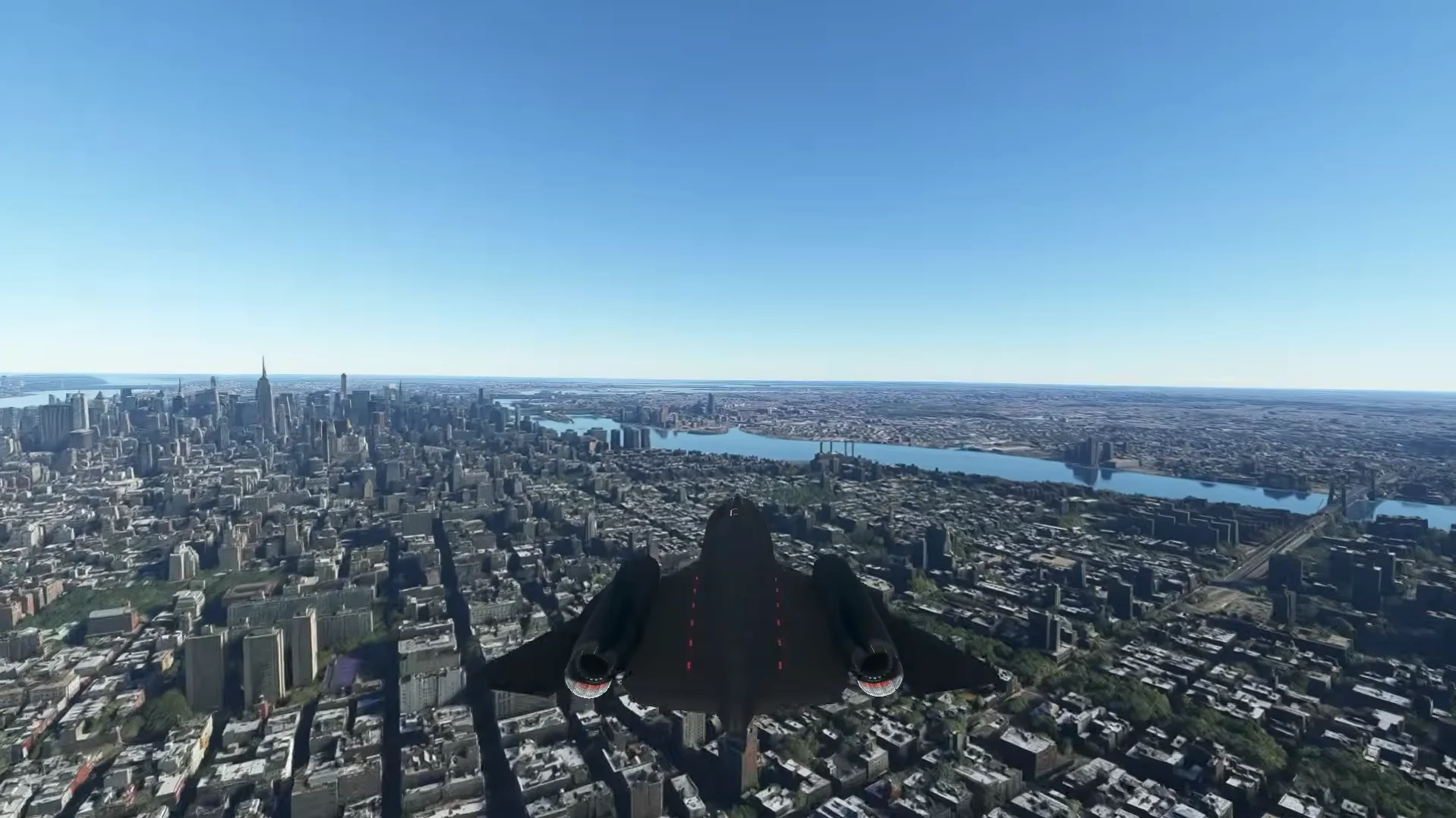
Even so, the visualization succeeds in putting the aircraft’s speed into perspective.
At more than 2,000MPH, the SR-71 covered around a mile every couple of seconds and could circle the Earth in roughly 11 and a half hours if it maintained its top cruising speed.

The aircraft officially retired from U.S. Air Force service in the late 1990s, but its engineering achievements continue to fascinate aviation enthusiasts around the world.
From breaking speed records to inspiring modern simulations like this one, the SR-71 Blackbird remains one of the most remarkable planes to ever fly.
Daisy is a technology and automotive journalist covering artificial intelligence, consumer tech, Apple news, cryptocurrency, emerging technologies, and transportation innovation. Since joining the team in 2025, she has reported on everything from AI-powered startups and major iOS updates to viral car stories and the latest developments shaping transportation and the digital economy. Drawing on her background in automotive journalism and a degree in History and Journalism from Goldsmiths, University of London, Daisy specializes in breaking down complex topics into clear, engaging reporting for a global audience. Her work spans cutting-edge technology, innovative vehicles, and the people driving change across both industries. Daisy has gained first-hand access to some of the world's most talked-about technologies and innovators, including meeting Tesla's Optimus humanoid robot during its first European appearance in London. She has also discussed the future of space exploration with an astronaut, bringing unique insights and real-world perspectives to her coverage of emerging technology.