The gap between the monthly cost of charging a Tesla Cybertruck vs filling a Chevrolet Silverado in the US is genuinely surprising
Published on Jul 27, 2026 at 11:58 AM (UTC-4)
by Alessandro Renesis
Last updated on Aug 07, 2026 at 4:07 AM (UTC-4)
Edited by
Kate Bain
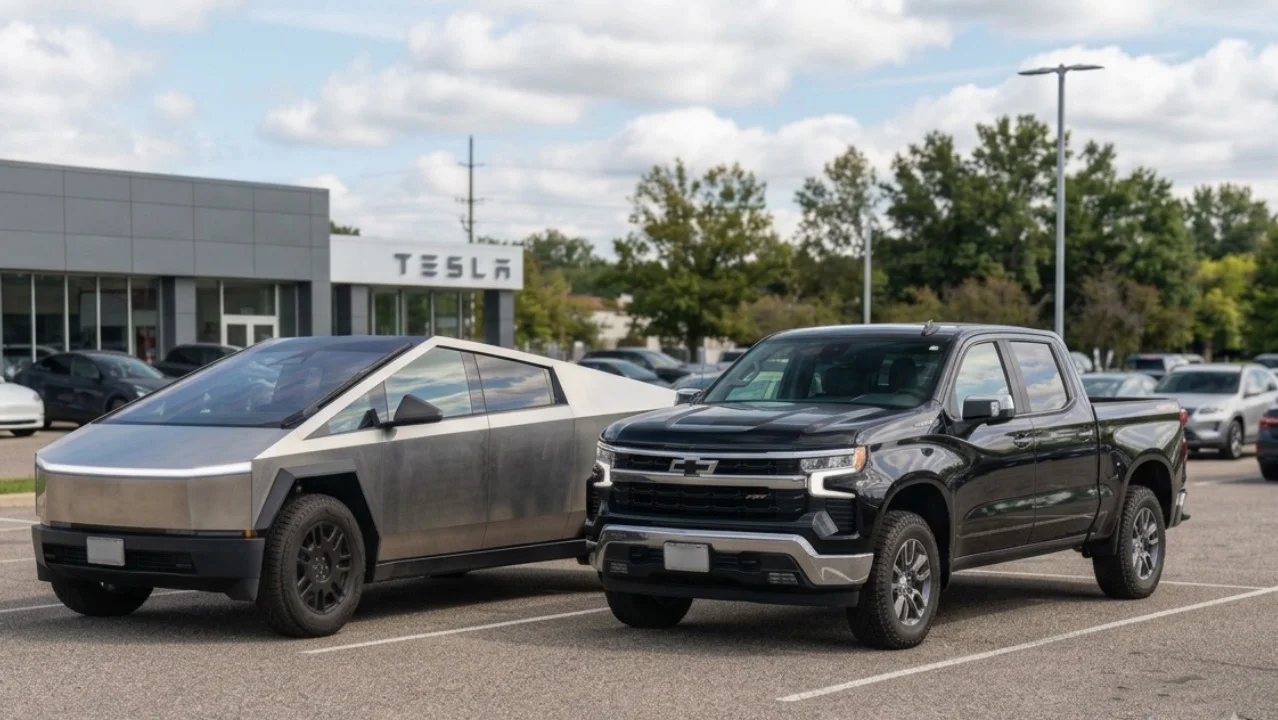

The cost difference between charging a Tesla Cybertruck and filling up a Chevrolet Silverado is quite shocking, but there’s a major caveat.
The debate between EVs and gas cars would probably require a UN resolution, and part of the reason why is that it’s not a binary situation.
While charging an EV can be potentially a lot cheaper, there are so many variables depending on a million factors.
And there’s another element that makes the whole situation even more ironic.
The Tesla Cybertruck is definitely more expensive to buy
In general, charging an EV is cheaper than filling up a car with gas, but it depends on several factors, and the sticker price has to be considered.
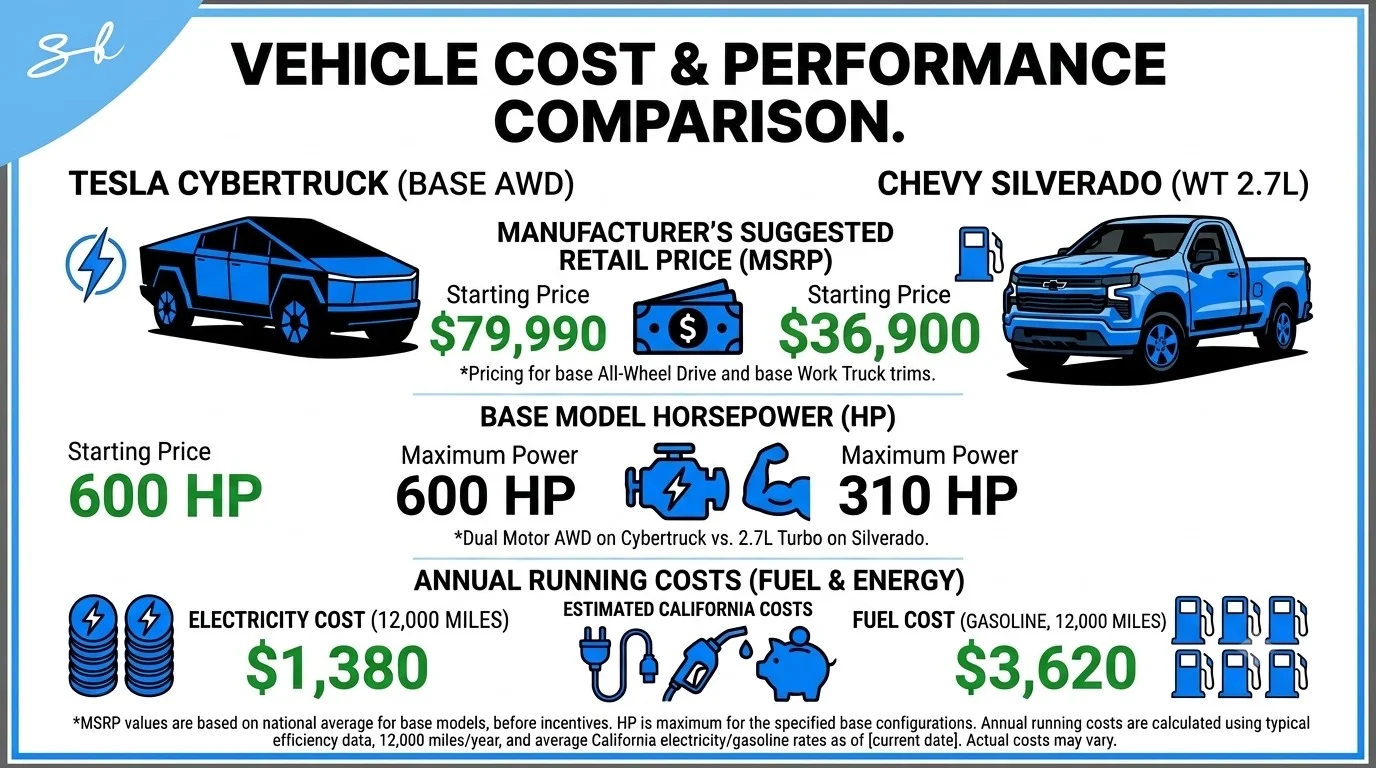
The entry-level Tesla Cybertruck starts at $69,990, putting it at nearly double the entry-level 2026 Chevy Silverado, which starts at $36,900.
Depending on your yearly mileage, it might take years to make the Cybertruck a financially sensible decision.
Related


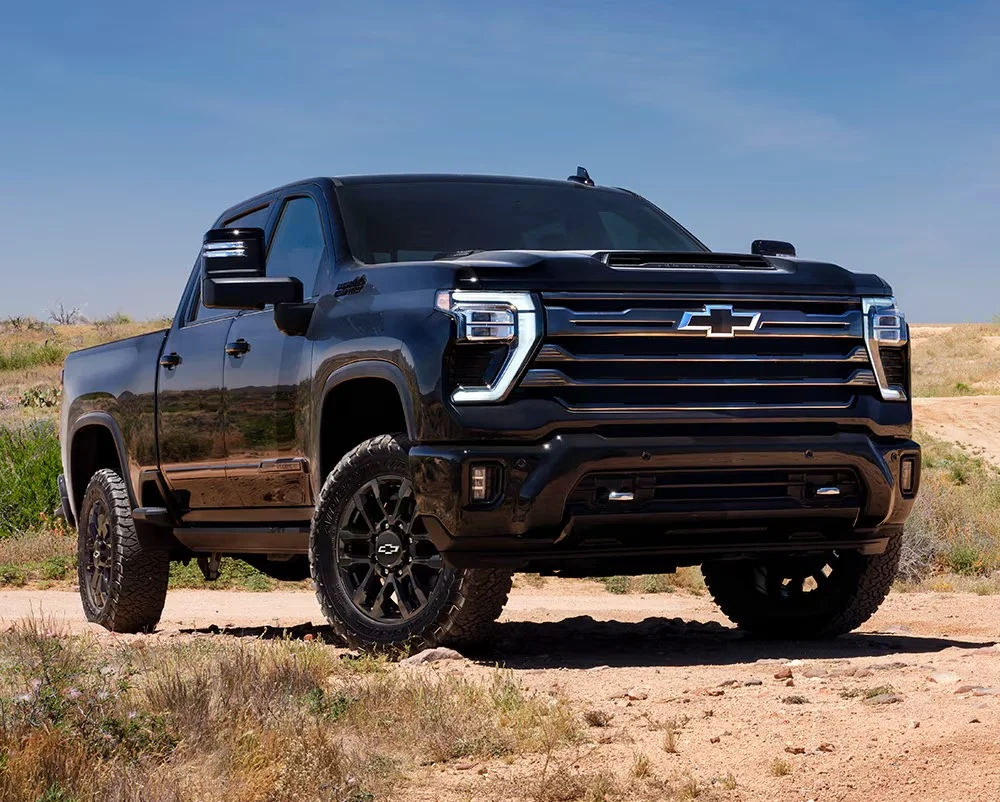
Tesla Cybertruck versus a Chevy Silverado over 15,000 miles
Let’s assume that each vehicle drives 15,000 miles a year, which is very close to the national average of 14,000 miles.
The average Tesla Cybertruck costs around $7.71 to charge per 100 miles driven at home, which works out to around $1,150 per year to charge.
That’s around $96 per month.
By contrast, a standard gas-powered Chevrolet Silverado costs around $17.50 to fuel per 100 miles (averaging 20 MPG), which comes out to around $2,600 per year or $218 a month.
The Cybertruck and the Chevrolet Silverado aren’t necessarily in the same segment, though.
They’re both trucks, but the key difference is that the Cybertruck is a bit of a statement buy.
There’s a massive ‘if’
There are significant fuel and energy price differences across different countries, or in some cases, US states.
But that’s not the main caveat.
The main problem is that, broadly speaking, regional fuel price differences are minor.
In some countries, fuel can be more or less expensive on highways, but it’s a minor difference.

If you’re in California, for example, filling up a car on a freeway in San Diego will cost roughly the same as filling up the tank near a McDonald’s in Burbank.
By contrast, charging costs can vary dramatically depending on whether you’re using home chargers, Superchargers, or other public chargers.
This has to be factored in because it directly controls your long-term EV return on investment, so to speak.
Apples to apples, if you can charge your EV at home, you’ll save a lot of money on fuel.
If you can’t, charging an EV can be just as expensive as filling up a tank with gas.
Alessandro is an automotive journalist with 10 years of experience covering supercars, automotive history, emerging vehicle technology, and luxury transportation. He wrote the first article published on SupercarBlondie.com when the website launched in 2022 and has since built a reputation for insightful reporting across the automotive and transportation industries. His expertise is grounded in hands-on experience. Alessandro has driven every Tesla model ever produced, from the original Roadster to the Cybertruck, and regularly covers the latest developments in electric vehicles and automotive innovation. His passion for transportation extends beyond cars, he has even flown a Boeing 787 Dreamliner simulator in Addis Ababa, Ethiopia. His reporting spans everything from classic American muscle cars and rare automotive discoveries to luxury yachts, private aircraft, high-end watches, and cutting-edge vehicle technology. Known for his deep knowledge of automotive history and ability to uncover the stories behind iconic vehicles, Alessandro brings readers a blend of historical context, technical expertise, and first-hand experience.