New Boeing VC-25B Air Force One has to be very specific colors and this is why it can't be changed for wild scientific reasons
Published on May 08, 2026 at 5:48 AM (UTC-4)
by Ben Thompson
Last updated on May 19, 2026 at 2:21 AM (UTC-4)
Edited by
Mason Jones
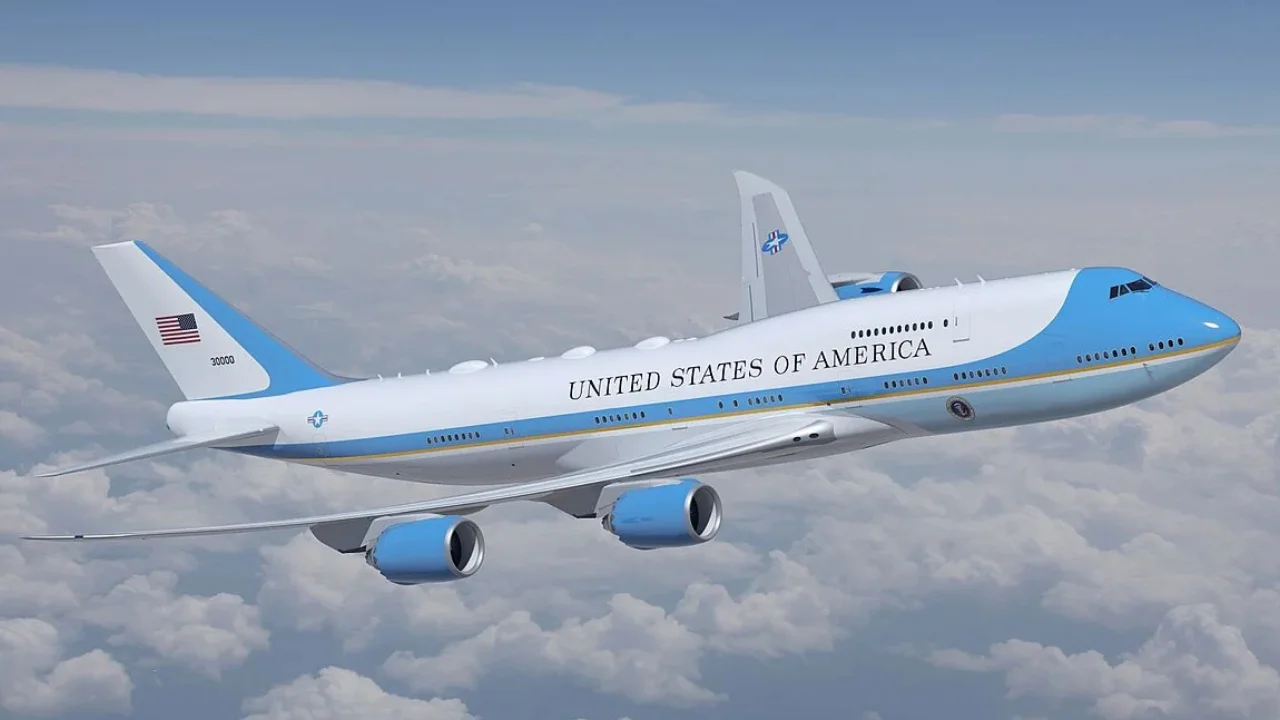

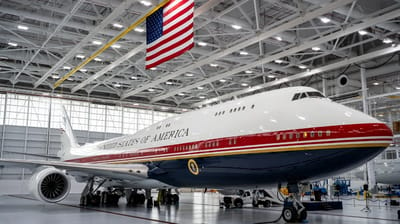
When it came to building a new Boeing VC-25B Air Force One, it had to be painted in very specific colors – not for aesthetic reasons, but for scientific ones.
There’s been a lot written about the new Air Force One.
It may have been overshadowed slightly by the donated plane from Qatar, but it’s still gotten a significant amount of press coverage.
But one thing that has escaped examination so far is the color scheme, which was chosen for a specific reason.
Here’s what colors we can expect to see on the new Boeing VC-25B Air Force One
It feels like Air Force One is never out of the headlines these days.
An awful lot has been said about the $300m Boeing 747 donated by Qatar, with everything put under scrutiny from its unusual call sign to its luxury interior.
But lest we forget, there are already two planes undergoing transformations to become the new presidential planes.
These two Boeing 747-8s have had their delivery dates pushed back constantly, with costs escalating as a result.
Even the operating manual cost a hefty $84 million.
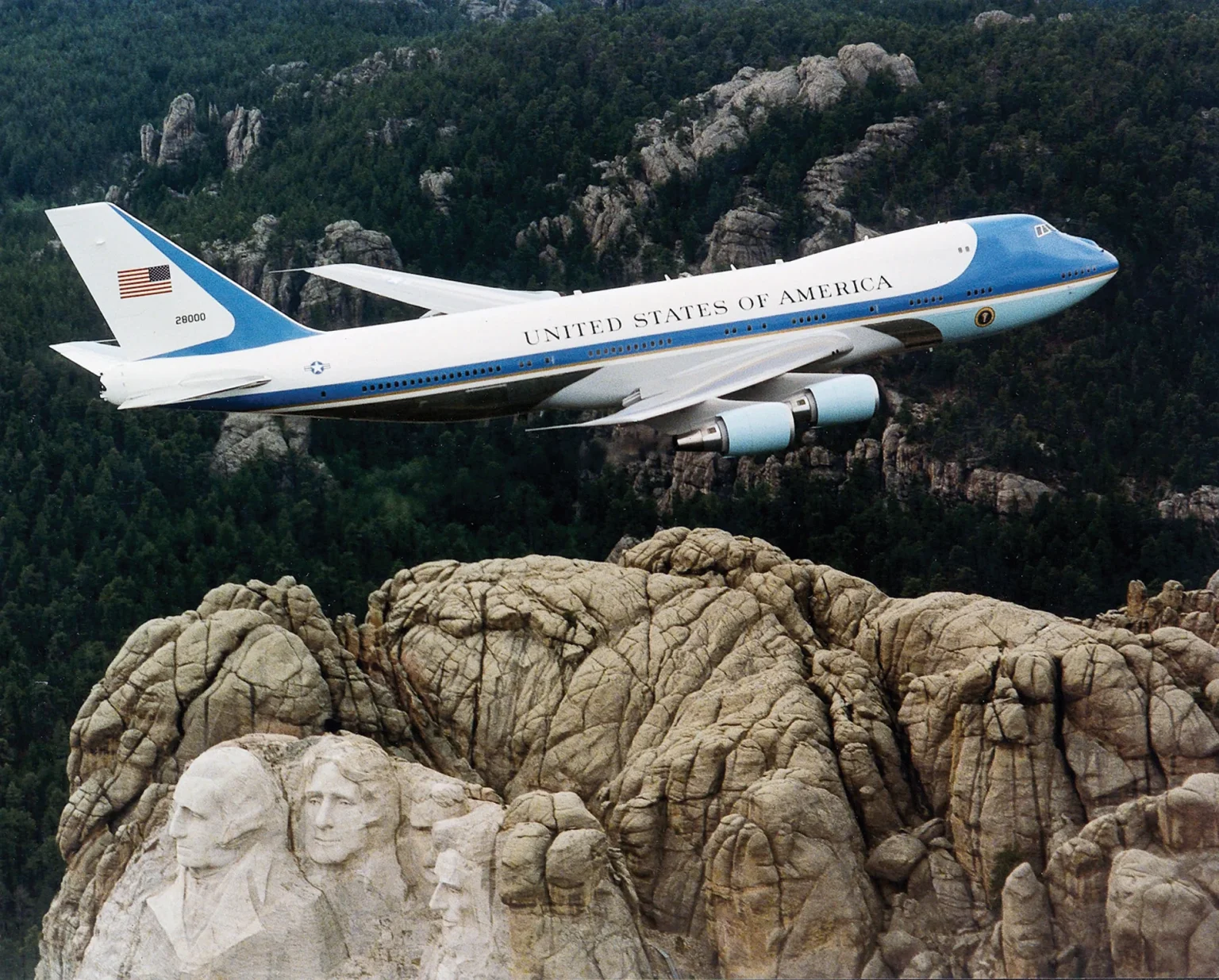
Now usually, with the Air Force One planes, we have an idea in our heads of what they look like.
There’s an American proudly placed on the rear, ‘United States of America’ running along the side, and a general aura of importance about it.
For lack of better words, it looks ‘presidential’.
But it turns out that more goes into the color scheme of these planes than the mere preference of any President.
While the Presidential planes of recent years have gone with a ‘baby blue’ look, this time around a darker red, white and blue livery had been proposed.
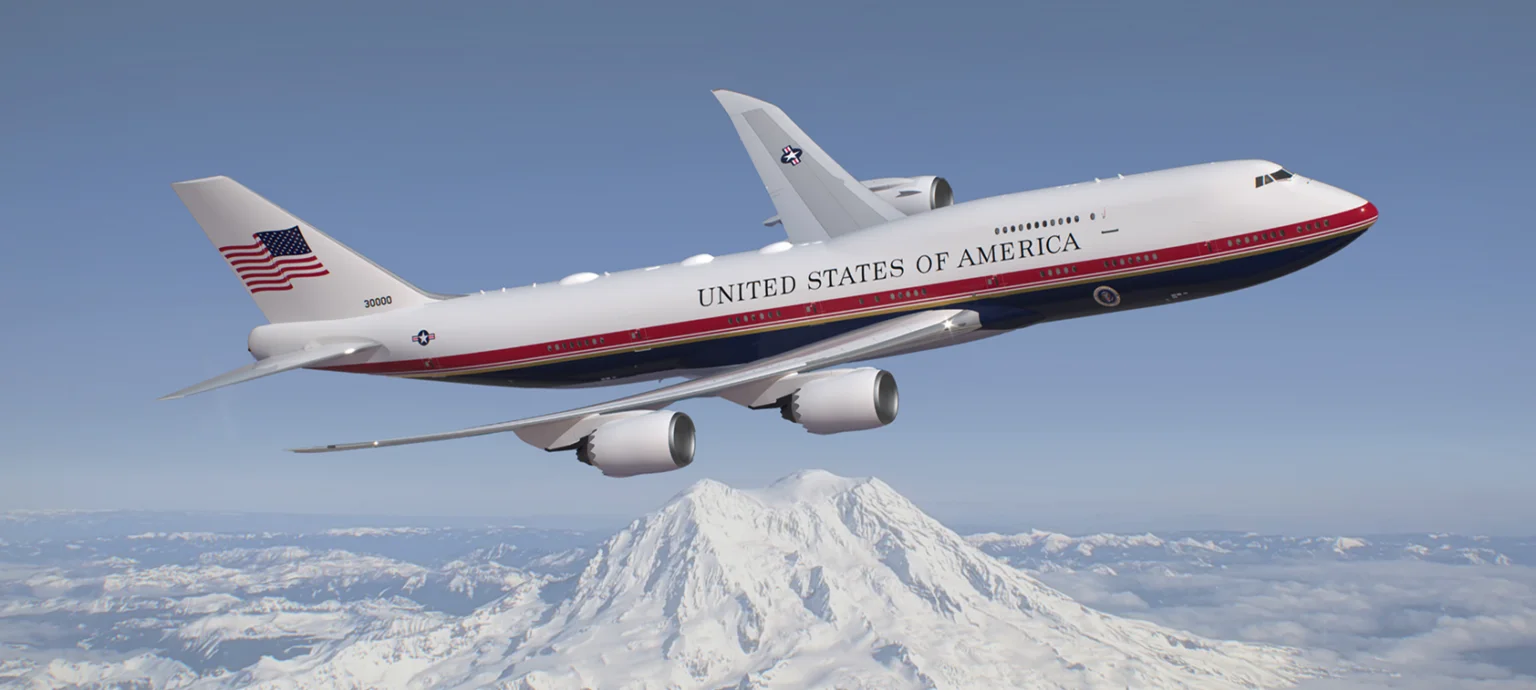
However, this was vetoed back in 2022 and dropped – meaning white and two-tone blue paint is still on the agenda.
But why?
Related
It’s not a matter of taste, but science
Reports indicated that the proposed color scheme had been dropped because it could ‘drive additional engineering, time and cost’.
An Air Force spokeswoman gave more insight into the decision.
“Darker colors among other factors on the underside of the VC-25B aircraft might contribute to temperatures exceeding the current qualification limits of a small number of components,” Spokeswoman Ann Stefanek told FLYING Magazine.
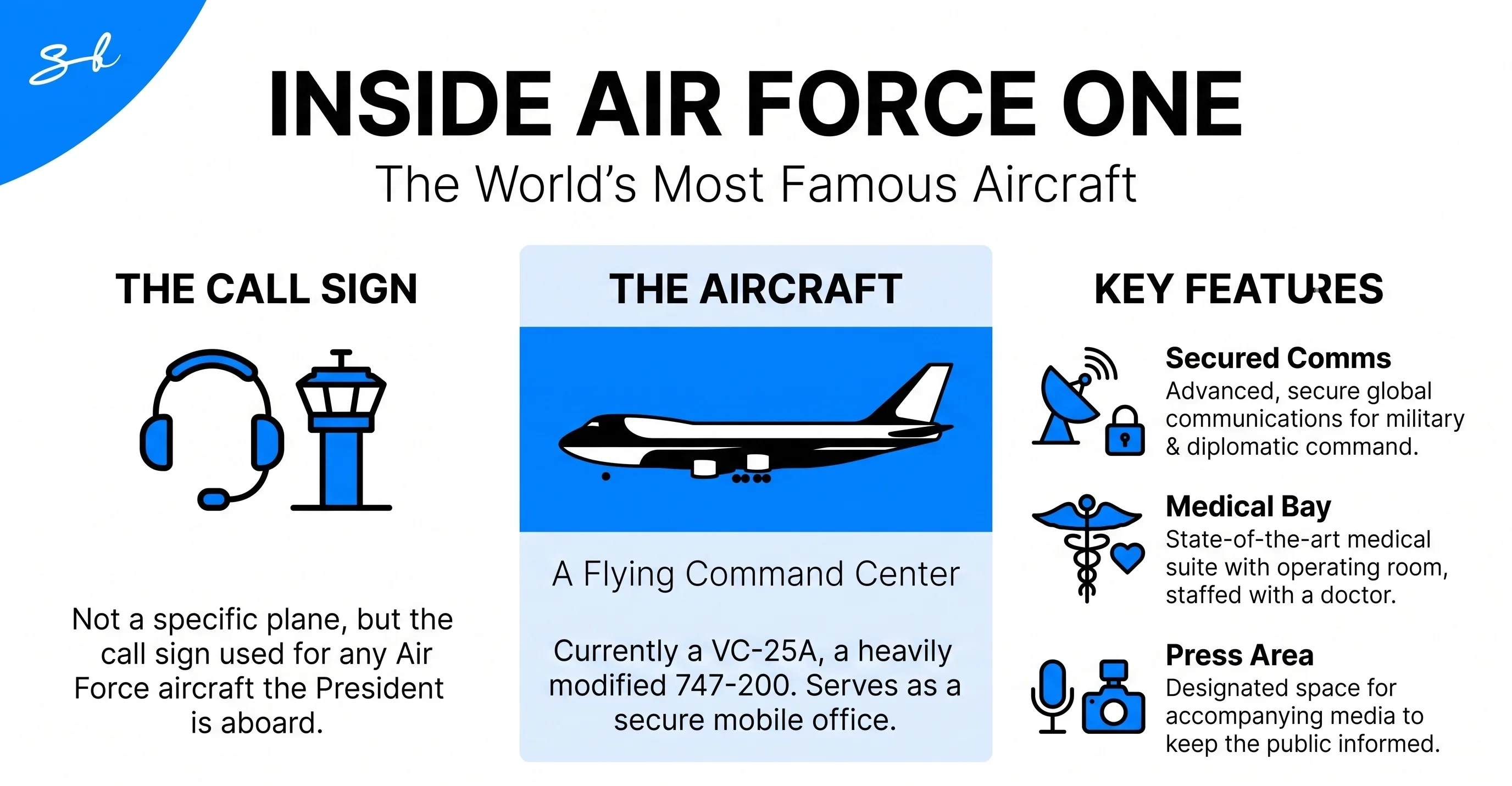
Because dark paint absorbs more heat, this is seen as a safety risk – and a headache when it comes to testing under FAA standards.
Had they gone with the darker underbelly, engineers would have to model how the darker paint alters heat absorption in different phases of flight.
That means more lab testing, more aircraft-level validation, and a whole raft of redesign measures.
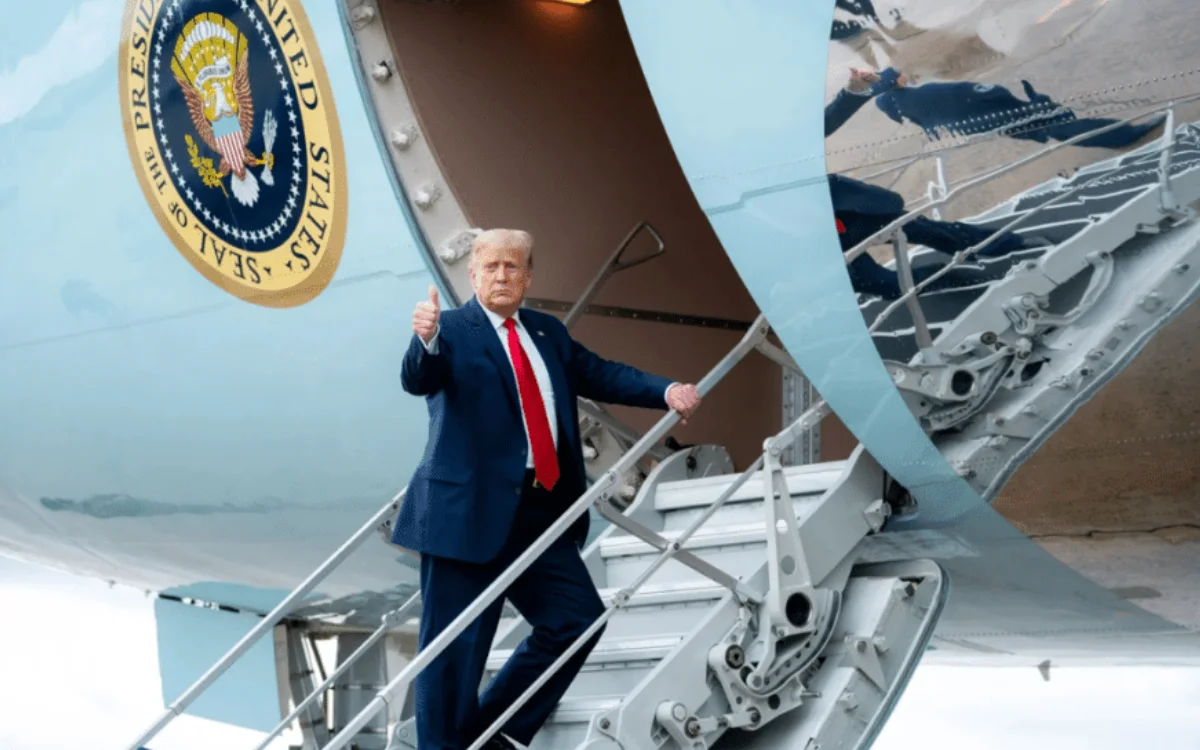
But despite this initial veto, reports from CBS News indicate that the original darker colors are back on the table, after President Trump’s re-election.
This amount of back-and-forth is something we’ve come to expect in politics, so only time will tell what shade these planes come out in.
Timeline of Air Force One
1943: Franklin D. Roosevelt becomes the first sitting President to fly as he takes a Boeing 314 out to Casablanca.
1945: A Douglas C-54 is commissioned as the first aircraft built for presidential use, featuring an elevator to accommodate Roosevelt’s wheelchair.
1953: The call sign ‘Air Force One’ is created for the first time.
1959: Dwight Eisenhower flies in the first jet-powered presidential aircraft, a modified Boeing 707.
1962: A Boeing 707 VC-137C becomes the first plane specifically designed to be a ‘Presidential Jet’.
1987: Ronald Reagan orders two Boeing 747s to replace the 707 fleet.
1990: First Boeing 747-200B delivered to George H.W. Bush.
2018: Donald Trump begins the process of the replacing the fleet with two new Boeing 747-8 planes.
2023: The proposed dark-red-and-blue color scheme is rejected over thermal engineering concerns.
2028: Expected delivery date for the fully customized VC-25B aircraft to be delivered.
Ben joined Supercar Blondie in February 2025 after being published by international organizations including LADbible, The Sun, the New York Post, and the Daily Mail. He covers supercars, rare and collectible vehicles, aviation, luxury assets, and the fascinating people behind them. His reporting has explored everything from seven-figure supercars and historic Ferrari collections to unusual aircraft adventures and extraordinary automotive discoveries from around the world. Ben has also gained first-hand insight into vehicle craftsmanship and customization, including visiting specialist workshops to see bespoke vehicles up close.