Britain had a secret plan to turn a business jet into a spy aircraft to rival America and it quietly failed
Published on Apr 15, 2026 at 2:38 PM (UTC-4)
by Henry Kelsall
Last updated on Apr 17, 2026 at 6:32 AM (UTC-4)
Edited by
Emma Matthews
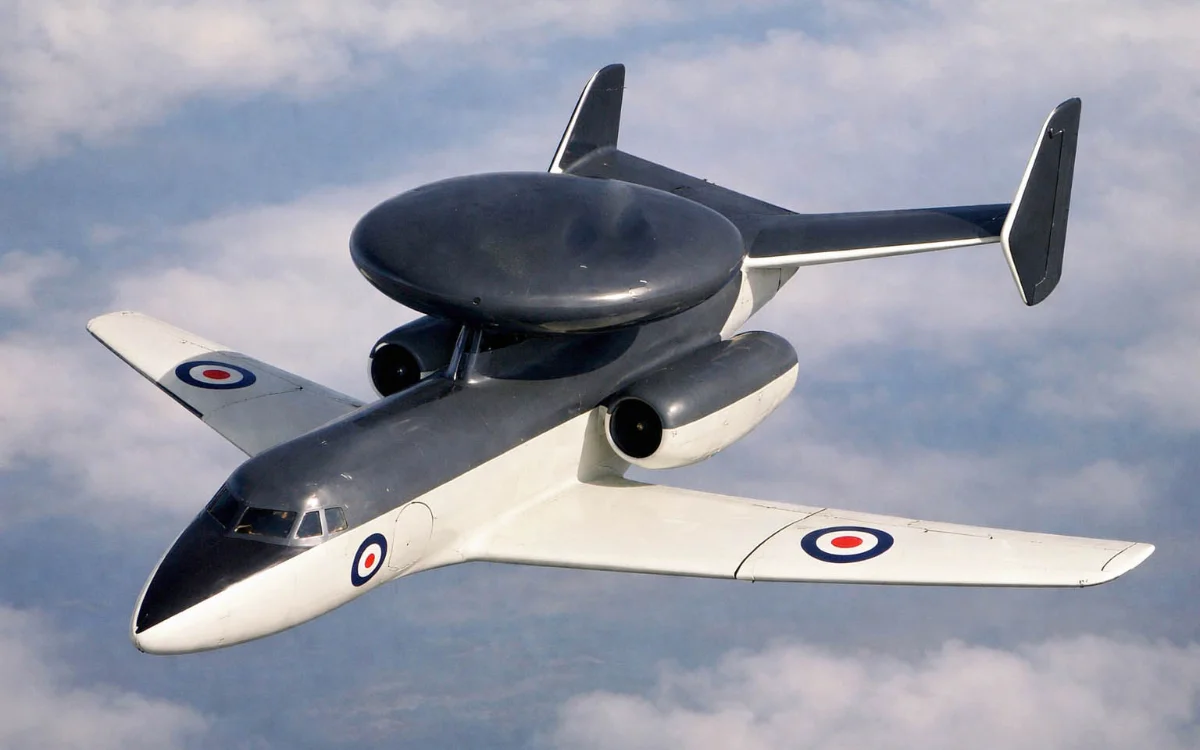

The history of aviation is filled with cancelled aircraft projects, and in the 1960s, one from Britain involved a secret plan to turn a business jet into a spy aircraft to rival one being built in America.
In 1964, America introduced the Northrop Grumman E-2 Hawkeye, an airborne early warning (AEW) aircraft, effectively a flying radar station.
It followed the E-1B Tracer, which by the mid-1960s was quite outdated, yet across the Atlantic in Britain, neither the Royal Navy nor the Royal Air Force had an AEW of its own.
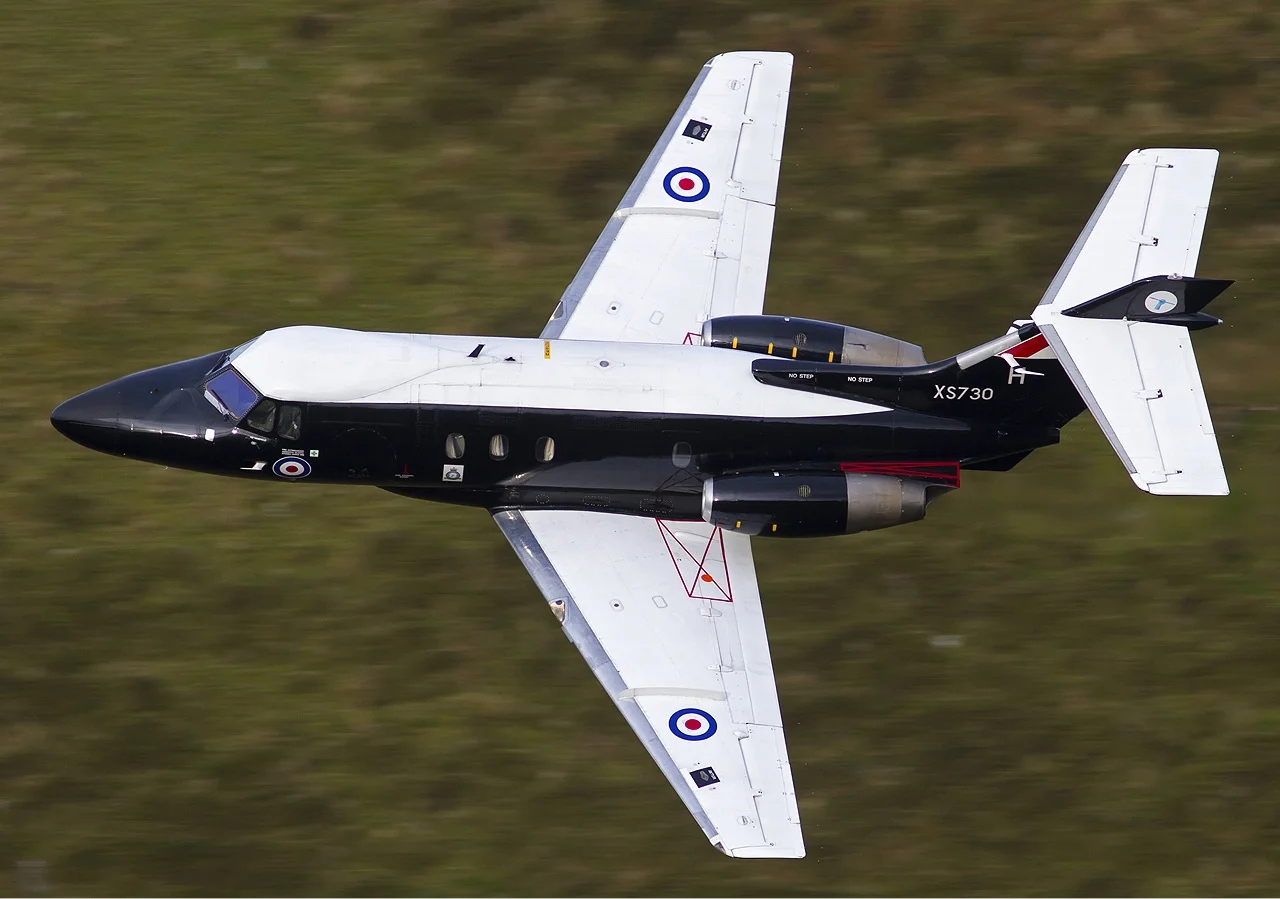
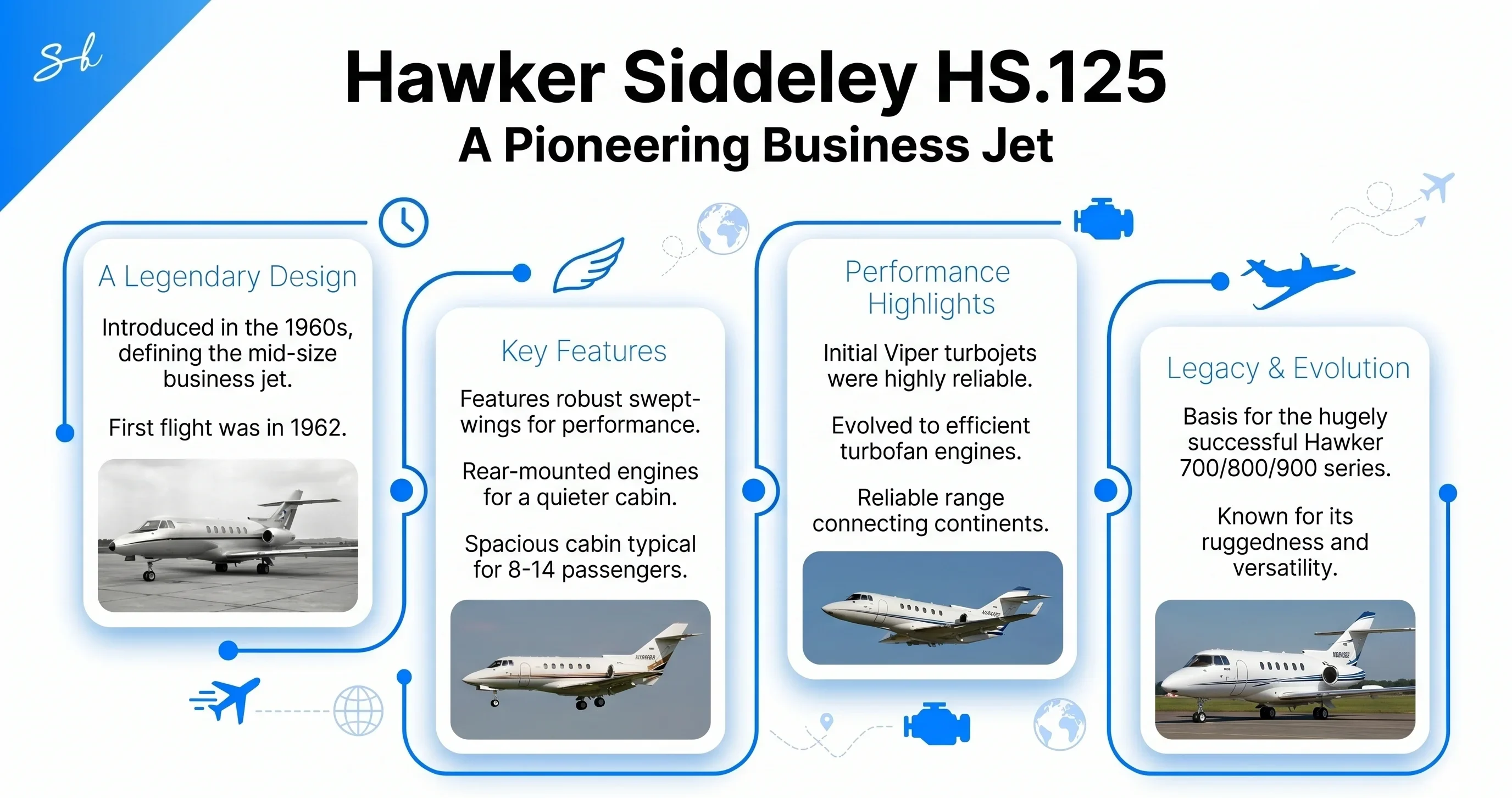
Thus, a plan was hatched to take the Hawker Siddeley HS.125, a mid-size business jet and navigation trainer, and turn it into a British spy aircraft.
What we know about the Hawker Siddeley business jet AEW
Information on the HS.125 AEW project is scarce due to the limited progress made on the aircraft.
What we do know is that Hawker Siddeley, latterly BAE, was to take the business jet and massively redesign it.
The conventional tailplane would be removed and replaced with a new twin-tailplane.
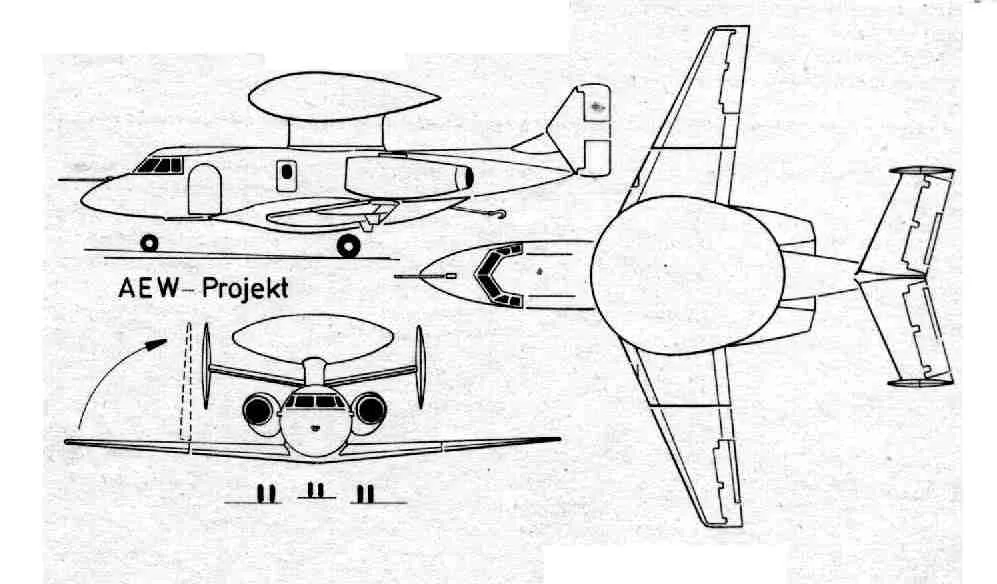
The two Rolls-Royce Viper turbojet engines would be mounted at the rear still.
But the biggest change came in the middle of the aircraft.
On top of the center of the fuselage would be what, at first glance, appears to be a large dinner plate.
This is, in fact, a radome, the aircraft’s radar, which would constantly scan for threats.
It’s also the design that the E-2 Hawkeye would adopt, and it’s also what the Boeing E-3 Sentry AWACS uses.
Related
This is what went wrong for the British business jet spy aircraft
Plans were drawn up in 1964 for the design of the HS.125 AEW.
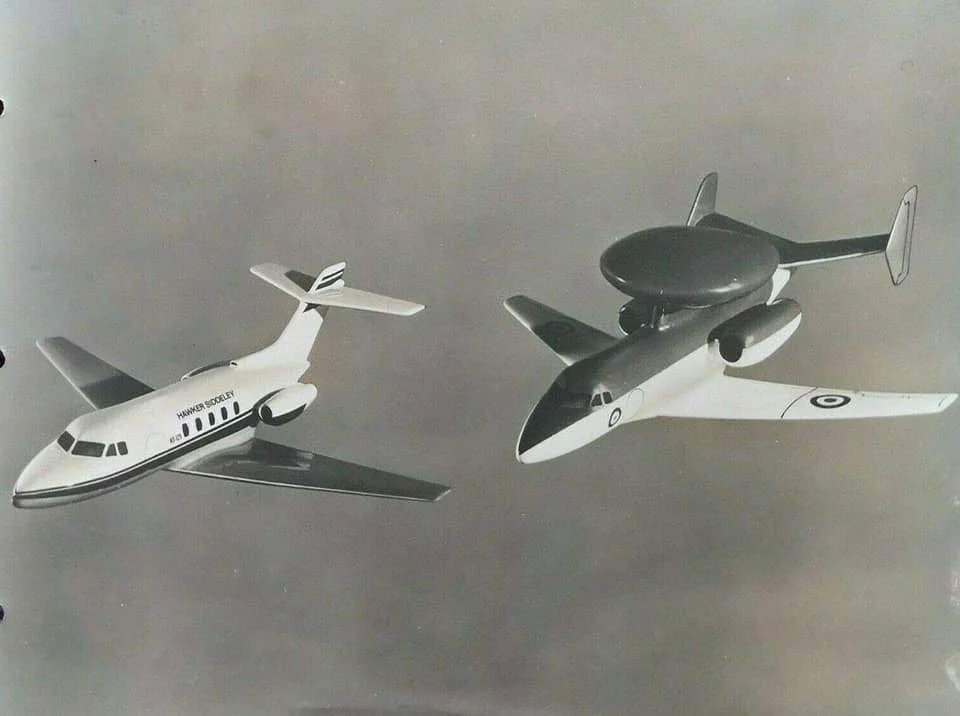
Hawker Siddeley even mocked up a couple of models of the aircraft.
They showed it alongside the regular business jet version.
But the project never got beyond some initial plans and the scaled models.
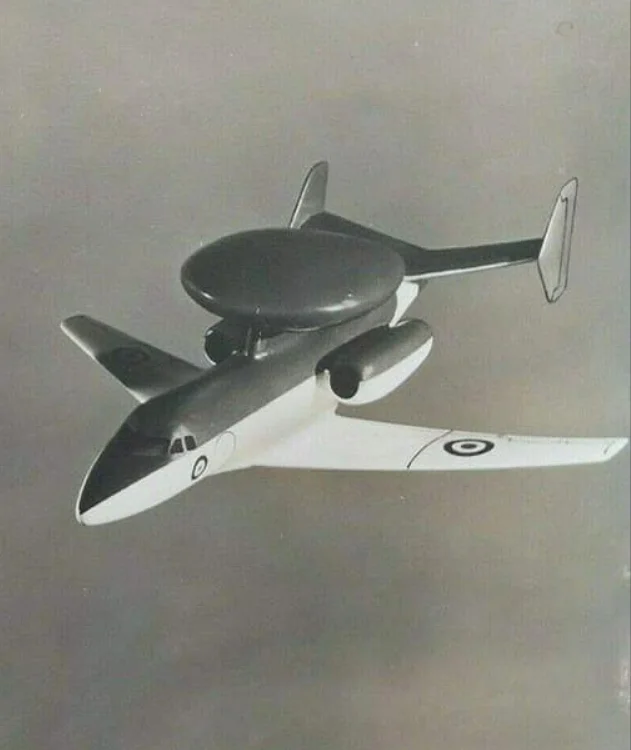
Part of the problem was that its radar dome was outdated, as it was a similar fixed design to the one on the E-1 Tracer.
The Hawkeye, however, had a much more advanced rotating design.
The small size of the HS.125 also caused problems.
While the Hawkeye wasn’t as large as the AWACS, it was purpose-built and not a business jet conversion.
Cramming all the equipment required into the HS.125 would not have been easy.
It could have potentially compromised the ultimate capabilities of the aircraft.
So the project was quietly dropped, and it wasn’t until the 1980s that it came to light again, thanks to a magazine article.
What Britain did next to find an AEW spy aircraft
With the HS.125 idea in the trash, Britain pursued other AEW projects.
One of these was the British Aerospace Nimrod AEW3.
This took an existing Hawker Siddeley Nimrod airframe and added a new Marconi Avionics radar and avionics package.
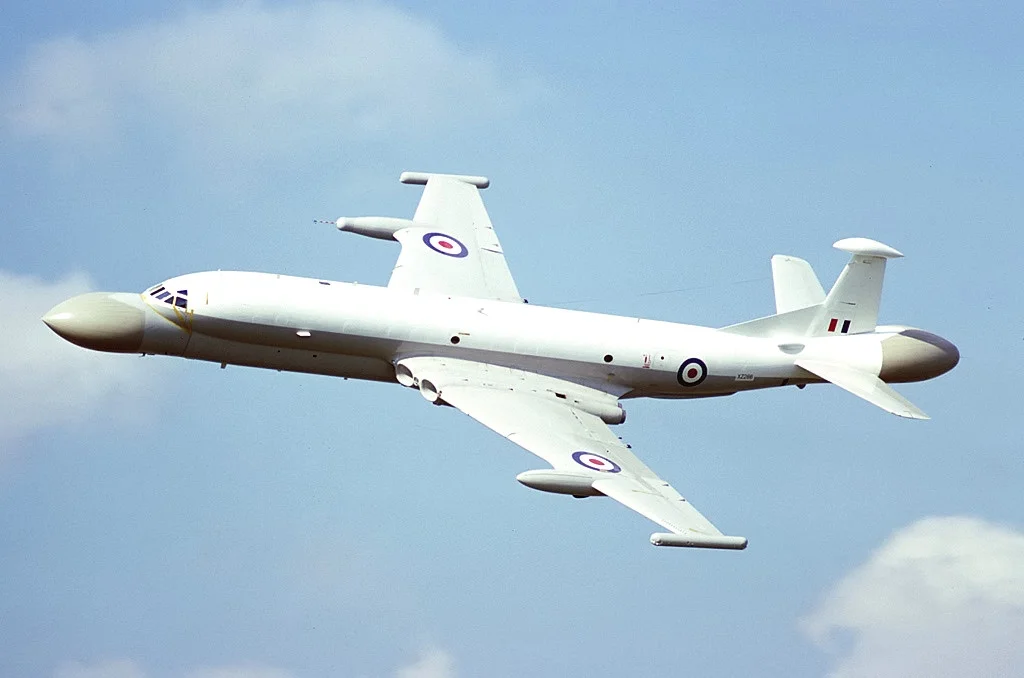
It led to a slightly unusual design, with a bulbous front and rear end on the Nimrod compared to the standard maritime patrol version.
The Nimrod could trace its origins back to the de Havilland Comet airliner, as it was originally an extensively modified version of that aircraft.
Britain needed a jet-powered AEW, and the idea was for the Nimrod to replace the old Avro Shackletons that were serving in that role.
While the AEW3 did fly and enter an extensive testing program, problems arose with the aircraft.

The advanced radar design was unreliable, scanners wouldn’t synchronize, and the overall capability of the aircraft was poor.
Plus, even the Nimrod proved too small to accommodate everything needed.
The Royal Air Force considered various aircraft instead, including the E-2 Hawkeye, before eventually buying Boeing E-3 Sentry aircraft.
Nimroad AEW3 history
1973: Project definition for a Nimrod Airborne Early Warning (AEW) variant is first initiated
March 1977: The Nimrod AEW is chosen over alternatives to meet the British early warning aircraft requirement
June 1977: A modified Comet 4C begins flight testing the distinctive bulbous nose radome design
July 1980: The first development Nimrod AEW3 prototype makes its maiden flight to test aerodynamics
March 1982: The first production AEW3 aircraft successfully completes its initial test flight
1984: Early production aircraft are delivered to RAF No 8 Squadron to begin crew training
Mid-1980s: The project faces severe cost overruns and major issues integrating the GEC Marconi radar
September 1986: The Ministry of Defence reopens the AEW competition due to ongoing technical failures
December 1986: The Nimrod AEW3 project is officially cancelled in favor of the Boeing E-3 Sentry
How did the Hawkeye fare after the HS.125 cancellation?
Meanwhile, in America, the E-2 Hawkeye project proved to be remarkably successful.
The aircraft first flew in 1960, and it entered service with the United States Navy in 1964.
Incredibly, the Hawkeye is still flying as a spy aircraft in 2026 and has entered its fourth generation.
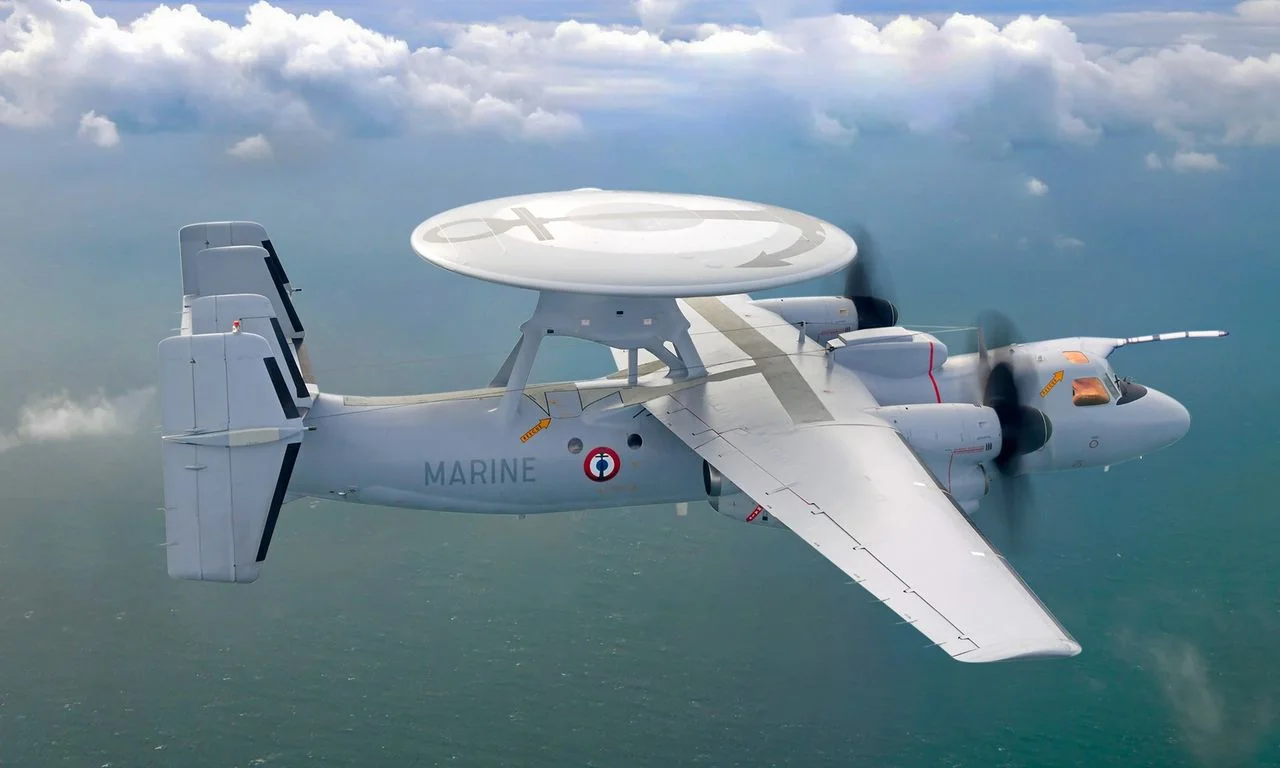
This is the E-2D, which first flew in 2007.
A notable achievement is that the Hawkeye was the first aircraft designed specifically for the AEW role.
Even the E-3 Sentry was modified from an existing aircraft, the Boeing 707 airliner.
The Hawkeye has served with distinction in various theaters of war.
A handful of other air arms, such as France and Egypt, have operated the plane.
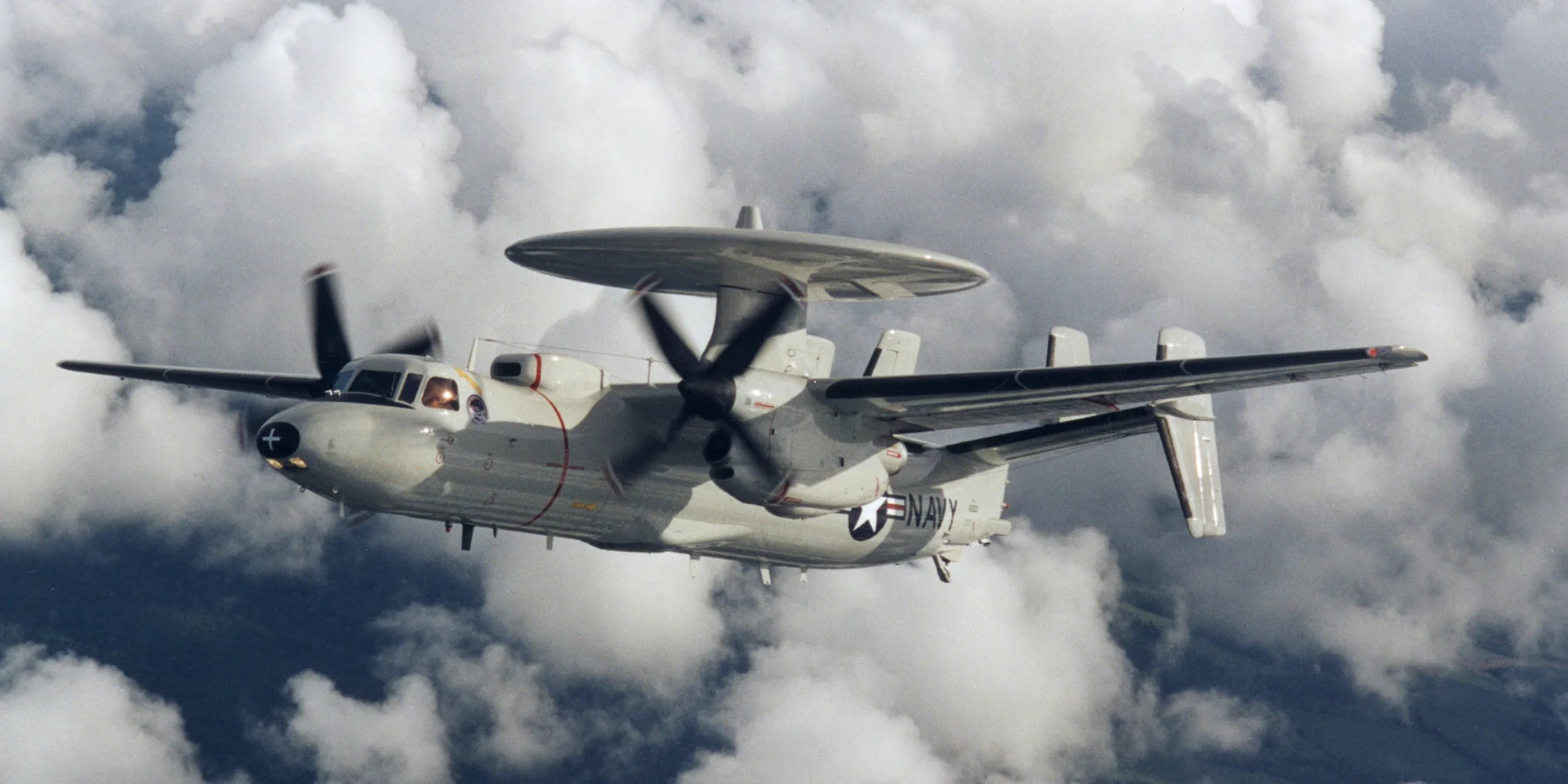
It is remarkable just how successful the Hawkeye is still proving to be.
Yet Britain’s answer to America’s spy aircraft never even got off the ground.
Ironically, the UK had to look to America for a spy plane after all.
Henry joined the Supercar Blondie team in February 2025, and since then has covered a wide array of topics ranging from EVs, American barn finds, and the odd Cold War jet. He’s combined his passion for cars with his keen interest in motorsport and his side hustle as a volunteer steam locomotive fireman at a heritage steam railway.