California’s last Camaro police car is banned from using its Sport and Track modes
Published on Nov 14, 2026 at 5:14 PM (UTC-5)
by Henry Kelsall
Last updated on Nov 14, 2026 at 5:14 PM (UTC-5)
Edited by
Mason Jones
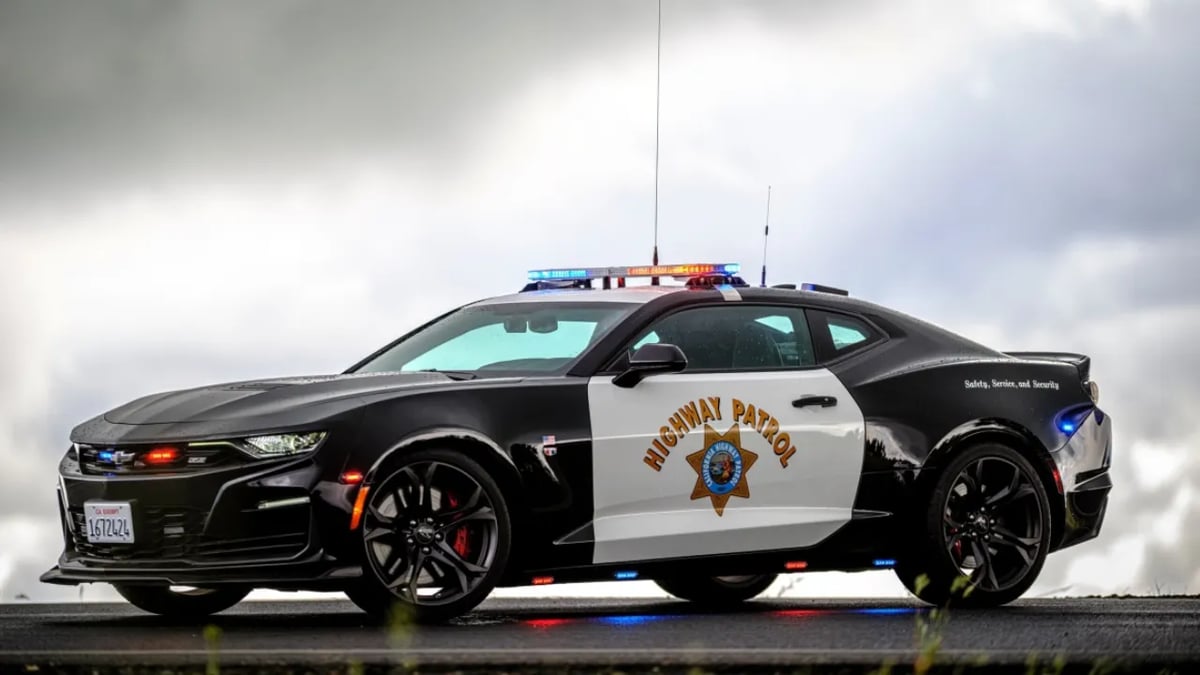

California’s last Chevy Camaro police car, and SS 1LE muscle car is, quite amazingly, banned from using its Sport and Track modes.
The California Highway Patrol recently took delivery of its new Chevy Camaro SS 1LE, three years after regular production ended.
As a Camaro SS 1LE, the muscle car is fitted with the track-focused 1LE package for a little bit more performance.
However, despite its sporty credentials, it seems the CHP are unable to really unleash the Bow Tie’s famous muscle car.
How are the California Highway Patrol restricted with the Camaro police car?
Police documents for the muscle car reveal what the CHP can and can’t do with their latest machine.
For example, officers who are using the car are discouraged from using it during prolonged periods of rain or adverse weather.
They are also not allowed to rev the Chevrolet for fun, and launch control is not to be used.
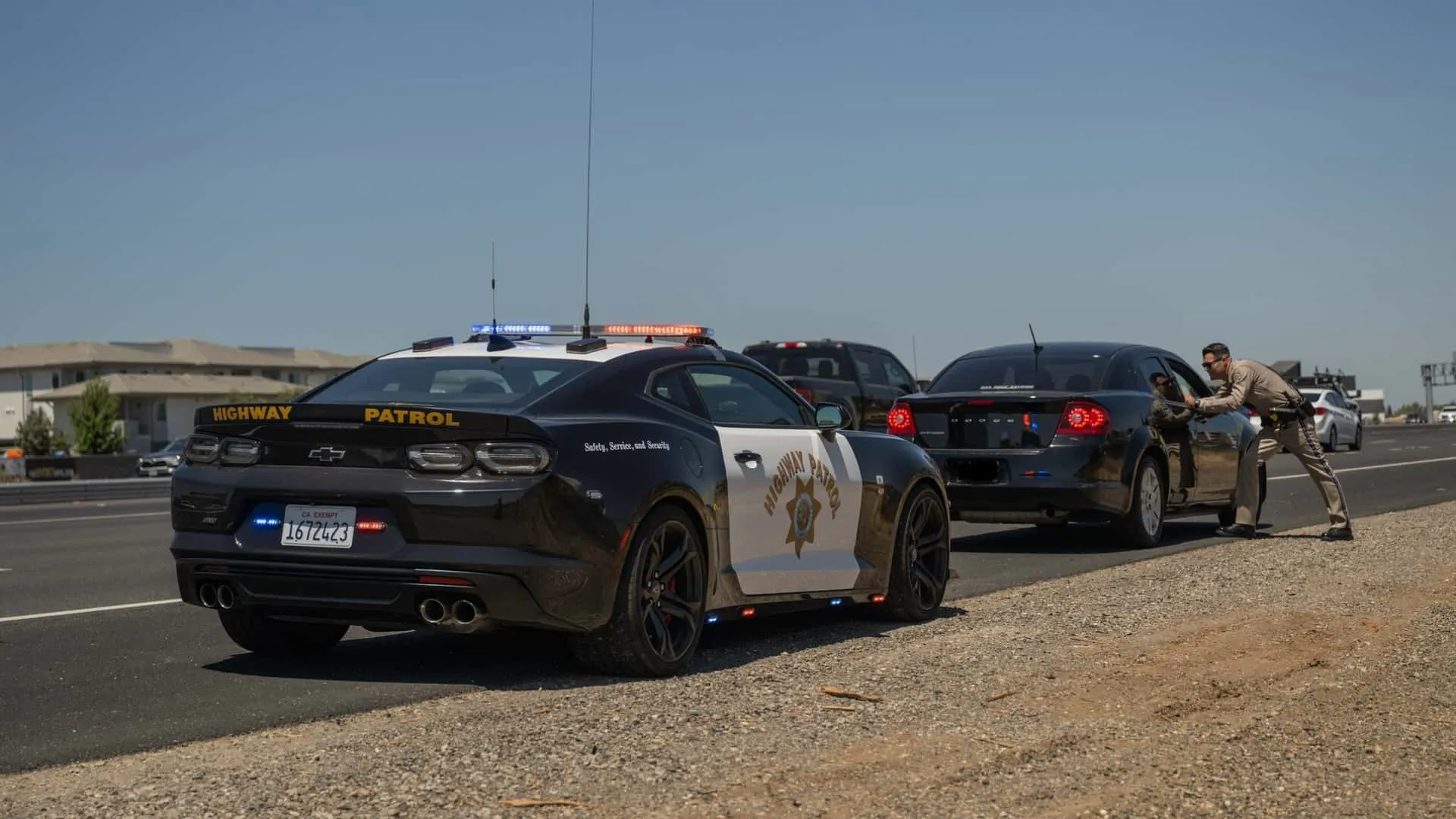
Weirdly, despite being a track-focused version, the CHP has made several of the car’s modes unavailable.
The Chevy Camaro has to be driven in Tour Mode.
This means that Sport and Track modes are not available for use by those behind the wheel.
Plus, any activity generated by the muscle car has to be logged under special project code (SPC) 775.
Prisoners should not be transported in the Camaro
Prisoners are also not allowed to be transported in the muscle car.
However, given the coupe body style of the Chevy, that does make perfect sense.
Anyone wishing to get away from the car in a police chase will definitely struggle.
The Camaro has a 6.2-liter LT1 V8 engine, making 455hp and 455lb-ft of torque.
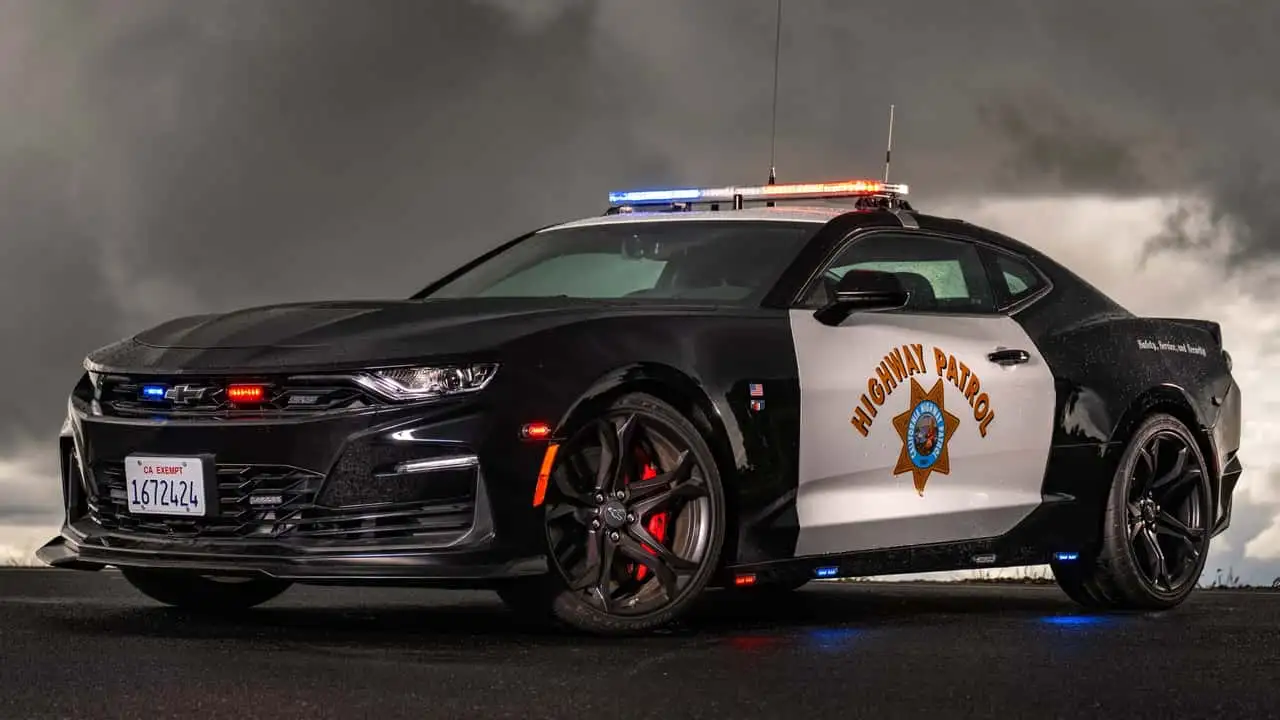
Those wishing to get behind the wheel of the car also need to undergo special training with the CHP Academy.
If you don’t do that, then you may not get the chance to ever drive this incredible police car.
As this is the last Camaro to join the CHP fleet, many officers will want to hold onto those privileges.
What the future holds for fleet muscle cars
While the CHP has said this car is the “last of its kind to join the fleet,” it may not be the end of police Chevy Camaro muscle cars.
Chevrolet has already hinted that the Camaro nameplate will return to its lineup at some point.
In fact, the car could ride on an updated version of GM’s rear-wheel-drive Alpha 2 architecture.
You can currently find this underneath the Cadillac CT5.
However, if the Camaro does return, there will be a crucial difference.
Reports have also stated that any new Camaro will have a four-door body style.
It will not be a coupe like the final generation, which would make it more practical for police officers.
That way, they would be able to arrest someone and transport them in the police car.
While it is exciting to think a new Camaro is on the way, it could still be a way off.
We may have to wait until 2029 to see a new version of the muscle car.
Chevy Camaro timeline
1966: First generation debuts as a direct response to the Ford Mustang
1970: Second iteration launches with a completely redesigned and wider body
1982: Third generation introduces fuel injection alongside a new hatchback style
1993: Fourth series arrives featuring sleek aerodynamics and plastic body panels
2002: Production halts due to declining sales in the sports coupe market
2010: Fifth generation revives the iconic nameplate with retro-inspired styling
2016: Sixth version transitions to a lighter and more nimble chassis platform
2024: Final model year concludes production as the automaker pivots to new platforms
The best of Supercar Blondie, every Sunday
The week's best car stories, straight to your inbox. Free.
Henry joined the Supercar Blondie team in February 2025, and since then has covered a wide array of topics ranging from EVs, American barn finds, and the odd Cold War jet. He’s combined his passion for cars with his keen interest in motorsport and his side hustle as a volunteer steam locomotive fireman at a heritage steam railway.