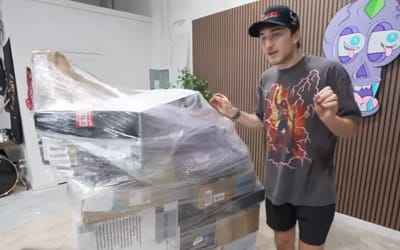
Canadian man compares what kind of TVs you can get for $30, $300, $3,000 and $30,000
Published on Jan 15, 2026 at 5:11 PM (UTC+4)
by Ben Thompson
Last updated on Jan 15, 2026 at 9:31 PM (UTC+4)
Edited by
Emma Matthews

This Canadian man wanted to see how TVs compared when bought at different prices, on a scale from $30 to $30,000.
Linus Tech Tips took a look at four different TVs, priced at $30, $300, $3,000, and $30,000, respectively.
The general wisdom is that when you spend big bucks, you get your money’s worth.
But is that always the case? Linus took a closer look.
EXPLORE SBX CARS – Supercar auctions starting soon powered by Supercar Blondie
How do these TVs compare – and does price make a difference?
The first TV up for inspection was a $35 open-box 32-inch Insignia Fire TV.
You would think that a cheap TV wouldn’t be much to look at, but it had a surprisingly good picture.
The viewing angles were workable, and there were useful ports, which allowed for optical audio.
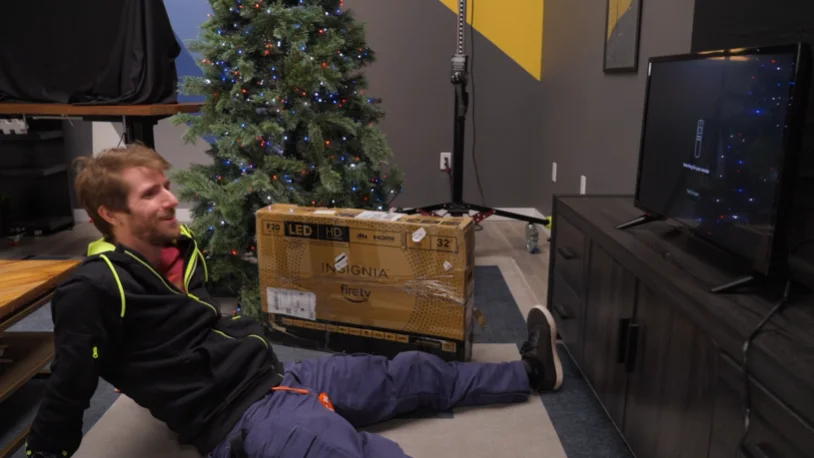
However, there were limitations when it came to using it as a Smart TV, and it didn’t hold up great when used for gaming.
In conclusion, this TV would work best in a guest bedroom or a dentist’s office, but wouldn’t be ideal as a main TV.
Moving onto the $300 55-inch Roku TV, the size jumped up as much as the price tag did.
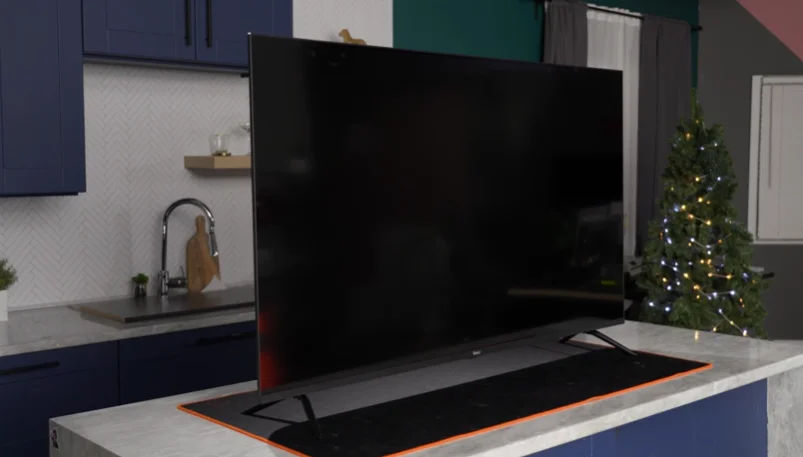
The screen looked a lot sharper, but the TV required an account to use, the input switching was buried, and ‘HDR’ (High Dynamic Range) had the potential to look bad on an LCD (Liquid Crystal Display) without dimming.
The $3,000 83-inch OLED had the best image quality so far, with high HDR brightness and a strong overall performance – not to mention that it was bought on sale for $2,497.
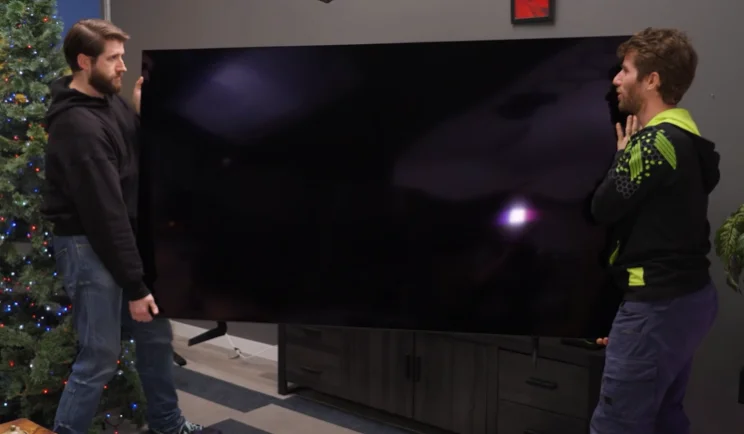
But would it be enough to best the $30,000 110-inch Hisense RGB mini-LED?
“This puppy is pure bragging rights!” Linus declared.
“At 10 times the price and nearly twice the area of the 83-inch TV we just looked at, five times the cost [per square inch] for two times the size, this bad-boy gets hit with a double whammy of price boosters!”
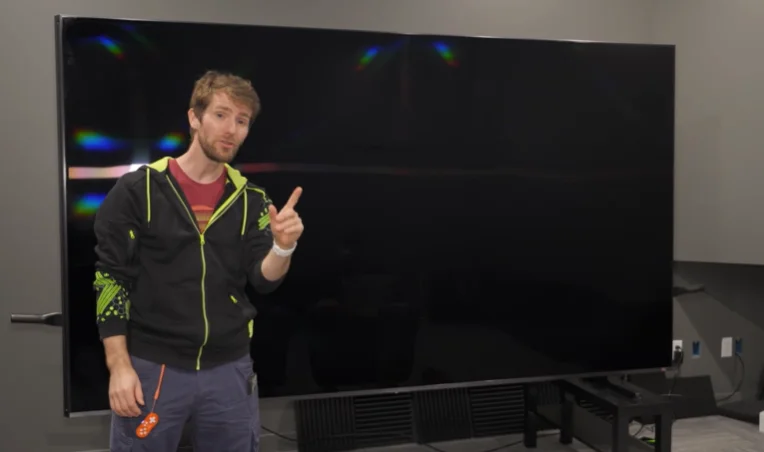
An RGB mini-LED backlight comes with this model, providing extreme brightness and a wide color volume.
You may recall that Linus had reviewed the Hisense in a previous video.
But that didn’t matter – this TV could still wow him.

However, if he had one criticism, it would be that sitting too close revealed low effective PPI (Pixels Per Inch).
It came out lower than the 32-inch Insignia TV – 38PPI for the Hisense, and 45PPI for the Insignia.
So when all is said and done, which TVs came out best in Linus’ book?
Linus gave his final thoughts
All the TVs had their good qualities as well as their shortcomings, but which one did Linus land on as being the best value for money?
While the $300 TV was described as the ‘Goldilocks option’, the $3,000 TV was praised as the enthusiast choice, and the $30,000 option came out strongest in terms of spectacle.

He didn’t outright advocate for one over the other and left it open-ended enough for his viewers to draw their own conclusions with the available information.
There’s no question that Linus is a good source to look towards for this kind of thing, as his passion for tech is undisputed.
After all, this is the guy who made videos playing every available PlayStation, or giving a dial-up internet a whirl in 2025.

To see his thoughts on each of these TVs, visit his YouTube channel.
DISCOVER SBX CARS: The global premium car auction platform powered by Supercar Blondie
Following stints at LadBible, The Sun, The New York Post, and the Daily Mail, Ben joined the team full-time in February 2025. In his role as Senior Content Writer, his sparkling copy, the ability to sniff out a good story at 100 paces, and a GSOH quickly led to him becoming an integral and invaluable member of the writing staff.