This airport terminal is shaped like a paper airplane showing even large-scale infrastructure can be playful
Published on Dec 29, 2025 at 8:30 AM (UTC+4)
by Jason Fan
Last updated on Dec 29, 2025 at 11:19 AM (UTC+4)
Edited by
Kate Bain

If you’ve ever looked down at Copenhagen Airport from above and thought one of its terminals resembles a paper airplane, you’re not imagining things.
Terminal 3’s long, folded geometry looks like it’s been creased and ready for takeoff, a clever visual joke hidden inside a very serious piece of infrastructure.
It’s the kind of design detail that turns a routine transit space into something memorable.
In fact, its existence is proof that airports don’t have to be anonymous boxes of glass and steel to work efficiently.
SBX CARS – View live supercar auctions powered by Supercar Blondie
The paper airplane design blends function with style
Copenhagen Airport, also known as Kastrup, opened in 1925, at a time when commercial flight was still a novelty.
Back then, it consisted of little more than grass runways and small buildings, serving early propeller aircraft and seaplanes.
As air travel gained popularity in the 1930s, the airport added a proper passenger terminal, complete with public viewing terraces.
The biggest transformation came after World War II.
During the Jet Age of the 1950s and 1960s, Copenhagen Airport rapidly expanded, becoming Scandinavia’s primary international gateway.
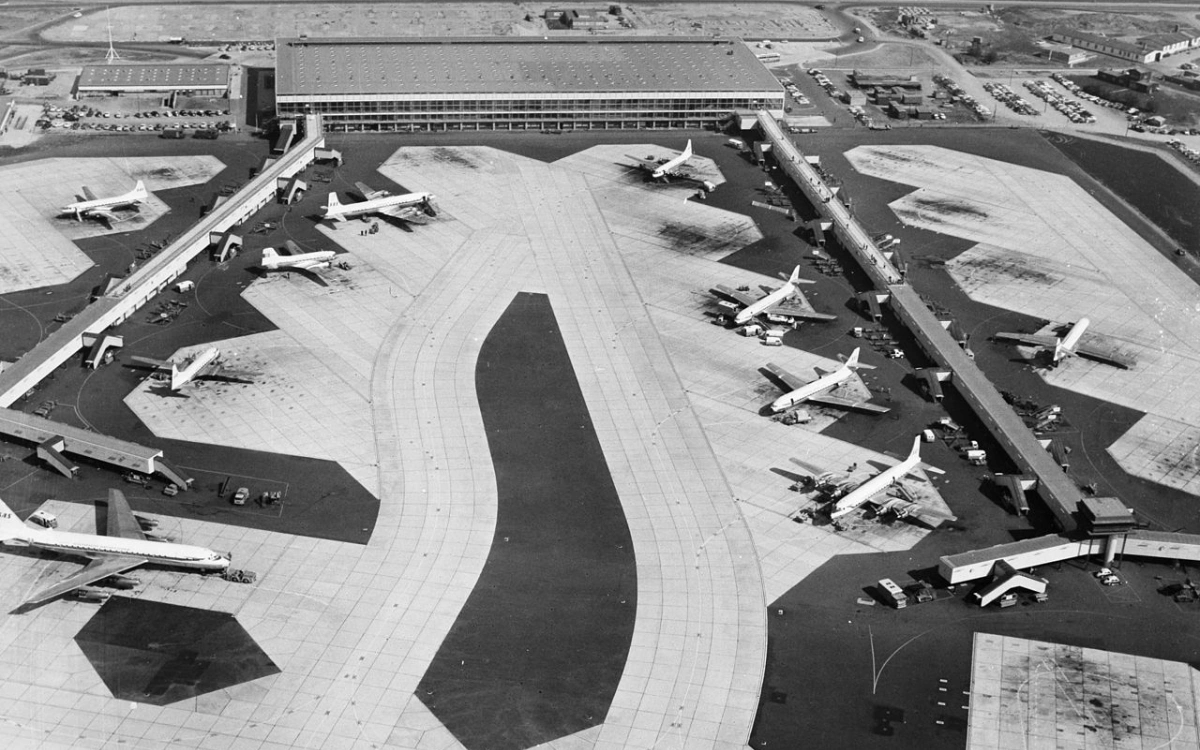
New runways, control towers, and terminals were added to handle faster aircraft and growing passenger numbers.
By the time Terminal 3 was developed decades later, capacity was no longer the only goal.
Instead, the airport’s designers wanted to create a terminal that was both functional and elegant.
Enter the paper airplane design, which not only improves passenger flow and wayfinding, but also subtly references the act of flight through its shape.

Many global airports are architectural statements
Copenhagen Airport isn’t alone in proving that airports can have personality.
Around the world, designers have turned terminals into architectural statements.
Beijing Daxing International Airport spreads out like a giant starfish, reducing walking distances while creating a dramatic central atrium.
The Hello Kitty Airport in Oita, Japan, is also a full-on Sanrio-themed experience, perfect for anyone with kids or wanting to get in touch with their more youthful selves.
Meanwhile, Singapore’s Changi Airport, which frequently wins awards for being the best airport in the world, takes airport design to a whole new level.
While most airports around the world aren’t exactly pleasant places to spend your time in, Changi Airport subverts your expectations completely.
With a man-made rainforest and the world’s tallest indoor waterfall, the airport truly blurs the line between terminal and destination.

These airports, along with Copenhagen Airport’s paper airplane terminal, prove that even massive infrastructure can spark delight.
DISCOVER SBX CARS: The global premium car auction platform powered by Supercar Blondie