Man who built $20,724 solar-powered yacht that can run forever shares how he'd build a catamaran that works the same
Published on Aug 09, 2026 at 11:10 PM (UTC-4)
by Alessandro Renesis
Last updated on Aug 09, 2026 at 11:10 PM (UTC-4)
Edited by
Mason Jones
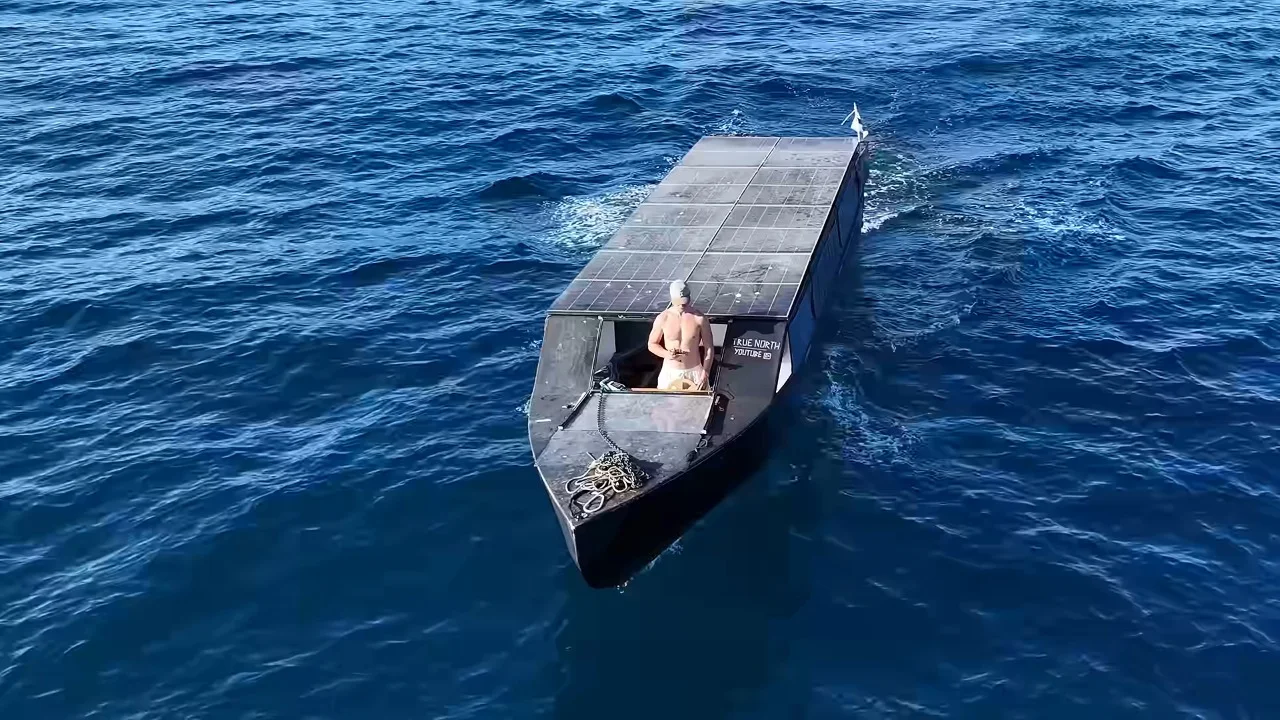

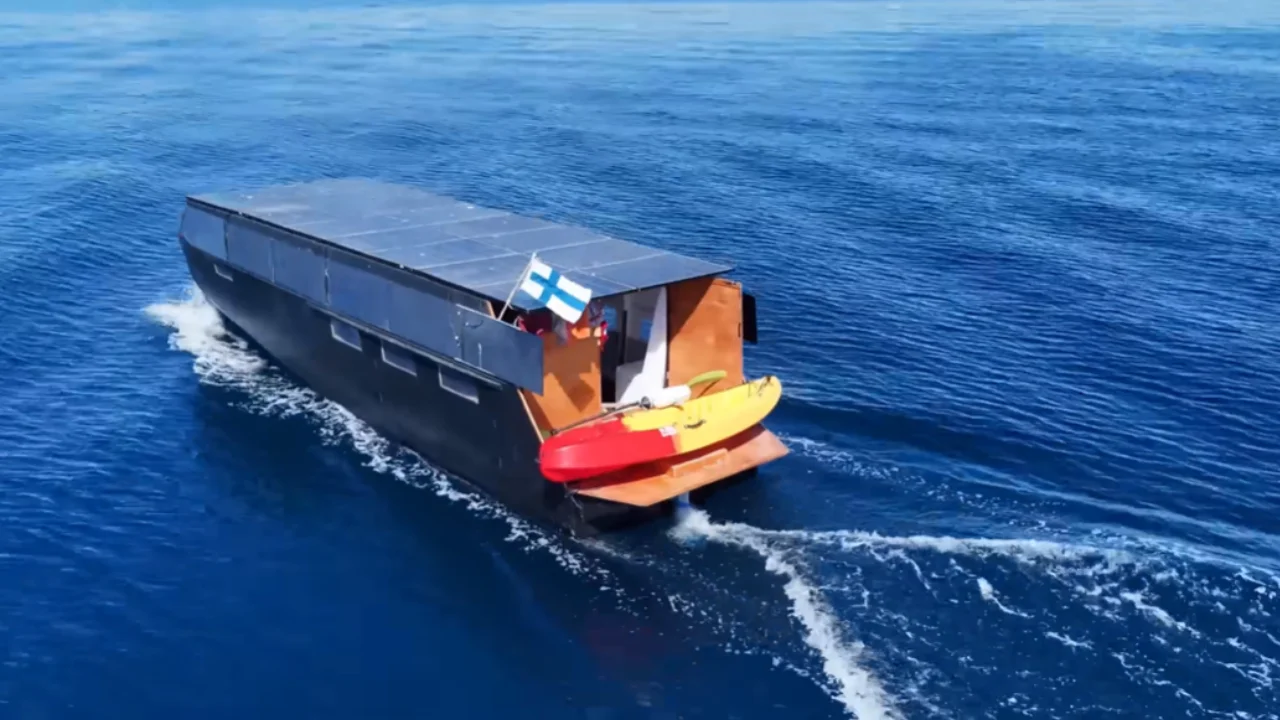
This YouTuber did something ingenious after sailing from Finland to Spain in a solar-powered yacht that he built by himself.
We don’t even know where to start – like, how do you even come up with the idea?
But clearly the idea worked, and the yacht works.
And now, he’s building a catamaran.
In theory, the yacht can run forever
One of the many reasons why solar energy is taking so long to properly take off is that, in theory, solar power is unlimited.
True, but harnessing solar power and actually turning it into usable ‘fuel’ is complicated and expensive.
Hence why we aren’t all hovering around our cities in flying cars that can run on solar energy.
It’s the same with hydrogen cars – apologies for the digression – because people say that ‘hydrogen is the most abundant element in the universe’ and while that’s true, it’s also not super relevant.
You still need to actually process it and turn it into fuel.
But the theory stands, and the YouTuber/sailor has indeed been traveling basically on a zero-dollar budget (from Finland to Spain) when it comes to fuel.
Related
Building a catamaran will be trickier (and more expensive)
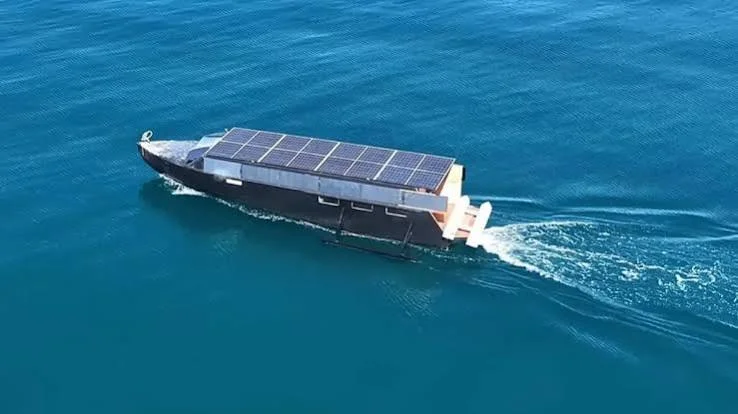
One of the biggest challenges with his yacht was choosing the correct type of solar panels and deciding where to fit them.
Well, on the roof, obviously, but that’s easier said than done.
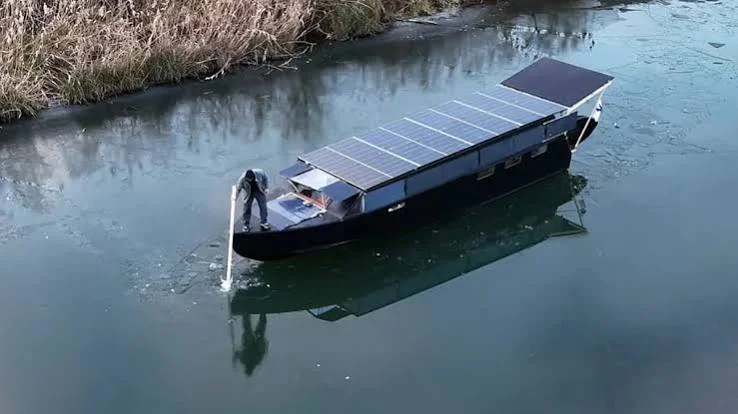
The YouTuber behind the True North Yachts channel, Lukas Sjoman, admitted that he had to replace the solar panels a couple of times, switching from rigid to flexible to rigid again.
Finding a sizable, mostly flat surface on which you can place solar panels on a yacht is relatively simple.
Especially if you built the solar-powered yacht yourself.
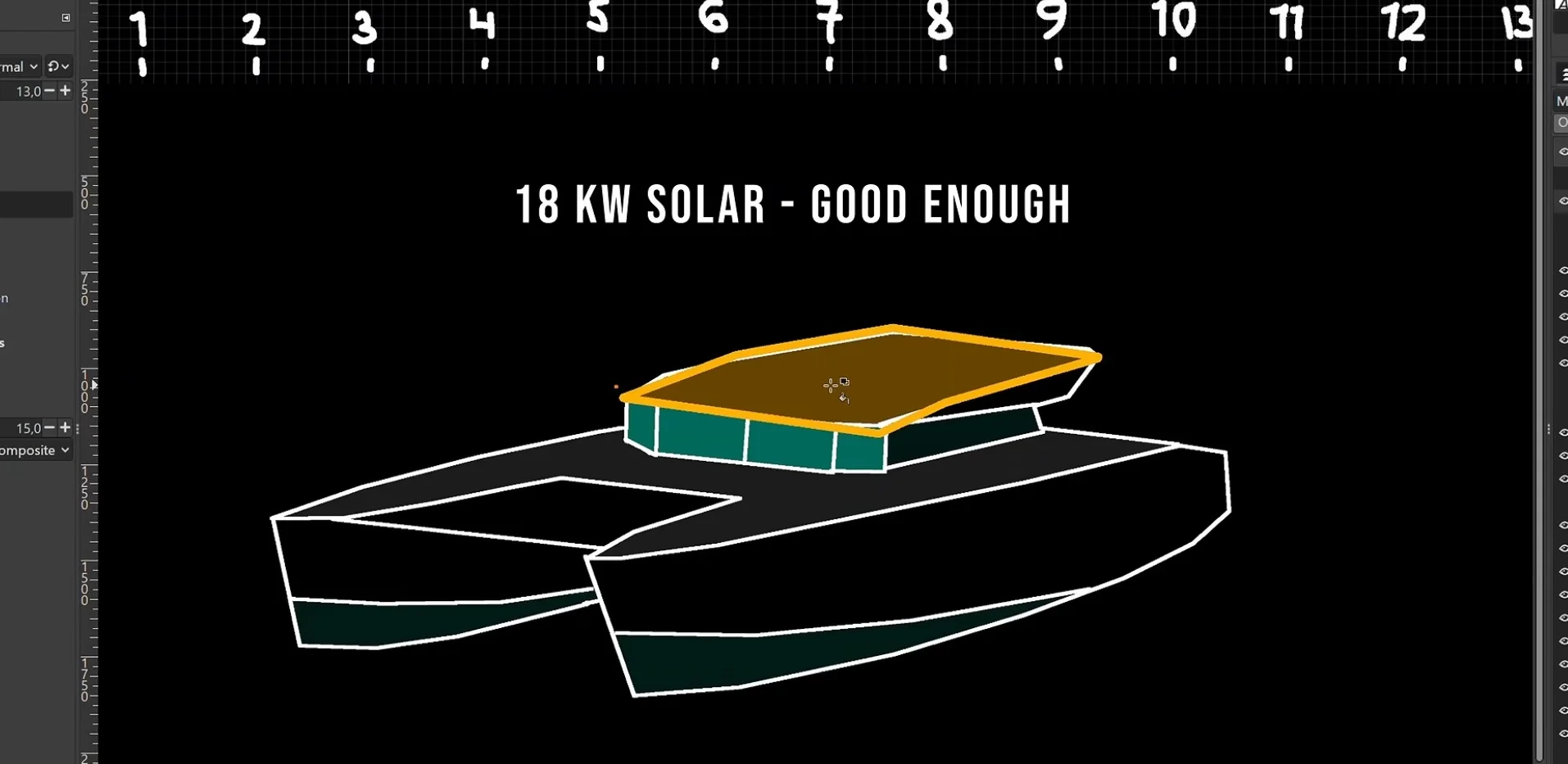
But a catamaran is different.
A catamaran has two parallel hulls that are too narrow so that’s not an option.
There’s a large deck, but you’d have to basically ‘sacrifice’ it if you want to use it to install the panels.
His idea does involve losing a bit of deck space, but there are two positives.
First, while some deck space will be taken up by the solar panels, it won’t consume the whole area.
Second, just like on his yacht, the solar panels will be installed on the cabin roof.
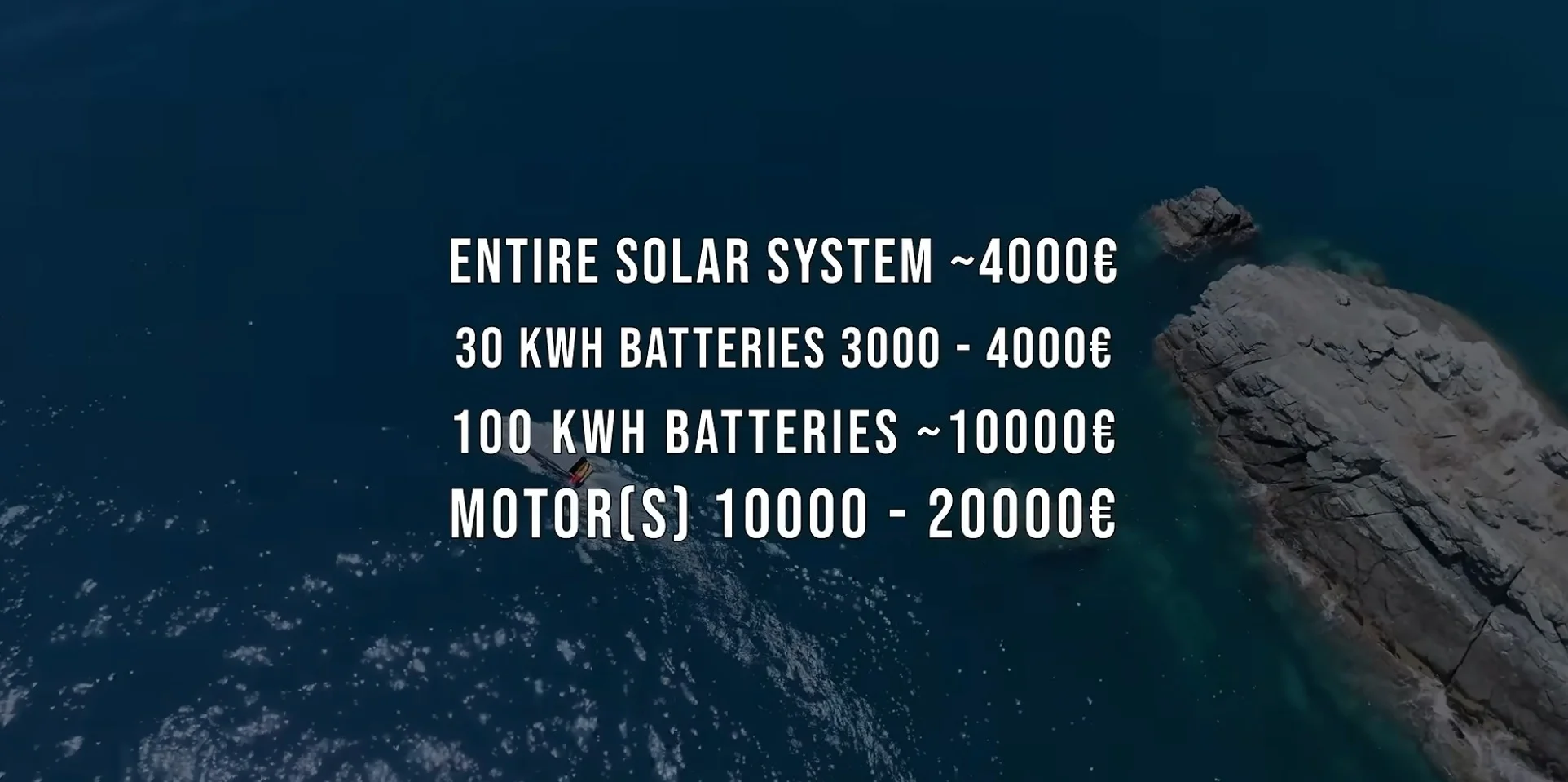
And it’ll be expensive, too.
In his estimation, he’s going to need at least $40,000, and that’s just for the solar system, the motors, and the batteries.
That means he hasn’t even factored in the cost of fitting out the cabin, building the hull, and so on.
The trickiest part will come later
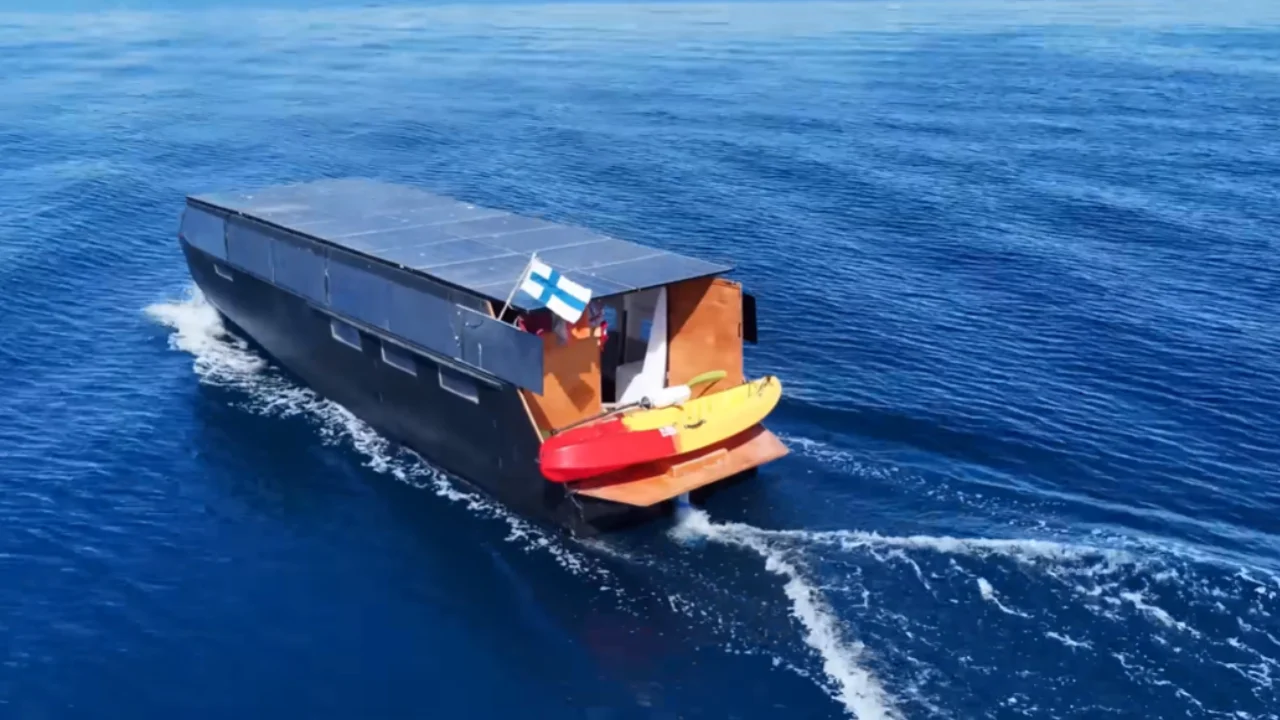
One of many things he said he wished he’d done differently when he built his solar-powered yacht was the cabin.
It’s not very tall – people like Jason Momoa or Zlatan Ibrahimović would barely fit – but more importantly the entrance (we can’t call it a door because there isn’t one) is super cramped.
This part will be tricky because with a catamaran, in general, you have even less space.
That depends on the size of the catamaran, of course, but a DIY catamaran can’t be that big.
The YouTuber is still currently in Spain and will presumably have to head back to Finland, his native country, for this project.
So stay tuned.

Alessandro is an automotive journalist with 10 years of experience covering supercars, automotive history, emerging vehicle technology, and luxury transportation. He wrote the first article published on SupercarBlondie.com when the website launched in 2022 and has since built a reputation for insightful reporting across the automotive and transportation industries. His expertise is grounded in hands-on experience. Alessandro has driven every Tesla model ever produced, from the original Roadster to the Cybertruck, and regularly covers the latest developments in electric vehicles and automotive innovation. His passion for transportation extends beyond cars, he has even flown a Boeing 787 Dreamliner simulator in Addis Ababa, Ethiopia. His reporting spans everything from classic American muscle cars and rare automotive discoveries to luxury yachts, private aircraft, high-end watches, and cutting-edge vehicle technology. Known for his deep knowledge of automotive history and ability to uncover the stories behind iconic vehicles, Alessandro brings readers a blend of historical context, technical expertise, and first-hand experience.