Man selling one of the earliest ever EVs from 1908 explains why it's up for sale
Published on Sep 26, 2026 at 5:54 PM (UTC-4)
by Daisy Edwards
Last updated on Sep 26, 2026 at 5:54 PM (UTC-4)
Edited by
Mason Jones
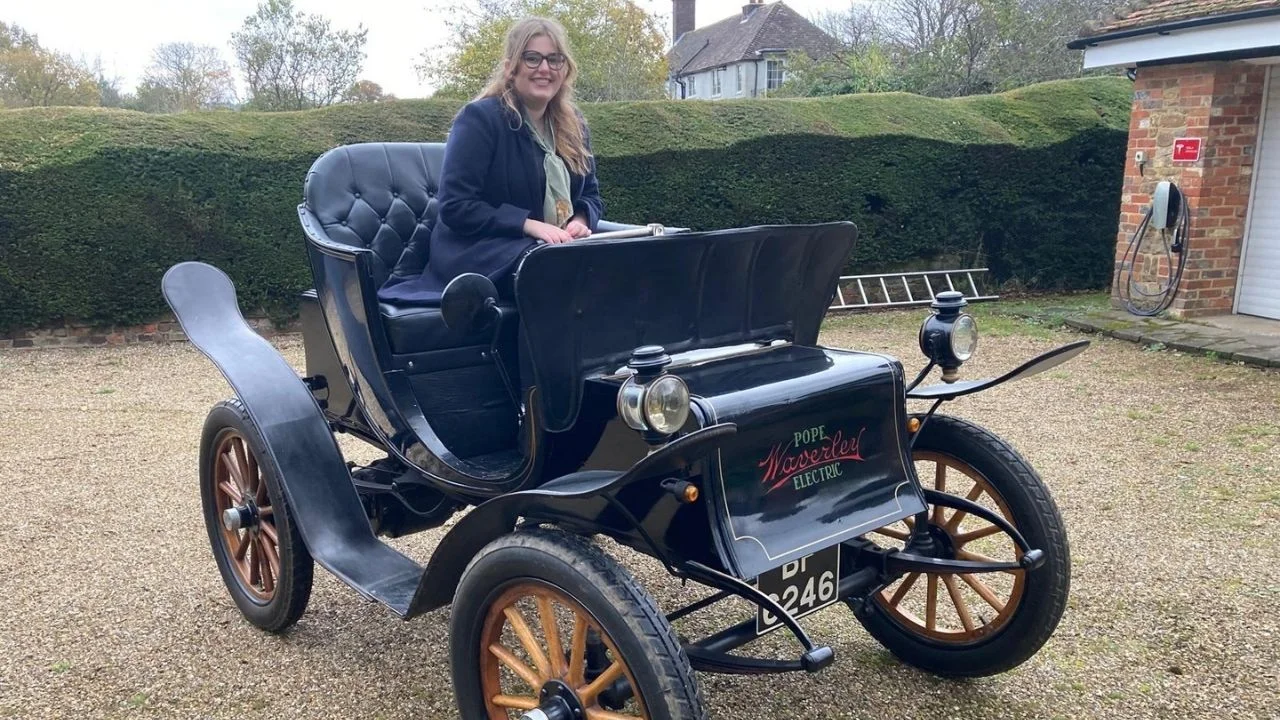

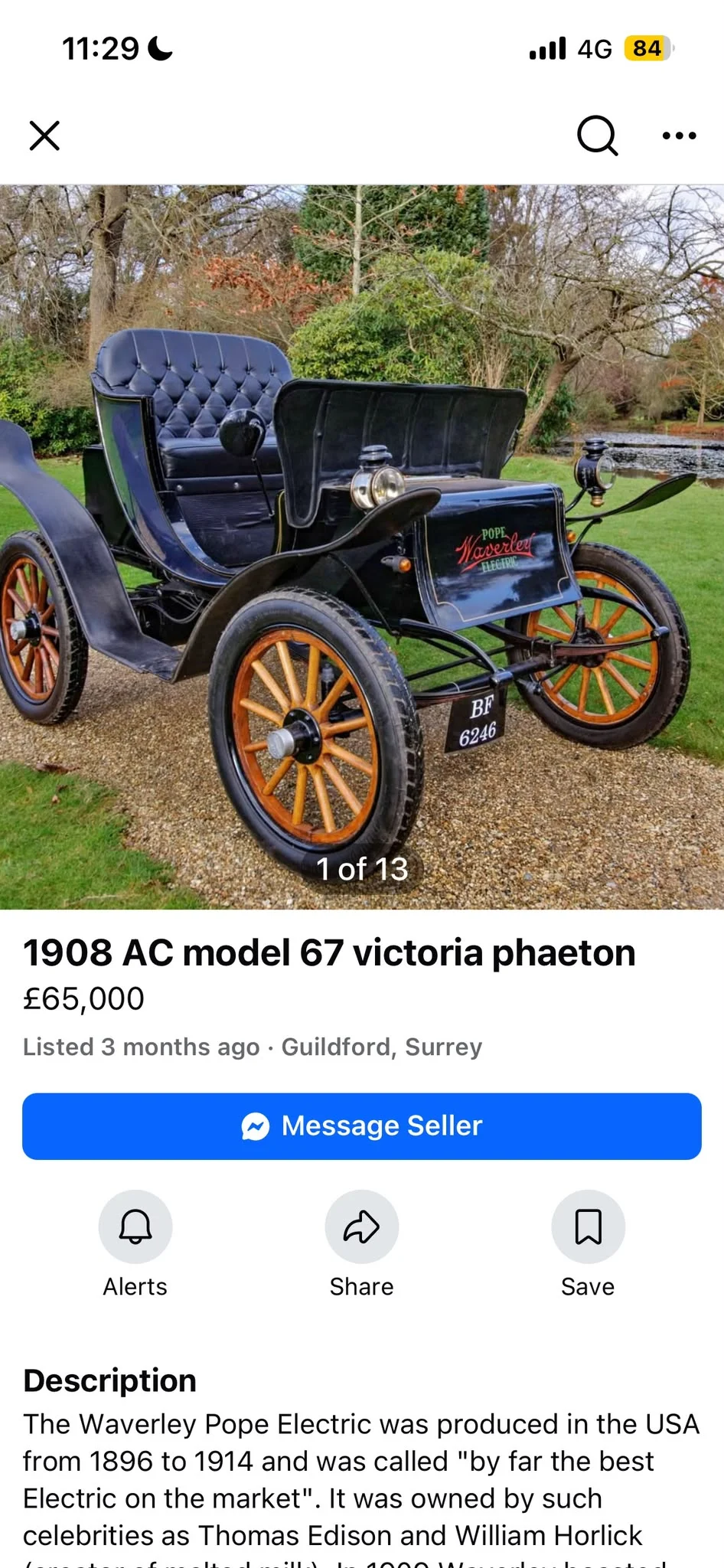
I was looking through Facebook Marketplace for used cars when I stumbled across an old friend I definitely wasn’t expecting – a 1908 Waverley Pope electric car.
I recognized it almost immediately because I’d previously written about the incredibly rare EV and its owner, Glyn Powell-Evans, when I was writing my university dissertation, and I was lucky enough to ride in it.
Now, the historic car is up for sale, and I had to get back in touch with Glyn to find out why he had decided it was finally time to part with it.
It turns out the decision wasn’t exactly an easy one.
Why one of the earliest EVs is looking for a new home
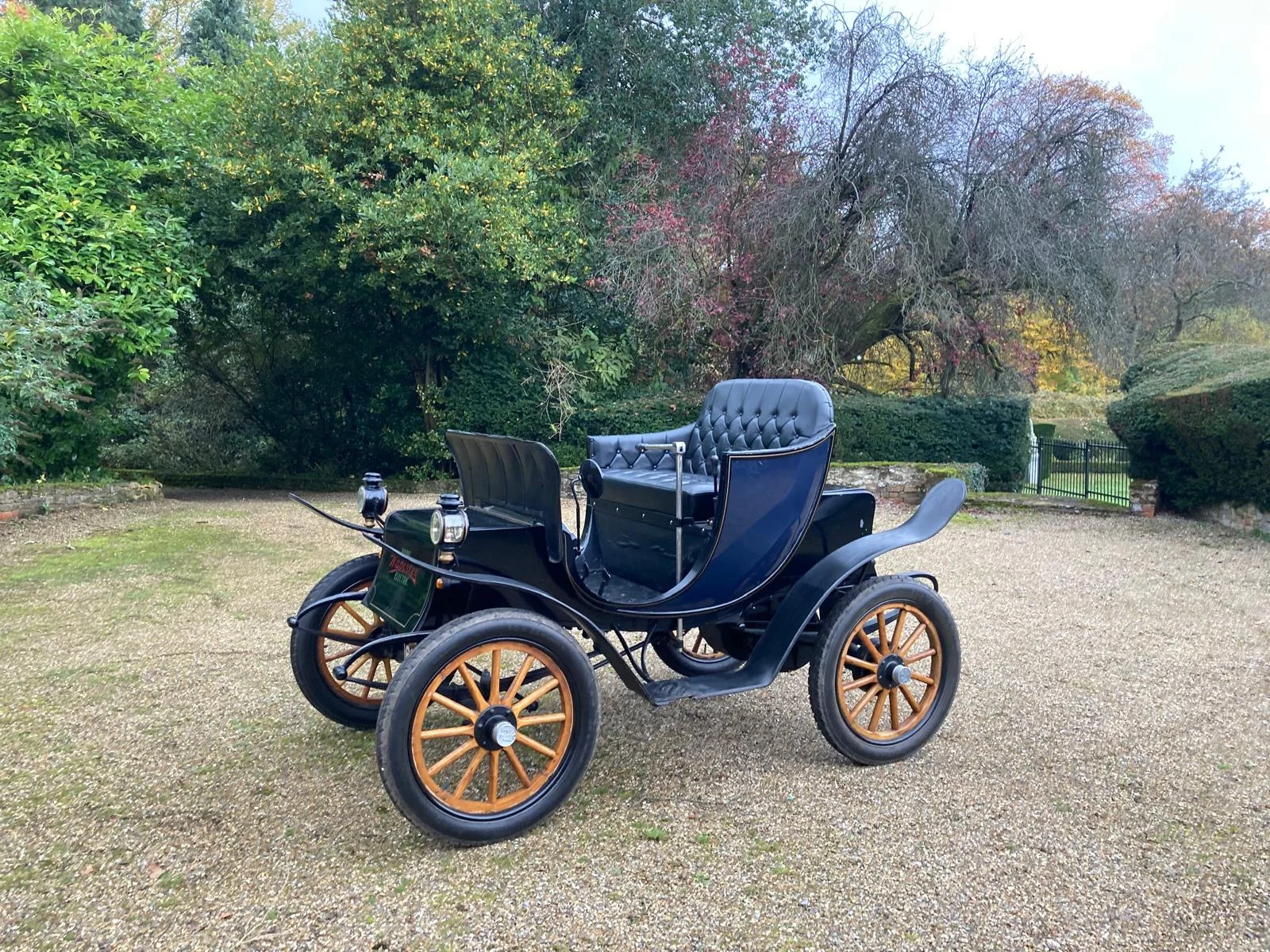
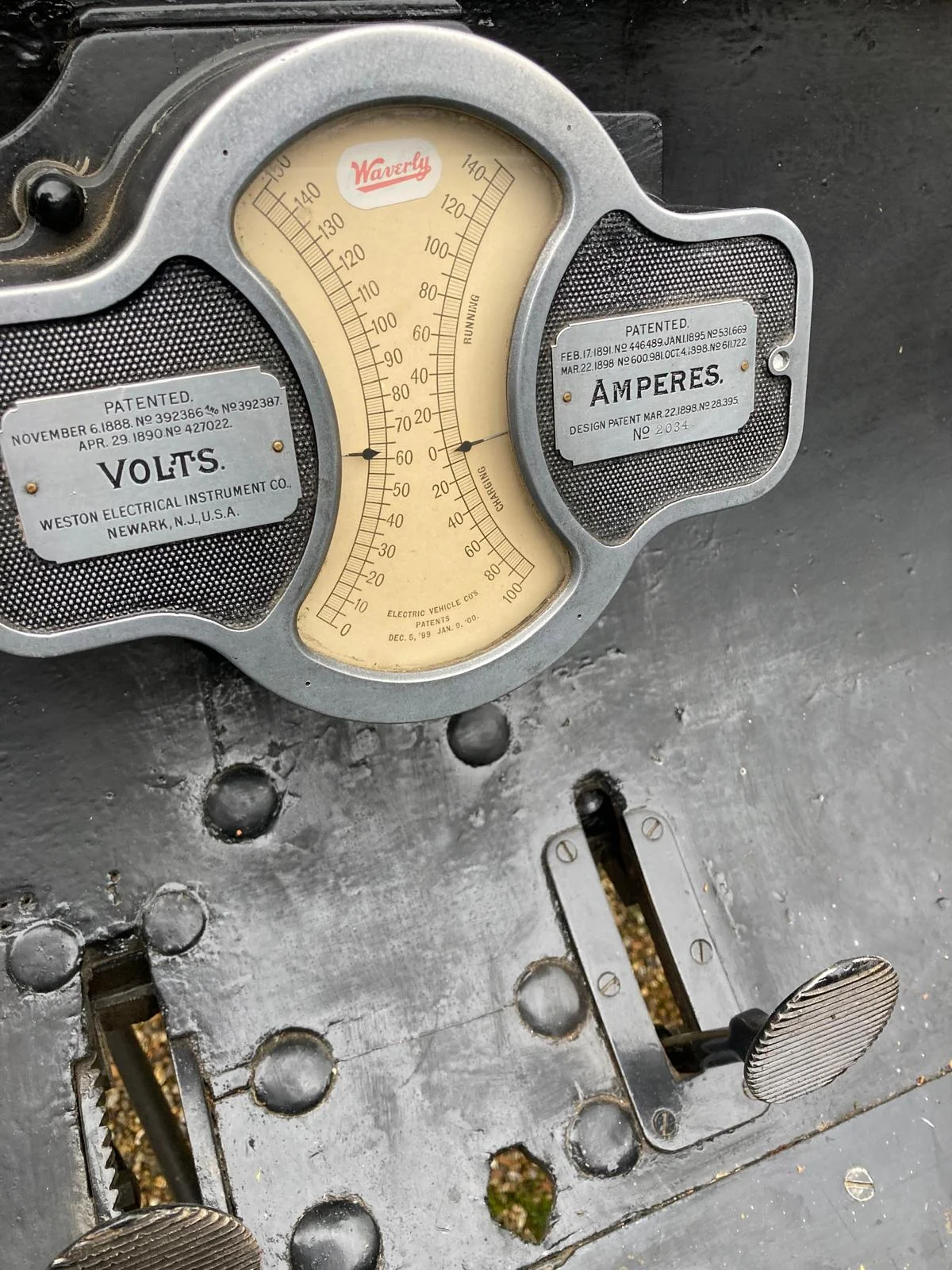
The Waverley Pope EV dates back to 1908, putting it firmly in the earliest days of electric motoring.
More than a century ago, electric cars were already being built as an alternative to gasoline-powered vehicles, although the technology eventually lost out as petrol cars became more practical and widely available.
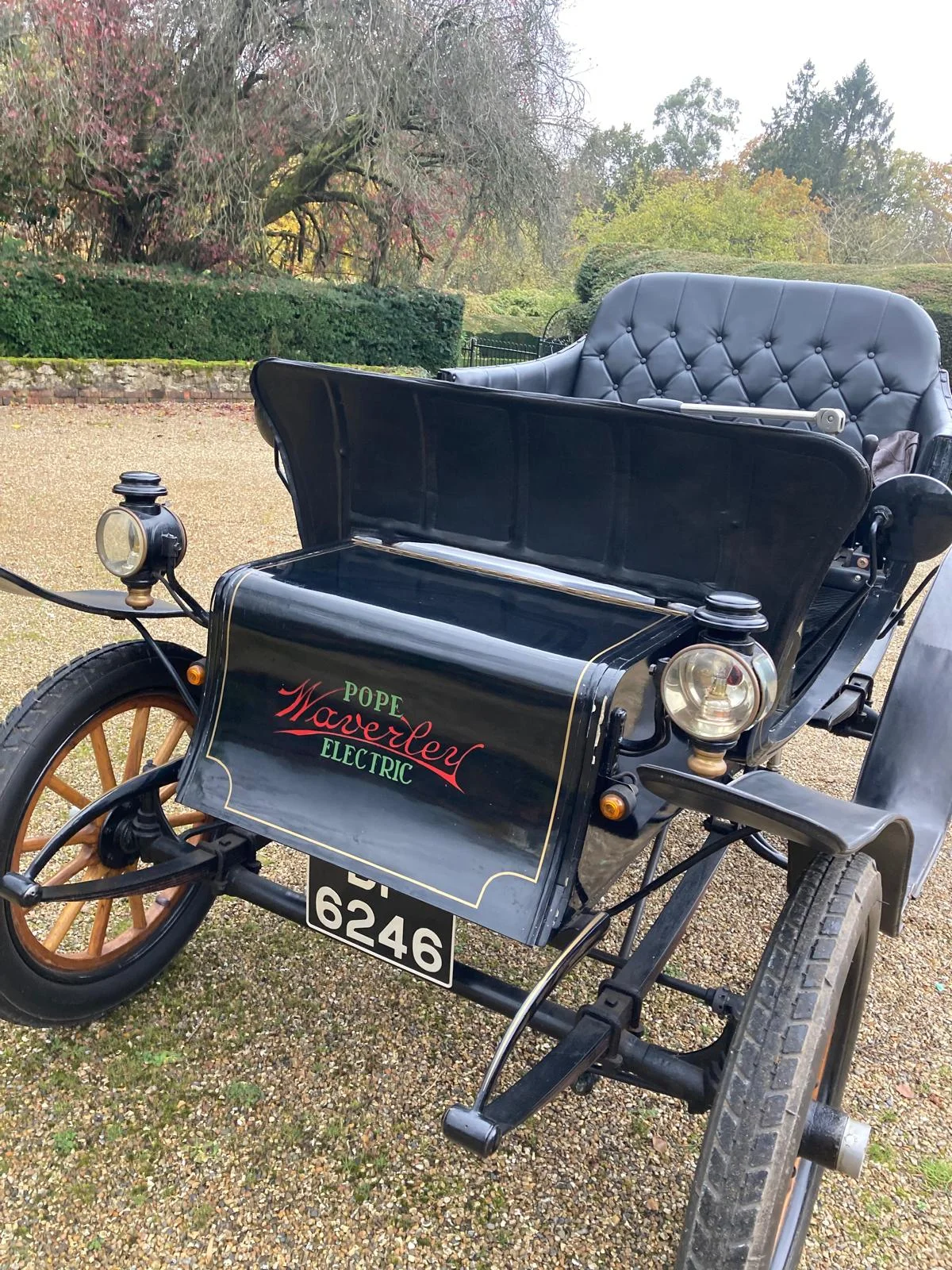
Glyn’s particular car is an incredibly rare survivor from that period, and he has spent years owning, maintaining and enjoying it.
When I previously spoke to Glyn, the car had already attracted plenty of attention because of its unusual history and its ability to still be driven today.
But now, it has appeared on Facebook Marketplace for £65,000 ($86,750) as Glyn prepares to find it a new owner.
And the reason is surprisingly simple.
“We are downsizing and will not have room for the Pope and I am getting bit old!” Glyn told me.
That doesn’t mean he’s particularly happy about letting it go.
When I asked whether it had been a difficult decision after owning the car for so long, his answer was simply: “Yes, but I had no choice.”
The ideal new owner
Perhaps the most touching part of Glyn’s ownership has been the fact that the Waverley Pope wasn’t simply sitting in a collection.
When I asked what he would miss most about the car, he said it was taking younger members of the family out.
During my chance to experience the amazing vehicle, I found out that Glyn attended different events with the EV, and many people in the community have been lucky enough to take a ride in it.
That gives an idea of what Glyn hopes its next chapter will look like.
Rather than seeing it disappear into a private collection where it is rarely seen, he wants the next owner to actually enjoy it.
“I would definitely rather see it go to someone who will use and cherish it,” he said.
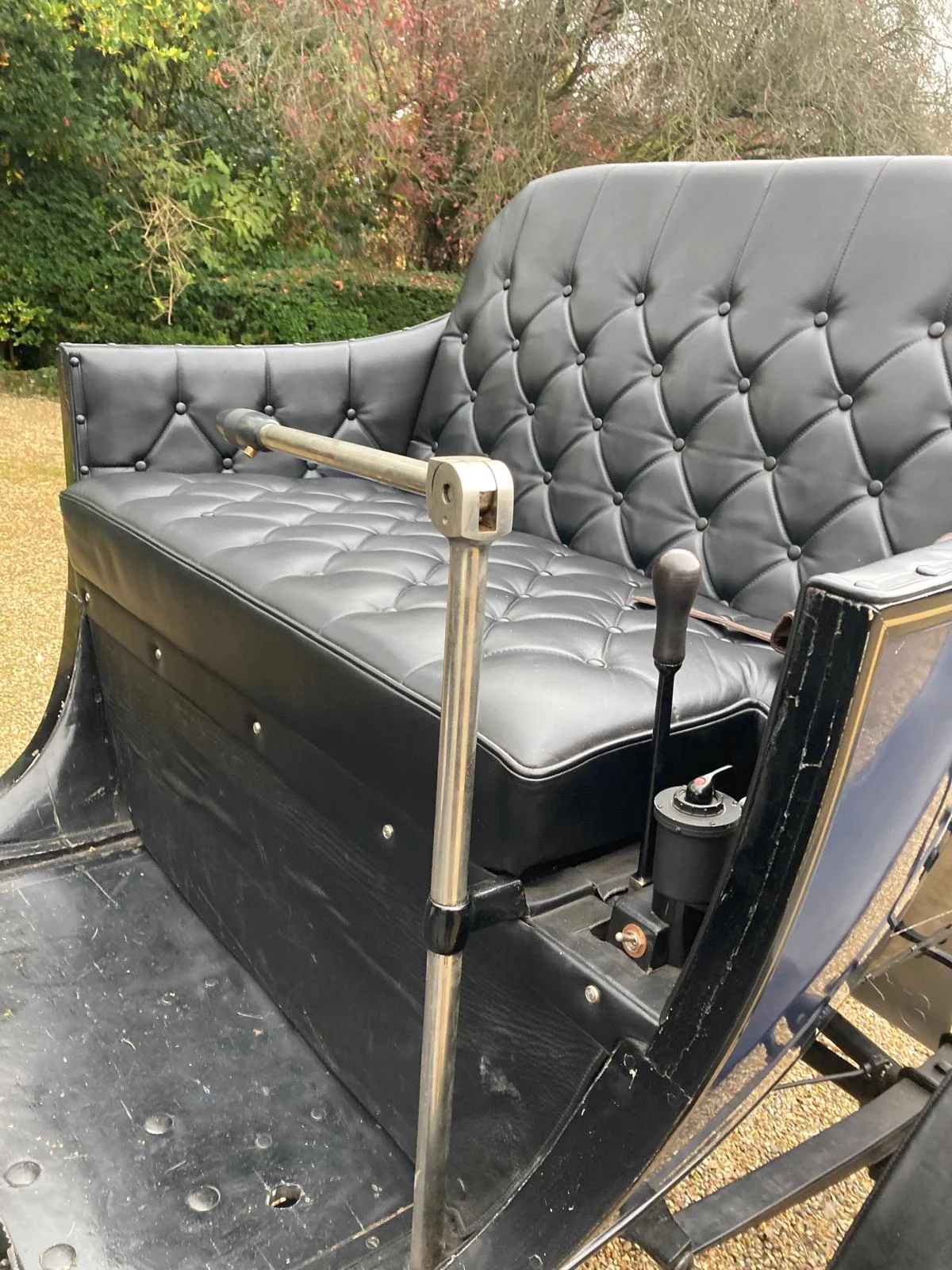
He also believes the ideal buyer would be a ‘history enthusiast’ who understands exactly what makes the car and its iconic, unique tiller controls so special.
His advice to anyone considering buying it is refreshingly straightforward: “Enjoy the car, use it and tell people about the history of it.”
And that’s exactly what he hopes will happen after the sale.
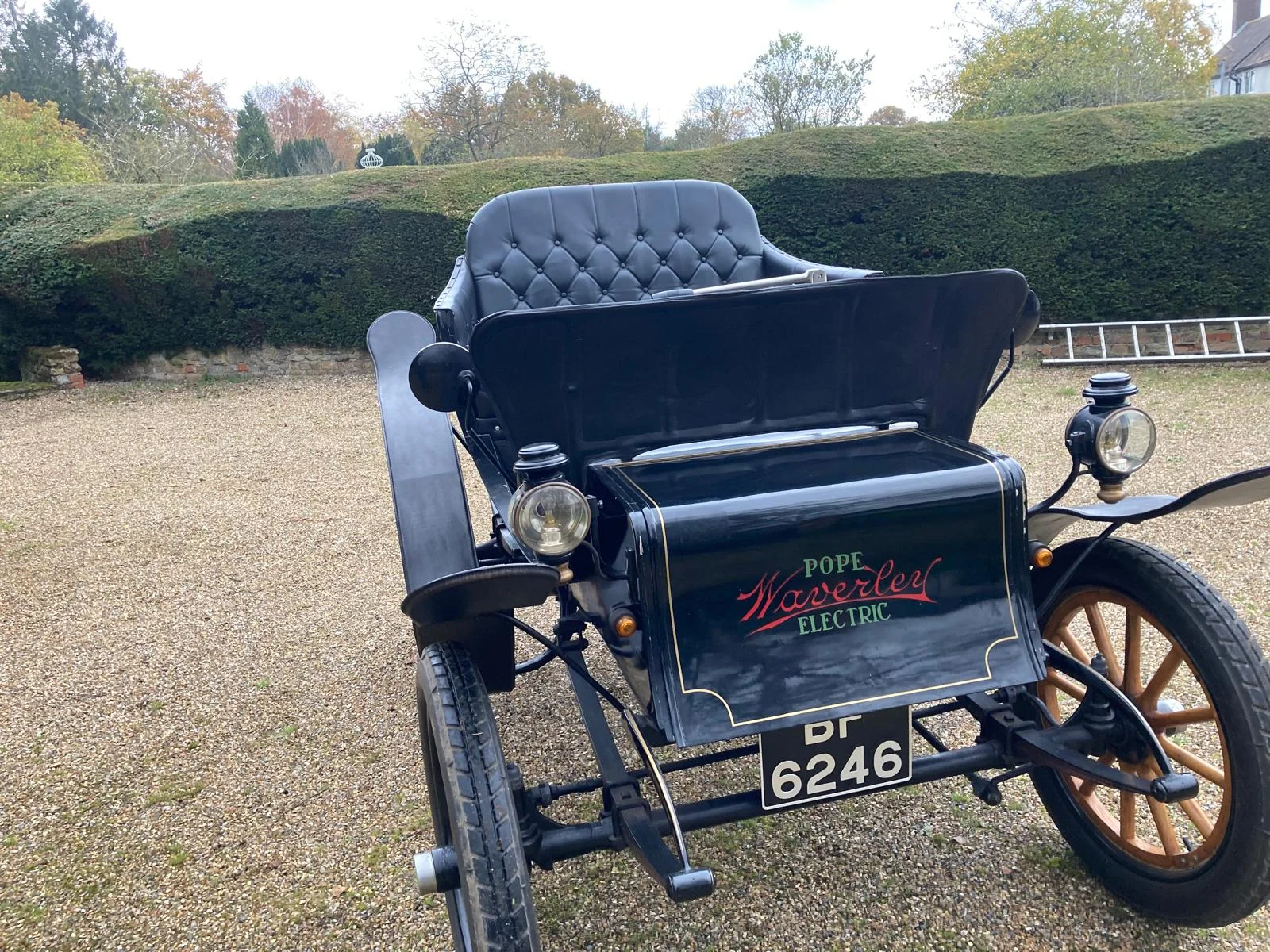
Considering this is an EV from 1908, there probably aren’t many better ways to keep its story alive than putting it back on the road and letting people see it for themselves.
The Waverley Pope can travel around 20-30 miles on its battery, although Glyn’s example has a small petrol generator that allows it to keep going once that range is exhausted, as he converted it to hybrid years ago.
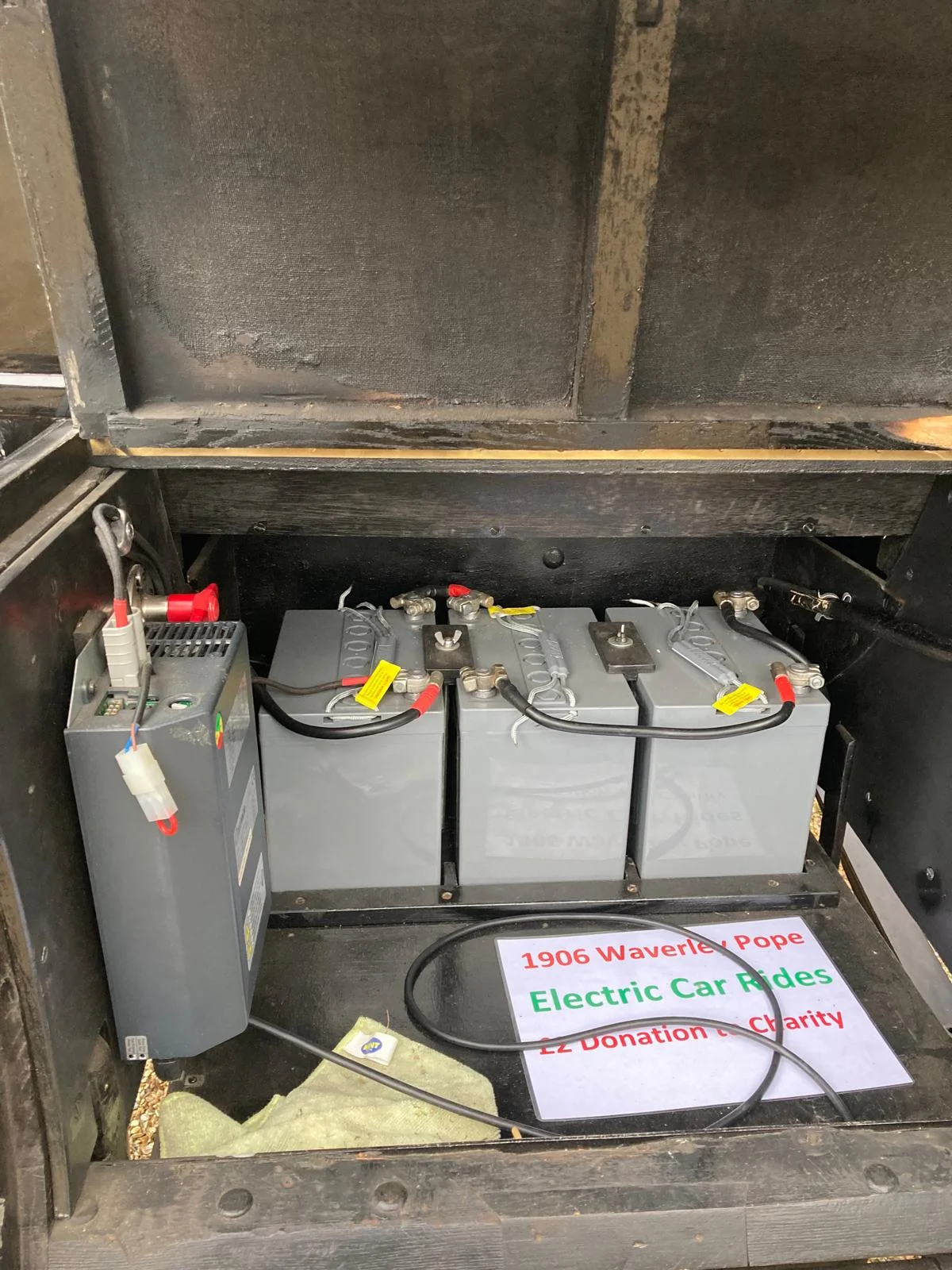
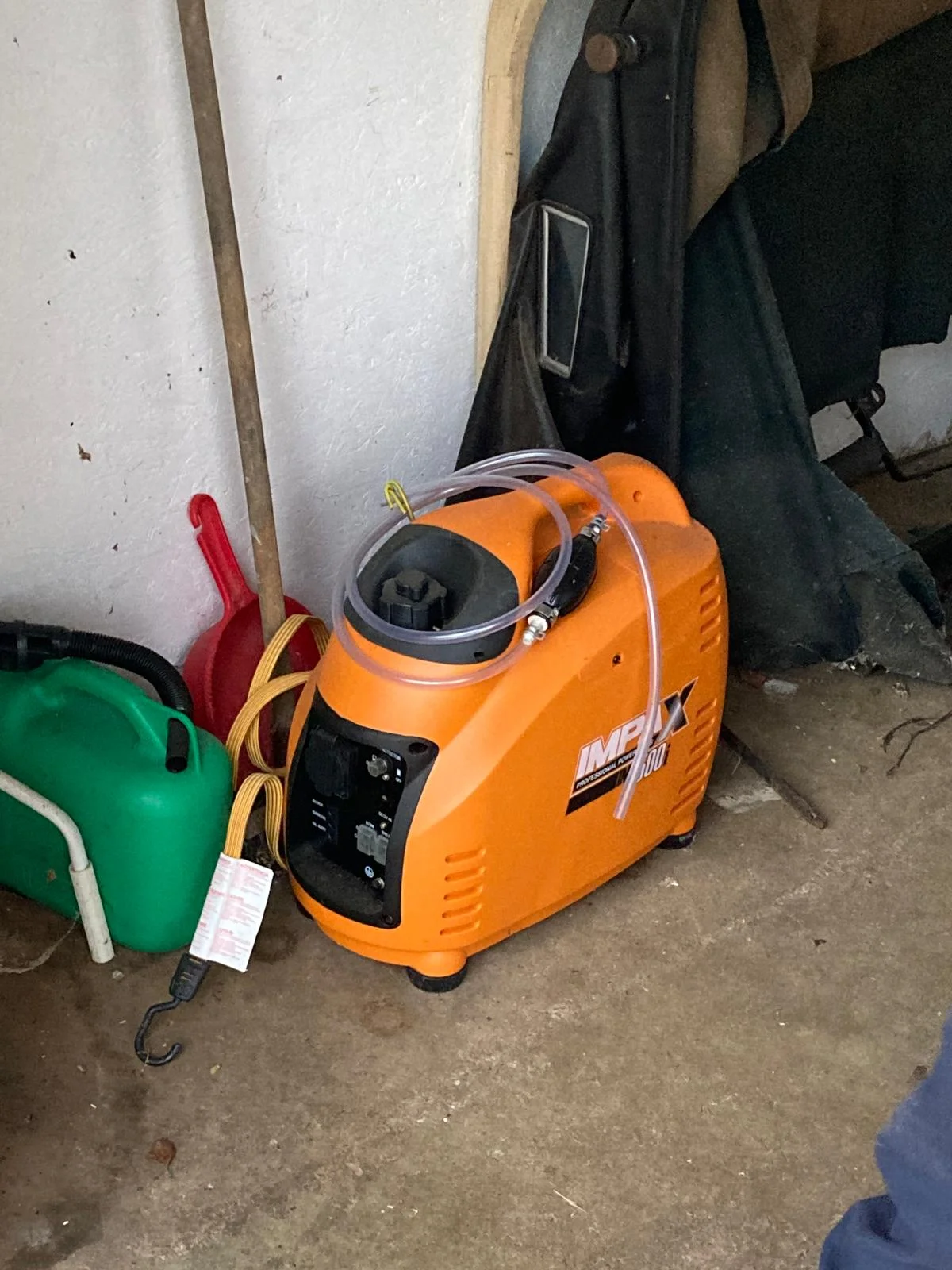
So, while I originally stumbled across the Waverley Pope while looking for an ordinary used car on Facebook Marketplace, I ended up finding something considerably more interesting, it’s just a shame I don’t have a spare $86,750 knocking about.
More than 100 years after it first hit the road, one of the earliest EVs is now looking for someone new to continue its story.
Daisy is a technology and automotive journalist covering artificial intelligence, consumer tech, Apple news, cryptocurrency, emerging technologies, and transportation innovation. Since joining the team in 2025, she has reported on everything from AI-powered startups and major iOS updates to viral car stories and the latest developments shaping transportation and the digital economy. Drawing on her background in automotive journalism and a degree in History and Journalism from Goldsmiths, University of London, Daisy specializes in breaking down complex topics into clear, engaging reporting for a global audience. Her work spans cutting-edge technology, innovative vehicles, and the people driving change across both industries. Daisy has gained first-hand access to some of the world's most talked-about technologies and innovators, including meeting Tesla's Optimus humanoid robot during its first European appearance in London. She has also discussed the future of space exploration with an astronaut, bringing unique insights and real-world perspectives to her coverage of emerging technology.