Man started his own company just so he could build his own V12 Ferrari Testarossa restomod called the Tesoro
Published on Oct 04, 2026 at 4:06 PM (UTC-4)
by Daisy Edwards
Last updated on Oct 04, 2026 at 4:06 PM (UTC-4)
Edited by
Daisy Edwards
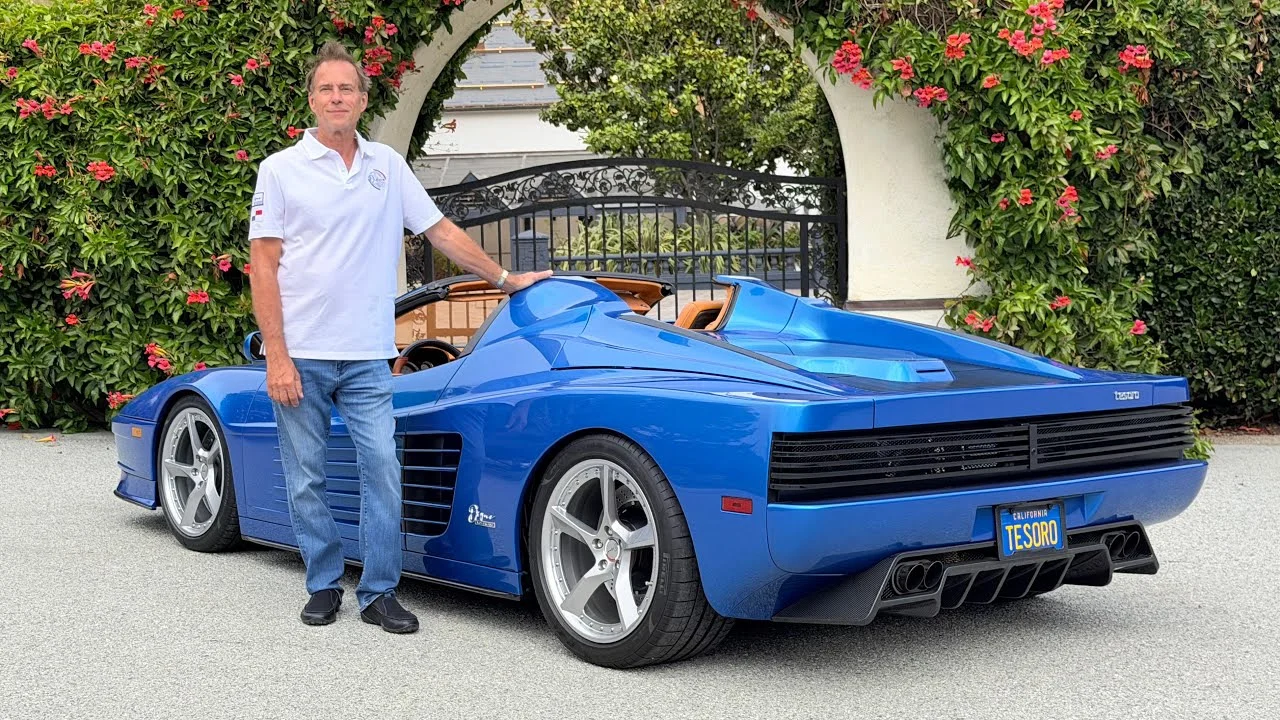

There are few cars as instantly recognizable as the V12 Ferrari Testarossa, but one man decided the 1980s icon deserved a modern makeover.
Tom Kazamek loved the original so much that he eventually created his own company, Dione Motorcars, to turn his idea into reality.
The result is the Tesoro, a seriously reworked version of the classic Italian supercar that keeps its unmistakable character while adding plenty of modern touches.
And almost every part of the car has been reconsidered along the way.
The Testarossa gets a modern makeover
The original Ferrari Testarossa supercar arrived in 1984 with its famous wedge-shaped body, side strakes, and flat-12 engine, quickly becoming one of the defining supercars of the decade.
For Tom, however, the supercar’s age eventually became part of the appeal.
“I’ve always been a fan of the Ferrari Testarossa,” he explained to Magnacars.
“It is an iconic Italian legendary car, and it just has aged gracefully, but is due for an upgrade.”
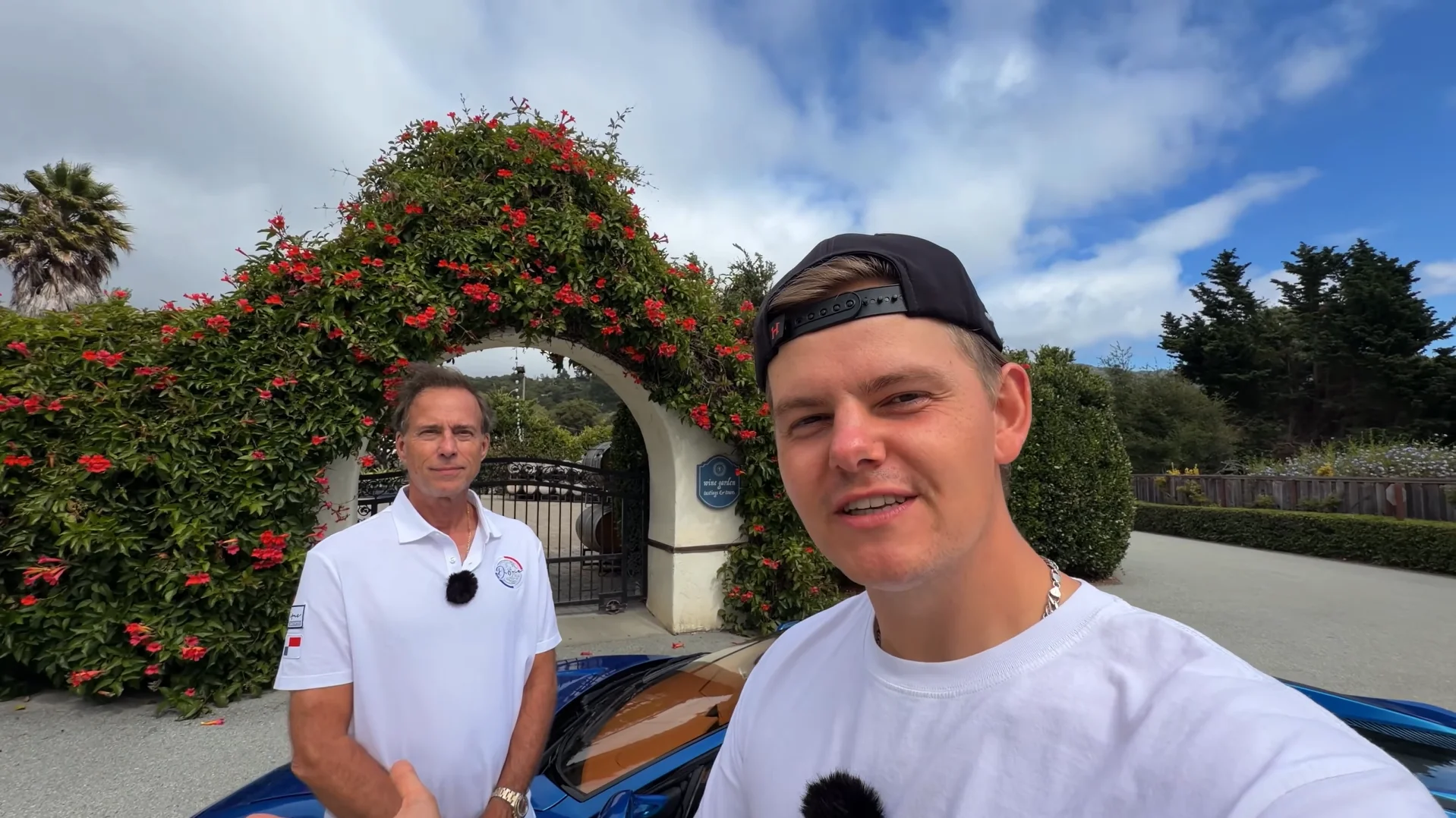
That idea became the Tesoro, which Kasmer describes as a retro supercar with around 40 years of new technology applied to it.
And he wasn’t interested in simply giving an old Ferrari a fresh coat of paint.
Around 400 unique pieces were developed specifically for the project, with Kasmer saying the engineering work required a huge number of new components.
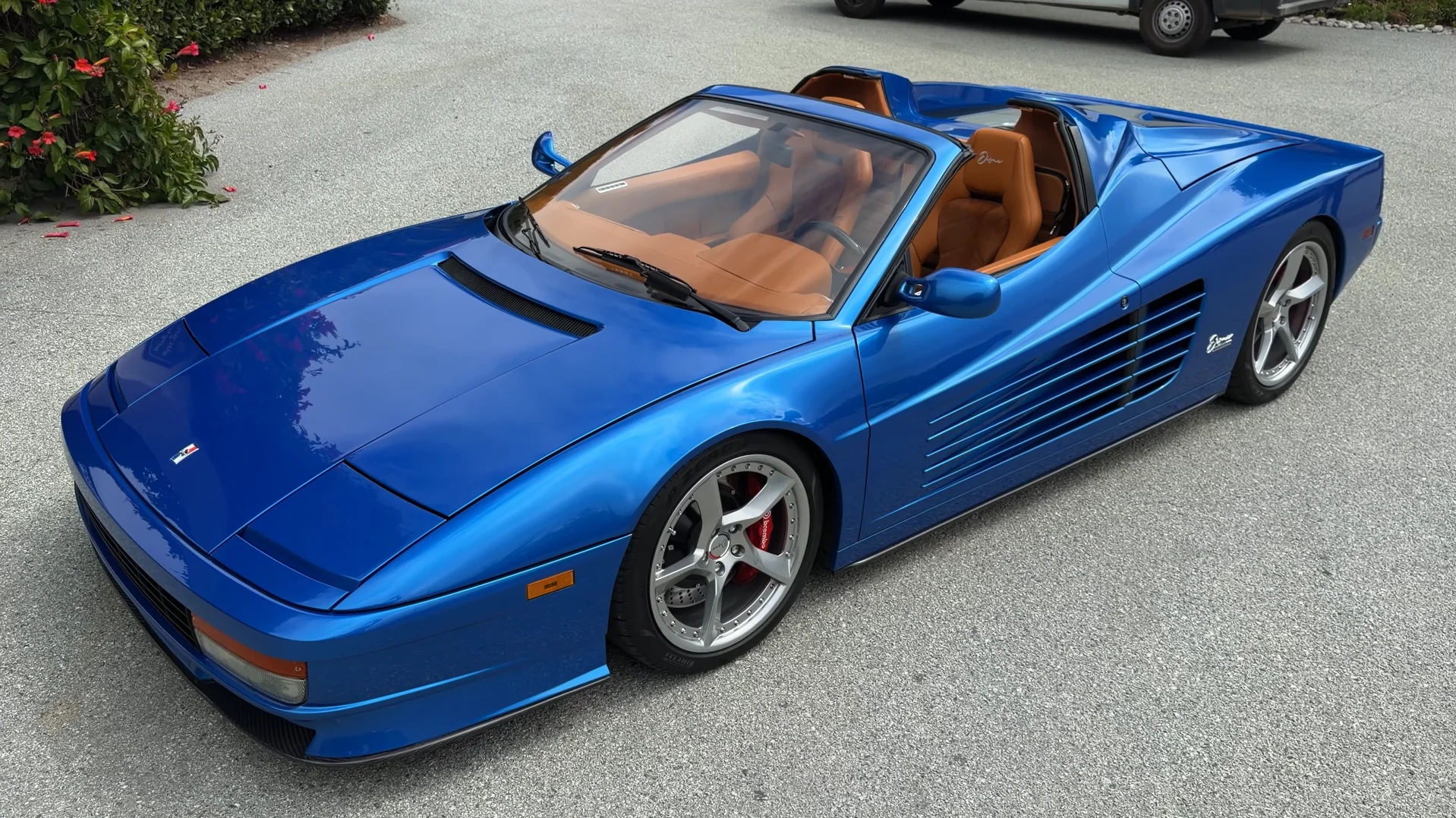
The transformation also involved turning the Testarossa into a convertible.
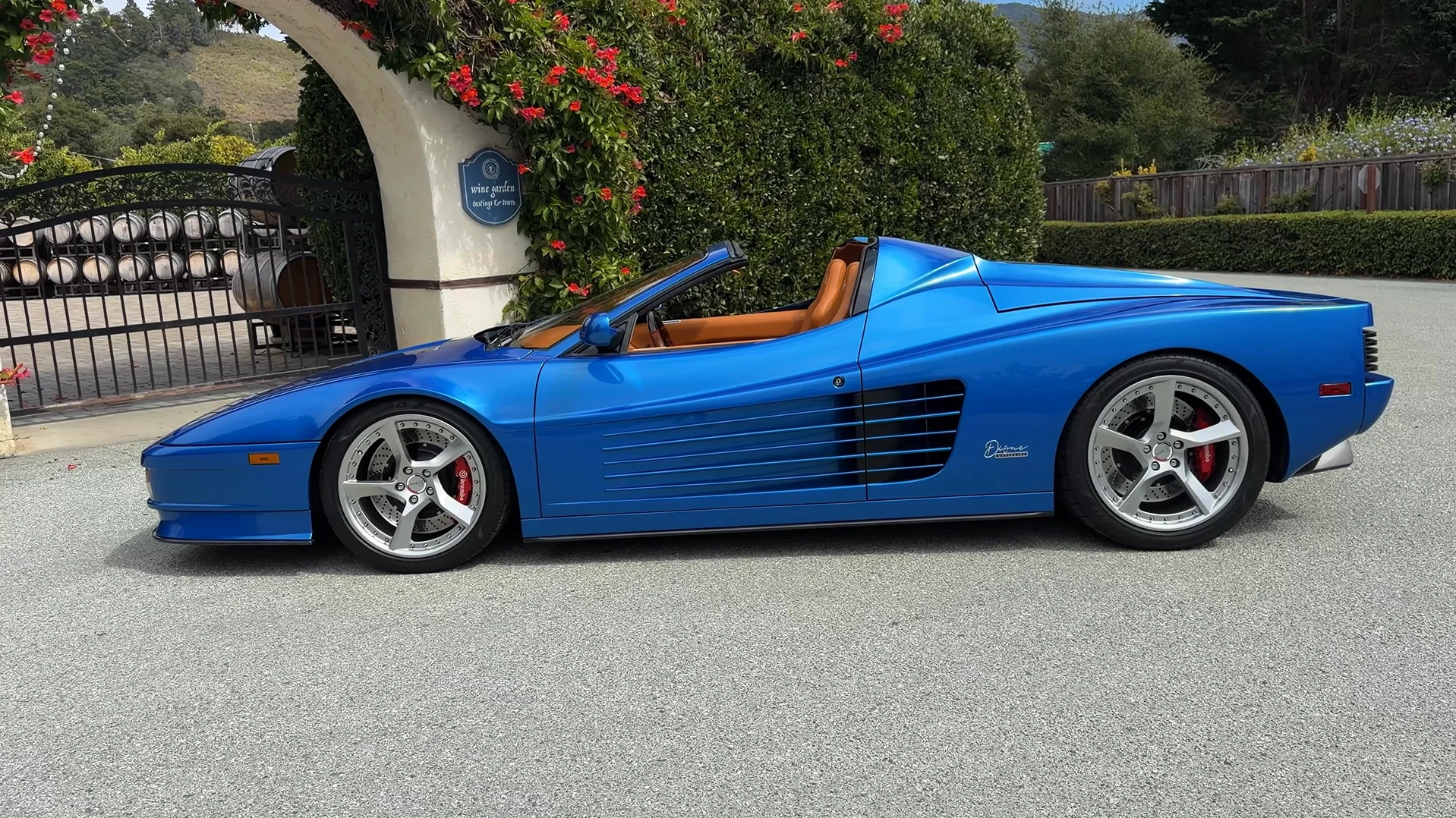
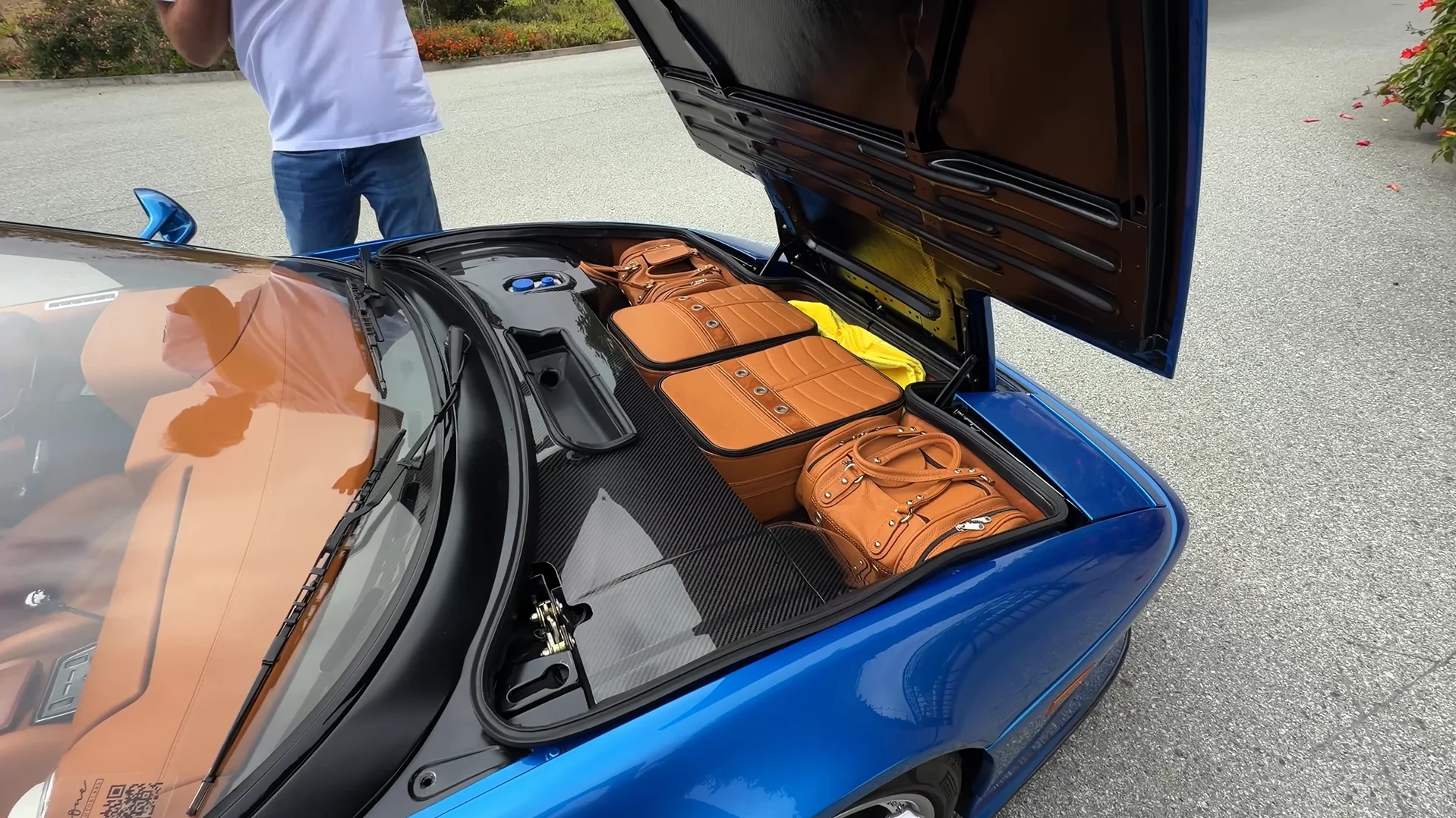
The Tesoro uses a removable two-piece hardtop that can be stored in the trunk, while the chassis has been strengthened in several areas to compensate for losing the original fixed roof.
There is additional rollover protection, roll hoops tied into the chassis, an engine strut brace and extra reinforcement around the original frame.
It is almost an entirely new car inside
The changes don’t stop at the bodywork.
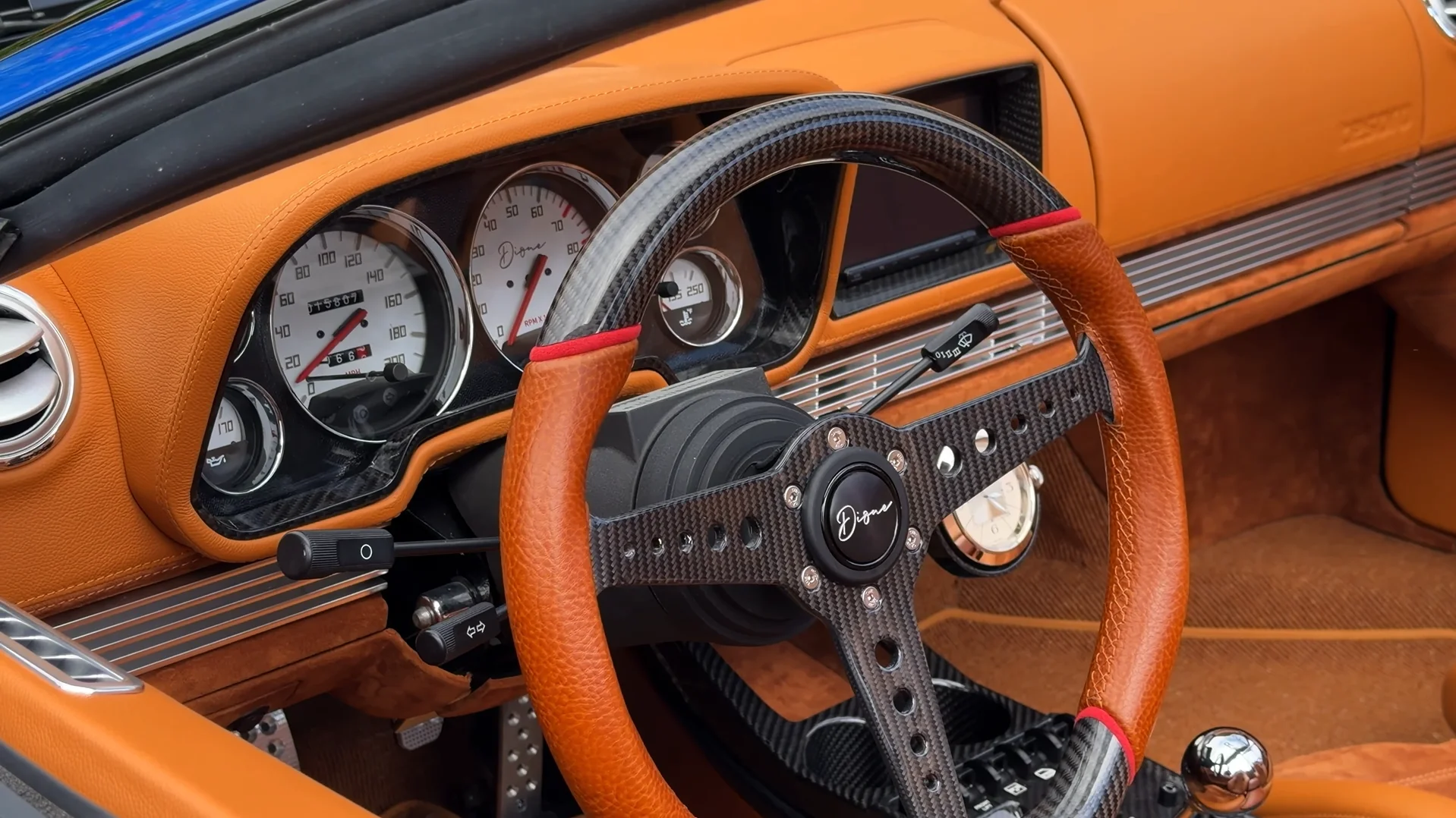
The original Testarossa’s driving position was redesigned to make it more upright and closer to what you’d expect from a modern supercar, while an electric speed-sensitive power steering system replaces the original setup.
Kasmer also believed the interior needed to catch up with the exterior.
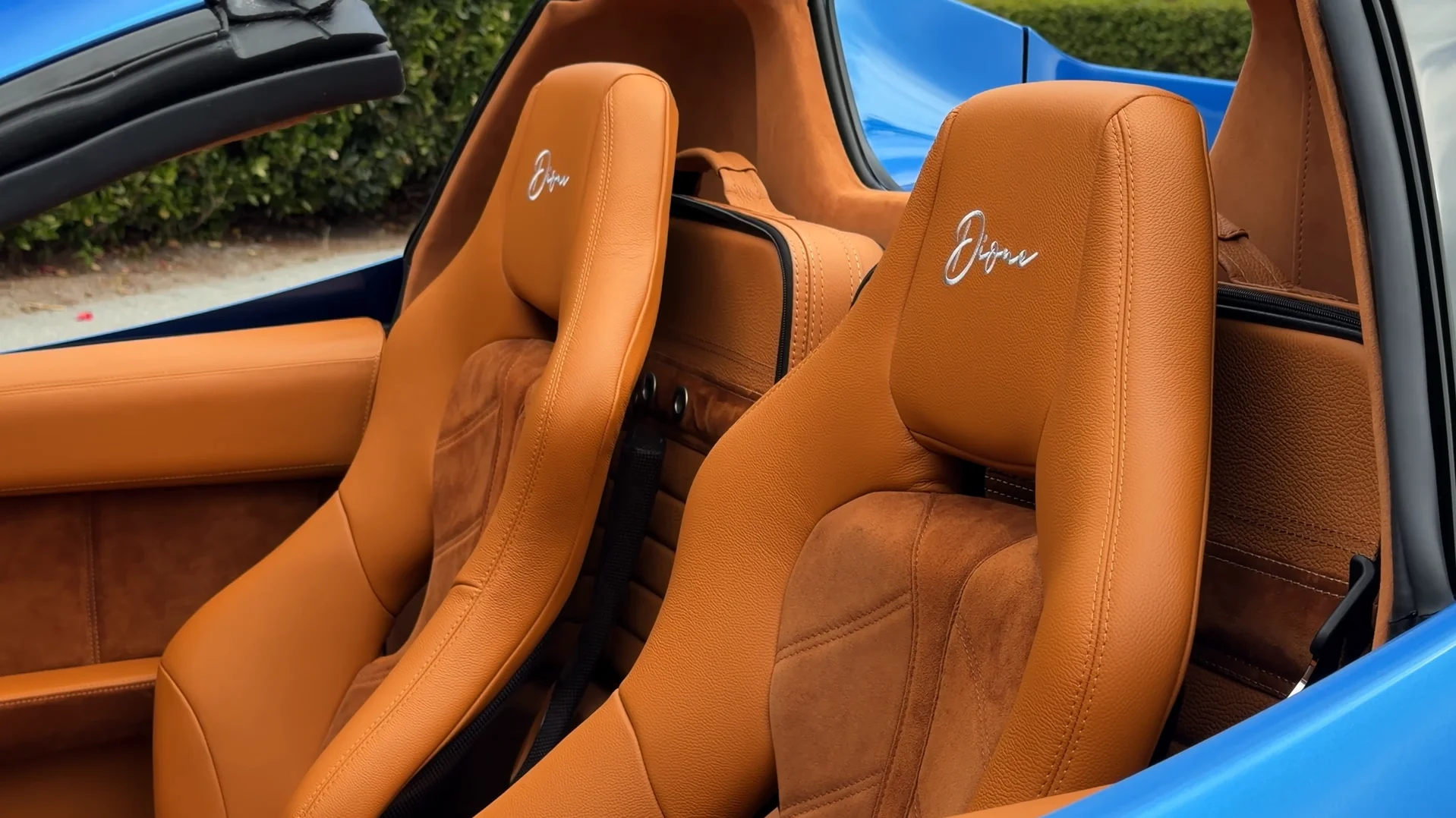
“I always felt that the outside of the original was one of the most beautiful iconic designs of our lifetime,” he said. “But the interior just didn’t keep up with it.”
So Dione redesigned virtually every surface, including the dashboard, door panels, center console and seats.
The angular shapes of the original have been replaced by softer curves intended to complement the exterior.
Even the luggage has been given the bespoke treatment, with Dutch company Roadster Bag creating pieces that fit behind the seats and into the trunk.
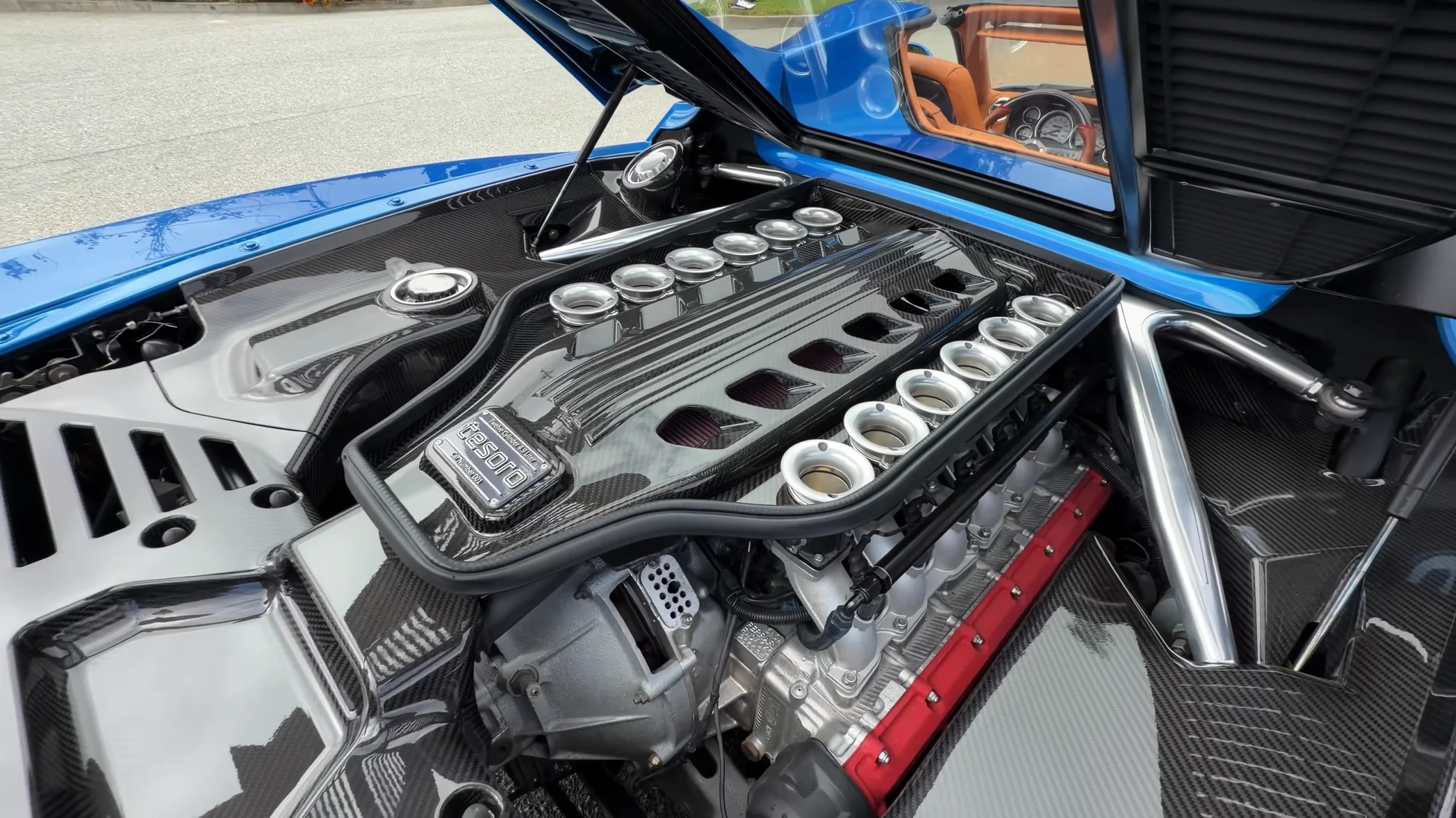
The engine has also been upgraded with electronic fuel injection and 12 individual throttle bodies, which Kasmer says give the V12 an even more impressive soundtrack.
Then there is the paint.
The prototype wears a custom shade called Maliblue, which was created specifically for this car and won’t be offered on another example.
You need to bring your own Ferrari
The Tesoro isn’t a car you can simply order from a dealer and have delivered a few months later.
Dione’s customers provide their own donor car, with the current conversion designed specifically around 1985 to 1991 Ferrari Testarossas.
The company isn’t currently converting 512 TRs because the parts have been engineered around the earlier cars.
Kasmer’s prototype is the first Tesoro and acts as the company’s proof of concept.
Future cars will be built to order, with customers able to customize everything from the seats and materials to unique leather combinations and other details.
“We’ll work with the owners to customize and tailor the car to their characteristics and personality,” Kasmer said.
That approach is fitting for a car that has already been built around the idea of making something extremely familiar feel completely individual.
Kasmer said the concept had been in his head for around seven years, while Dione Motorcars had been operating as a business for three, but the actual build took two years and eight months.

Perhaps most importantly, he says the goal was never to erase what made the Testarossa special.
“We didn’t change anything that we didn’t need to change just for the purpose of updating it,” he explained.
The first three customer cars are expected to be ready in late 2028, with Dione planning to build Tesoro examples for customers around the world.
And considering Ferrari itself has now brought the Testarossa name back for its modern 849 Testarossa, the timing of this old-school V12 reinterpretation is particularly interesting.
Daisy is a technology and automotive journalist covering artificial intelligence, consumer tech, Apple news, cryptocurrency, emerging technologies, and transportation innovation. Since joining the team in 2025, she has reported on everything from AI-powered startups and major iOS updates to viral car stories and the latest developments shaping transportation and the digital economy. Drawing on her background in automotive journalism and a degree in History and Journalism from Goldsmiths, University of London, Daisy specializes in breaking down complex topics into clear, engaging reporting for a global audience. Her work spans cutting-edge technology, innovative vehicles, and the people driving change across both industries. Daisy has gained first-hand access to some of the world's most talked-about technologies and innovators, including meeting Tesla's Optimus humanoid robot during its first European appearance in London. She has also discussed the future of space exploration with an astronaut, bringing unique insights and real-world perspectives to her coverage of emerging technology.