We asked Google Gemini to create a Rolls-Royce in 2050 and this is what it came up with
Published on Sep 27, 2026 at 6:08 AM (UTC-4)
by Ben Thompson
Last updated on Sep 27, 2026 at 6:08 AM (UTC-4)
Edited by
Mason Jones
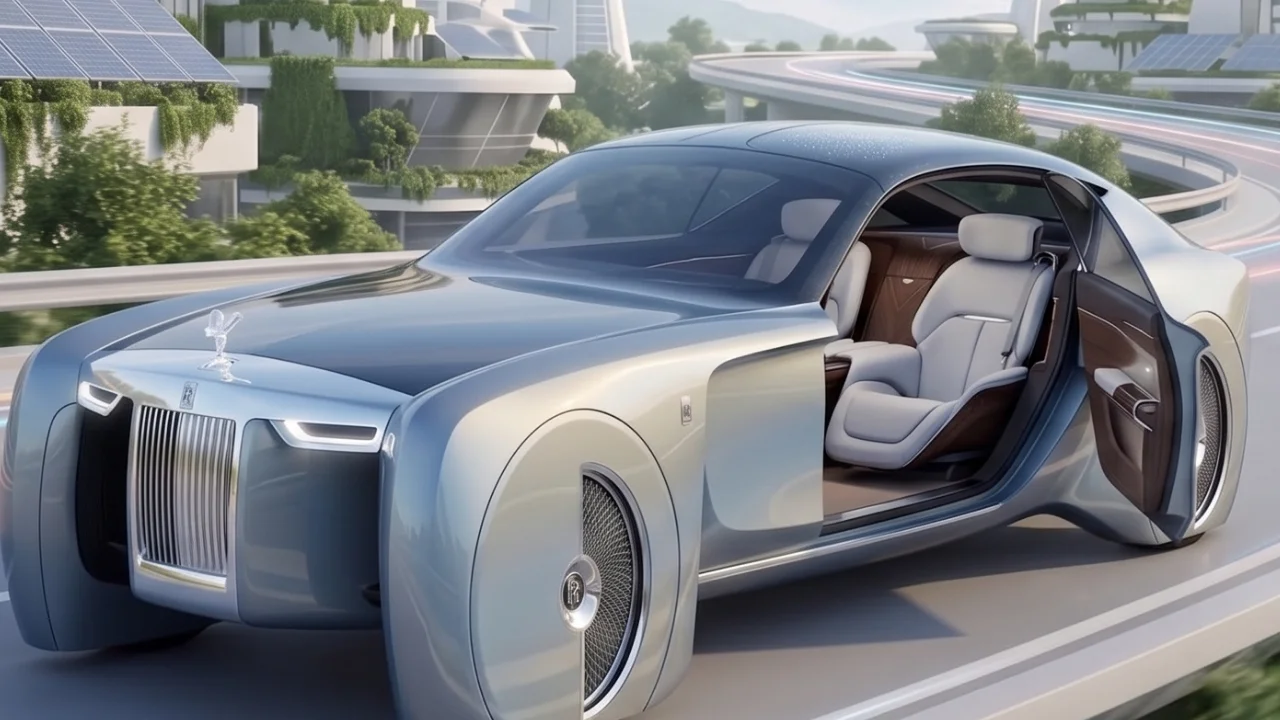

When we asked Google Gemini to create an image of what a Rolls-Royce might look like in 2050, this is what it came up with.
The Rolls-Royce brand has been around for a long while now.
When a carmaker has that kind of legacy, it can be hard to visualize where it goes from this point forward.
So we asked Google Gemini to create a visual of what a Rolls-Royce car may look like in 2050.
What does the future look like for this iconic British carmaker?
When you think of a Rolls-Royce, a few things will come to mind.
Class, sophistication, and stunning craftmanship.
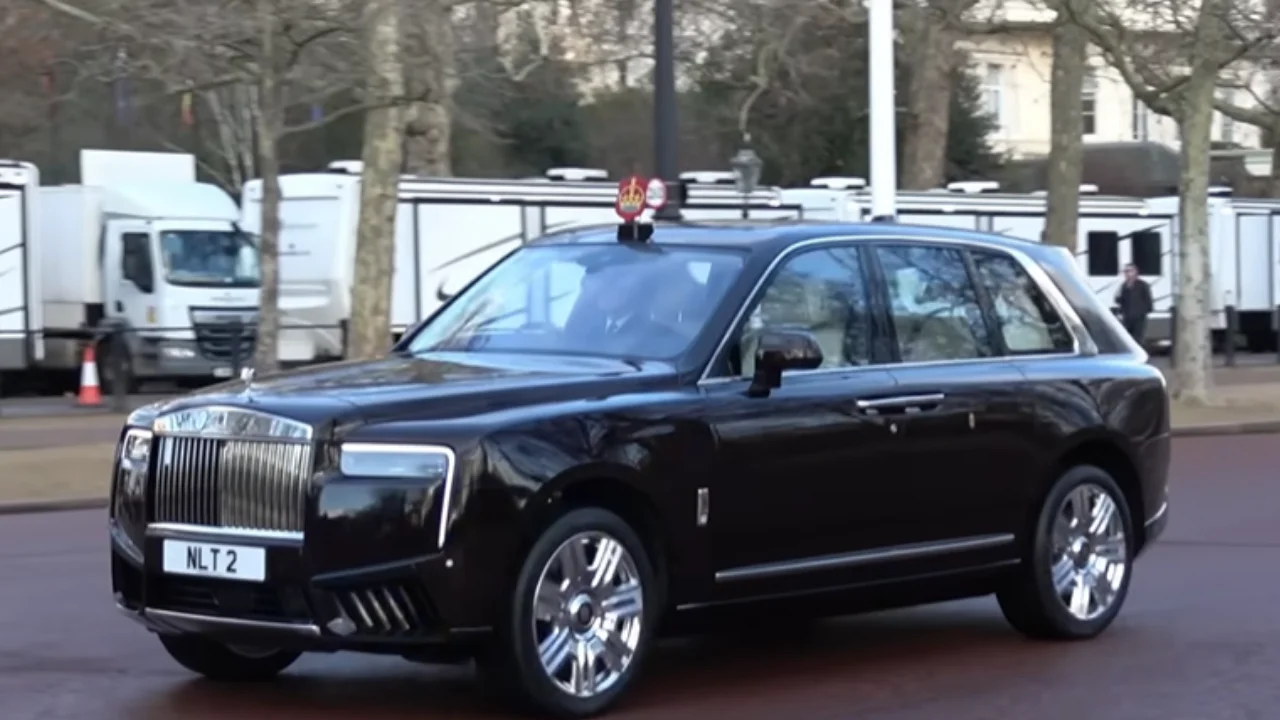
It really is British cars at their most regal, whether it’s being driven by King Charles himself or Rowan Atkinson, aka Mr. Bean.
But a car brand can’t rest on its laurels for long.
The automotive industry is a fast-moving environment, and automakers have to keep up with what drivers want.
And Rolls-Royce is no different.
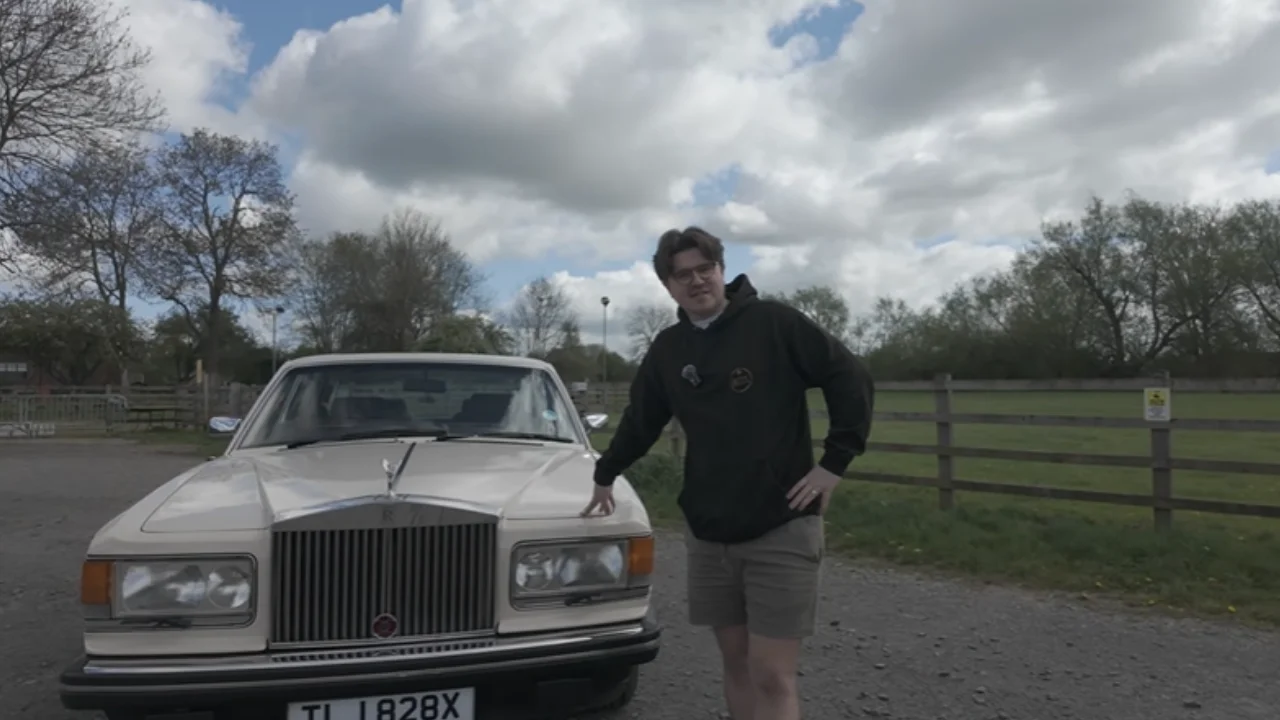
Alex Hirschi, aka Supercar Blondie, has previously gotten an up-close look at a concept car intended to be the Rolls-Royce of 2035.
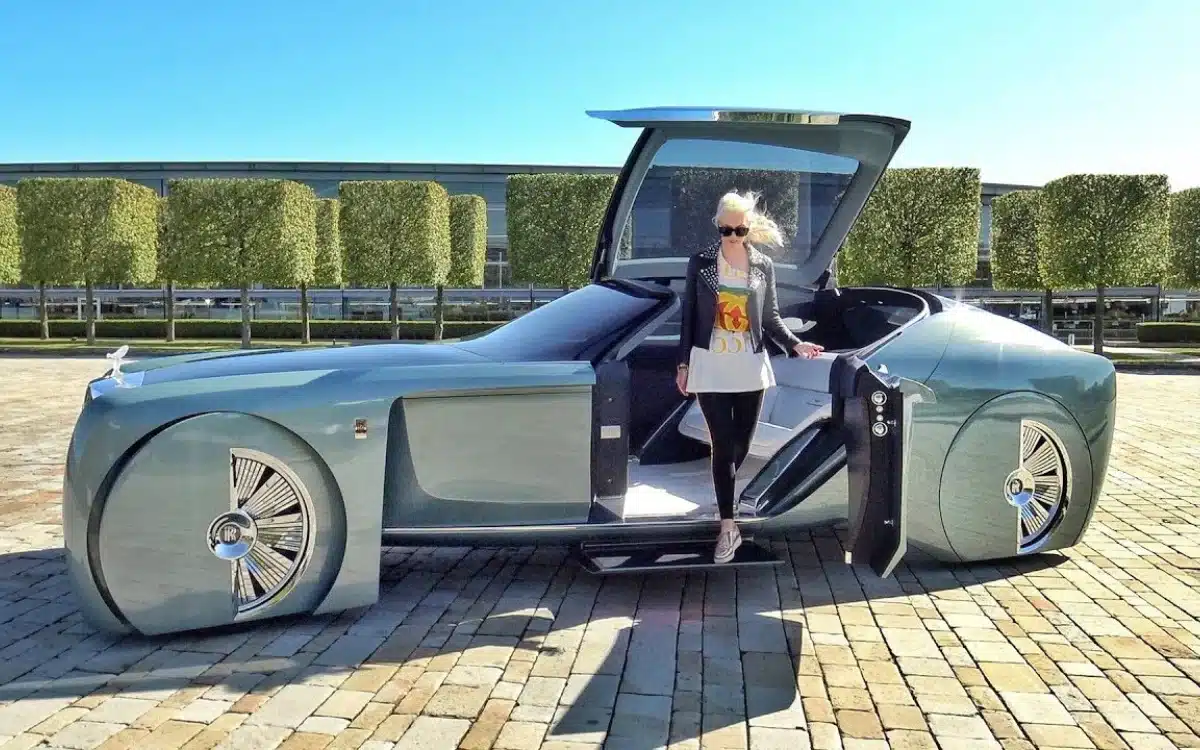
The 103EX certainly didn’t disappoint, but it had us wondering – what if we turned the dial a little bit more?
Say 15 years further down the line?
Imagine we’re in a DeLorean right now, because we’re going back to the future.
Related
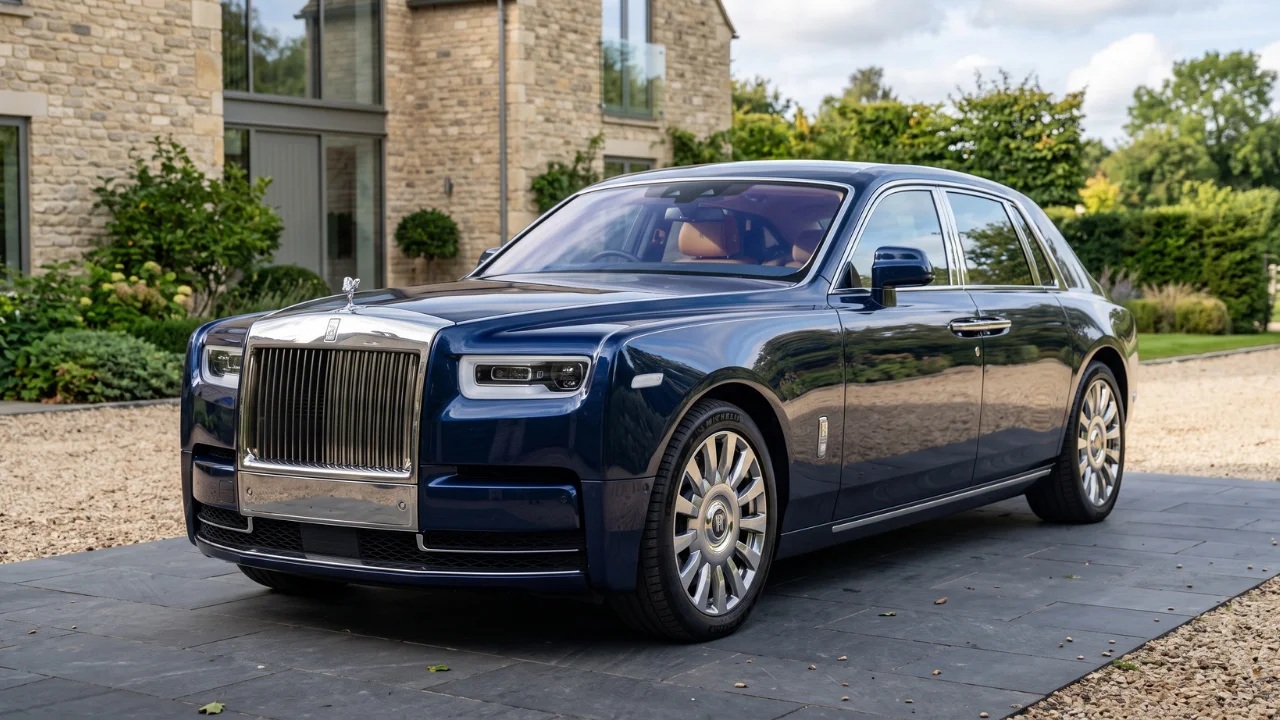

Could this be the Rolls-Royce of the future? Google Gemini thinks so
Isn’t it strange to think that 2050 once seemed like the distant future?
But now it’s closer to us than the year 2000 was.
While you recover from the shock of that news, let’s take a look at what Google Gemini has foreseen in Rolls-Royce’s future.
We asked the chatbot: “Please create an image of what a Rolls-Royce could look in 2050 and explain how you came to this design based on current trends.”
This is the image that it gave back to us.
It’s got some of the recognizable markers of a Rolls-Royce, like the front grille and the Spirit of Ecstacy.
But beyond that, this is a whole new creature.
On the outside, this car has a ‘Celestial Silver’ and ‘Deep Orchid’.
It’s certainly fitting, as we do tend to associate silver colors with a futuristic vibe, don’t we?
Even the Spirit of Ecstacy isn’t quite what we’re used to, as this appears to be ‘floating’.
“She is made of advanced optical crystal and appears suspended in light, symbolizing the ‘effortless’ travel Rolls-Royce has always championed,” Gemini said.
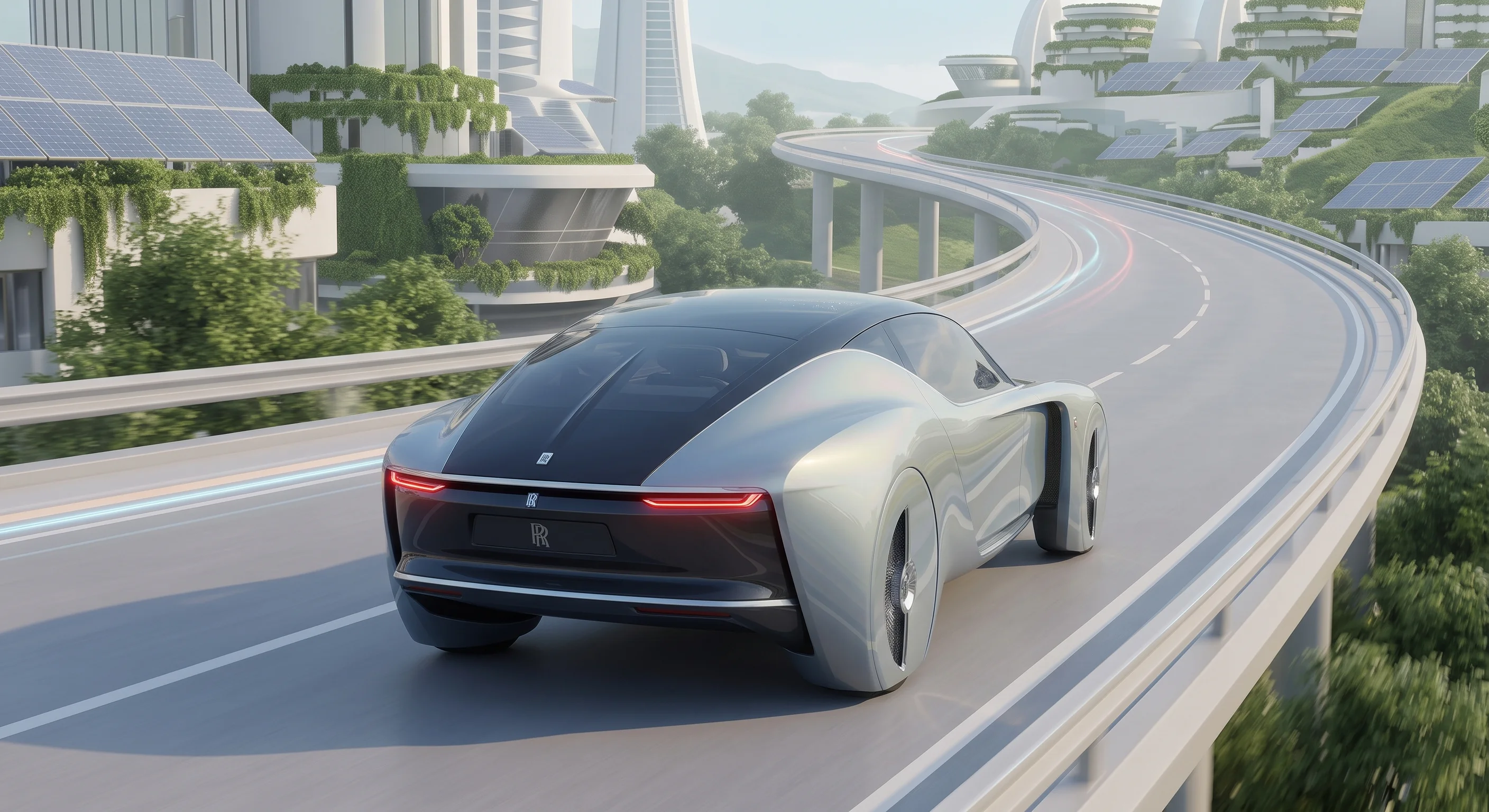
What’s particularly noteworthy is that this is an EV.
As we know, EVs have become mainstream these last few years – a trend that Gemini doesn’t see slowing down anytime soon.
“Current trends towards electrification and autonomy require radical shifts in vehicle architecture. In 2050, we move beyond just ‘EVs’ to fully integrated electric platforms,” it said.
The rear-hinged doors are a nice touch, made of smart glass that can turn opaque for privacy – already something we’re seeing in high-end architecture and some modern vehicles.
On the interior, things are just as regal as you’d expect.
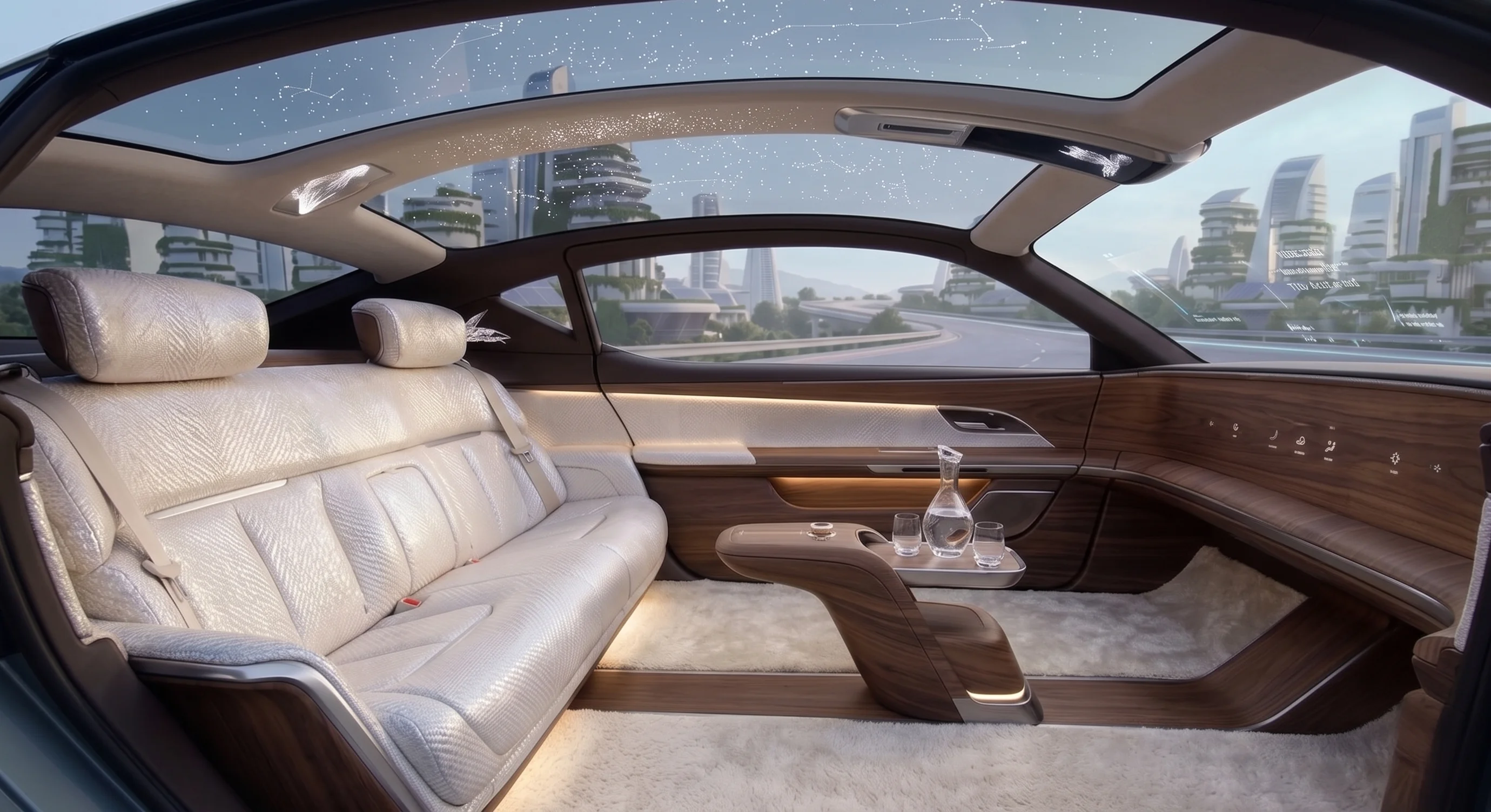
But in a remarkable departure from our expectations of the future, this car appears to be tech-free to the naked eye.
“Current digital trends are leading towards ‘detoxing’ from screens. In 2050, technology will be omnipresent but hidden,” Gemini explained.
In another interesting twist, the car’s interior is styled more after a sanctuary than a cockpit.
“Current trends toward autonomous driving mean the interior shifts from a driver-focused ‘cockpit’ to a passenger-focused ‘sanctuary’,” Gemini explained.
“My design features a lounge-like, ‘open’ floorplan (enabled by a solid-state battery skateboard chassis) with no traditional dashboard.”
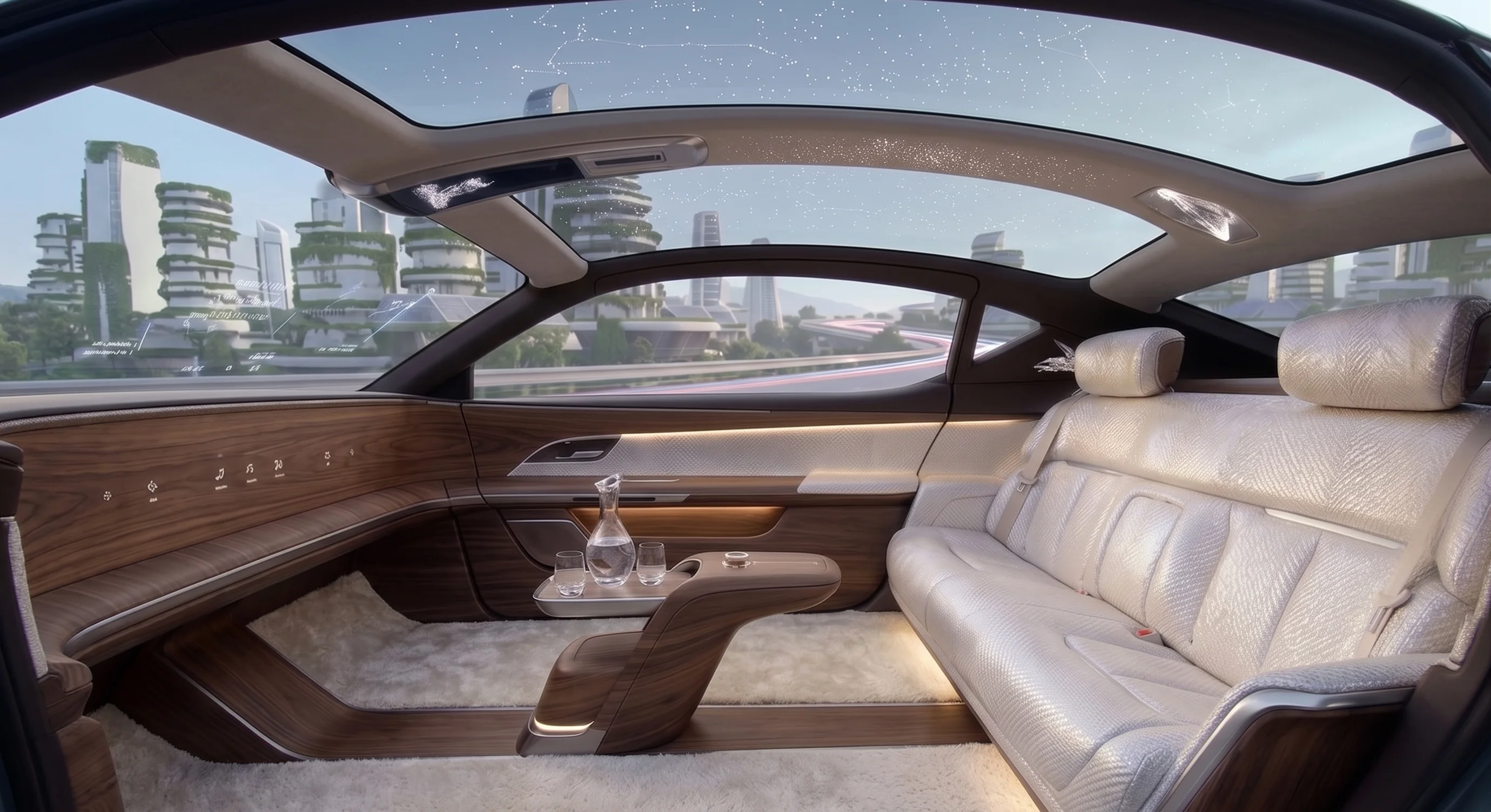
It looks beautiful – and it’s environmentally friendly to boot.
“Luxury consumers already value bespoke craft. By 2050, luxury must also be sustainable,” Gemini said.
“This design moves away from conventional leathers. The interior uses innovative materials: a ‘silk-derived composite’ (like current biotech research) that is stronger than steel yet incredibly soft, combined with lab-grown open-pore walnut.
“These materials feel ultra-luxurious but have a negative carbon footprint.”
Who else is excited for 2050 to see if these predictions pan out?
A brief history of Rolls-Royce
1904: The Partnership Begins: Charles Rolls and Henry Royce meet in Manchester, agreeing to manufacture and sell cars under the name Rolls-Royce.
1907: The Silver Ghost: The launch of the Silver Ghost earns the company the title of ‘The Best Car in the World’ after a record-breaking reliability run.
1915: Taking Flight: Responding to WWI demands, the company designs its first aero engine, the Eagle, beginning its legacy in aviation.
1940: The Merlin Engine: Rolls-Royce powers the Battle of Britain with the Merlin engine, used in the iconic Spitfire and Hurricane fighters.
1971: Crisis and Nationalization: Financial strain from developing the RB211 jet engine leads to bankruptcy and subsequent nationalization by the British government.
1973: The Split: The entity separates into two distinct companies: Rolls-Royce Motors (cars) and Rolls-Royce plc (aviation/industrial).
1998: The BMW Era: BMW acquires the rights to the Rolls-Royce car brand. Leading to the modern era of luxury production at Goodwood in the UK.
Ben joined Supercar Blondie in February 2025 after being published by international organizations including LADbible, The Sun, the New York Post, and the Daily Mail. He covers supercars, rare and collectible vehicles, aviation, luxury assets, and the fascinating people behind them. His reporting has explored everything from seven-figure supercars and historic Ferrari collections to unusual aircraft adventures and extraordinary automotive discoveries from around the world. Ben has also gained first-hand insight into vehicle craftsmanship and customization, including visiting specialist workshops to see bespoke vehicles up close.