Man takes $107K garage-built Ferrari F40 out for its first drive to see if it's better than the $4M real car and is left surprised
Published on Jun 08, 2026 at 6:46 AM (UTC-4)
by Ben Thompson
Last updated on Jun 09, 2026 at 9:52 AM (UTC-4)
Edited by
Mason Jones
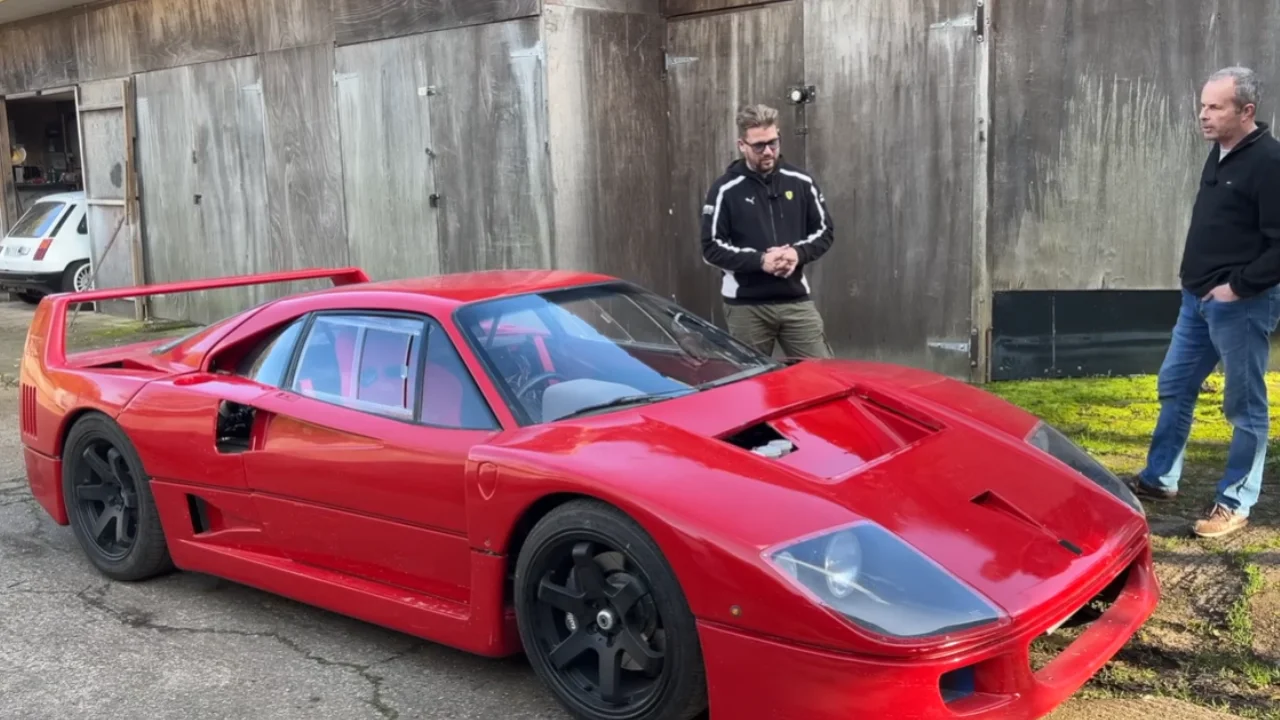

This man took a garage-built Ferrari F40 out for a drive to see how it would compare to the real car.
One cost $4 million, the other was a comparatively modest $107,000.
But what YouTuber Ratarossa wanted to know was how the garage-built Ferrari F40 his friend had built would hold up on the road.
The drive would leave him stunned.
Could this garage-built Ferrari F40 compare to the real deal?
YouTuber Ratarossa had paid a visit to his friend Raphael, who had made a tribute Ferrari F40 in his garage.
If looks were anything to go by, it was money well spent as this F40 looked incredible.
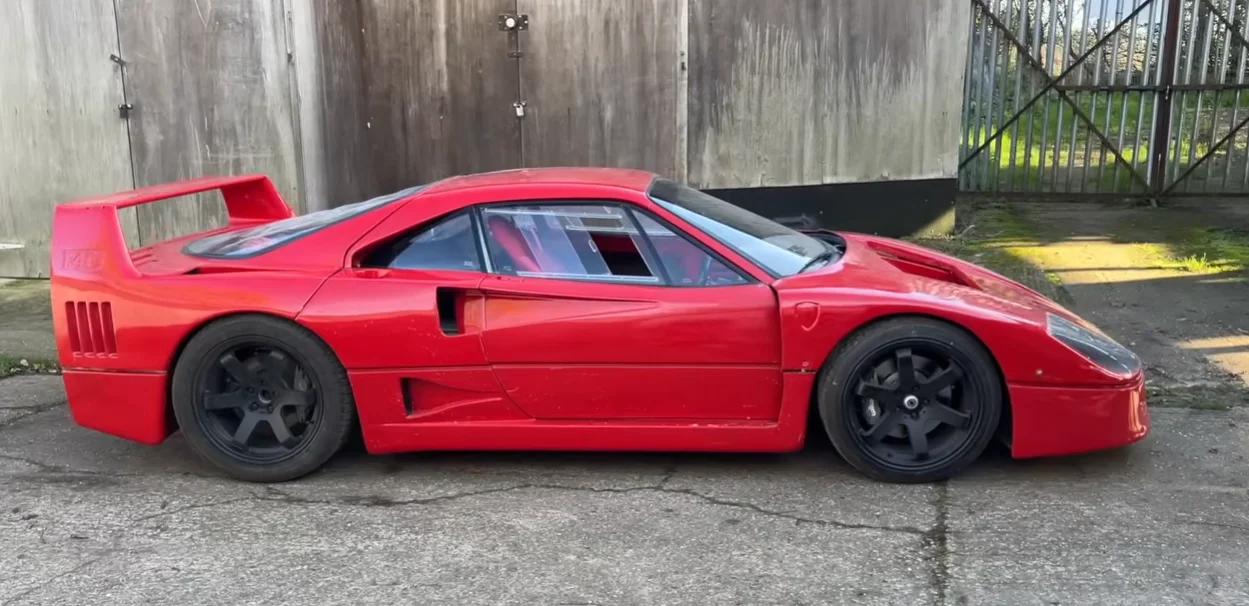
Built upon an existing chassis and a 4.7-liter Maserati V8 engine, it weighed in at 1,007kg and had 400hp worth of power flowing through it.
But that’s all well and good on paper – how would it handle out on the road?
What happened on the test drives?
On the first drive on public roads, the F40 performed remarkably well, albeit with some teething issues.
The rear indicators briefly stopped working, and the cabin warmed up considerably without air conditioning.
“You know how the race cars like have a checklist on the dashboard, don’t they?” Ratarossa remarked.
“You need a checklist. Remove jumper. Make sure you got water. Dehydration tablet.”
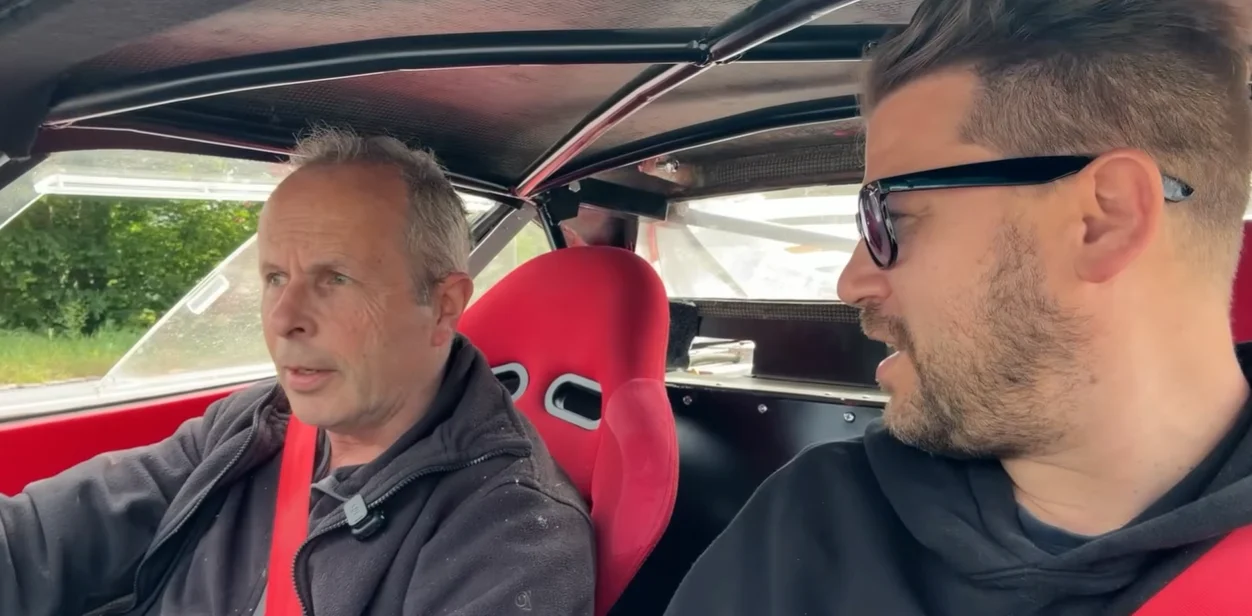
Before the second drive, Raphael did some tinkering with the car and took it out for a faster run.
While the cabin remained ‘savagely hot’, the car really did feel like a Ferrari.
There was still work left to do, as the visibility of the back window was poor.
But it’s still an impressive achievement.

Even among the Ferraris, the F40 is revered
Ferrari is a company with a huge fanbase – it’s one of those brands that kids grow up hanging on their bedroom walls.
So for a car to stand out among this exceptional line-up really says a lot.
Whether it’s being driven by Lewis Hamilton or a man in his 80s, there’s no denying that the F40 is a very special set of wheels.
It’s a car that entrepreneur Sophie Saint is investing a lot of time into fixing up.
While it may be relatively vintage now – having been produced between 1987 and 1992 – it’s still a car that holds huge sway in the modern automotive world.
And with Lewis Hamilton himself saying he wanted to create a modern version of it, who knows what lies in store for the F40?
Ferrari F40 Timeline
1984: The 288 GTO was introduced to compete in FIA’s Group B racing series.
1986: Group B racing is abolished after a series of accidents, leaving Ferrari with five 288 GTO Evoluzione prototypes.
June 1986: An ailing Enzo Ferrari authorized for the Evoluziones to be used as the foundation for a new car.
July 1987: The F40 is officially unveiled at the Civic Centre in Maranello.
Late 1987: The F40 becomes the first street-legal production car to cross the 200mph threshold.
1989: Michelotto Automobili is tasked with building the F40 LM, featuring heavily upgraded aerodynamics, a reinforced chassis, and an aggressively tuned engine putting out over 720 hp. Only 19 are ever produced.
1992: Standard production of the F40 draws to a close.
1994 – 1996: Some track variants are built in small batches.
Ben joined Supercar Blondie in February 2025 after being published by international organizations including LADbible, The Sun, the New York Post, and the Daily Mail. He covers supercars, rare and collectible vehicles, aviation, luxury assets, and the fascinating people behind them. His reporting has explored everything from seven-figure supercars and historic Ferrari collections to unusual aircraft adventures and extraordinary automotive discoveries from around the world. Ben has also gained first-hand insight into vehicle craftsmanship and customization, including visiting specialist workshops to see bespoke vehicles up close.