Canadian attempted to create a homemade 'infinite range' EV and is incredibly pleased with end result
Published on Oct 13, 2025 at 10:52 AM (UTC-4)
by Daisy Edwards
Last updated on Oct 14, 2025 at 1:19 PM (UTC-4)
Edited by
Emma Matthews

Sometimes crazy ideas work, and this Canadian attempted to create a homemade ‘infinite range’ EV and found himself incredibly pleased with the end result.
In the age of Tesla, Lucid, and solar-charging concepts, one Canadian YouTuber decided to answer the age-old question: why not just stick solar panels on an EV and drive forever?
The first prototype was debuted last year; it came with a 100km range, which was impressive, but nowhere near infinite.
What started as a backyard experiment with a solar-powered go-kart quickly snowballed into an ambitious build aiming for ‘infinite range’.
EXPLORE SBX CARS – Supercar auctions starting soon powered by Supercar Blondie
Canadian created a homemade ‘infinite range’ EV
This YouTuber decided that he was going to do something that had never been successfully pulled off before: create an EV with an ‘infinite range‘.
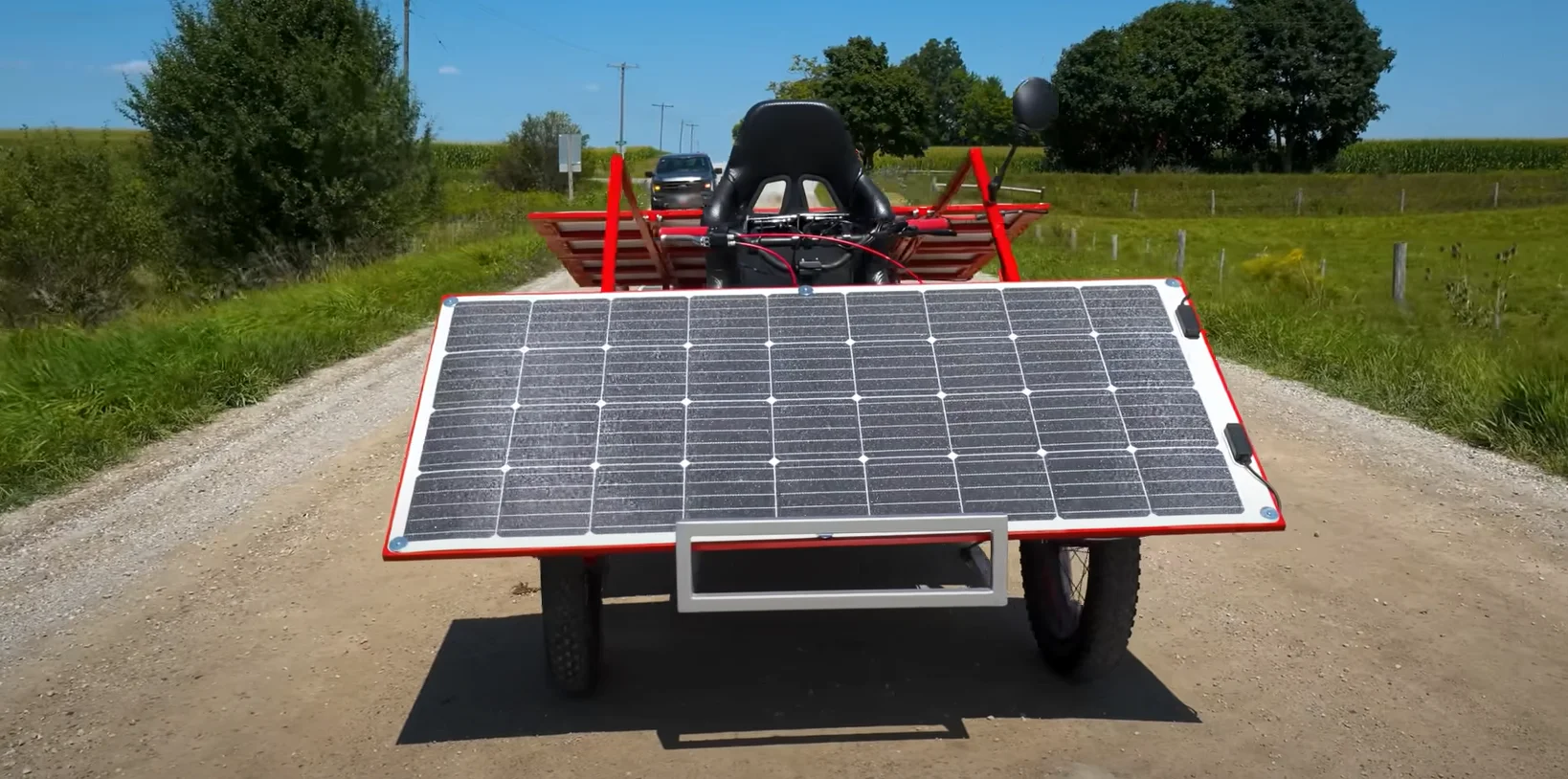
Last year, the creator debuted a solar go-kart with three flexible panels.
On a clear day, it could stretch the range to about 100km (62 miles) compared to 60–70km (37–43 miles) on battery power alone.
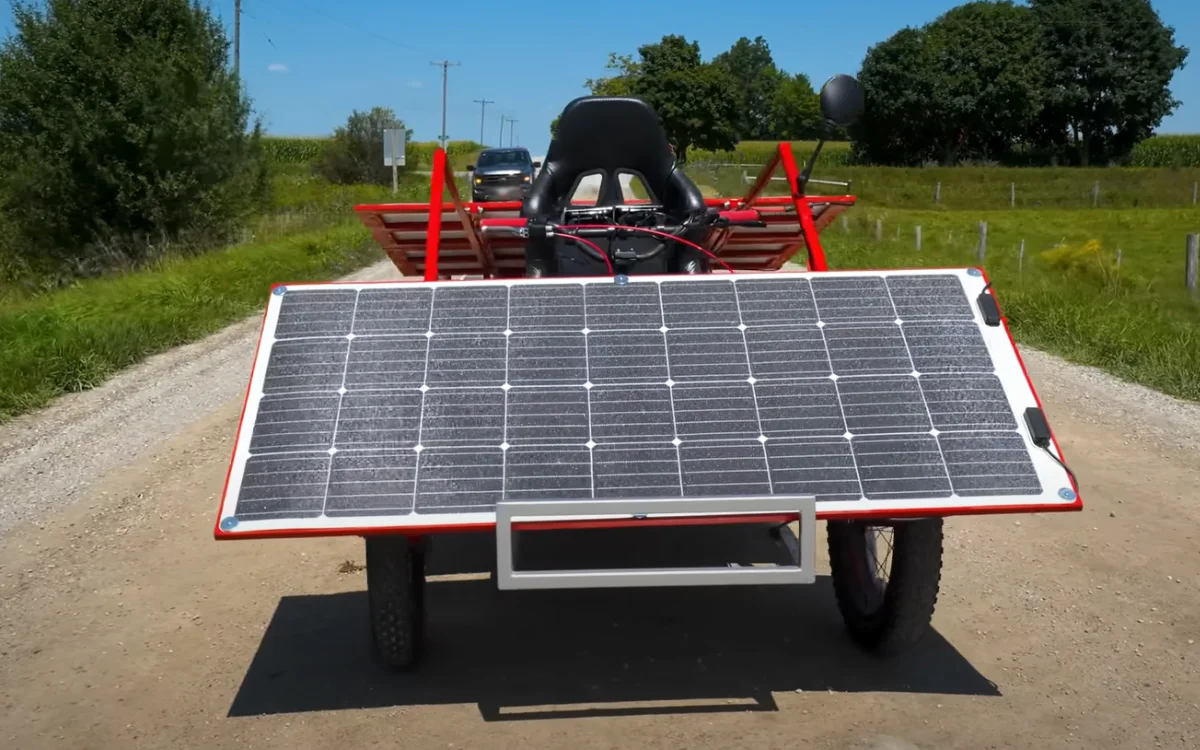
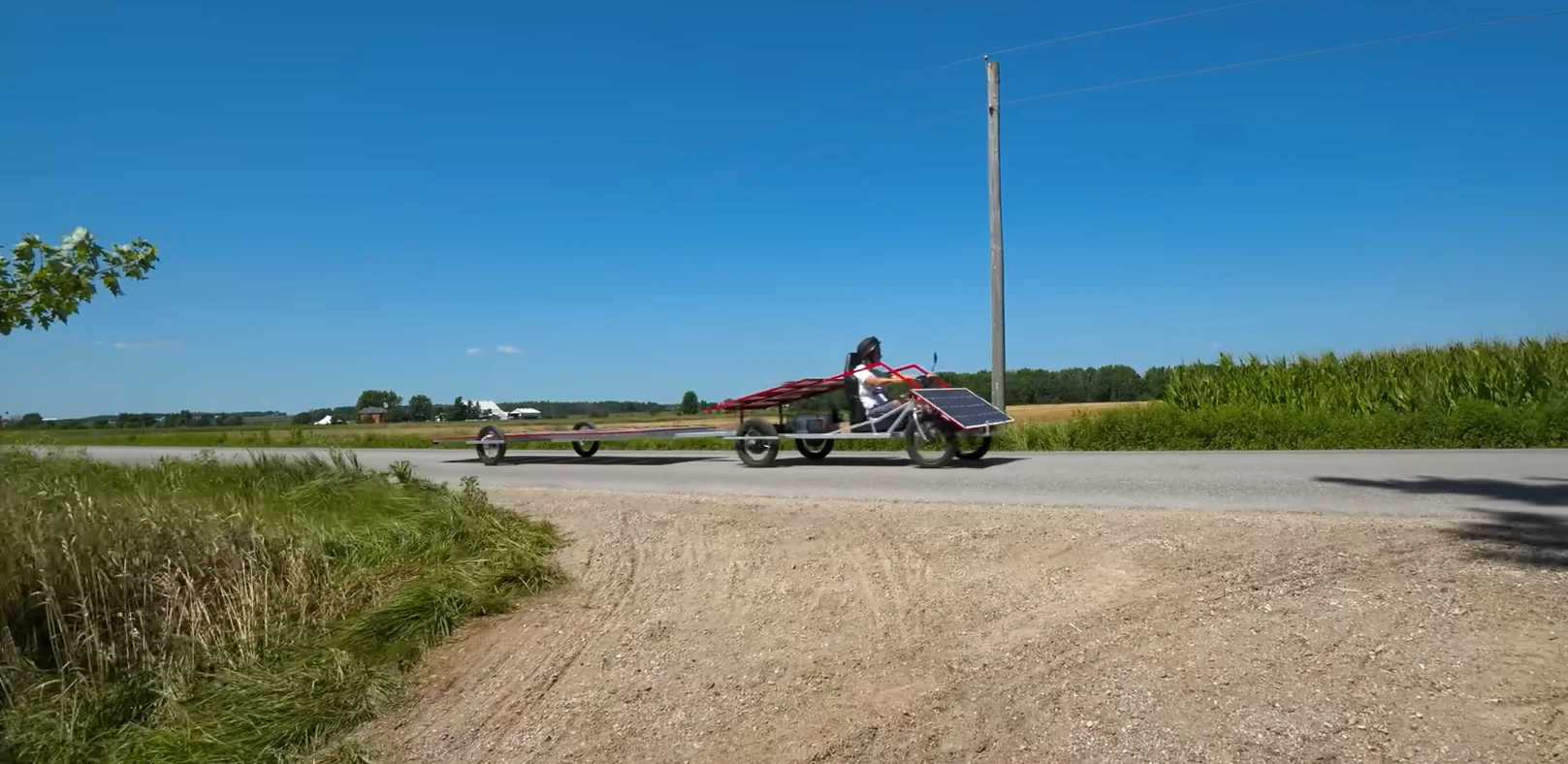
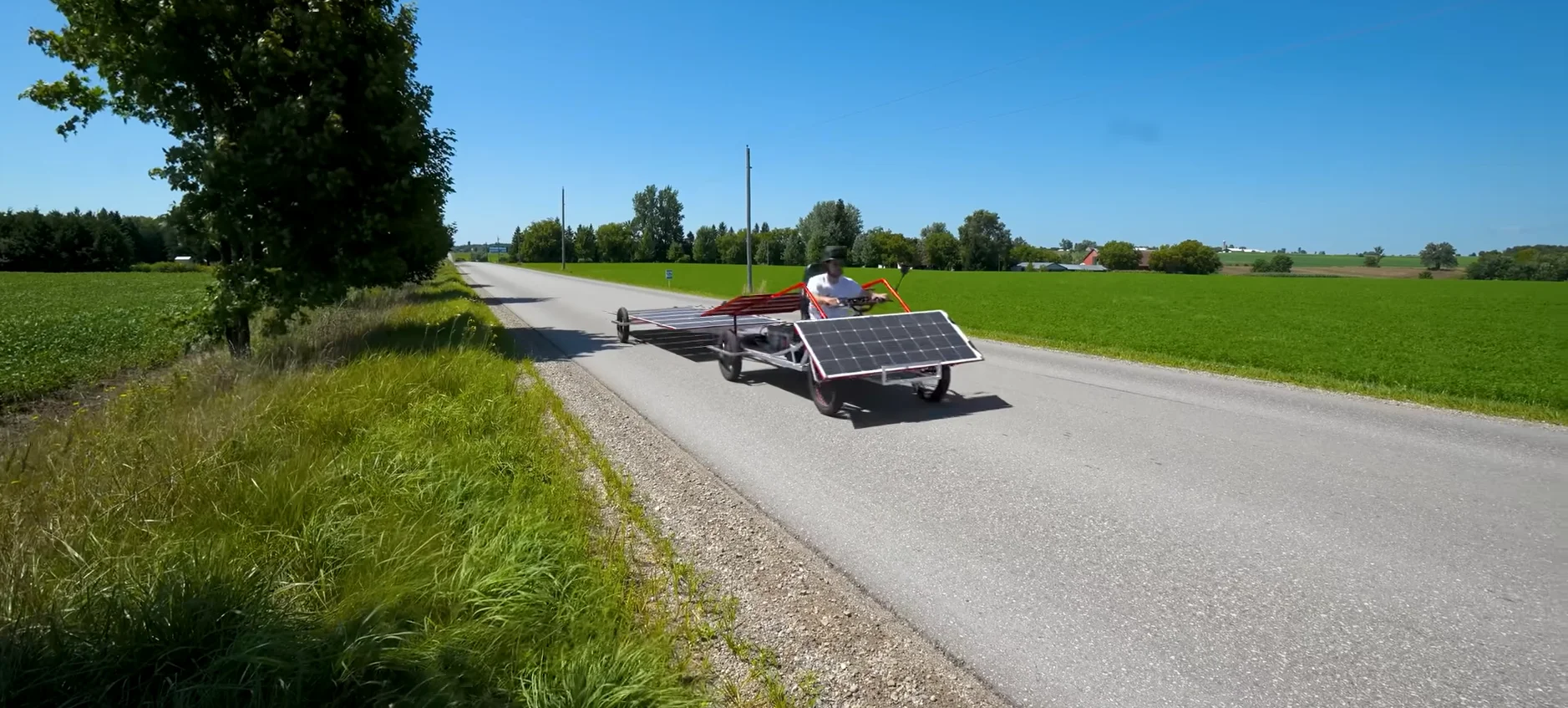
This was an impressive feat, but Drew, the YouTuber, decided that it was time to go bigger, and instead of modifying a car itself, he built a 14-foot-long custom trailer from steel tubing and bike wheels.
The trailer was designed to carry six lightweight, flexible solar panels mounted on wooden frames. These, combined with the three already on the car, meant that the system packed nine panels in total.
Related
He was incredibly pleased with the end result
He made some smart decisions by picking lighter, flexible solar panels instead of rigid ones, and he also added upgraded hydraulics and a rear-view mirror for safety.
On a perfect sunny day, the car consistently produced around 1,350 watts of solar power – almost enough to match its 1,200-watt burn rate.
By mid-afternoon, the battery remained nearly full despite his continuous driving.
The cloudy weather conditions and the sunset eventually tipped the balance, and the vehicle finally rolled to a stop after 250km (155 miles).
While it was not quite the infinite range that he’d wanted, 250km is very impressive, and he was very pleased with the little EV’s performance.
Daisy is a technology and automotive journalist covering artificial intelligence, consumer tech, Apple news, cryptocurrency, emerging technologies, and transportation innovation. Since joining the team in 2025, she has reported on everything from AI-powered startups and major iOS updates to viral car stories and the latest developments shaping transportation and the digital economy. Drawing on her background in automotive journalism and a degree in History and Journalism from Goldsmiths, University of London, Daisy specializes in breaking down complex topics into clear, engaging reporting for a global audience. Her work spans cutting-edge technology, innovative vehicles, and the people driving change across both industries. Daisy has gained first-hand access to some of the world's most talked-about technologies and innovators, including meeting Tesla's Optimus humanoid robot during its first European appearance in London. She has also discussed the future of space exploration with an astronaut, bringing unique insights and real-world perspectives to her coverage of emerging technology.