Man who's spent $18,057 powering his home and two EVs with solar and batteries for 2 years shares what he's saved and if it's been worth it
Published on Jul 08, 2026 at 8:00 PM (UTC-4)
by Ben Thompson
Last updated on Jul 10, 2026 at 4:42 AM (UTC-4)
Edited by
Mason Jones
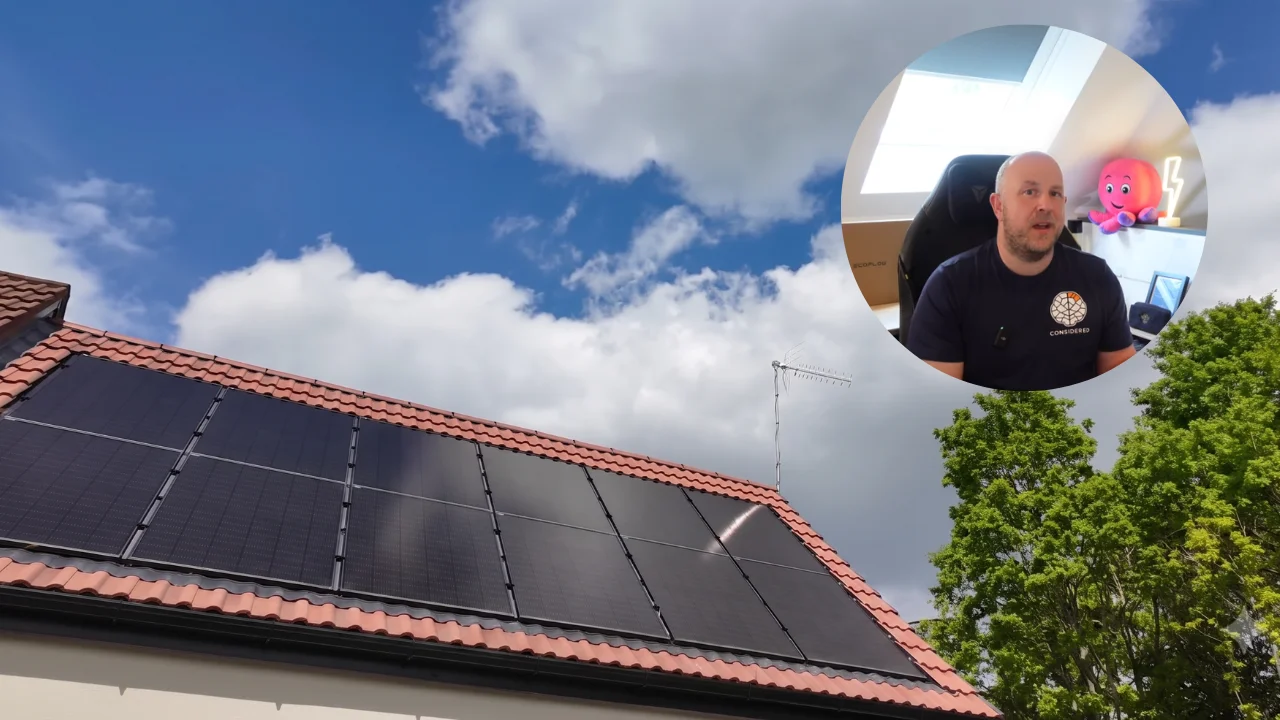

A man who spent more than $18,000 powering his home and his two EVs with solar panels and battery storage over a two year period has revealed his savings.
More and more people are seeking out ways to get their energy in a way that’s environmentally friendly.
Solar panels have become a huge part of that movement.
But how much money can you save with them? That’s what this British man wanted to find out.
Solar panels are increasing in popularity every year
Solar power is big business these days.
In May 2026, the energy source overtook coal in the US in a huge step forward for the eco-energy movement.
And that’s not forgetting China, which did more for solar power in 2025 than any other country in the world.
We’re at the point where we’re seeing panels on practically everything, from boats to cars.
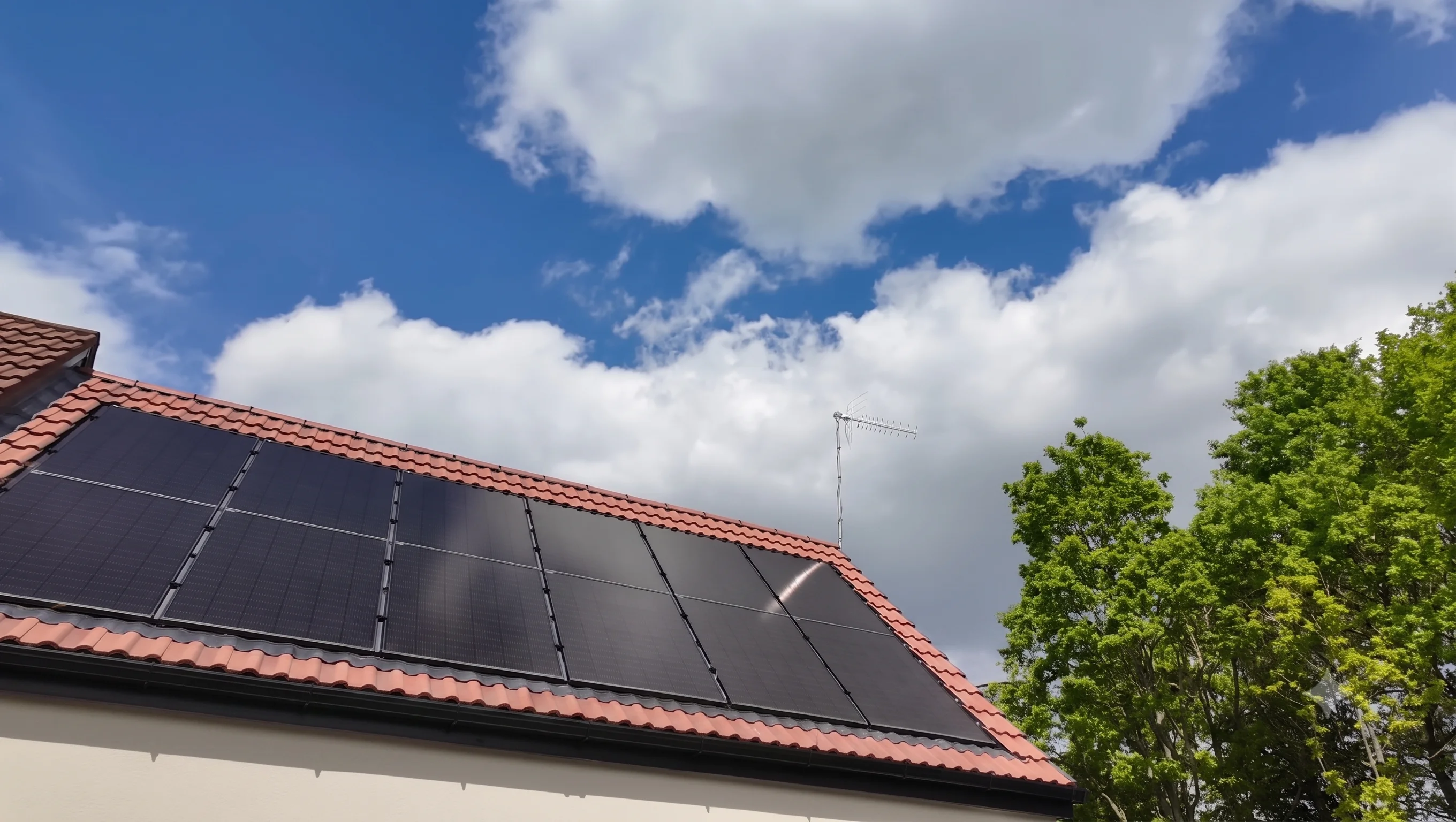
But traditionally, they’re situated on the roofs of houses providing energy to the occupants.
That’s certainly how one YouTuber in the UK has been making use of them.
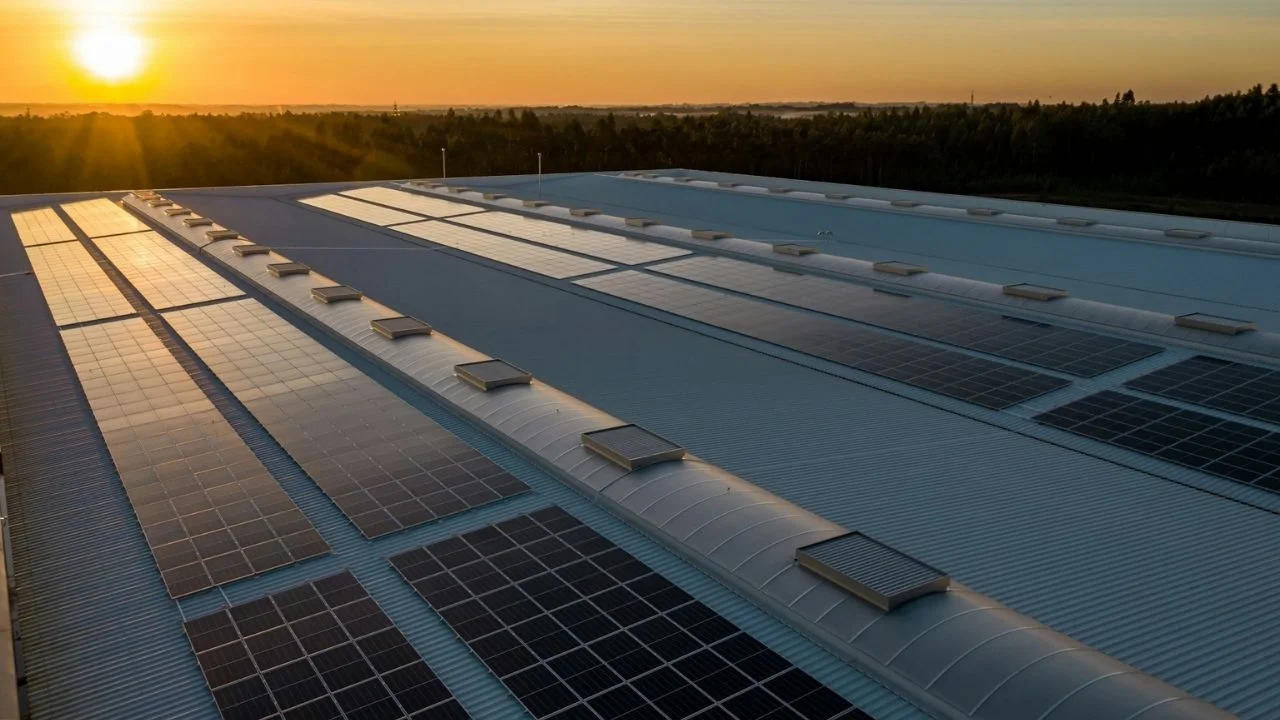


This man had spent $18,057 on his solar panels – but was it money well spent?
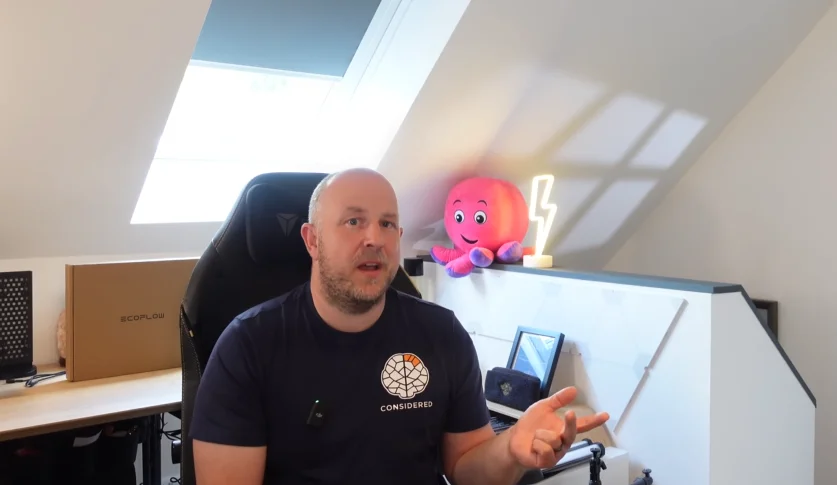
Dale, the host of YouTube channel Considered, had installed his solar panels back in April 2024.
But that wasn’t the whole set-up.
In addition to a 5.16kW south-facing in-roof solar array of 12 panels, he’d put in place a 5kW GivEnergy hybrid inverter, and two 9.5kWh GivEnergy batteries.
All in all, that’d cost him $18,057, which isn’t cheap.
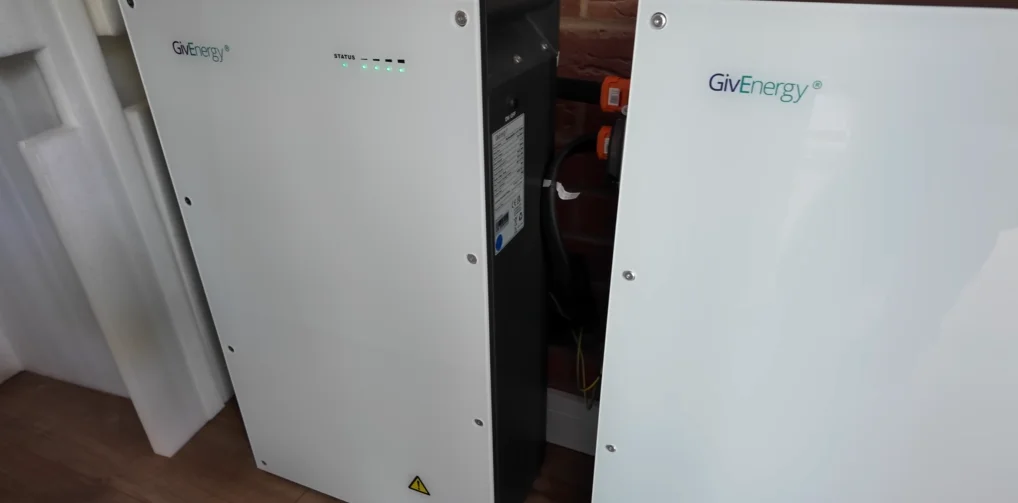
And it’s hardly like his household was one in which there was low demand for electriticity.
It housed two full-time remote workers who would need plentiful energy for their 9-to-5 gigs, and two EVs.
Over the past two years, the house had consumed more than 46MWh of electricity.
The energy grid was still doing its part, which Dale acknowledged freely.
“Even with the solar and the batteries, the grid is still doing a significant amount of the work for us at this house,” he said.
“And I think that’s an important part, cuz this never was really about going off grid. It’s about reducing how much we rely on it.”
The solar had generated over 9MWh, with a self-consumption rate of 82.6 percent.
That meant that 82 percent of the energy was used in the home rather than being exported into the grid.
While solar generation remained practically the same between the first and the second year, the financial returns increased mightily in the second year.
In the first year, Dale saw returns of $2,371 (£1,773), which increased to $2,758 (£2,064) in the second year.
What do financial returns look like in this set-up?
It’s three fold – avoided grid costs, tariff arbitrage (overnight charging over day charging), and exporting excess energy back into the grid.
He was currently on track to a 6.7 year payback period.
What’s a payback period in this context?
That’s essentially the amount of time it would take for savings to equal the original installation cost.
Effectively, it’s breaking even.
Did he think this set-up was worthwhile?
So with all of that in mind, did he think this had been a savvy investment?
There was one problem – GivEnergy had gone into administration, leaving a lot of grey area when it came to long term system updates and support.
Despite that, this whole arrangement was still worthwhile in Dale’s book.

It provided control over energy usage and offered a buffer against energy prices, which are notoriously volatile.
He was looking to expand his setup in the future, with a solar pergola (outdoor garden structure) and additional battery capacity.
What advice would he give to anyone thinking about following in his footsteps?
“If I had to give one piece of advice to anyone considering a similar energy setup, it would be to understand your own energy usage before buying anything,” Dale told Supercar Blondie.
“It’s easy to get drawn in by larger batteries, more solar panels, or marketing claims about huge savings, but the best system is the one that’s designed around how and when you actually use electricity.
“Spend some time looking at your energy consumption, think about what you’re trying to achieve, whether that’s reducing bills, increasing energy independence, or having backup power, and then choose a system that fits those goals.
“For me, it’s been about much more than just saving money. I’ve learned a huge amount about how my home uses energy, reduced my reliance on the grid, and built a system that works well for my household.
“I think approaching it as a long-term investment, rather than a quick financial win, leads to much better decisions.”
Ben joined Supercar Blondie in February 2025 after being published by international organizations including LADbible, The Sun, the New York Post, and the Daily Mail. He covers supercars, rare and collectible vehicles, aviation, luxury assets, and the fascinating people behind them. His reporting has explored everything from seven-figure supercars and historic Ferrari collections to unusual aircraft adventures and extraordinary automotive discoveries from around the world. Ben has also gained first-hand insight into vehicle craftsmanship and customization, including visiting specialist workshops to see bespoke vehicles up close.