Man builds a real-life Green Goblin hoverboard after teaching himself how to create it and successfully flies it across a river
Published on Nov 04, 2026 at 12:20 PM (UTC-5)
by Daisy Edwards
Last updated on Nov 04, 2026 at 12:20 PM (UTC-5)
Edited by
Mason Jones
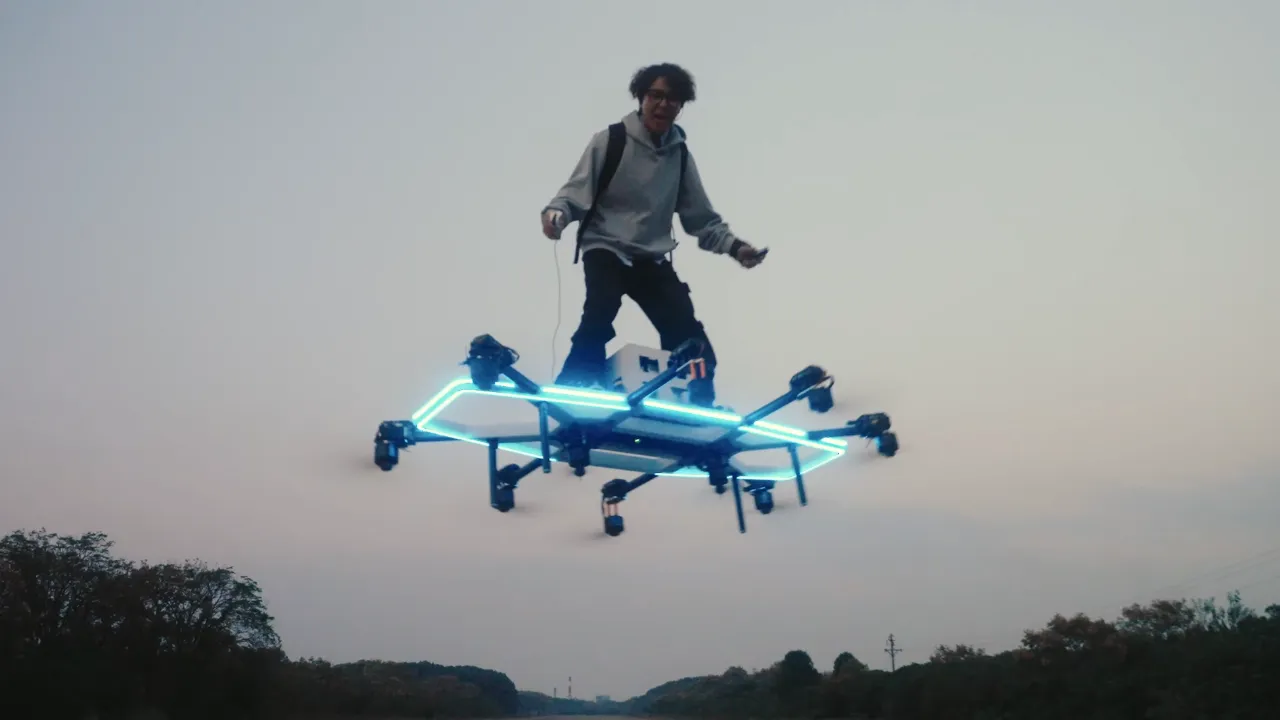

A real-life version of the Green Goblin flying hoverboard has taken to the skies, and it was built by a young inventor who taught himself how to make it.
Song Xingyu, better known online as Shenqi Ayu, has attracted millions of viewers after sharing footage of himself soaring over rivers, bridges, and mountain scenery.
The 26-year-old from China’s Hubei province spent years experimenting with aircraft and mechanical inventions before finally bringing his childhood dream to life.
But his journey to creating the unusual flying machine involved plenty of trial and error.
The flying skateboard was inspired by Spider-Man
Song’s inspiration came from watching the Spider-Man movie as a child, when he first saw the Green Goblin riding his iconic Goblin Glider.

He reportedly became fascinated by the idea of having one himself, even imagining other ways he could fly, including taking an aircraft to school.
However, he didn’t have the resources or formal education to make those ideas happen.
Song left school at 14 and began working in his father’s timber workshop before taking on jobs at construction sites and factories.
Instead of following a traditional engineering education, he taught himself about mechanics, electronics, materials, and aviation through online resources and hands-on experiments.
In 2022, he borrowed 19,000 yuan (around $2,650) from his father to buy a secondhand truck and transform an old workshop into a personal laboratory.
He spent 180 days renovating the space himself, eventually filling it with tools, a computer, and a 3D printer.
His first attempt at building the Green Goblin hoverboard caught fire
Song initially planned to power his flying skateboard using five aviation turbojet engines.
The original setup included one 163-kilowatt engine and four smaller engines, which he believed could produce enough thrust to carry three adults.
But when he switched all five engines on together, things went badly wrong.
The engines caught fire, destroying parts of the fuel and electrical systems.
After analyzing the problem with AI, Song discovered that the engines were positioned too close together, allowing hot exhaust gases to enter their air intakes.

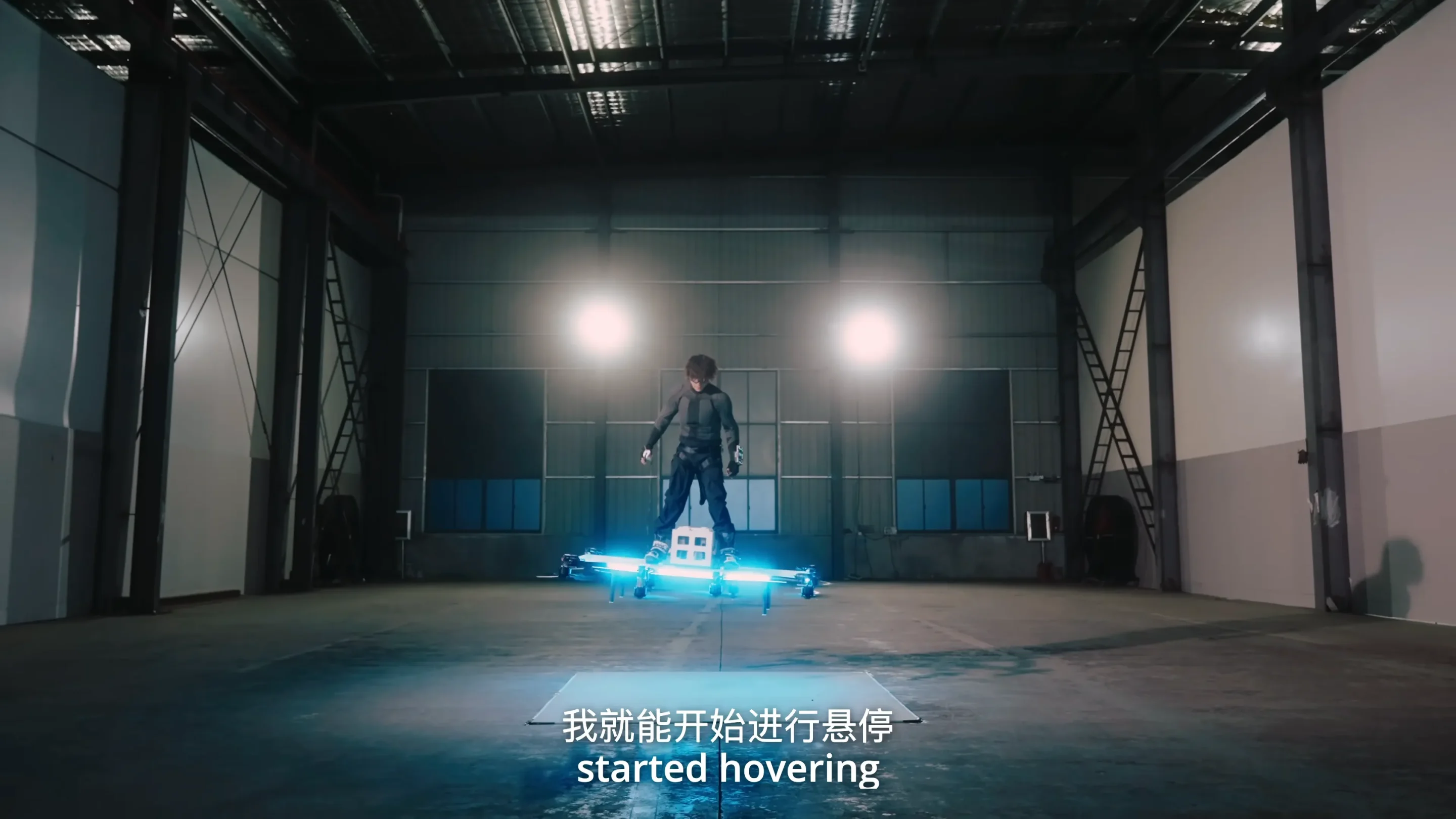
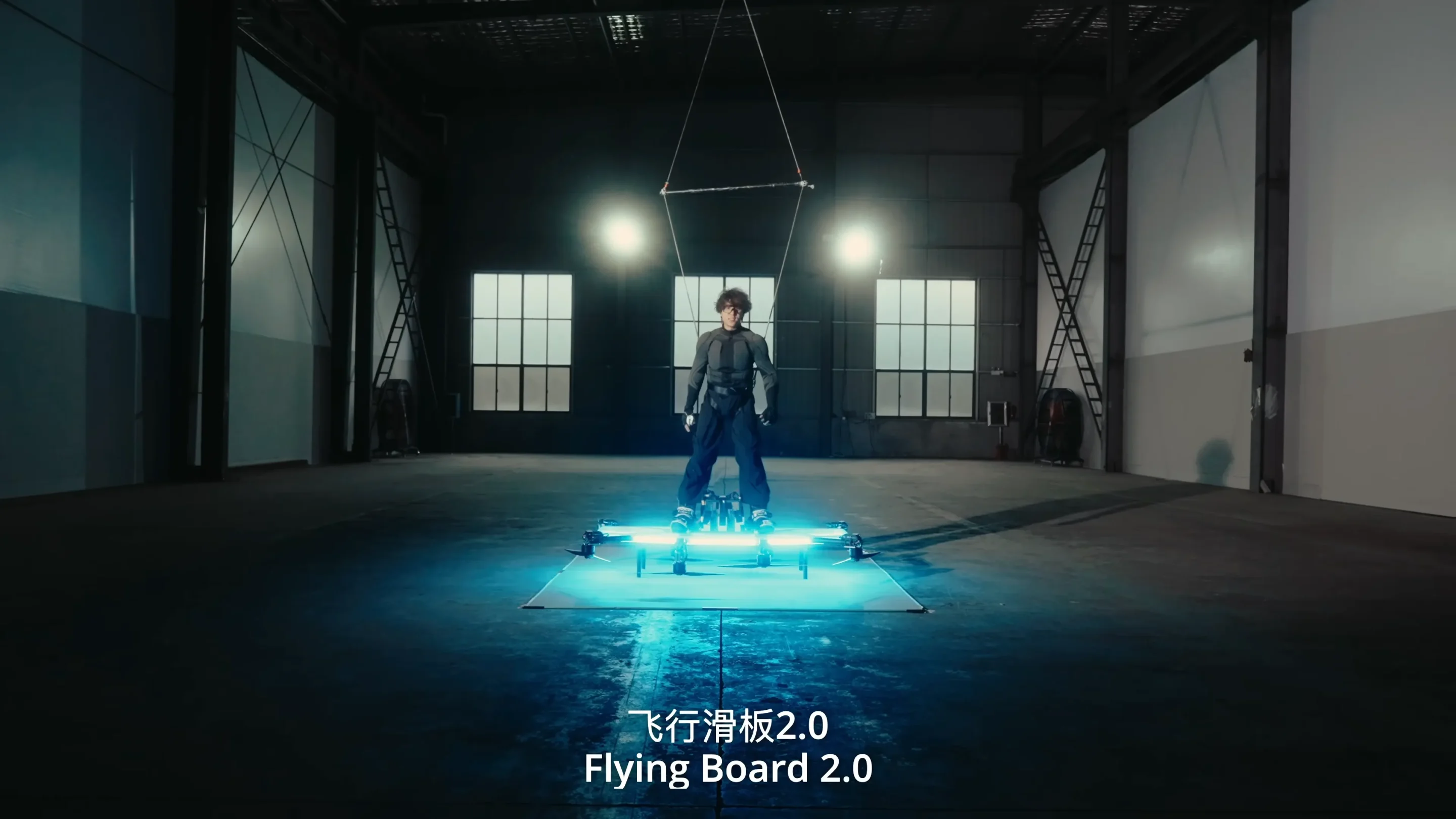
He eventually abandoned the jet-engine approach and switched to 10 sets of powerful electric propellers.
The new version was completed in September 2026, with its 3D-printed frame and electric propulsion system giving it a much more futuristic appearance.
Song also developed an AI-assisted monitoring system using two smartphones and a Bluetooth earpiece to help him improve his flying technique.
He successfully flew it over the Yangtze River
After completing the machine, Song began training to control it, relying on a combination of hand controls and body movements to steer.
His right hand operates a wired throttle, while a controller in his left hand helps with turning. He also uses his body weight to shift direction, meaning balance and coordination are essential.
During China’s National Day holiday in October 2026, he took the invention to his hometown of Badong and successfully flew over the Yangtze River.

He also completed a flight at the Bairen River scenic area, where he traveled more than 300 meters in just over two minutes before landing on a canyon platform.
The footage quickly went viral on Douyin, reportedly collecting more than four million likes and attracting attention from around the world.
However, the hoverboard still has limitations, and apparently its battery currently allows for around 16 minutes of flight time, with overheating affecting its endurance.

He hopes to work with battery manufacturers to improve its performance, although he doesn’t see it becoming an everyday consumer product.
Instead, he believes the board could eventually appeal to extreme sports enthusiasts.
For now, the young inventor has managed to turn a childhood fantasy of being Green Goblin into something that can genuinely leave the ground.
The best of Supercar Blondie, every Sunday
The week's best car stories, straight to your inbox. Free.
Daisy is a technology and automotive journalist covering artificial intelligence, consumer tech, Apple news, cryptocurrency, emerging technologies, and transportation innovation. Since joining the team in 2025, she has reported on everything from AI-powered startups and major iOS updates to viral car stories and the latest developments shaping transportation and the digital economy. Drawing on her background in automotive journalism and a degree in History and Journalism from Goldsmiths, University of London, Daisy specializes in breaking down complex topics into clear, engaging reporting for a global audience. Her work spans cutting-edge technology, innovative vehicles, and the people driving change across both industries. Daisy has gained first-hand access to some of the world's most talked-about technologies and innovators, including meeting Tesla's Optimus humanoid robot during its first European appearance in London. She has also discussed the future of space exploration with an astronaut, bringing unique insights and real-world perspectives to her coverage of emerging technology.




