Man uses 99 phones to trick Google Maps into thinking there's a traffic jam to prove a big point
Published on Jan 22, 2026 at 6:19 PM (UTC+4)
by Daisy Edwards
Last updated on Jan 23, 2026 at 8:57 PM (UTC+4)
Edited by
Emma Matthews
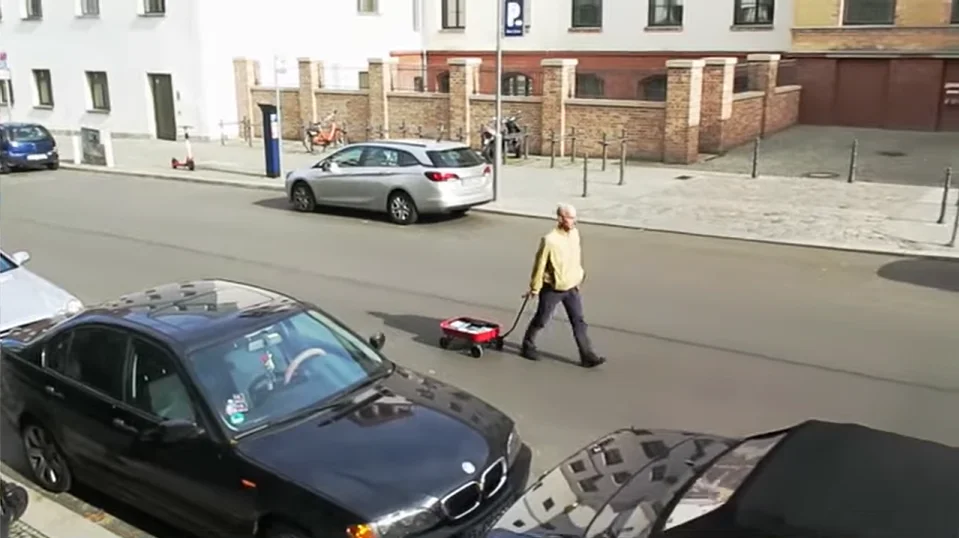
A Berlin artist loaded a little red wagon with 99 phones and went for a walk in order to trick Google Maps and cause a traffic jam.
Every phone in his wagon had Google Maps open, and as the cluster moved slowly through the city, the app began to read it as heavy traffic.
What looked like a bizarre stunt was actually a carefully planned experiment showing how easily digital systems can be misled.
It was a low-tech setup with a high-impact message about how much power a tiny device can quietly hold.
EXPLORE SBX CARS – Supercar auctions starting soon powered by Supercar Blondie
99 phones turn a quiet street into a traffic jam
The man behind the strange tech project is an artist called Simon Weckert, who filled a tiny red wagon with 99 secondhand phones and pulled it through quiet Berlin streets.
To Google Maps, dozens of devices moving together at walking speed looked like a traffic jam, so the route on the app turned red and suggested drivers take a different path.

The idea was sparked during a large May Day demonstration in Berlin.
Weckert noticed Google Maps showed ‘traffic jams’ in areas packed with people rather than cars, suggesting the system was reacting to phone density rather than vehicles.
He spent around two years developing the project, researching how mapping tools shape our understanding of the world and how much trust we place in them.

Click the star icon next to supercarblondie.com in Google Search to stay ahead of the curve on the latest and greatest supercars, hypercars, and ground-breaking technology
Trick Google Maps to prove a big point about big data
Weckert describes the work as a form of hacktivism aimed at exposing how fragile and influenceable data systems can be.
By manipulating something as widely trusted as Google Maps, he wanted to make the hidden mechanics of algorithms visible and understandable.

The timing was deliberate, too; he made sure that his project coincided with the 15th anniversary of Google Maps, and one of the routes passed Google’s Berlin offices.
Google responded lightheartedly, saying it welcomes creative uses of Maps and that such experiments help improve the product itself, while admitting that Google Maps has not quite figured out how to identify someone traveling by wagon.
If Google Maps is showing a lot of traffic in one area, it might just be Simon with his little red wagon filled with 99 phones.
DISCOVER SBX CARS: The global premium car auction platform powered by Supercar Blondie