Everyone's debating Waze vs Google Maps but there's an alternative on the market with a game-changing feature
Published on Jan 13, 2026 at 10:23 AM (UTC+4)
by Jason Fan
Last updated on Jan 23, 2026 at 3:06 PM (UTC+4)
Edited by
Kate Bain
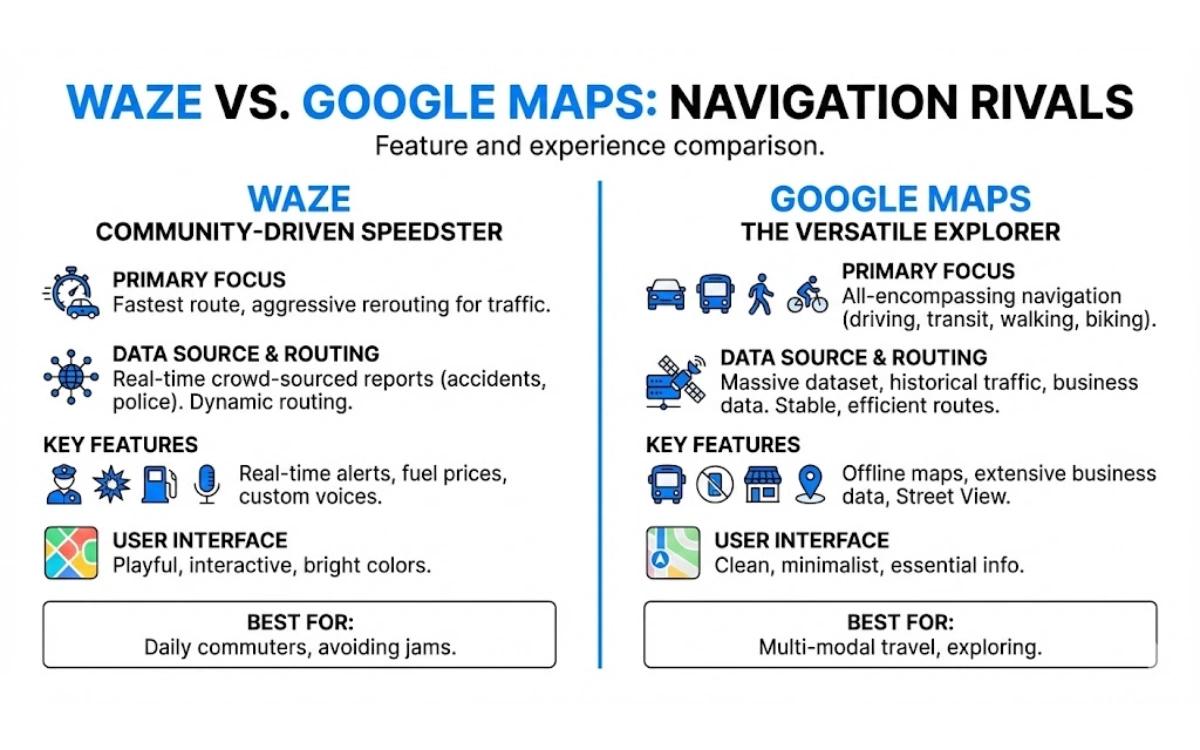
The battle between Waze and Google Maps to become the best navigation app has become one of the most familiar tech debates of the smartphone era.
Some drivers swear by Waze for real-time alerts and crowdsourced traffic reports, while others stick with Google Maps for its clean interface and powerful search.
Both apps live on our phones, mirror neatly onto car screens, and feel almost impossible to replace.
But while that rivalry has been dominating attention, something important has been happening quietly in the background.
SBX CARS – View live supercar auctions powered by Supercar Blondie
There are options beyond Google Maps and Waze
Google Maps continues to push features like Immersive View, blending aerial imagery, Street View data, traffic, and even weather to preview routes before you drive them.

Apple, meanwhile, has been steadily rolling out its detailed city experience, rebuilding Apple Maps with in-house data and increasingly realistic 3D cities.
All of this points to the same goal: making navigation feel less abstract, and more like what drivers actually see through the windshield.
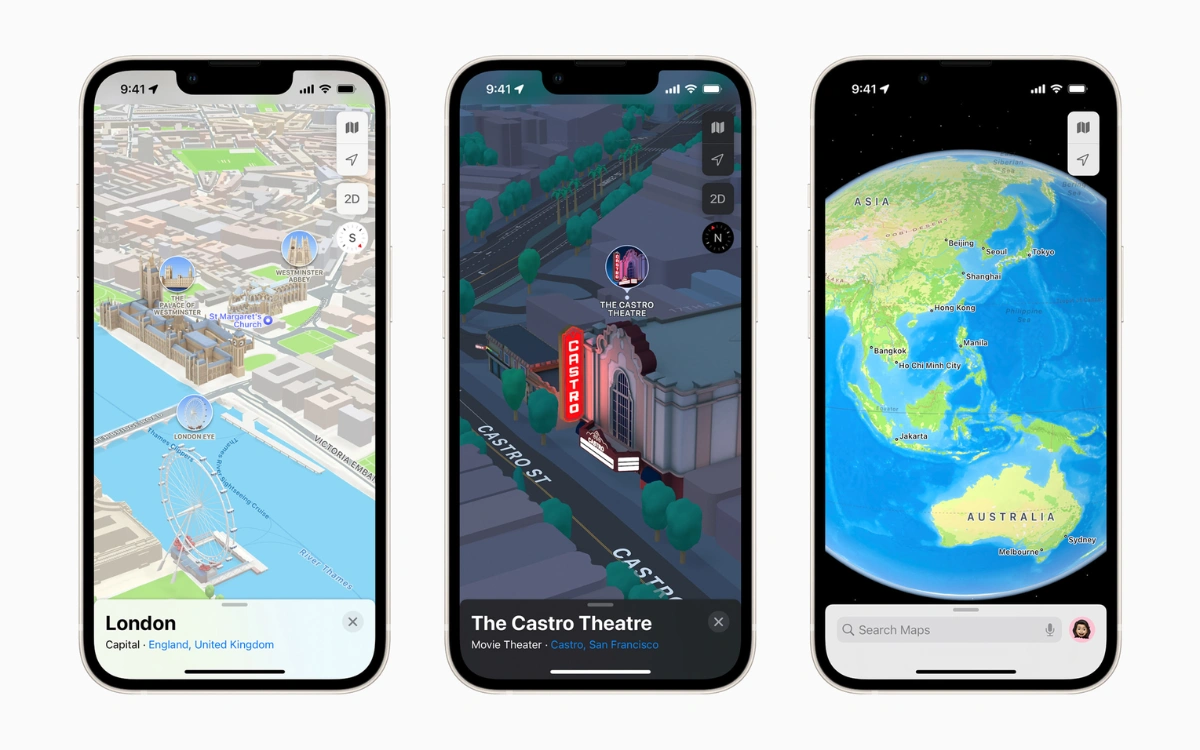
The catch is that most of these features are either in the planning phase, or remain limited to certain regions and specific platforms.
What many drivers don’t realize is that their car’s built-in navigation system often isn’t powered by Google or Apple at all.
Instead, it runs on a separate platform designed specifically for automakers, meaning it’s not actually a navigation app.
This is where the conversation quietly shifts away from phone-based apps and toward native, in-car navigation.
Mapbox is the underlying ‘brain’ behind navigation systems
Enter Mapbox.
Mapbox is the underlying ‘brain’ behind navigation systems in a growing number of vehicles.
After years of hiding in the background, it wants drivers to stop defaulting to Google Maps or Waze.
Its latest feature, called 3D Lanes, is a major leap forward.
Rather than showing abstract arrows and lines, 3D Lanes recreates complex intersections and highway splits in realistic 3D, complete with lane markings, bridges, tunnels, and overpasses.
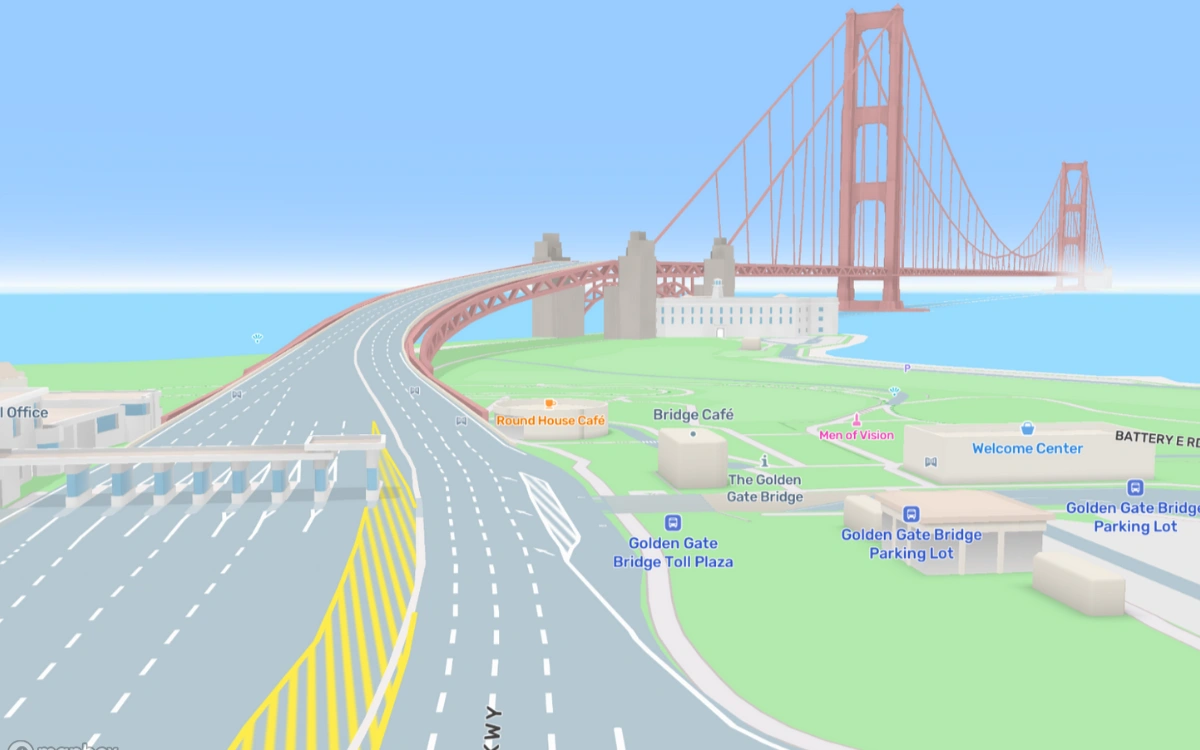
The idea is simple: if what you see on screen matches what you see outside the car, it’s much easier to choose the correct lane and follow the route confidently.
The feature builds on Mapbox’s recent rollout of 3D buildings and landmarks, and is designed primarily for built-in vehicle navigation systems.
Developed with input from BMW, 3D Lanes is now available in private preview via the Mapbox Navigation SDK, with broader rollouts expected once automakers integrate it.
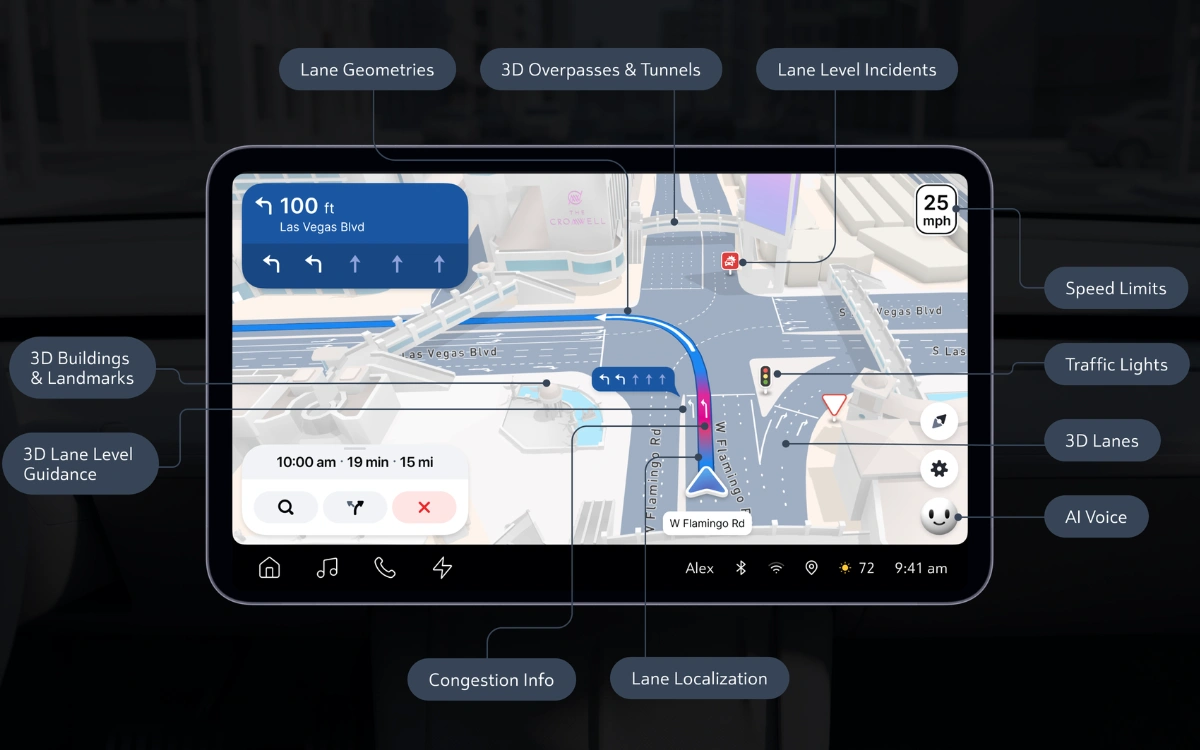
Unlike smartphone apps, Mapbox’s strength lies in deeply embedded, car-native experiences that feel purpose-built rather than mirrored from a phone.
So while Waze and Google Maps continue their very public rivalry, a quieter contender is reshaping how navigation works inside the car itself.
You may already be using it without realizing it, and soon, you might not want to switch back to a navigation app.
DISCOVER SBX CARS: The global premium car auction platform powered by Supercar Blondie