Miami is testing self-driving robot police car that can launch drones for surveillance
Published on Oct 18, 2025 at 11:45 AM (UTC-4)
by Daisy Edwards
Last updated on Oct 18, 2025 at 11:45 AM (UTC-4)
Edited by
Emma Matthews
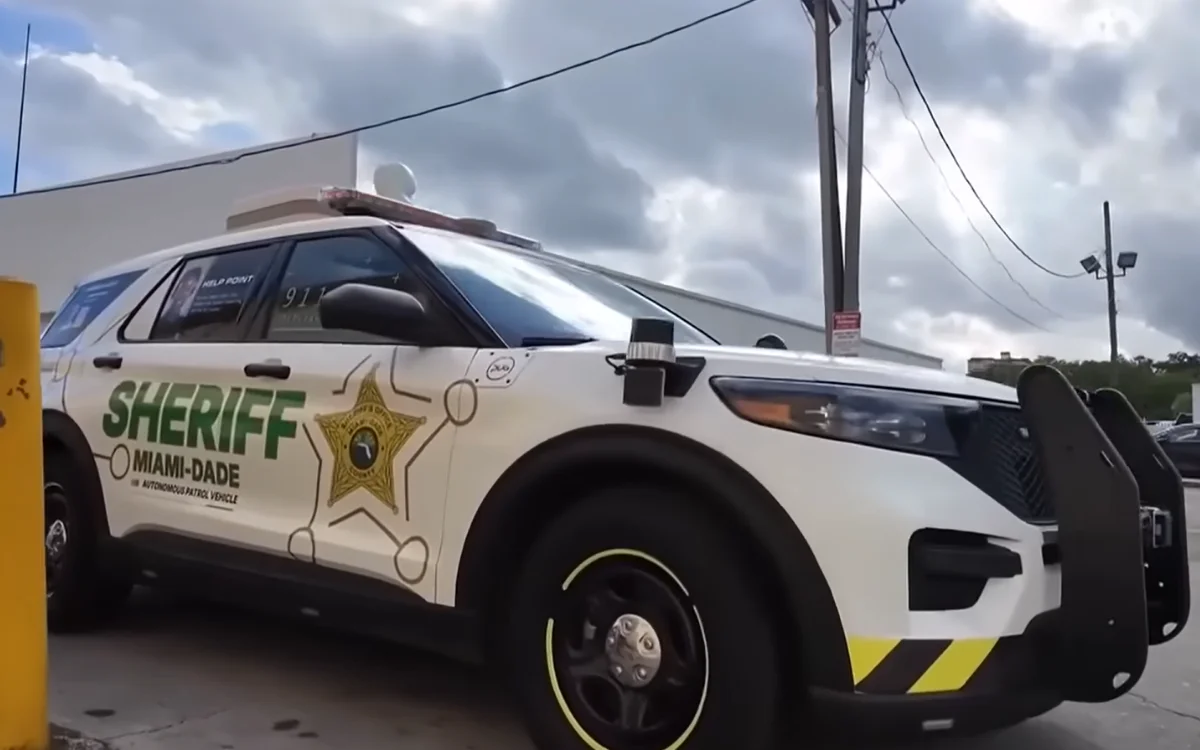

Miami-Dade Sheriff’s Department has just unveiled something that looks straight out of a sci-fi movie – a self-driving robot police car that can launch drones for surveillance.
This isn’t your average cruiser because the project, called PUG (PolicingLab Unmanned Ground unit), is a partnership between the Miami-Dade County Sheriff’s Department and PolicingLab.
It’s part of a year-long pilot program launched by the Miami-Dade Sheriff’s Office, in partnership with PolicingLab and Perrone Robotics.
It looks like something out of Robocop, but it’s real, and it’s already rolling on the streets of Miami.
EXPLORE SBX CARS – Supercar auctions starting soon powered by Supercar Blondie
Miami is testing a self-driving robot police car
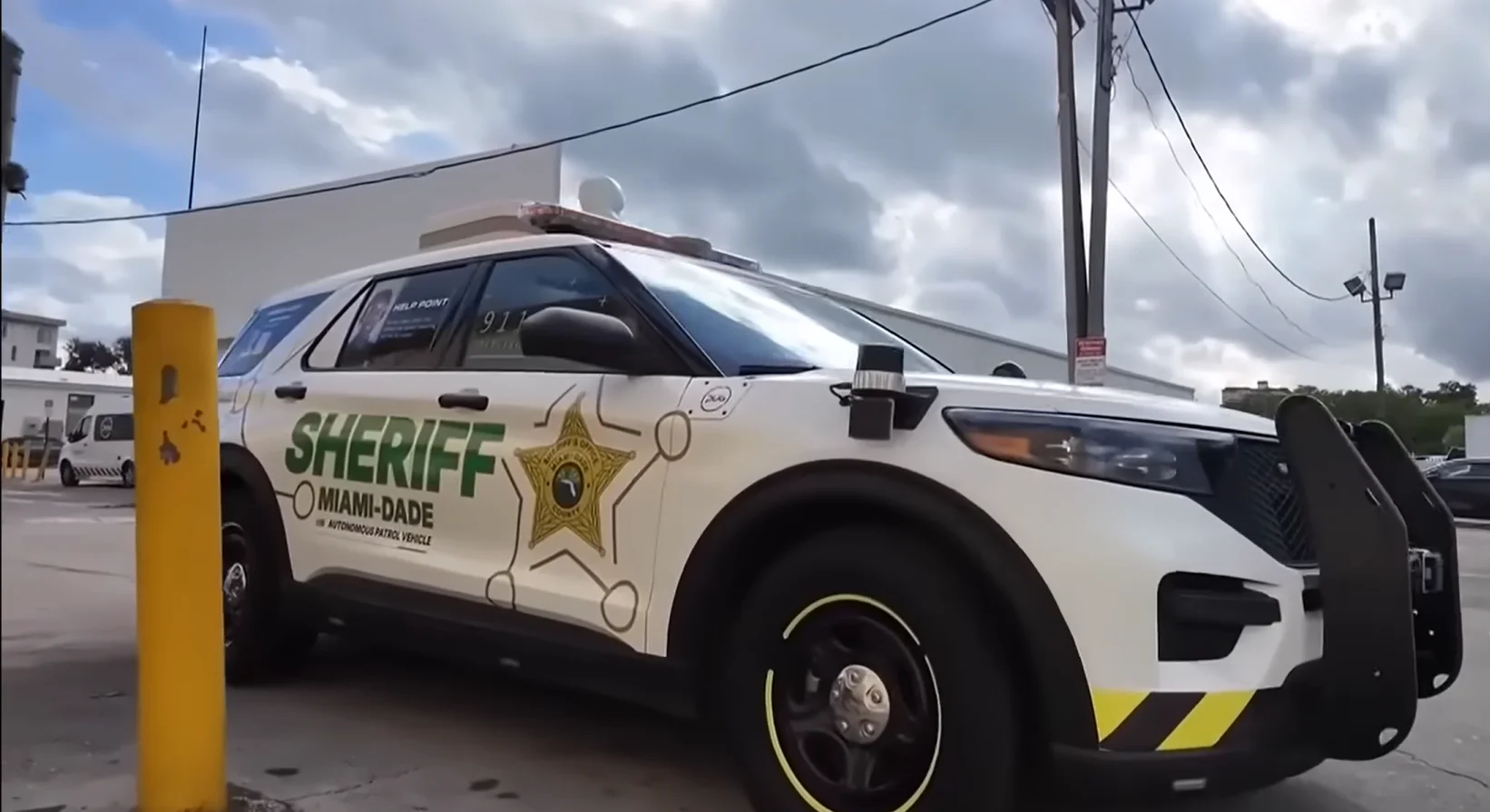
Meet PUG. No, it’s not a cute, short-snouted dog, it’s actually short for ‘PolicingLab Unmanned Ground unit’, a new police car hitting the streets of Miami.
It’s part of a year-long pilot program launched by the Miami-Dade Sheriff’s Office, in partnership with PolicingLab and Perrone Robotics.
PUG is the first self-driving robot police car in the fleet, and it’s already out rolling about on the streets in Florida.
Here’s what makes PUG different from your average cruiser.
It has self-driving technology powered by Perrone’s TONY autonomous platform, as well as 360° cameras and thermal imaging sensors to see in all directions, day or night.
PUG also comes with handy automated license plate readers to instantly scan and flag vehicles, which is perfect for the police force.
It can launch drones for surveillance
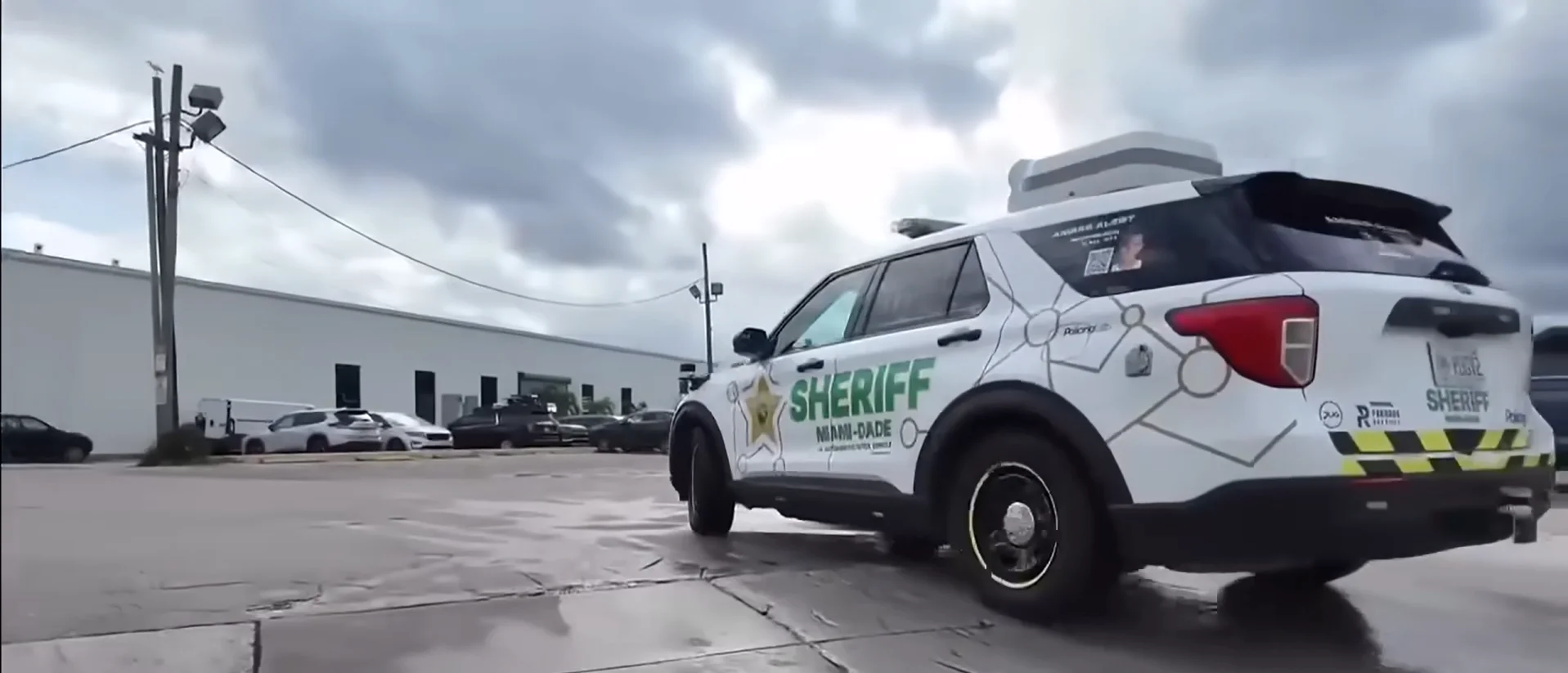
The self-driving robot police car comes with a built-in drone launch system that can send surveillance drones buzzing overhead on command.
It’s crazy to think an automated vehicle, can call for more automated airborne backup.
Miami officials say the idea is to create a ‘force multiplier’, which in plain English means: the robot car gives officers more reach without needing more staff.
The force is hoping the 12-month trial will cut down response times, improve officer safety, deter crime and build public trust.
If the Miami trial goes well, it could be the start of automated police fleets across the US
Imagine robot cruisers handling routine patrols, scanning crowds, and launching drones at public events – while human officers focus on emergencies.
Daisy is a technology and automotive journalist covering artificial intelligence, consumer tech, Apple news, cryptocurrency, emerging technologies, and transportation innovation. Since joining the team in 2025, she has reported on everything from AI-powered startups and major iOS updates to viral car stories and the latest developments shaping transportation and the digital economy. Drawing on her background in automotive journalism and a degree in History and Journalism from Goldsmiths, University of London, Daisy specializes in breaking down complex topics into clear, engaging reporting for a global audience. Her work spans cutting-edge technology, innovative vehicles, and the people driving change across both industries. Daisy has gained first-hand access to some of the world's most talked-about technologies and innovators, including meeting Tesla's Optimus humanoid robot during its first European appearance in London. She has also discussed the future of space exploration with an astronaut, bringing unique insights and real-world perspectives to her coverage of emerging technology.