NASA and Boeing join forces to take a half plane into a wind tunnel to test new aircraft design
Published on Dec 29, 2025 at 10:32 AM (UTC+4)
by Molly Davidson
Last updated on Dec 30, 2025 at 1:00 PM (UTC+4)
Edited by
Molly Davidson

NASA and Boeing really did put half a plane into a wind tunnel.
Not because the other half fell off but because they only needed one wing to answer a big question.
Future airplanes need to burn less fuel, and one of the best ways to do that is by changing the wings.
The catch? When wings get longer and thinner, they start acting… weird.
DISCOVER SBX CARS – The global premium auction platform powered by Supercar Blondie
Why NASA and Boeing are testing a half-plane at all
The project is a collaboration between NASA and Boeing, and it focuses on a simple upgrade with a tricky downside.
Longer, skinnier wings cut through the air more easily.
That means planes use less fuel, fly farther, and give passengers a smoother ride.
Sounds perfect… until physics steps in.
Thin wings bend more.
Bend too much, and you risk something called ‘flutter’, where airflow makes the wing shake violently.
That kind of shaking is very bad news at 35,000 feet.
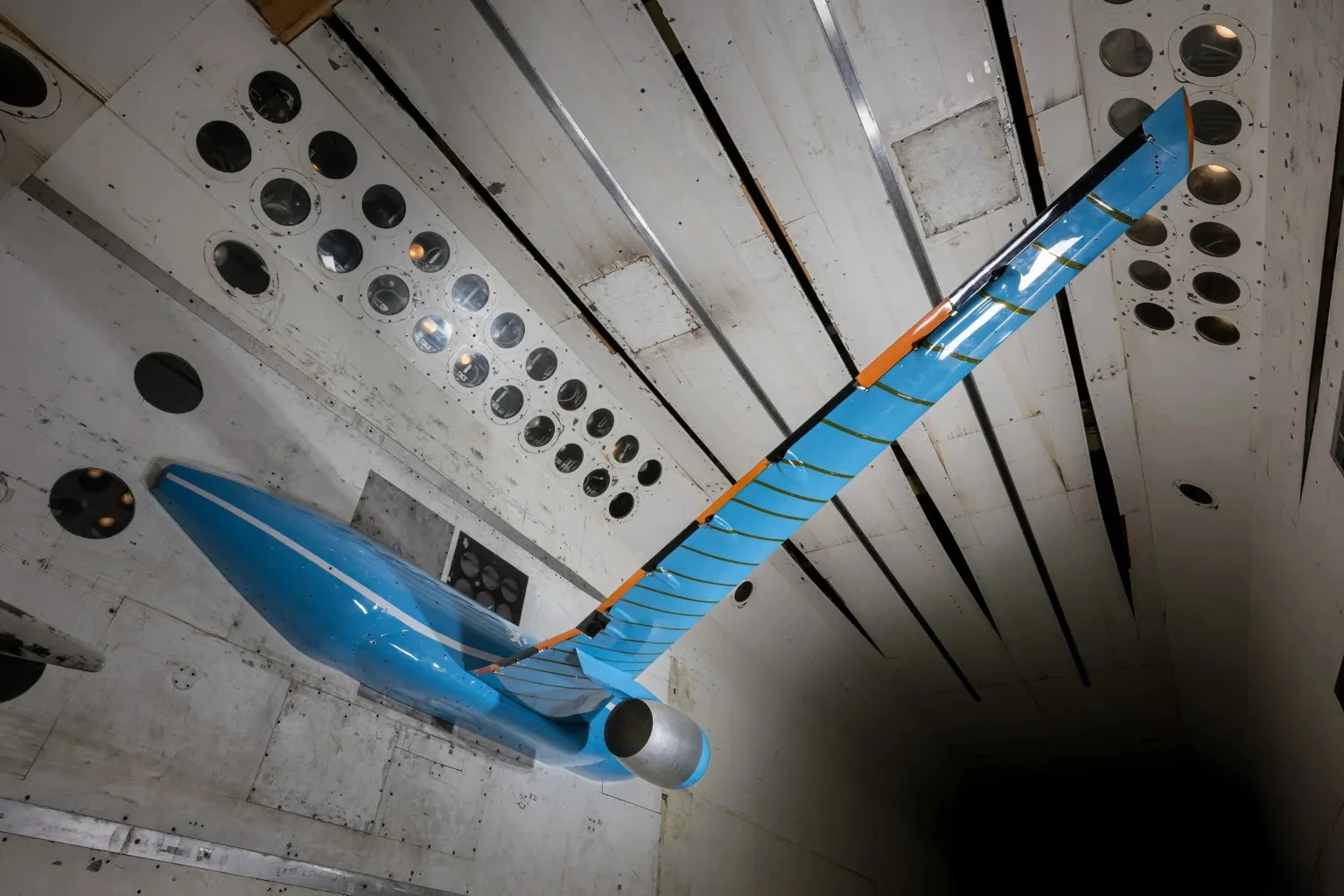
So instead of building a whole test airplane, engineers built a ‘half-plane’ – basically an aircraft sliced down the middle, with one 13-foot wing attached.
They rolled it into NASA Langley’s Transonic Dynamics Tunnel, blasted it with high-speed air, and watched how the wing behaved.
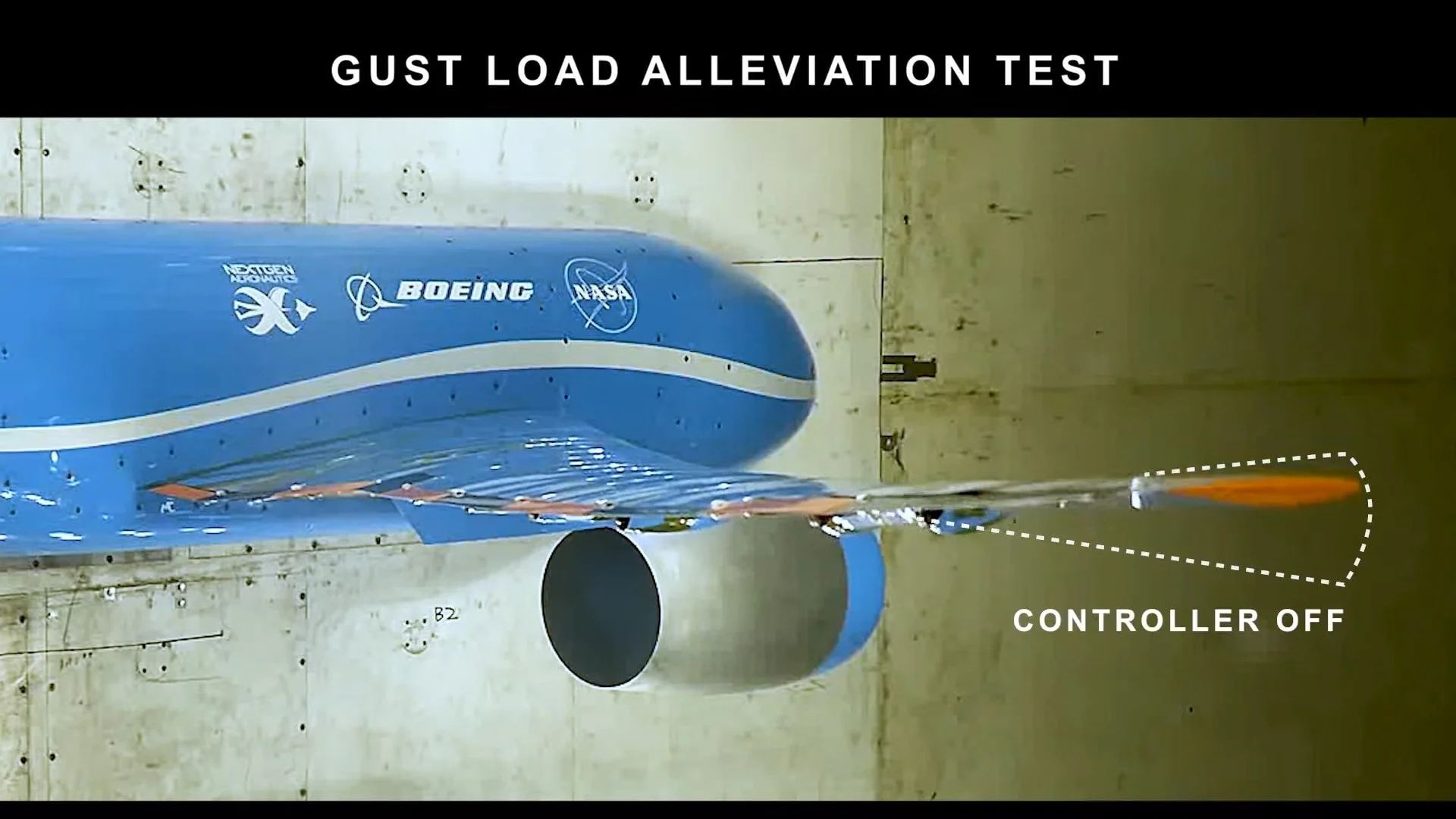
The model was packed with sensors and had 10 movable flaps along the back edge of the wing to see if they could calm things down when the wing started flexing.
The goal wasn’t speed or lift.
It was control.
Figuring out how close the wing can get to trouble without crossing the line.
That wind tunnel testing is now done, and NASA says the next step is crunching the data and sharing what they’ve learned with aircraft designers.
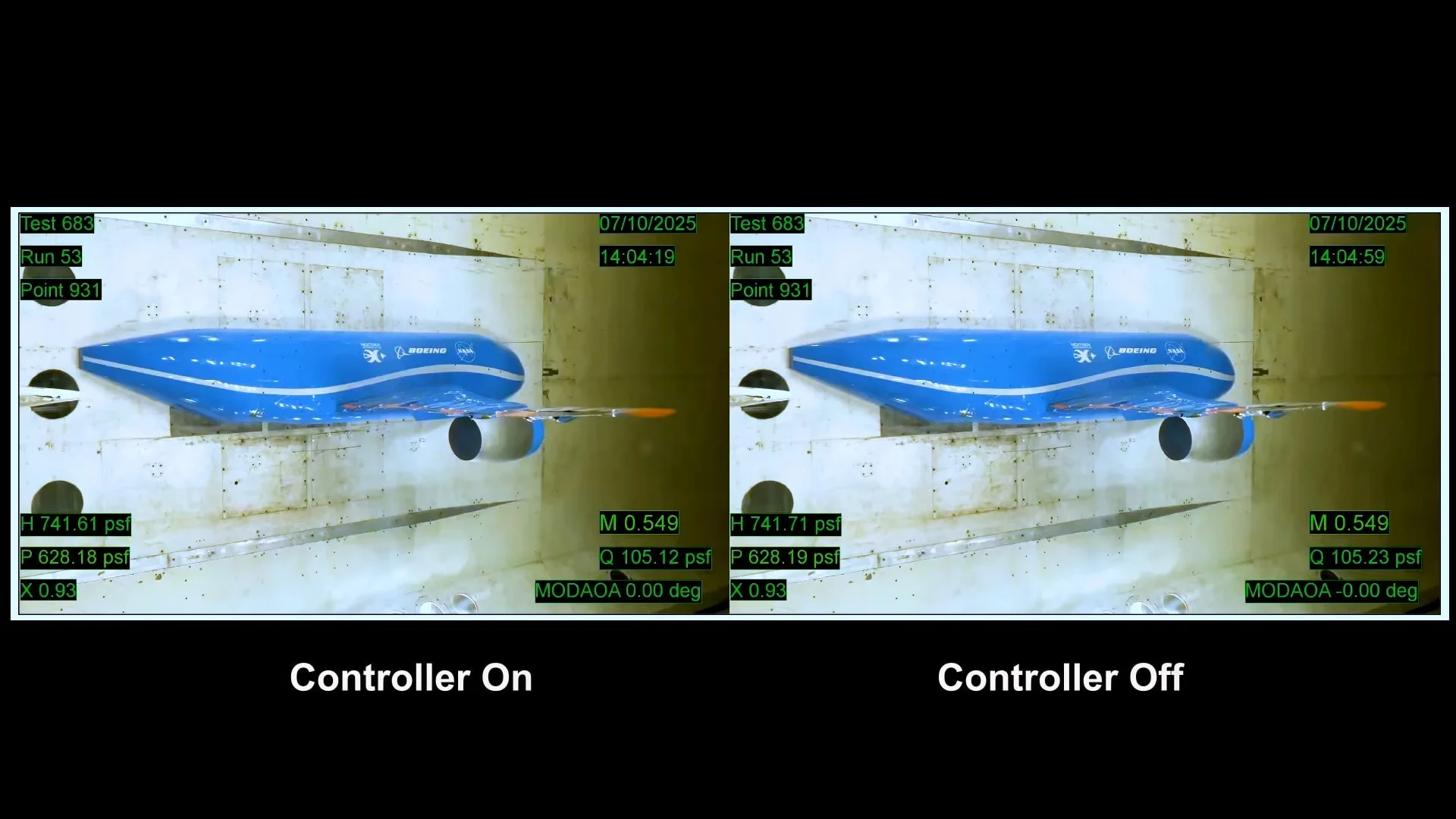
The wing doesn’t just bend, it fights back
Here’s the clever part.
Those 10 control surfaces aren’t just for steering.
They’re meant to actively manage the wing while the plane is flying, easing stress, stopping vibrations, and keeping flutter from getting started.
Earlier tests showed these moving surfaces could seriously improve performance.

This final test pushed things harder, checking how stable the wing stayed as conditions got rougher.
No, this doesn’t mean a new airplane appears next year.
But it does mean engineers now have better rules for how far wings can be stretched, how flexible they can be, and how to keep them under control.
Most passengers will never think about it.
They’ll just notice their flight feels smoother and that the plane used less fuel getting there.
All thanks to one wing, one wind tunnel, and the decision to only build half a plane.
DISCOVER SBX CARS: The global premium car auction platform powered by Supercar Blondie
With roles at TEXT Journal, Bowen Street Press, Onya Magazine, and Swine Magazine on her CV, Molly joined Supercar Blondie in June 2025 as a Junior Content Writer. Having experience across copyediting, proofreading, reference checking, and production, she brings accuracy, clarity, and audience focus to her stories spanning automotive, tech, and lifestyle news.