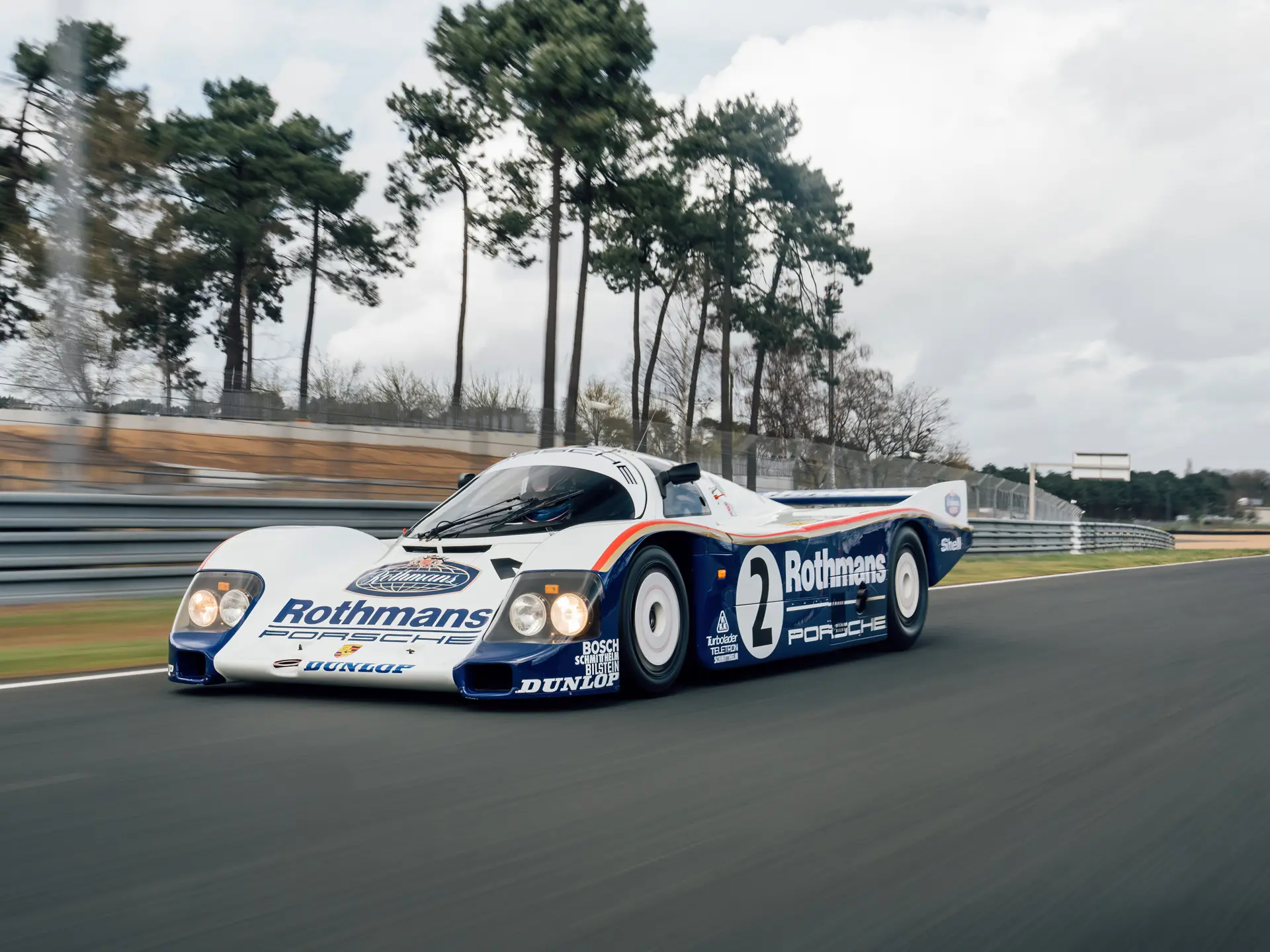
Le Mans-winning Porsche 962 was stuck doing 55 mph in regular highway traffic despite being engineered to run 24 hours at 220mph
Published on Mar 23, 2026 at 4:10 PM (UTC+4)
by Callum Tokody
Last updated on Mar 23, 2026 at 9:01 PM (UTC+4)
Edited by
Emma Matthews

Seeing a legendary Porsche 962 trade the high-speed curves of Le Mans for the gridlock of highway traffic is a jarring sight for any racecar enthusiast.
This particular chassis was engineered to scream down the Mulsanne Straight for 24 hours at speeds exceeding 220mph.
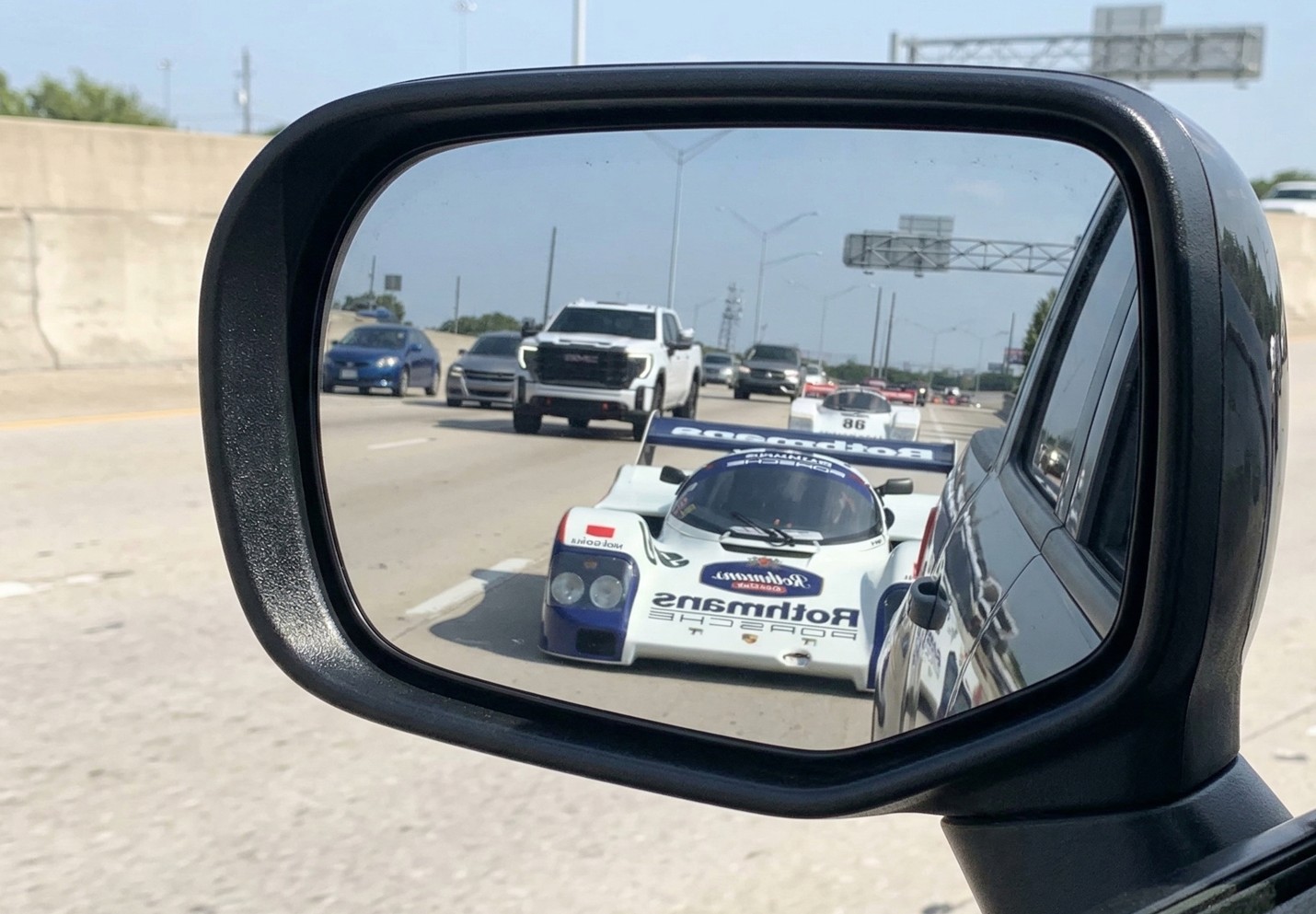
It recently appeared on the I-95, sitting inches off the pavement while surrounded by standard commuter SUVs and delivery trucks.
Navigating a prototype designed for aerodynamic downforce through a suburban afternoon commute creates a series of mechanical hurdles that most owners would simply avoid.
Click the star icon next to supercarblondie.com in Google Search to stay ahead of the curve on the latest and greatest supercars, hypercars, and ground-breaking technology
A Porsche 962 navigates the afternoon commute
The presence of a Porsche 962 in highway traffic is a rare result of a specialized street-legal conversion.
This racecar was recorded traveling toward a local car meet, maintaining a steady 55mph to manage the operating temperature of its air-cooled engine.
Because the Porsche 962 has minimal ground clearance, the driver stayed in the far right lane to avoid road debris and steep transition points.
Most collectors move these vehicles in enclosed trailers to protect the carbon bodywork and racing livery.
But this owner decided to drive the Porsche 962 directly through highway traffic to demonstrate the car’s mechanical reliability on public roads.
The racecar is significantly wider and lower than the modern vehicles surrounding it on the interstate, and nearby drivers noted that the towering rear wing of the Porsche 962 was visible from several cars back in the queue.
The racing cockpit is cramped and offers very little side visibility, which makes the process of merging into highway traffic a very deliberate exercise.
And since the flat-six engine is tuned for high-rev competition, it produces a mechanical note that is far more aggressive than the muffled tones of a standard commuter.
But the Porsche 962 handled the stop-and-go sections of the route without showing any signs of overheating.
It eventually reached the exit ramp, having successfully completed a stint in standard highway traffic without incident.
From Mulsanne straights to Main Street
Making a racecar street-legal involves specific mechanical modifications to meet modern registration standards.
Several engineering firms specialize in adapting the Porsche 962 by adding functional indicators, a handbrake, and road-homologated tires.
These additions allow the Porsche 962 to be registered for the road, though the interior remains a loud and focused environment.
The Le Mans pedigree is present in every vibration through the steering wheel and the stiff response of the suspension.
Despite its aggressive history, the Porsche 962 is capable of low-speed operation when the driver understands the car’s cooling requirements.
Seeing this machine in highway traffic offers a rare look at a 1980s prototype outside of a track setting.
The Porsche 962 remains a cornerstone of the Group C endurance era 40 years after its debut.
Operating one on a public highway shows that the engineering used for 24-hour races is remarkably durable.
We may see more of these racecar conversions appearing at events as owners look to use their collections more frequently.
The Le Mans legacy of the car is secure, but seeing it on the highway adds a new chapter to its ongoing history.
DISCOVER SBX CARS: The global premium car auction platform powered by Supercar Blondie