Real world experiment finally shows how freeway traffic grinds to a halt from nothing and it's hard to watch
Published on Feb 25, 2026 at 10:57 AM (UTC-5)
by Ben Thompson
Last updated on Feb 26, 2026 at 12:19 PM (UTC-5)
Edited by
Emma Matthews
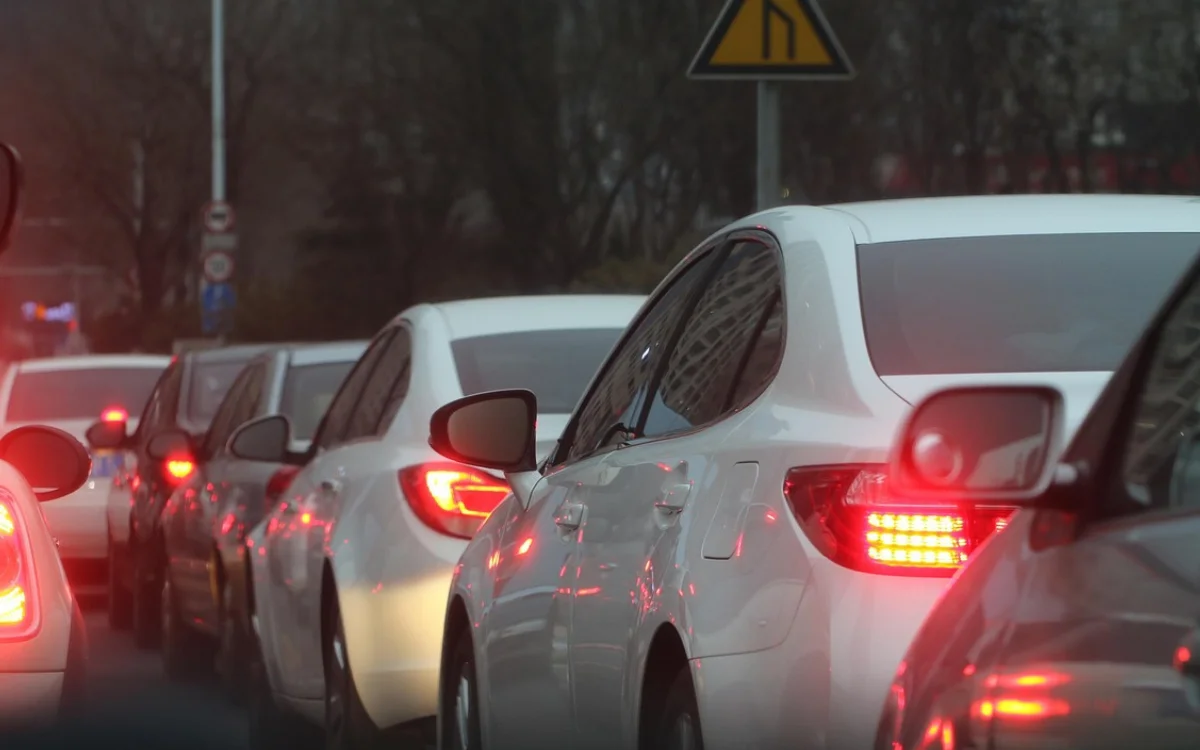

This experiment showed how freeway traffic can grind to a halt with no apparent cause, and it’s hard to watch.
Footage uploaded to the New Scientist YouTube channel back in 2008 showed an experiment conducted by the University of Nagoya in Japan.
In this test, 22 cars were sent driving around a circular track at a constant speed to see what would happen.
What followed was frankly bizarre.
EXPLORE SBX CARS – Supercar auctions starting soon powered by Supercar Blondie
What happens to make freeway traffic grind to a halt?
Each of the 22 cars was driving at a constant speed of 18mph, which is pretty steady.
With relatively similar gaps between each vehicle, the cars set off around the track.
However, it didn’t take long for distances to start to vary, as some widened and some narrowed.
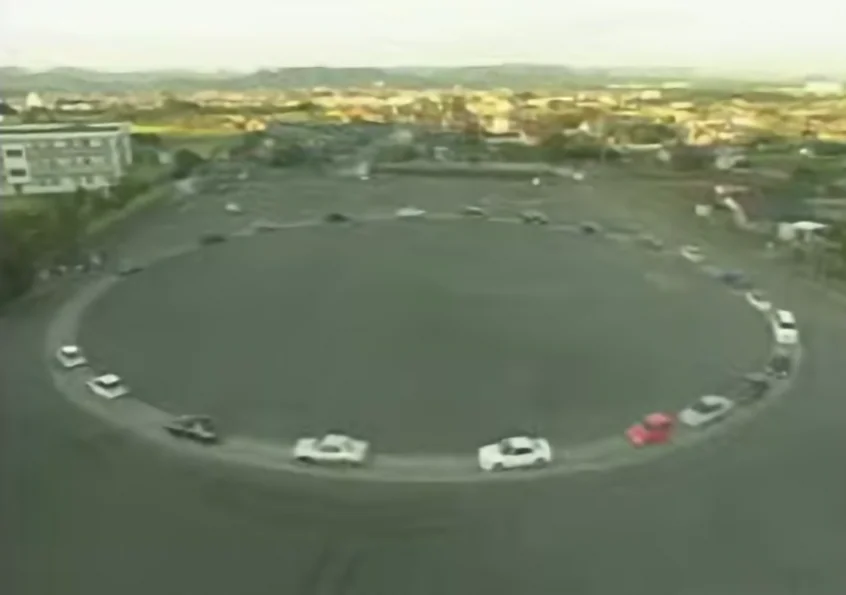
Once it happened at one point, it began occurring around the rest of the track.
Even as cars moved away from each other, the traffic jam would be pushed further down the line.
This kind of phenomena are known as ‘ghost jams’ or ‘phantom jams’.
It’s essentially a ripple effect caused by drivers braking in response to a vehicle ahead – not in response to an accident, obstruction, or a red light, as is usually the case with traffic jams.
Click the star icon next to supercarblondie.com in Google Search to stay ahead of the curve on the latest and greatest supercars, hypercars, and ground-breaking technology
Nobody likes being stuck in traffic
Wherever you look in the world, you’ll find one thing that unites all people of different creeds and backgrounds – nobody likes being caught up in traffic.
That applies whether you live in Taiwan, China, or the UAE.
But there’s something especially annoying about a phantom jam.
One person got footage of a phantom freeway traffic jam in Georgia, and it gave a clear view of why these traffic jams happen.
All it takes is for one car to tap the brakes for a moment, and the cars behind it follow suit.
If a car is even a second too late in its response time, this can slow everyone down.
High traffic density makes this effect stronger, and once the wave forms, it can last for minutes or longer.

So now you know why you’ve been sitting stationary so much recently.
Not that an explanation would make it any less frustrating.
Ben joined Supercar Blondie in February 2025 after being published by international organizations including LADbible, The Sun, the New York Post, and the Daily Mail. He covers supercars, rare and collectible vehicles, aviation, luxury assets, and the fascinating people behind them. His reporting has explored everything from seven-figure supercars and historic Ferrari collections to unusual aircraft adventures and extraordinary automotive discoveries from around the world. Ben has also gained first-hand insight into vehicle craftsmanship and customization, including visiting specialist workshops to see bespoke vehicles up close.