This $100,000,000 experimental aircraft was meant to be revolutionary but ended up destroyed in seconds
Published on Jan 16, 2026 at 6:27 AM (UTC+4)
by Henry Kelsall
Last updated on Jan 15, 2026 at 9:28 PM (UTC+4)
Edited by
Amelia Jean Hershman-Jones
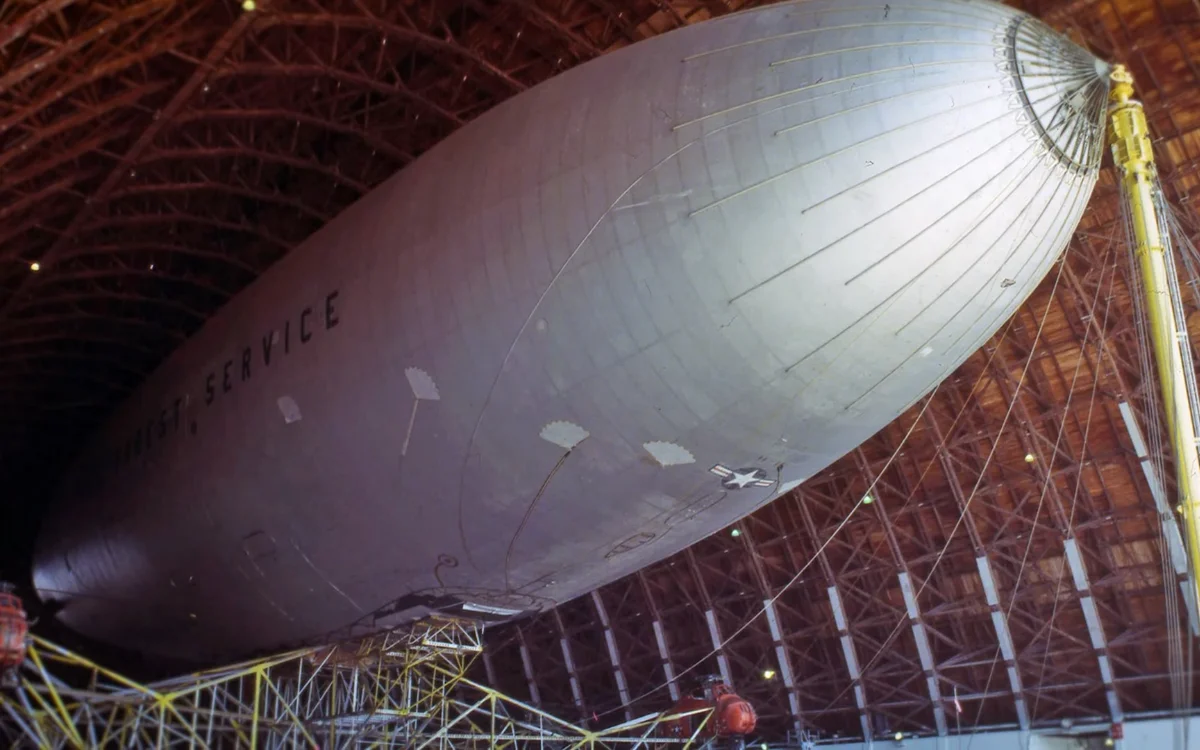

This incredible experimental aircraft, which cost $100,000,000, called the Helistat, was meant to be revolutionary, but it was ultimately destroyed in seconds.
The Piasecki PA-97 Helistat was an experimental heavy lift aircraft, using four helicopters to lift what looked like a giant Zeppelin into the sky and carry large amounts of cargo.
Amazingly, it was conceived in the 1980s, but only one example was built, and it was destroyed in an accident in the Summer of 1986.
After the crash, it never saw the light of day again, ending what was one of the most outrageous experiments in aviation history.
DISCOVER OUR SUPERCAR AUCTION SITE – View live auctions on SBX Cars
Why the experimental Piasecki Helistat was created
The Helistat aircraft was designed in the 1980s.
It came from a U.S. Navy contract for the Forest Service, which needed a very large airlifter for harvesting timber from inaccessible terrain.
The idea was to lift with helicopters, aided by the blimp above.
With lighter loads, the Helistat would need less rotor thrust and allow for more forward thrust.
This, in turn, would save on fuel overall and make the craft more efficient.
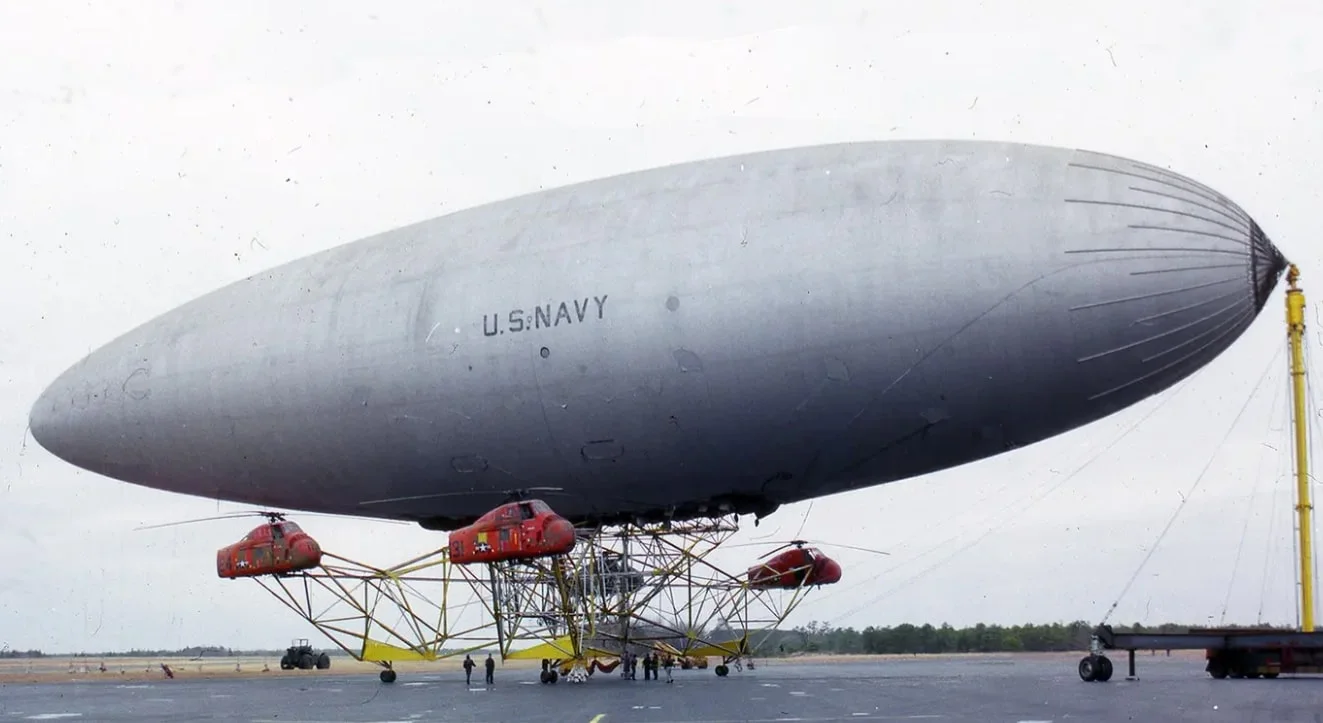
Multiple helicopters would effectively be attached to girders spanning either side of the craft.
In total, there would be four aiding in the lift of the Helistat.
Commissioned in 1980, the first flight took place in April 1986.
Why was the experimental aircraft a failure?
The Navy chose four Sikorsky H-34J helicopters and a retired Navy ZPG-2W blimp for the prototype.
While the H-34J helicopter was of an old design, it was one that was very well proven and reliable.
With the powered lift and the blimp, the Helistat was the largest dynamic lift aircraft in the world.
Test flights began in the spring, with them taking place at the Naval Air Engineering Station Lakehurst in New Jersey.
However, disaster would strike just a few months later.

On July 1st, 1986, the aircraft crashed instantly upon takeoff.
A gust of wind from the rear moved it across the ramp, with framework vibration causing ground resonance – a self-amplifying oscillation in helicopters that quickly leads to structural failure.
Structural failure ensued, with the rear starboard helicopter breaking off the mounting and cutting the gasbag.
The failure spread to the remaining three helicopters, culminating in a crash that tragically killed one of the pilots.
After this, the U.S. Navy abandoned the concept, and the experimental aircraft was no more.

DISCOVER SBX CARS: The global premium car auction platform powered by Supercar Blondie
Henry joined the Supercar Blondie team in February 2025, and since then has covered a wide array of topics ranging from EVs, American barn finds, and the odd Cold War jet. He’s combined his passion for cars with his keen interest in motorsport and his side hustle as a volunteer steam locomotive fireman at a heritage steam railway.