Rimac Nevera set world record for how fast it can travel in reverse and it's quicker than most cars can drive forwards
Published on Sep 27, 2026 at 8:03 PM (UTC-4)
by Alessandro Renesis
Last updated on Sep 28, 2026 at 5:11 AM (UTC-4)
Edited by
Mason Jones
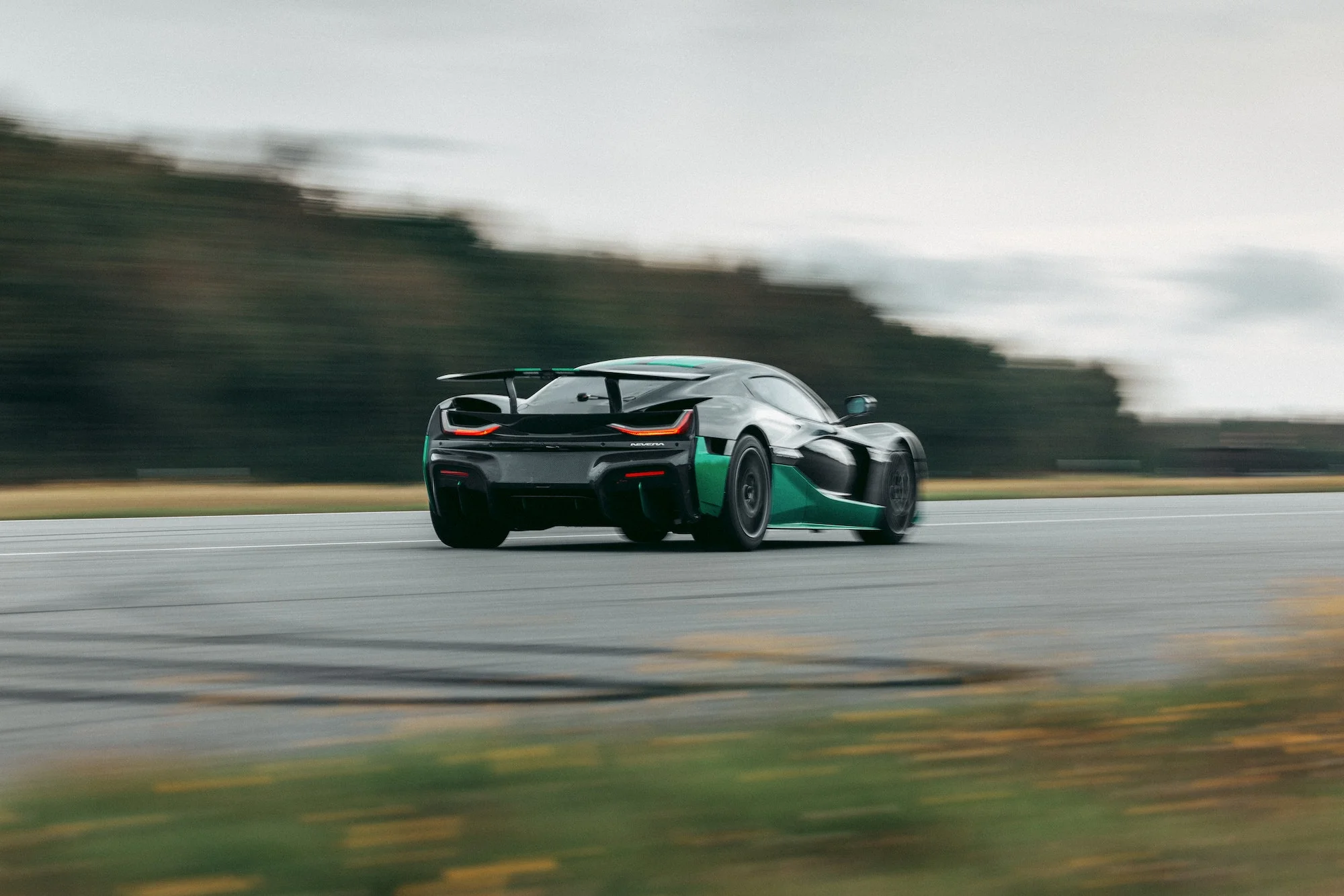

Croatian EV manufacturer Rimac took its 1,914-horsepower hypercar, the Rimac Nevera, to a test track in Germany and set an incredible Guinness World Record.
The car reached around 170 mph… in reverse.
That’s impressive, like physics forgot to physics for a second.
And there’s a reason why this record will never ever be broken by a gas car.
How the Rimac Nevera set this incredible record
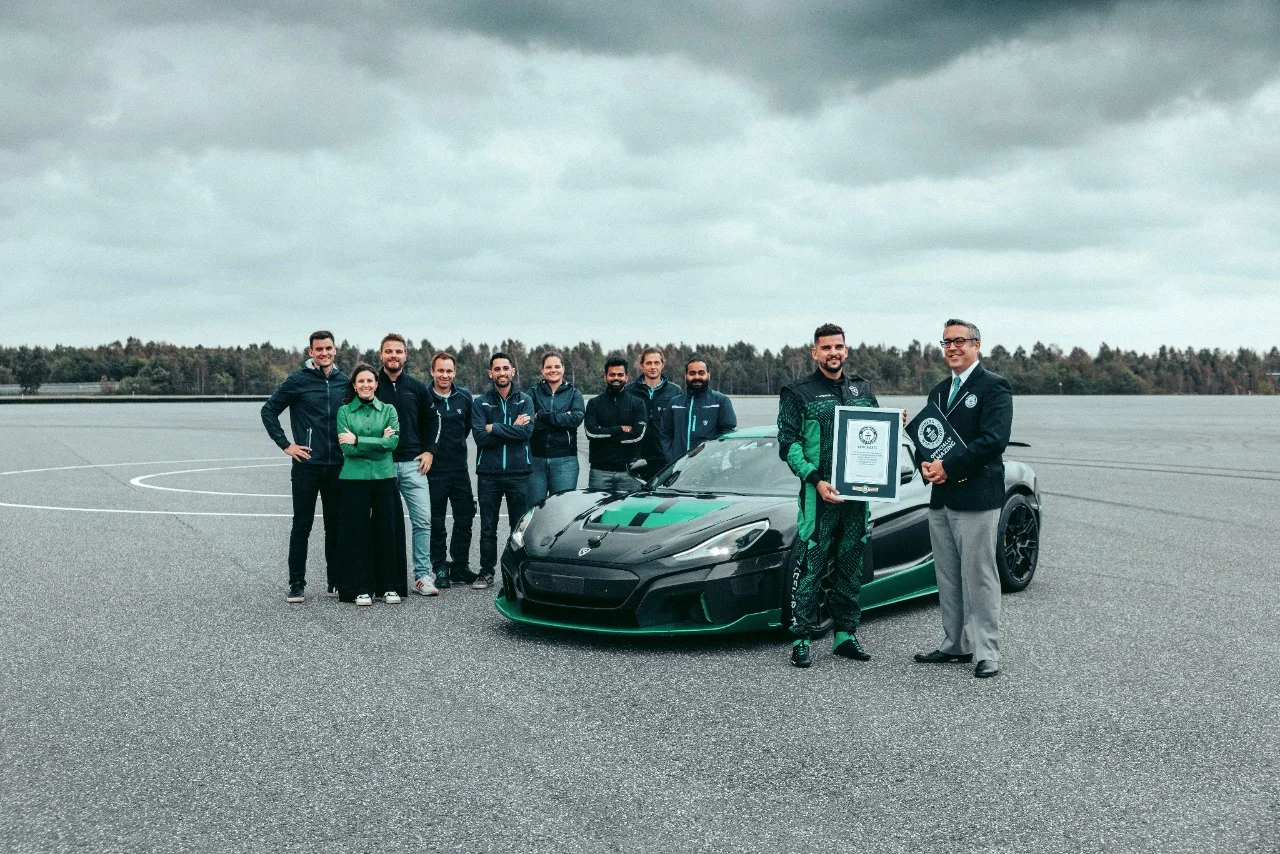
Despite the obvious physics constraints, driver Goran Drndak kept the car pointed straight down the Papenburg track’s long straightaway and reached an incredible speed.
Data logged by Dewesoft confirmed the Rimac Nevera peaked at 171.34 mph (275.74 km/h), surpassing the previous Guinness World Record of 102.58 mph (165.08 km/h) set in 2011 by a modified Nissan Leaf.
That’s incredibly ironic, by the way.
When else are you ever going to be able to say a 1,900-horsepower hypercar beat a record set by a family EV?
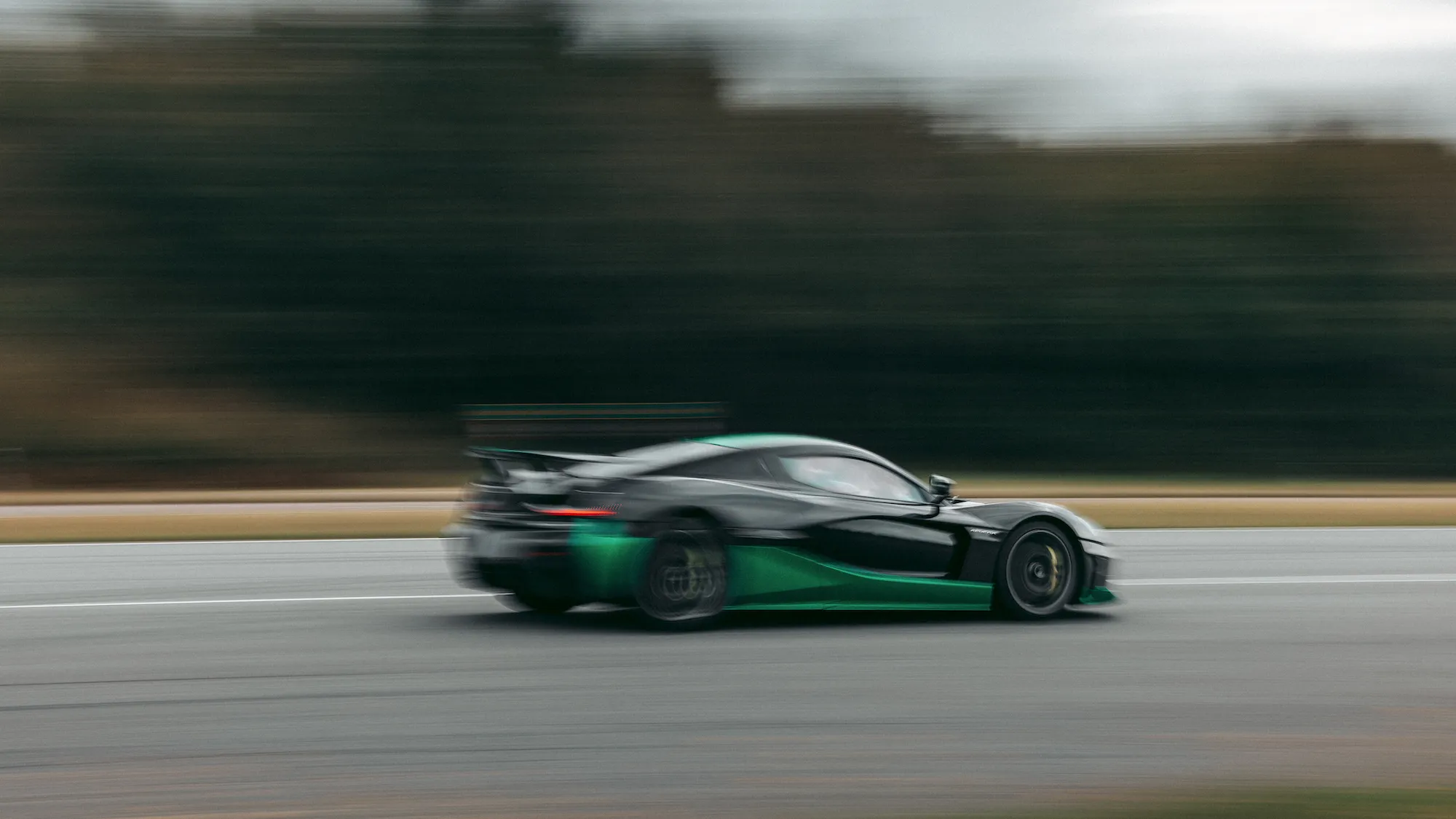
But it did beat the record, and while it may be broken again, we can bet good money on something: this Guinness World Record will never be broken by a gas car.
Related

Why EV powertrains excel in reverse
To understand how a car can travel backward faster than most sports cars go forward, you have to look under the bodywork.
In an internal combustion engine vehicle, going backward relies on a specific reverse gear engineered with short gear ratios intended for slow, low-speed maneuvering.
The main goal is to avoid engine damage.
In an EV, propulsion is propulsion.
There are no gears, but there is instant torque.
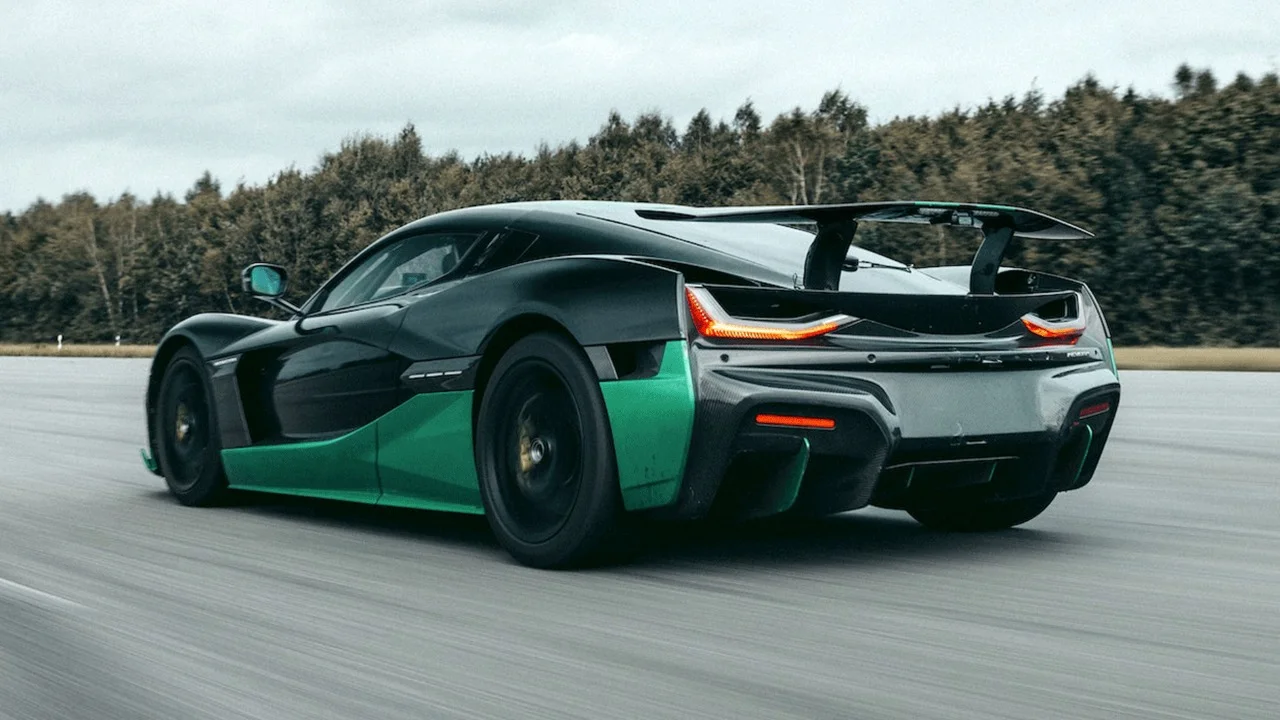
Specifically, in a Nevera, there are four individual electric motors that directly drive each of the four wheels independently.
An electric motor generates maximum torque instantly regardless of rotational direction.
By simply reversing the direction of the electrical current feeding the motors, the drivetrain provides identical power and torque backward as it does forward.
In theory, you could drive the Nevera at top speed in reverse.
The only reason you can’t is aerodynamic stability presents a major physical barrier.
The only way to reach top speed in reverse
In theory, it would be possible to reach the top speed of a car in reverse.
In practice, the only way to do it would be the turn the car into a Top Gear-style Salfa Romeaab/Salfaab.
About 20 years ago, James May built a stretch limo using the front end of an Alfa Romeo and… the front end of a Saab.
So technically, you’re never reversing in a car like that.
Short of doing that, physics would make it impossible.
Even if you somehow engineered the steering wheel to rotate around the interior and face backwards.

And even if you gave your car four-wheel steering for better control, you’d still be facing the wrong way, which means that the aerodynamics would be exactly backwards.
Not only would this make the car slower, but, at extreme speeds, even micro-adjustments on the steering wheel can cause severe oversteer or trigger immediate instability.
That’s why even reaching 170 mph must’ve felt incredible.
Is it physically possible?
We asked our go-to expert in mechanical engineering, Simone Bianconi, to break down why it would be impossible, and his answer was clear.
“[In reverse] basically every aerodynamic element would be working against you,” he said.
“Downforce becomes lift, reducing tire traction. Cooling ducts work in reverse, so there’s no airflow to the powertrain. Drag coefficient would go up, so you’d need more power.
“Mechanically, it’s doable. An electric powertrain can take it. But it is physically impossible. If you managed to remove or somehow temporarily modify some of the aerodynamic components – for example any wings or spoilers – and assuming you’ve got four-wheel steering, you could probably reach three-quarters of the top speed, so in this case maybe around 200 mph. Maybe. But that would still require a driver that’s completely crazy,” he laughed.
Alessandro is an automotive journalist with 10 years of experience covering supercars, automotive history, emerging vehicle technology, and luxury transportation. He wrote the first article published on SupercarBlondie.com when the website launched in 2022 and has since built a reputation for insightful reporting across the automotive and transportation industries. His expertise is grounded in hands-on experience. Alessandro has driven every Tesla model ever produced, from the original Roadster to the Cybertruck, and regularly covers the latest developments in electric vehicles and automotive innovation. His passion for transportation extends beyond cars, he has even flown a Boeing 787 Dreamliner simulator in Addis Ababa, Ethiopia. His reporting spans everything from classic American muscle cars and rare automotive discoveries to luxury yachts, private aircraft, high-end watches, and cutting-edge vehicle technology. Known for his deep knowledge of automotive history and ability to uncover the stories behind iconic vehicles, Alessandro brings readers a blend of historical context, technical expertise, and first-hand experience.