Rivian CEO says Apple CarPlay will never come to any of their cars
Published on Dec 21, 2025 at 7:05 PM (UTC+4)
by Alessandro Renesis
Last updated on Dec 19, 2025 at 3:47 PM (UTC+4)
Edited by
Amelia Jean Hershman-Jones

Rivian CEO, RJ Scaringe, has reiterated that Apple CarPlay will never be available in Rivian EVs, and the reason he’s given makes sense.
The same applies to Android Auto, even though he hasn’t mentioned that specifically.
Other manufacturers are on the same page, but RJ Scaringe has been banging on this particular drum for longer and louder than most.
Privacy and security have always been key reasons behind this decision, but now there’s another element.
DISCOVER SBX CARS: The global premium car auction platform powered by Supercar Blondie
When it comes to CarPlay, Apple is now facing resistance across the industry
Rivian CEO RJ Scaringe has made it clear that Rivian vehicles don’t support Android Auto or Apple CarPlay, and probably never will.
Rivian, like other manufacturers, relies solely on an in-house infotainment system, which used to be the norm before Apple and Android disrupted the car world.
In the early days of infotainment car screens, manufacturers simply created their own OS (Operating System), which was generally very basic, but then again, it didn’t need to be complicated because cars were still simple back then.
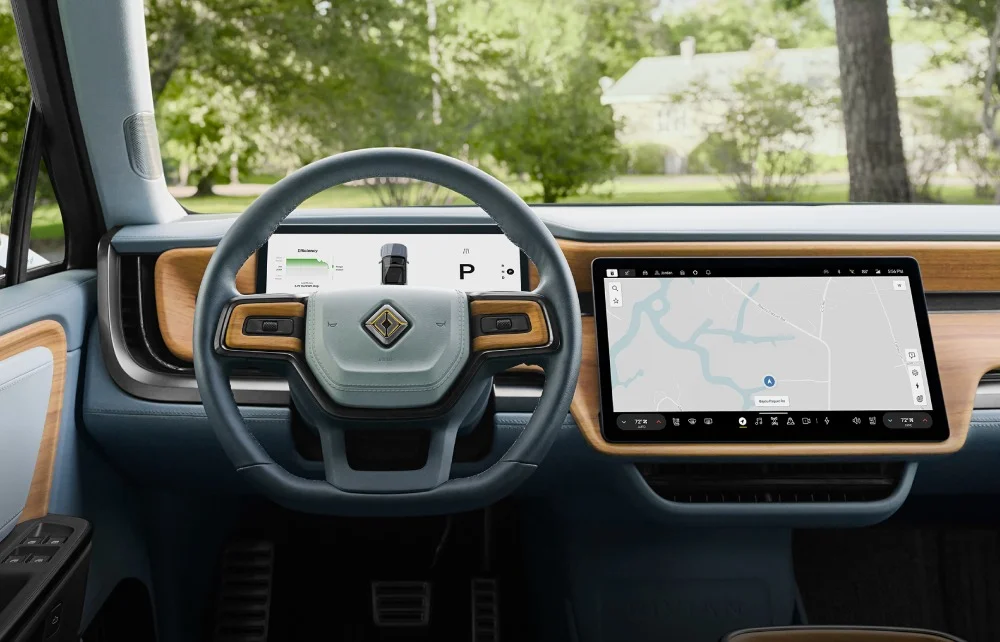
However, technology evolves rapidly, and before you know it, you now have cars that are basically smartphones on wheels.
Apple and Google (Android) saw an opportunity, and they seized it.
Apple recently launched CarPlay Ultra, which basically takes over your car.
Manufacturers don’t really like that, which is why so many – not just Rivian – are saying no.
And they’re saying no for the same reason Scaringe is.
This is why Rivian doesn’t want Apple CarPlay
RJ Scaringe cited the usual security-related risks when he explained why his company’s EVs don’t support CarPlay or Android Auto.
In an interview with Stratechery during Rivian’s Autonomy and AI Day, Scaringe said the EV maker won’t adopt CarPlay because the company doesn’t want to depend on third-party AI systems.
“Inserting any sort of aggregation layer that’s not our own is extremely risky, and you start to build dependencies on that that are hard to reverse,” he said.

By keeping everything in-house, according to Scaringe, the automaker reduces the number of people they have to point their finger at if something goes wrong.
And that, in his view, makes for fewer problems overall and, when they do arise, means they can be resolved faster.
After beginning his automotive writing career at DriveTribe, Alessandro has been with Supercar Blondie since the launch of the website in 2022. In fact, he penned the very first article published on supercarblondie.com. He’s covered subjects from cars to aircraft, watches, and luxury yachts - and even crypto. He can largely be found heading up the site’s new-supercar and SBX coverage and being the first to bring our readers the news that they’re hungry for.